

Table of Contents
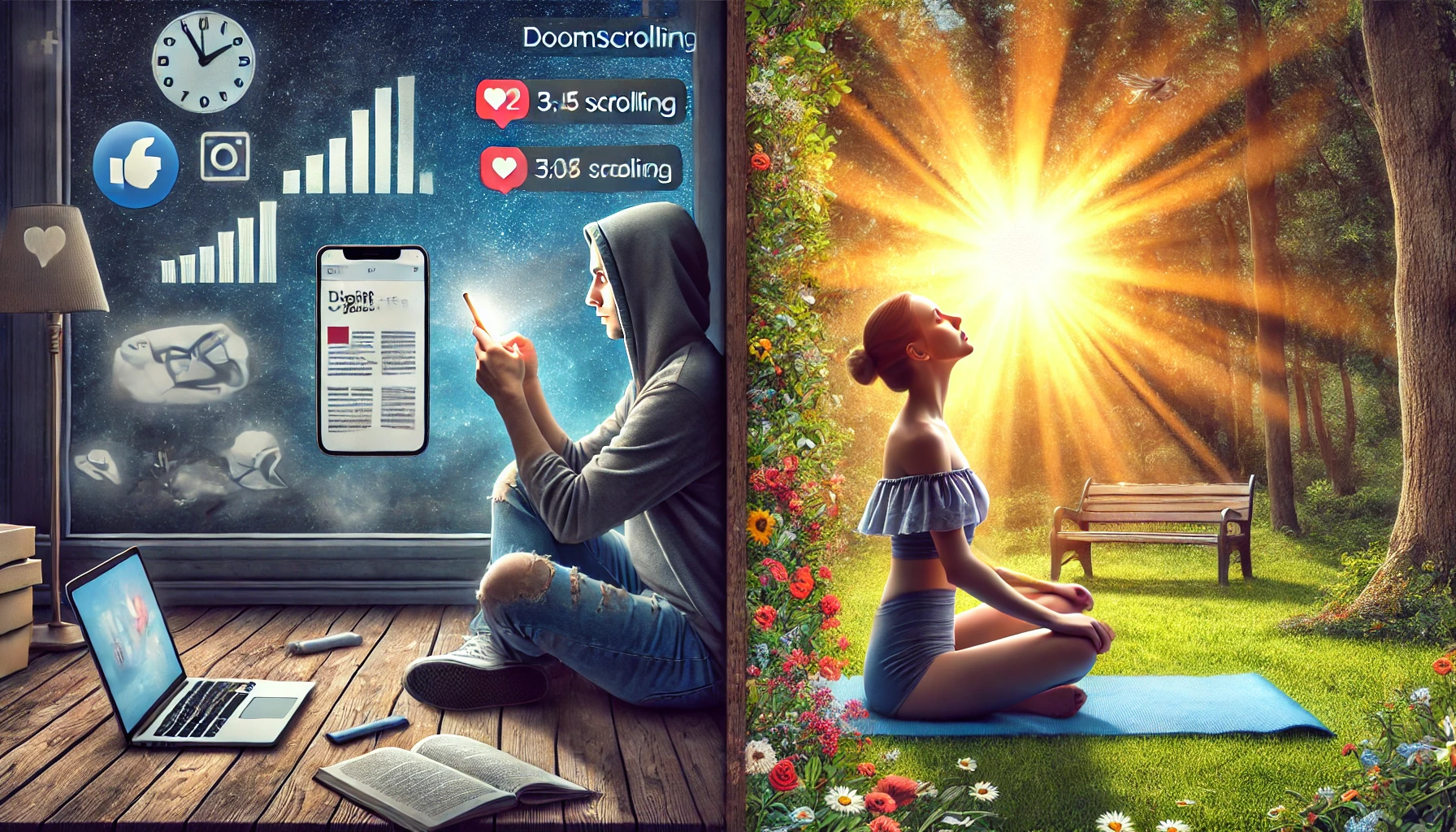
Doomscrolling is the habit of endlessly consuming negative news through algorithm-driven feeds. It happens because platforms amplify fear and uncertainty to keep attention. You can reduce it by adding friction, replacing the habit with low-stress micro-activities, and removing digital triggers. Most people notice improvement within 7–14 days.
Doomscrolling isn’t a lack of discipline. It’s engineered behavior — and it’s one you can break.
Doomscrolling Isn’t Your Fault — It’s Engineered
You’re not doomscrolling because you’re weak or addicted to negativity. You’re doomscrolling because your brain is colliding with systems intentionally designed to keep you scrolling. Every swipe pulls you deeper into a loop of uncertainty, curiosity, stress, brief relief, and repetition.
Negative headlines grab attention faster than neutral ones. Infinite scroll removes stopping cues. Algorithms learn what unsettles you and deliver more of it. Research from digital wellness labs shows negative content can capture attention several times faster than neutral information. Combined with the brain’s threat-detection wiring, doomscrolling becomes automatic.
But here’s the critical point: doomscrolling is a habit shaped by design — and habits can be rewired.
Why Does Doomscrolling Feel Impossible to Stop?
It’s a combination of biology and product design. Doomscrolling thrives where human psychology meets algorithmic reinforcement and endless content. The brain constantly seeks patterns, novelty, and unpredictable rewards, and platforms deliver all three nonstop.
Even apps outside social media contribute: music platforms suggest news, fitness trackers push alerts, and video apps recommend disasters after harmless content. The ecosystem is interconnected, and attention leaks everywhere. This is why breaking the habit isn’t just about willpower — it requires intentional friction, digital boundaries, and alternative micro-activities to retrain how your brain responds.
The Addictive Cycle of Doomscrolling
Doomscrolling isn’t “scrolling too much.” It activates the brain’s stress response. Distressing headlines trigger vigilance. The mind searches for clarity. Algorithms detect engagement and amplify similar content. The feed never provides closure
This cycle runs on negativity bias, a survival mechanism that once kept humans safe but now keeps them scrolling. Modern apps are full of micro-hooks — recommendations, alerts, infinite feeds — that quietly nudge attention back to the screen.
- You didn’t fail.
- Your tools succeeded.

How to Break the Doomscrolling Habit
Breaking doomscrolling isn’t about willpower. It’s about redesigning your environment so your brain doesn’t have to fight constantly. Here’s how:
1. Set App Limits and Digital Downtime
Use built-in tools on iOS or Android to track and limit app usage:
- Settings → Screen Time (iOS) or Digital Wellbeing (Android)
- Enable downtime before bed or during work
- Use app limits for social media
- Keep only essential apps visible
These small pauses interrupt automatic scrolling and give your brain a chance to reset.
2. Use Third-Party Apps That Break the Scroll Pattern
Some apps provide additional features to reduce screen time effectively. These tools stop your fingers from acting before your brain does:
- ScreenZen (iOS, Android) — adds a pop-up message before opening selected apps, asking if it is necessary.
- Opal (iOS, Android, Web) — limits app usage based on frequency instead of time.
- Roots (iOS) — includes a “Monk Mode,” which locks apps completely until the set limit is reached.
3. Embrace Platform-Native Wellness Features
Recent updates show platforms are taking attention health seriously:
- TikTok’s Well-being Missions reward less screen time and adherence to daily limits
- Instagram and YouTube now provide reminders and tracking to encourage breaks
- iOS and Android reward downtime and reduced notifications
These features use the same dopamine loops that drive scrolling but redirect them toward healthier habits.
4. Replace Doomscrolling With Micro-Activities
Stopping a habit creates a void. Fill it with low-stress, high-value activities:
- Short reading sessions on Kindle, Bookcase, AiPaper, or portable E‑Ink devices like the Xteink X4
- Puzzles, calming audio, journaling, brief walks, or simple breathing exercises
These micro-activities satisfy your brain’s reward system without the negative impact of endless feeds.
5. Turn Off Notifications and Remove Digital Triggers
Notifications are micro-stressors disguised as updates. Reduce them to reclaim attention:
- Turn off non-essential alerts
- Move social apps off your home screen
- Use grayscale mode at night
- Charge devices away from your bed
Small changes to your environment often have bigger effects than raw willpower.
6. The RRR Method: Reduce → Replace → Restore
- Reduce: Cut down triggers, notifications, and mindless access.
- Replace: Swap doomscrolling with low-stress, low-cognitive-load activities.
- Restore: Build routines that bring clarity back — morning slow time, breathing exercises, journaling, device placement.
This works because the environment shapes behavior more than motivation ever will.

How Long Does It Take to Stop Doomscrolling?
Most people notice initial changes within 1–2 weeks, such as fewer unconscious scrolls and better focus during breaks. Full habit rewiring usually takes around 30 days, as the brain’s reward loop adjusts and new behaviors become automatic.
Progress isn’t perfectly linear — some days will feel easier, others harder. To stay on track:
- Track your usage: Note when and how often you scroll mindlessly
- Celebrate small wins: Even a single successful break counts
- Adjust strategies: If a method isn’t working, swap it for another micro-activity or app limit
With awareness, consistency, and small daily steps, you can retrain your attention and reclaim your digital focus within a month.
Final Thought
The world isn’t getting quieter, and platforms aren’t slowing down. Doomscrolling thrives on fear, novelty, and endless algorithmic stimulation. But your attention doesn’t have to be trapped.
Every small choice — putting your phone down, turning off notifications, replacing scrolling with short reading, puzzles, or a quick walk — reclaims a piece of focus the feed will never give you. Progress builds gradually: small wins compound, habits shift, and digital resilience strengthens.
Remember: this isn’t about perfection. It’s about awareness, consistency, and smart use of tech to work with your brain, not against it. By combining friction, micro-activities, and platform-native wellness features, you can break the doomscrolling cycle and take back control of your time, attention, and mental clarity — starting today.
Originally published on March 10, 2025, this post has been updated with the latest info and analysis.
Stay Updated: Tech News

