

Table of Contents
JPL Faces Workforce Reduction Impact
NASA’s Jet Propulsion Laboratory is reducing its workforce by approximately 8%, a decision that reaches well beyond a routine round of belt-tightening. JPL is NASA’s primary center for robotic planetary exploration, and the laboratory occupies a distinctive place in the U.S. space program: it is where difficult science goals are translated into spacecraft, instruments, operations plans, and years of mission support.
JPL officials announced the news on February 6, saying the cuts will affect approximately 530 employees and 40 contractors. The scale matters not only because of the number of people involved, but because a laboratory such as JPL depends on accumulated technical knowledge. Planetary missions are long projects, often requiring teams to carry lessons from one challenge into the next. When those teams shrink, the immediate savings are visible; the loss of experience is harder to measure.
The reduction comes as NASA and Congress confront a sharper disagreement over the cost and direction of the Mars Sample Return campaign, or MSR. That dispute has put JPL in an unusually difficult position. The lab must continue delivering work for NASA while planning around a much smaller funding assumption for one of its central efforts.
Scope of Impact on Technical and Support Areas
The layoffs will extend across both technical and support areas of the lab, according to JPL officials. That breadth is significant. Major space missions are not carried by scientists and engineers alone. They also rely on the people who manage contracts, facilities, computing, finance, mission planning, procurement, communications, and the many other functions that keep a large research institution operating.
JPL has said the adjustments are painful but necessary to stay within the allocated budget while continuing crucial work for NASA and the nation. That is the central tension in the announcement. NASA cannot simply pause the work associated with spacecraft already in development or missions already operating, yet the laboratory cannot maintain the same staffing level when the expected money for a major campaign is uncertain.
Workforce reductions can be especially disruptive in space exploration because programs are tightly connected. A delayed decision on one project may affect staffing plans, supplier relationships, technical schedules, and the ability to retain specialized personnel. The budget pressure surrounding MSR therefore does not sit neatly inside a single program office. It shapes the lab’s wider capacity to plan.
JPL’s Role in NASA’s Scientific Endeavors
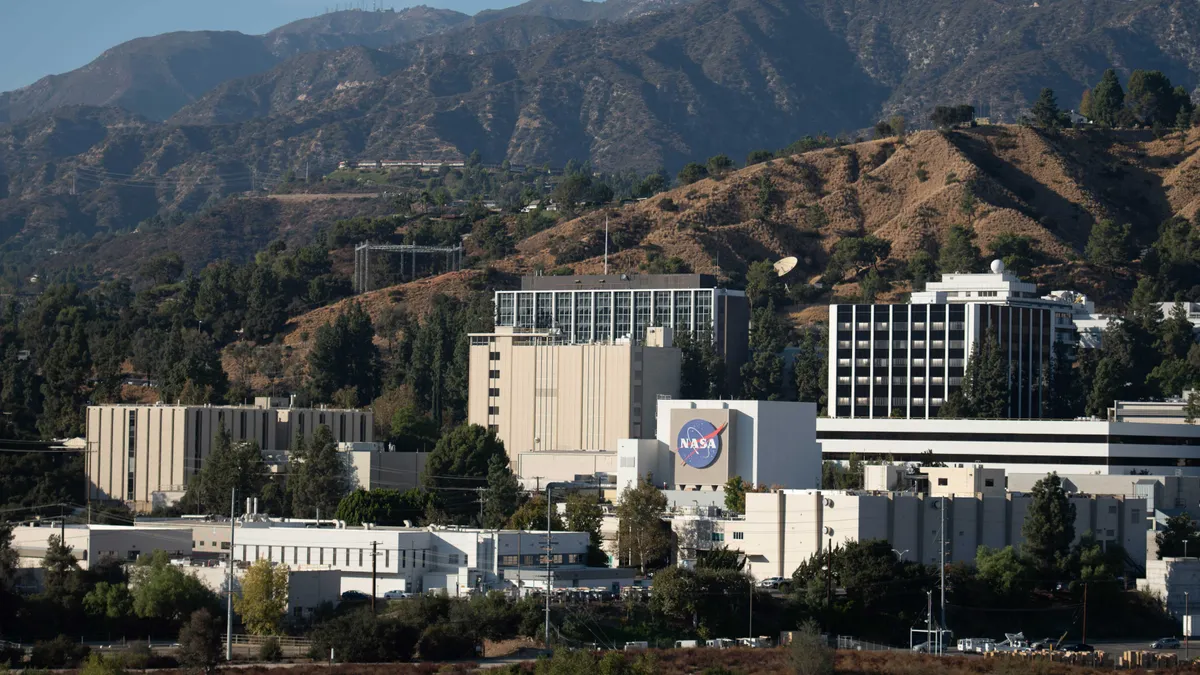
Located just north of Los Angeles and managed by the California Institute of Technology, JPL leads numerous significant science projects for NASA. Its work includes the Curiosity and Perseverance rover missions on Mars, two highly visible examples of the laboratory’s role in robotic exploration.
That portfolio helps explain why the workforce announcement has drawn attention beyond the immediate budget debate. JPL is not a single-mission organization. Its teams work across different stages of exploration, from designing and building spacecraft to operating missions and handling the scientific return. The lab’s value lies partly in its ability to take on missions that are technically demanding and inherently uncertain.
For NASA, that makes stable planning unusually important. A laboratory can adjust contracts and delay some work, but rebuilding specialized teams after a reduction is not as simple as reopening a job listing. The practical question is whether near-term savings leave enough capacity to carry out the missions NASA expects JPL to deliver.
The Mars Sample Return Campaign Faces Budgetary Challenges
JPL is a key player in the ambitious Mars Sample Return campaign, which aims to elevate the search for life on the Red Planet. The campaign’s scientific appeal is clear: returning material from Mars would allow study using tools and methods not available on a rover. But its cost has become the defining political issue around the program.
Projected estimates for MSR have recently surged to between $8 billion and $11 billion by 2030, prompting concern among some members of Congress. Those figures have changed the conversation from whether Mars Sample Return is scientifically compelling to whether NASA can pursue it in its current form without putting too much pressure on other priorities.
This is not merely a question of one mission’s price tag. NASA’s science agenda contains competing ambitions, and Congress has to weigh MSR against the rest of that agenda. Once a project’s projected cost rises sharply, lawmakers tend to demand tighter control, clearer schedules, and evidence that the agency can avoid an open-ended commitment. JPL’s workforce cut shows how quickly that scrutiny can move from Capitol Hill appropriations language into the day-to-day realities of a laboratory.
Congressional Response and Fiscal Constraints
Congress has sought to rein in MSR costs. The Senate allocated only $300 million for MSR in its fiscal year 2024 appropriations bill, a 63% decrease from the previous year’s funding. While negotiations for the final fiscal year 2024 appropriations bill are ongoing, NASA has instructed JPL to plan for a $300 million MSR budget.
That instruction is consequential because planning has to be based on the funding that may actually be available, not on the funding a program hopes to receive. For JPL, the result is a forced reset in expectations around the campaign. A budget plan is not an abstract exercise when it determines whether teams can remain intact and contracts can continue at their previous pace.
The situation also illustrates a broader weakness in stop-start public funding. Space missions require long horizons, but annual appropriations decisions can introduce sudden changes into programs designed over many years. A lab can prepare contingencies, yet there is no painless way to absorb a major reduction in expected funding for a flagship-scale effort.
JPL’s Mitigation Measures and Unavoidable Workforce Reduction
JPL did not move directly to layoffs. The laboratory implemented a hiring freeze, reduced MSR contracts, and cut burden budgets across the lab. Those measures indicate an effort to reduce spending before eliminating positions, particularly at a place where technical continuity has real value.
Still, JPL found those actions insufficient to sustain operations through the remainder of the fiscal year. In the absence of an appropriation, and in an effort to prevent deeper cuts later, the lab proceeded with the workforce reduction.
That explanation does not make the decision less severe for affected employees and contractors. It does clarify the timing: JPL is acting amid uncertainty rather than waiting for a final outcome that could leave it with even fewer options. The lab is attempting to align its spending with the budget direction NASA has given it, even as the final appropriations process remains unresolved.
Related: Latest News on Space
NASA Administrator’s Perspective
NASA Administrator Bill Nelson expressed regret over NASA’s JPL workforce reduction while emphasizing that the cuts were necessary in light of the budget situation. His response acknowledges the uncomfortable reality behind the decision: NASA can celebrate ambitious exploration goals, but those goals depend on funding that can support the people asked to carry them out.
Nelson also stressed JPL’s continuing role in upcoming NASA missions, including Europa Clipper, the NASA-ISRO Synthetic Aperture Radar (NISAR), and the Near-Earth Object Surveyor space telescope (NEO Surveyor). That list is a reminder that JPL’s future is not defined solely by Mars Sample Return. The laboratory remains central to NASA’s broader exploration and science plans.
Still, the workforce reduction raises a harder question for the agency and Congress alike: how much instability can a mission-driven institution absorb before it begins to affect the pace and confidence of the work ahead? JPL’s importance to America’s leadership in space exploration is clear. The budget conflict now tests whether that role will be matched by a funding path that gives the lab room to sustain it.

