

Table of Contents
SquaredTech examines Meta’s decision to delay its Phoenix mixed reality glasses to 2027. The shift signals a wider change in strategy inside Reality Labs. The move also reflects Meta’s interest in long-term stability instead of rushed product cycles. The company appears to be setting a new internal benchmark for quality, user comfort, and technical maturity. The decision arrives during a time of intense competition in mixed reality hardware. It also follows months of internal reviews that focused on product standards, financial performance, and ambitious next-generation projects already in development.
Meta Delays Phoenix Mixed Reality Glasses Release to 2027
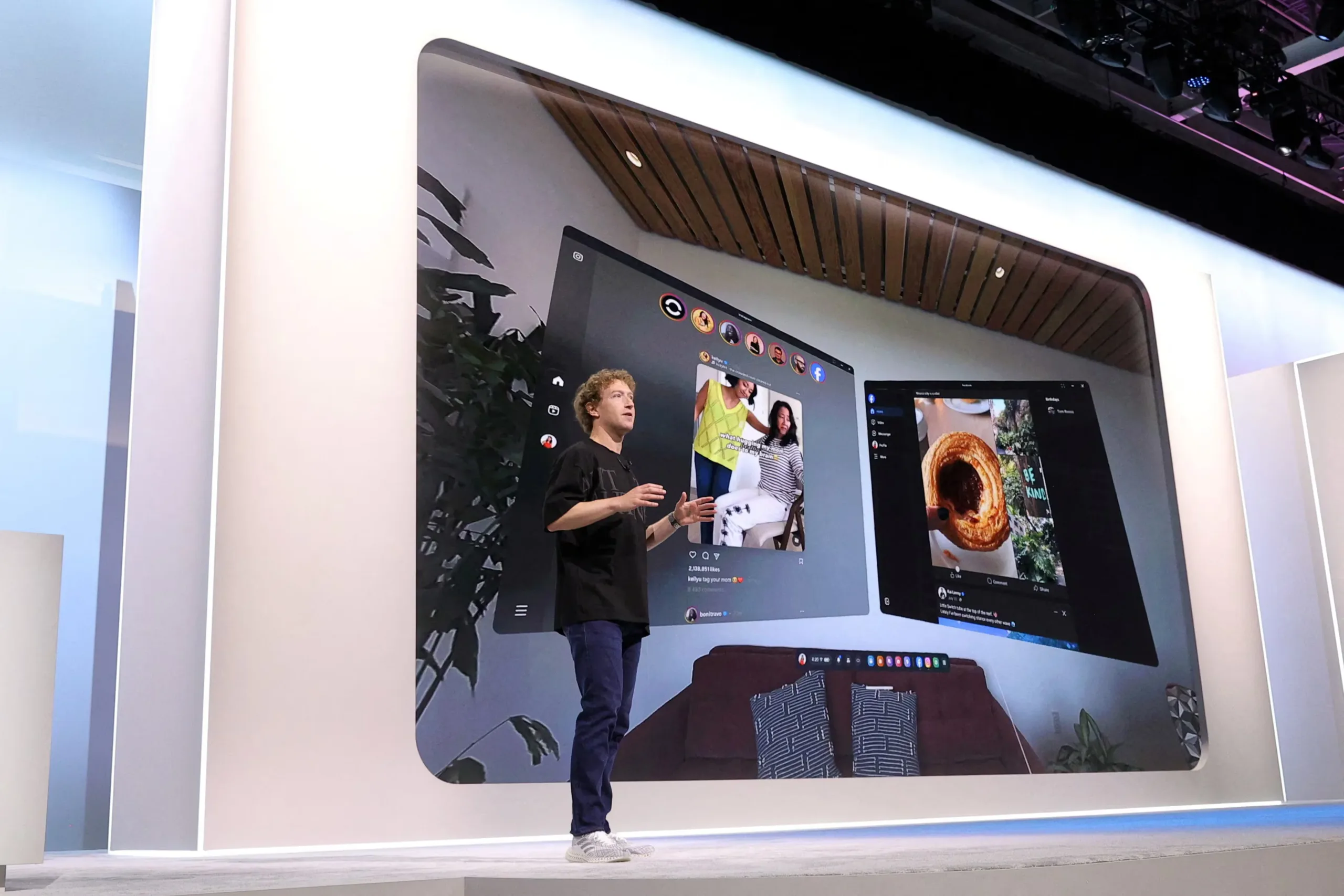
Meta initially targeted a 2026 launch window for the Phoenix mixed reality glasses. Internal planning shaped the product as a significant follow-up to previous headsets. The glasses were meant to expand Meta’s footprint in advanced wearable computing. A Thursday memo from Maher Saba, VP of Reality Labs Foundation, confirmed that the company will instead release the device in the first half of 2027. Business Insider reported the details after reviewing the internal communication. Saba explained that the delay follows direct feedback from CEO Mark Zuckerberg. The review session pressed teams to build a more sustainable business and deliver higher quality experiences.
The Phoenix mixed reality glasses use a design similar to ski goggles. Two employees who saw the prototype explained that the device connects to an external puck. The puck supplies power and manages processing demands. Early reactions from leadership questioned the need for the puck. But the team elected to keep it because the setup keeps the glasses lighter, improves comfort during long sessions, and reduces the risk of overheating. This structure mirrors design goals visible in other premium mixed reality products, including Apple’s Vision Pro, which also uses a separate component to distribute weight and heat.
Engineers inside Meta view the Phoenix project as a major step in the company’s move toward lightweight wearable computing. The team intends to merge mixed reality functions with practical ergonomics. Comfort, clarity, battery life, and thermal management form the core engineering priorities. These goals require long testing cycles, which helps explain why leadership prefers an extended timeline. The focus now rests on refining visuals, reducing lag, strengthening hand tracking, and aligning software features with actual user needs. As Meta invests in more advanced optics and sensor arrays, it must manage a wider set of production challenges than earlier devices.
A separate memo from metaverse leaders Gabriel Aul and Ryan Cairns echoed Saba’s message. Both executives argued that the extra time provides “breathing room” to produce a fully polished device. They stressed that the delay does not give teams permission to add new experimental features. Instead, the objective is to refine what already exists. Meta appears to be preventing scope creep, which often disrupts long hardware cycles. The Phoenix project now sits under stricter discipline, where engineers must commit to stability and strong early performance. The move mirrors product development strategies used in the semiconductor and gaming hardware industries, where delays often result in more durable long-term gains.
Meta Expands Hardware Plans While Adjusting Reality Labs Strategy
The internal reorganization of Meta’s metaverse division earlier this year plays a major role in this shift. In October, the company placed Aul and Cairns in charge of the unit after previous cycles revealed structural weaknesses. Aul came from Meta Horizon, and Cairns oversaw virtual reality hardware. Their joint leadership now directs product planning, hardware testing, and experience alignment across multiple projects. At the same time, Reality Labs faces possible budget cuts of up to 30 percent. These cuts may impact teams working on virtual environment platforms like Horizon Worlds. The division now balances high-cost R&D with pressure to show financial discipline.
While Phoenix moves to 2027, Meta prepares two other significant hardware efforts. Saba confirmed that Meta plans to introduce a “limited edition” wearable device in 2026. The device carries the internal code name Malibu 2. Details remain private, but the device appears to expand Meta’s interest in small wearable computing tools that support AI-driven features. The company’s recent acquisition of Limitless reinforces that direction. Limitless builds AI pendant devices that process real-time inputs through connected apps. The purchase signals that Meta sees long-form AI hardware as an important extension of its mixed reality work.
Meta is also starting development on the next-generation Quest headset. Aul and Cairns described the upcoming product as a major leap from previous models. They expect the device to deliver stronger performance for immersive gaming. They also stated that the new headset will improve unit economics for the hardware line. This point reflects an internal desire to improve margins in a division that has reported steep losses over several years. Quest remains the widest-adopted device in Meta’s mixed reality ecosystem. Strengthening the product gives the company a stable base as it experiments with higher-end devices like Phoenix.
The renewed Quest project also shows how Meta aims to maintain two tiers of mixed reality hardware. Phoenix represents the more advanced long-term vision, while Quest supports mainstream adoption. This structure mirrors strategies used in the smartphone and laptop markets, where companies maintain both premium and mid-range models. The challenge for Meta is different in one major way. Mixed reality technology demands high optical clarity, precise tracking, and heavy computation. These functions require expensive components. Meta must reduce those costs without weakening user experience.
Feedback from Zuckerberg also pushed Reality Labs to reshape its planning for 2026. Saba explained that the CEO asked teams to concentrate on sustainability, performance, and product stability. The renewed guidance prioritizes foundation work over fast iteration. Teams must now justify every major step through measurable outcomes. This shift may slow down release cycles, but it increases Meta’s chance of delivering durable long-term hardware lines. Phoenix, Malibu 2, and next-gen Quest represent three major branches of hardware development, and each branch now operates under stricter discipline.
The Broader Impact of Meta’s Delay of Phoenix Mixed Reality Glasses
Meta’s decision to delay Phoenix reshapes the competitive landscape for mixed reality hardware. Apple’s Vision Pro set a new benchmark for display clarity and hand tracking. Competitors across Asia and the United States aim to produce lighter devices with better thermal performance. Meta’s delay gives rivals time to build stronger positions in enterprise and entertainment markets. Yet the move may also protect Meta from launching a product that does not meet expectations. The company faced criticism during earlier launches of Horizon Worlds and previous Quest software cycles. Prior issues included limited experiences, performance gaps, and design inconsistencies. The Phoenix team now aims to prevent repeat scenarios.
The choice to keep the external puck illustrates a bigger engineering trend. Companies building advanced mixed reality glasses face strict limits. Lenses, projectors, cameras, and sensors must fit into small frames. Battery life decreases as displays get brighter. Heat rises as processors draw more power. A puck allows engineers to shift hot components away from the face. This decision improves comfort and reduces the weight of the glasses. The tradeoff involves extra wires or wireless connections that must maintain fast latency. Meta’s final design will depend on reliable transfer rates and stable power distribution.
Inside Meta, the Phoenix project functions as a testbed for future wearable computing. Engineers expect the glasses to support mixed reality overlays, spatial interactions, advanced passthrough visuals, and app ecosystems that blend digital content with real environments. These features require a large amount of data processing. Meta’s AI research and graphics technologies will support the device’s software layer. The company now builds hardware and software in parallel in order to create a unified experience. Delaying the release increases the time available to align these efforts.
Meta’s hardware expansion through Malibu 2 and AI-driven devices points to another major strategy shift. The company intends to create a complete connected ecosystem of displays, glasses, headsets, and AI tools. The acquisition of Limitless strengthens Meta’s position in AI wearables. Limitless produces pendant devices that capture audio and help users record and summarize conversations. These devices show how lightweight AI tools can support daily routines without full headsets. As Meta invests in this direction, it creates new pathways for mixed reality adoption.
SquaredTech monitors technology trends across extended reality, AI wearables, and advanced computing experiences. Meta’s decision to delay the Phoenix mixed reality glasses reflects a strategic reset. The extended timeline aims to protect product quality, maintain financial discipline, and sharpen long-term goals. The coming years will reveal whether Phoenix, Malibu 2, and the next-generation Quest can advance Meta’s leadership in mixed reality hardware. SquaredTech will continue to follow these developments as Meta reshapes its approach to advanced wearable computing.
Stay Updated: Gadgets

