

Table of Contents
At Squaredtech.co we focus on technology moments that reshape consumer choices. Insta360 gave us one of those moments at CES 2026 in Las Vegas. Insta360 has dominated action cameras and panoramic camera tools for several years. The company now sees a chance to lift that success into an entirely new category. Insta360 is pushing into the US drone market at the exact moment its Chinese rival DJI faces tighter limits and rising uncertainty inside American borders.
Insta360 Uses CES Stage To Push Insta360 Into Drone Territory
Insta360 entered CES with confidence and a clear agenda. The first goal was to place Insta360 products in front of as many buyers as possible. The second goal was to send a signal that Insta360 wants long term space in the United States rather than a small trial run. The company introduced a new AI powered webcam with 4K resolution. That webcam demonstrates how Insta360 mixes hardware and computational imaging to deliver creative capture tools for remote meeting users, video creators and streamers.
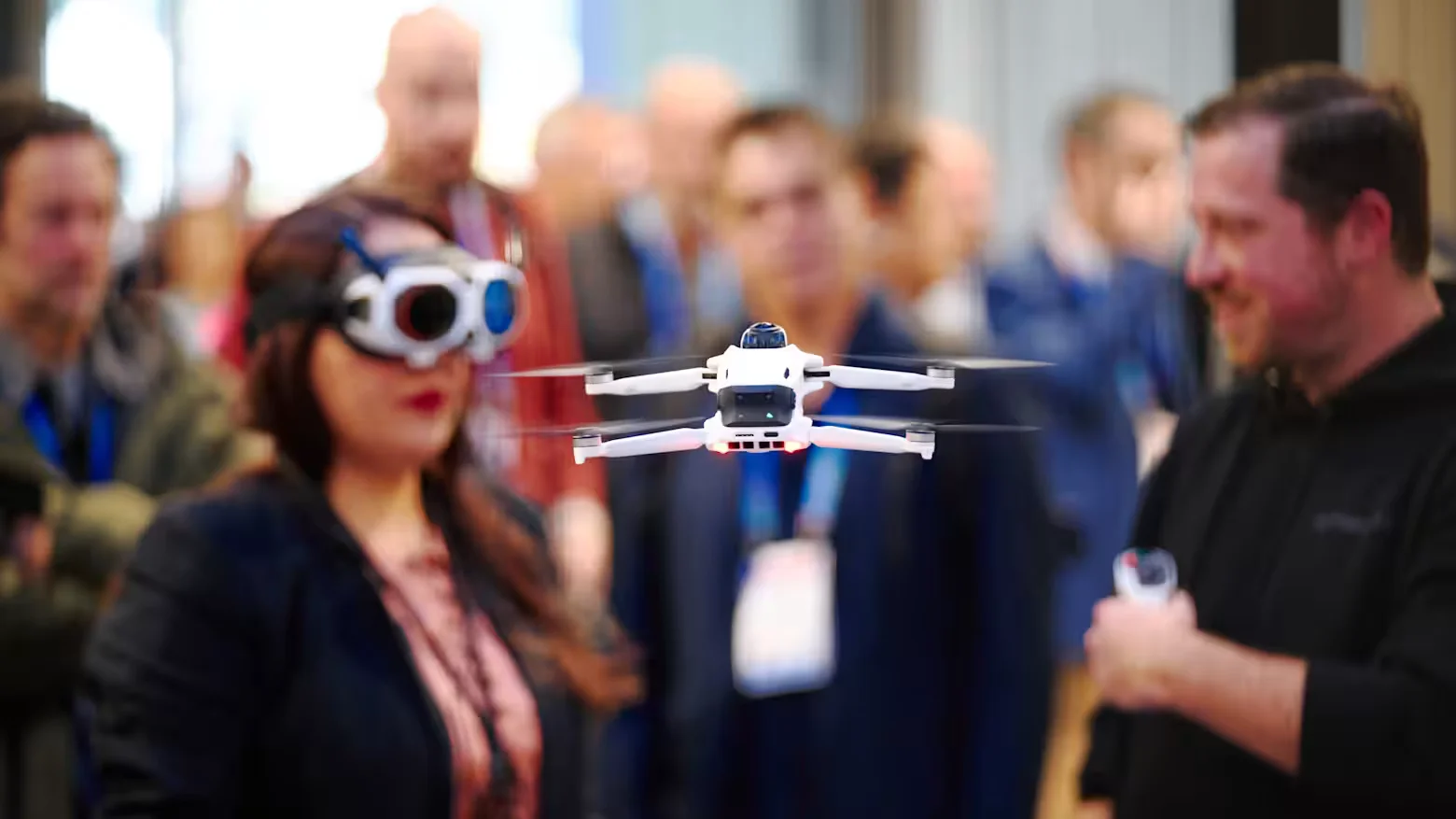
The highlight however came from Insta360 owned drone developer Antigravity. Antigravity presented the A1 drone. The A1 launched in early December. It carried a built in 360 degree camera and a flight platform built to feel familiar to action camera fans. This approach gives Insta360 a natural way to move its existing user base into flying cameras.
The placement of bright yellow Insta360 shopping bags around the entire CES floor acted as visual branding. CES visitors are used to seeing Nikon bags. Nikon skipped CES this year and Insta360 stepped into that visual space without saying a word. That move drew attention because it showed confidence and a desire to compete for mindshare in an environment where large global brands watch every detail.
Antigravity set the A1 price near one thousand five hundred dollars in the United States. The model is already live on Amazon and Best Buy. Antigravity reports strong response in China and in the United States. That level of excitement suggests that customers are ready to explore new companies in this space. Many first time drone owners may arrive from the action camera crowd. Others may arrive from users who want to avoid the DJI dispute with US agencies.
Insta360 co founder Max Richter explained the reason for this strategic timing. The United States contains millions of hikers, athletes, campers and adventure sports fans. Those groups want aerial capture and smooth panoramic video. Richter said the United States has huge potential because customers here already know the action camera identity that Insta360 built.
Insta360 Moves As DJI Faces Limits That Slow DJI Expansion
The timing for Insta360 arrives during a difficult period for DJI. DJI still holds the largest share of the hobby drone market worldwide. Yet DJI faces more restrictions inside the United States. Late in 2025 the Federal Communications Commission listed DJI, Autel and several other foreign drone firms on a covered list. That list marks firms that Washington currently views as a risk to national interests. That status blocks companies on the list from gaining approval for future models or critical flight components inside the United States. Current models are not removed from stores but future growth becomes uncertain.
DJI did win approval for a panoramic drone called Avata 360 on November 19. Yet retail sales have not begun in the United States. This delay increases tension because DJI spent several years trying to avoid further restrictions. The United States defense budget required DJI to hand its systems to an unnamed national security agency for a technical audit by December 23. DJI claims it requested reviews from several federal agencies to comply with that condition. DJI says none responded. DJI sits in a legal fight with the Defense Department over inclusion on a list of firms that Washington believes support military activity in China.
At Squaredtech.co we see a structural pattern. National policy factors add weight to tech competition. DJI appears stuck in procedural limbo. Every new drone must clear regulatory gates that may slow the arrival of new products. This gap creates space. Insta360 knows that American customers have few fresh models from DJI to compare against right now.
Insta360 and Antigravity say they are not blind to these issues. Richter says there is always a risk that US agencies could place Insta360 on a similar list. He does not expect it but he refuses to rule it out. He says the company will do whatever it must for compliance. His position signals two commitments. Insta360 wants to obey US guidelines. Insta360 wants to keep investing in US sales rather than step back out of caution.
Tariffs remain another variable. Richter says the company sells premium gear. Premium margins give Insta360 room to absorb tariff costs without panic. He describes the cost pressure as manageable. That view means customers in the United States may see fairly stable prices even if international trading friction continues.
Michael Shabun, who serves as chief executive of Antigravity, framed the US market as critical for expansion. He pointed out a major concern that appears in every US meeting about Chinese technology. That concern centers on data security. Shabun says Antigravity stores flight related data on AWS inside the United States. He says the data remains inside US servers. That comment acknowledges one of the reasons Congress stays focused on drone makers from China. US lawmakers worry that flight data could support spying or surveillance. Antigravity sees value in calming that fear.
Shabun also revealed a unique system inside the A1. The drone uses a payload detection feature. This feature stops the A1 from launching if a user attaches accessories that could harm people. Technically that safety feature reduces the risk of a drone being modified for unsafe use. Strategically it shows that Insta360 wants to avoid headlines that could place it under the same microscope that DJI currently faces.
Antigravity operates as an independent business structure. Insta360 owns a large share and supplies its lenses, computational image stitching and flight camera software. Shabun says Insta360 is a public company while Antigravity remains private. Antigravity wants to go public in the United States eventually and the company includes funding from US venture capital and private equity firms. That fact signals confidence from domestic investors. It also suggests the company plans long term US presence.
Shabun said Washington has increased screening of US investment flowing into sensitive Chinese technology areas. That includes artificial intelligence, quantum research and advanced chip development. However Antigravity has not felt any limitation on its funding pipeline. Shabun says American investors still choose to place capital in the company.
Insta360 Uses Technology And Timing To Position Insta360 For Growth
If we step back and look at this moment from a Squaredtech.co lens we see an industry transition. Insta360 tries to build a new category identity that blends action cameras, aerial capture and AI processing. The company has earned trust in imaging through its panoramic cameras and mobile accessories. The move into flying imaging tools brings that same DNA into the air. DJI once reshaped drones by making them simpler to fly. Insta360 may reshape drones by making them simpler to record and share.
The current American market conditions help Insta360. DJI faces deeper scrutiny. Autel shares that burden. Customers who feel uncertain may look for alternative makers. Insta360 fills that space with new hardware, prominent CES presence and bold branding. At the same time Insta360 cannot relax. The US has shifted policy rules several times in the past five years. Future court decisions or legislative actions could still restrict foreign drone firms further.
This brings us back to product strategy. Insta360 will need to deliver consistent updates, reliability and transparent security. US buyers want clear messages on where their data lives. US regulators want clear evidence that hardware does not support foreign military activity. Investors want companies that can survive legal and political hurdles.
Insta360 enters this mix with a pitch built on imaging excellence. The A1 makes sense for action sports fans. The AI webcam makes sense for remote workers and content creators. CES gave Insta360 a spotlight window at the exact moment DJI had to play defense.
From our perspective the next twelve months will define the trajectory of Insta360 inside the United States. If Antigravity products gain adoption and avoid policy friction then Insta360 may emerge as the strongest new force in consumer drones. If future restrictions expand to new companies from China then Insta360 may face the same steps DJI is dealing with today.
What happens next will depend on regulators, customers and continued investment. For now the picture is clear. Insta360 is here. Insta360 wants to stay. Insta360 wants a share of the sky.
Stay Updated: Gadgets

