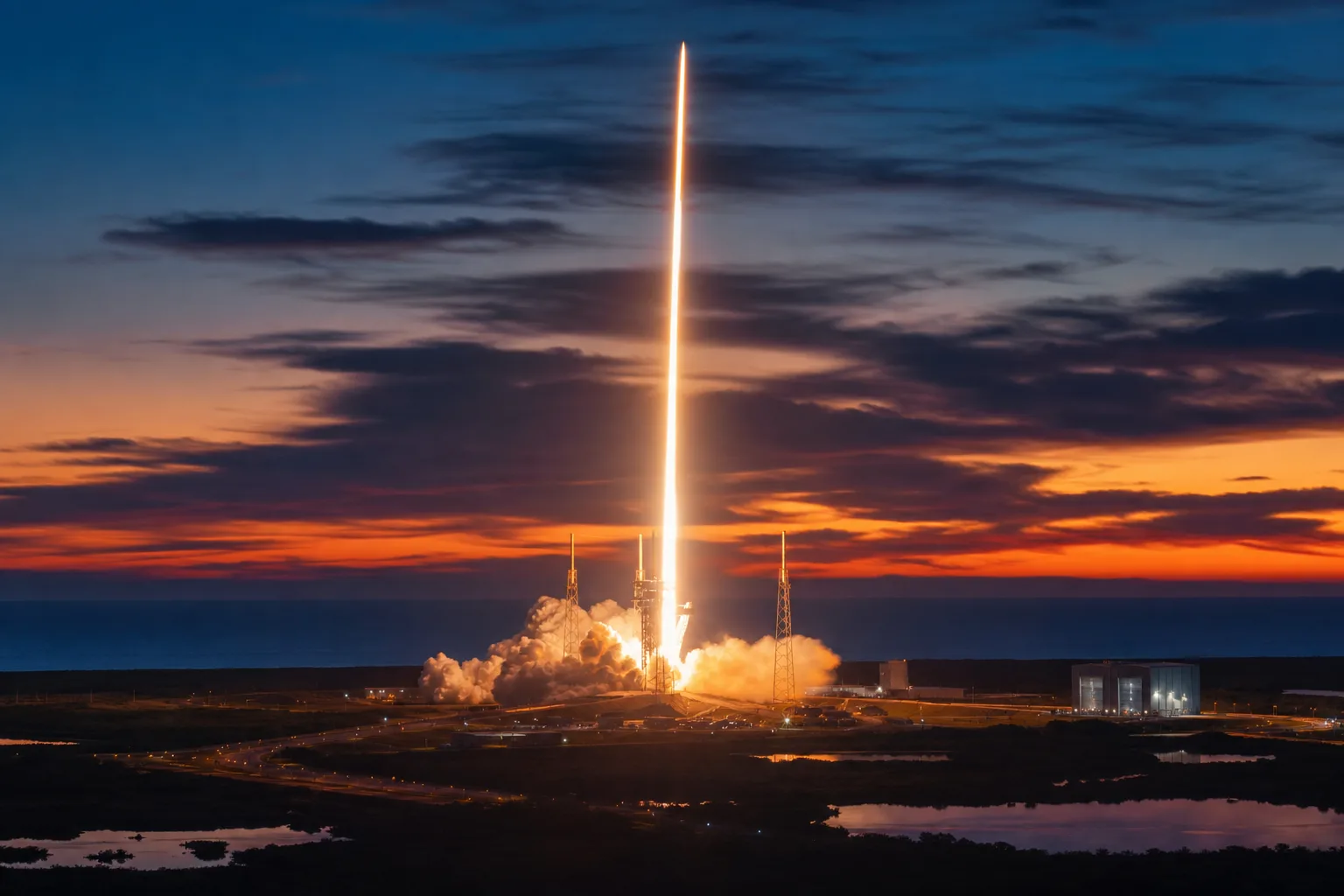
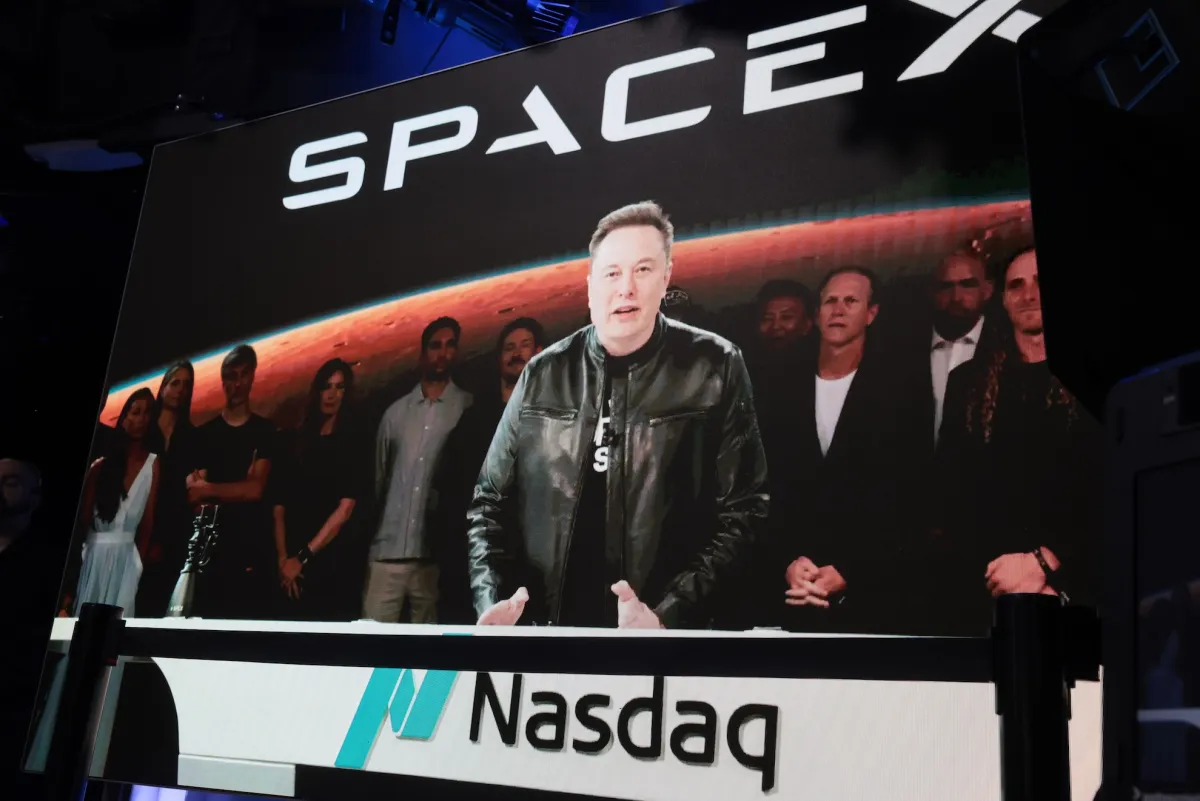
The SpaceX IPO was always going to be a big deal. But few people expected it to land quite this hard. By market close on Friday, Elon Musk’s rocket and satellite company had hit a market cap of $2.1 trillion — surpassing Tesla, overtaking every U.S. company except Nvidia, Apple, Alphabet, Microsoft, and Amazon, and instantly rewriting the conversation about what the future of transportation actually looks like. This isn’t just a financial milestone. It’s a signal about where the industry’s centre of gravity is shifting.
- The SpaceX IPO closed its first trading day at a $2.1 trillion market cap, surpassing Tesla’s $1.52 trillion valuation.
- SpaceX IPO documents hint at a major equity issuance, fuelling speculation of an eventual Tesla merger.
- Waymo paid $220 million for a 5,500-acre Apple-linked proving ground in Arizona, signalling serious scaling ambitions.
- GM is developing sodium-ion batteries for grid-scale energy storage, partnering with startup Peak Energy.
Table of Contents
SpaceX IPO: The Numbers That Matter
Tesla closed the same day at $1.52 trillion — still an enormous figure by any measure, but now firmly in SpaceX’s rearview mirror. Think about that for a moment. The company that spent years as the poster child for the EV revolution, that turned Musk into the world’s most famous tech CEO, has just been lapped by his other company. A rocket manufacturer. One that, until recently, wasn’t even publicly traded. The SpaceX IPO marks the first time that reality has been priced into public markets.
The SpaceX IPO has attracted enormous media coverage — and rightfully so — but two details deserve closer attention for anyone tracking mobility and transportation trends. First, the sheer scale of the valuation tells you how much investor appetite there is for infrastructure bets: Starlink’s satellite internet business alone is widely seen as the engine behind SpaceX’s sky-high numbers, and its role in connecting autonomous vehicles, logistics networks, and remote operations isn’t going away. Second, the gap between SpaceX and Tesla is already being read as a referendum on which Musk company carries more long-term strategic weight.
Is a SpaceX–Tesla Merger Actually Coming?
Here’s where it gets genuinely interesting. Buried in SpaceX’s S-1 filing is a sentence that wasn’t there before: ‘We may issue a significant amount of equity in connection with future transactions.’ That’s not boilerplate. Companies don’t drop language like that into IPO documents without a reason, and the reason most analysts are landing on is Tesla. A deal of that scale — combining the world’s leading EV maker with its most valuable private-turned-public space company — would be one of the largest corporate mergers in history. The SpaceX IPO filing has effectively put that possibility on the table for every institutional investor to weigh.
SpaceX president and COO Gwynne Shotwell didn’t exactly shoot the idea down either. Speaking to CNBC on opening day, she acknowledged that a merger ‘might make Elon’s life a little easier.’ That’s a carefully worded non-denial from someone who doesn’t tend to speak loosely. Whether a full merger materialises or the two companies find some looser structural arrangement, the financial and operational logic is there: SpaceX’s Starlink connectivity, Tesla’s vehicle and energy hardware, and a shared manufacturing philosophy that Musk has spent years building across both companies. Analysts tracking the SpaceX IPO closely say the merger question is now the single most-watched storyline in the deal’s aftermath.
Not everyone wins equally if a deal happens, though. Lower-tier SPV (Special Purpose Vehicle) investors — the kind who got into SpaceX at earlier stages through secondary market vehicles — could find themselves significantly diluted in any large equity issuance. That’s a wrinkle worth watching, and one that SpaceX IPO prospectus language does little to resolve.
GM’s Battery Strategy Gets Complicated
Away from the drama of the SpaceX IPO, General Motors is quietly making some consequential decisions about battery chemistry — and they’re messier than the company’s official messaging suggests. The 2027 Chevrolet Bolt is getting lithium-iron-phosphate (LFP) cells from a foreign supplier identified as CATL, China’s dominant battery manufacturer. Earlier reporting framed the CATL arrangement as a temporary stopgap. But sources familiar with GM’s internal plans say it’s more settled than that — at least for the Bolt.
Meanwhile, GM is beginning LFP cell production at one of its Ultium plants, but those cells aren’t destined for EVs. They’re headed to energy-storage systems being built by LG Energy Solution. GM hasn’t committed to using LFP chemistry in any EV beyond the Bolt, which leaves a meaningful strategic question unanswered: if LFP is good enough for the grid, why not for the car?
That question matters even more given GM’s other battery announcement this week. The automaker revealed plans to sell a commercial energy-storage system targeting AI data centres and the electricity grid, developed in partnership with startup Peak Energy. The chemistry here is sodium-ion — an entirely new direction for GM, and one that signals the company sees serious money in stationary storage, not just EVs. With Ford also pushing into energy storage, and startups like Redwood Energy crowding the space, Tesla’s Powerwall and Megapack businesses suddenly have a lot more competition coming.
Waymo’s $220 Million Land Grab — and What It Tells Us About Apple
One of the week’s more quietly significant stories involves a large piece of desert in Arizona. Waymo has acquired a 5,500-acre proving ground for $220 million from a Delaware shell company called Route 14 Investment Partners LLC — which turns out to be linked to Apple. Yes, that Apple. The one that officially killed its autonomous car project back in 2024.
The sale is a clean, transactional full stop on Apple’s automotive ambitions. The company spent the better part of a decade and reportedly billions of dollars on Project Titan before walking away. Now Waymo — which has been methodically expanding its robotaxi operations in San Francisco, Phoenix, and Los Angeles — gets a massive private testing ground to simulate scenarios that public roads can’t reliably provide. Rare weather events, edge-case intersections, high-speed emergency manoeuvres: a 5,500-acre facility gives Waymo the kind of controlled environment that’s genuinely hard to come by at scale.
For Waymo, this is exactly the kind of infrastructure move a company makes when it’s serious about expanding beyond a handful of geofenced cities. Waymo’s own research arm has been publishing safety and simulation data for years, but physical proving grounds accelerate development in ways that purely virtual simulation can’t replicate. Expect this facility to show up in Waymo’s testing data within the next 18 months.
Lucid Motors Loses a Key Executive
Lucid Motors is navigating some internal turbulence. Emad Dlala, a senior executive who had been promoted to a prominent leadership role just months ago, has left the company. His departure is the first major executive exit since Lucid brought in Silvio Napoli as CEO in April — and sources suggest it may not be the last.
This is the kind of quiet instability that can be easy to miss against bigger headlines, but it matters. Lucid makes one of the most technically impressive EVs on the market — the Air sedan holds the range record for any production electric vehicle — but it’s been losing money at a ferocious pace and has struggled to translate engineering excellence into meaningful sales volumes. Leadership continuity is critical right now, particularly as the company tries to ramp production of more affordable models to expand beyond its ultra-luxury niche. A string of executive departures at this stage would be a concerning sign.

Deals, Funding, and a Few Things Worth Watching
Beyond the headline stories, the week produced a decent crop of funding rounds and moves worth tracking. CameraMatics, an Irish AI fleet-safety company, closed a €49 million round led by Blume Equity, the Ireland Strategic Investment Fund, and Goodbody Capital Partners — a meaningful vote of confidence in video telematics as fleets electrify and insurers demand better data. Evotrex, which makes hybrid RV travel trailers, pulled in $30 million in Series A funding from a consortium of Chinese and Hong Kong investors. Volteum, a fleet management software startup focused on mixed EV fleets, raised €2.5 million led by Movens Capital.
On the autonomous shipping front, Clear Robotics — an Indian startup building autonomous vessels — raised a $1.75 million pre-Series A from maritime-focused Shipsfocus Ventures. It’s a small round, but autonomous maritime is one of those sectors that tends to move quietly until it doesn’t.
Two potential IPOs are also worth flagging. Indian quick-commerce startup Zepto has unveiled plans for a public offering that could value the company at around $1 billion. And Zūm, which operates electric-bus-based school transportation services, is reportedly talking to banks about its own IPO. School transportation is a massively underserved market from an electrification standpoint, and Zūm has been one of the few companies making a credible push into it.
Meanwhile, Rivian has started deliveries of its R2 SUV — the more affordable sibling to the R1T and R1S that the company is counting on to drive real volume. How quickly Rivian can ramp R2 production will be one of the defining data points for the EV startup story in the second half of 2026. And with the SpaceX IPO now reshaping how investors think about transportation infrastructure at every level — from the road to low Earth orbit — the stakes across the whole sector feel a little higher than they did a week ago. Whether you’re tracking the SpaceX IPO for its market implications, its merger speculation, or its signal about the future of mobility, one thing is clear: the conversation it has started is nowhere near finished.
Frequently Asked Questions
What valuation did the SpaceX IPO reach on its first day of trading?
SpaceX closed its opening day of trading with a market cap of $2.1 trillion, making it the sixth most valuable U.S.-listed company behind Nvidia, Apple, Alphabet, Microsoft, and Amazon — and ahead of Elon Musk’s other publicly traded company, Tesla.
Could SpaceX and Tesla merge after the SpaceX IPO?
It’s possible. SpaceX’s S-1 filing includes language warning investors of potential equity issuance ‘in connection with future transactions.’ SpaceX president Gwynne Shotwell said on CNBC that a merger ‘might make Elon’s life a little easier,’ adding serious weight to the speculation.
Why did Waymo buy a proving ground linked to Apple?
Waymo acquired a 5,500-acre testing facility in Arizona for $220 million from a Delaware shell company tied to Apple. The purchase signals Waymo is aggressively scaling infrastructure for its autonomous vehicle operations, while also marking the definitive end of Apple’s car project.
What is GM’s strategy for batteries beyond electric vehicles?
GM is developing a sodium-ion battery chemistry for grid-scale energy storage, partnering with startup Peak Energy. Separately, it’s producing lithium-iron-phosphate cells at an Ultium plant, though those are earmarked for energy storage systems made by LG Energy Solution, not EVs.