Table of Contents
LG is pushing the boundaries of home display technology at CES 2026 with the unveiling of the LG Gallery TV, a canvas-style television designed to blur the line between fine art and premium screen tech. As AI-driven personalization and luxury home décor continue to converge, LG’s latest Gallery TV positions itself as a direct rival to Samsung’s The Frame—while introducing deeper AI intelligence and Mini LED performance. CES 2026, running January 6–9 in Las Vegas, marks a key moment for LG as it redefines how screens live on our walls.
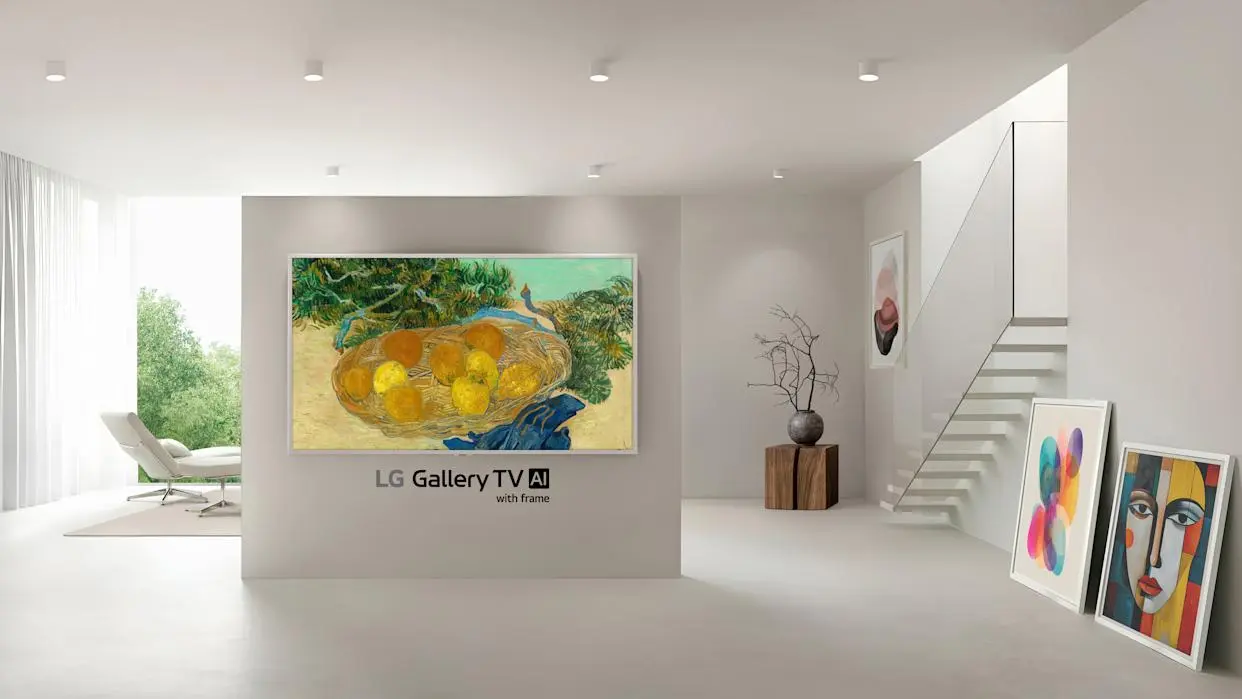
Designed for art lovers and design-conscious homeowners, the LG Gallery TV allows users to display classic masterpieces, curated collections, or AI-generated artwork while maintaining the performance of a high-end 4K television. With a flush wall mount, interchangeable magnetic frames, and museum-grade color accuracy, LG is clearly targeting the growing market where technology meets lifestyle.
LG Gallery TV Features Revolutionize Home Art Displays
The LG Gallery TV is available in 55-inch and 65-inch sizes and mounts nearly flush to the wall, measuring under one inch in depth. Magnetic frames snap on effortlessly, offering wood, metal, and matte finishes to match interior styles. This design-first approach allows the TV to function as wall art when idle and a premium display when active.
Under the surface, LG opts for Mini LED backlighting, delivering deep contrast, precise local dimming, and peak brightness levels reaching up to 2,000 nits. This provides OLED-like contrast without burn-in risk, making it ideal for static art displays. The panel covers 100% of the DCI-P3 color gamut, ensuring accurate tones across paintings, photography, and video content.
AI-Powered Gallery Experience
At the core of the LG Gallery TV is the Alpha 7 AI processor, which uses neural networks to upscale images, analyze textures, and preserve brushstroke detail in artwork. Gallery Mode dynamically adjusts brightness, contrast, and color temperature based on ambient lighting, creating a canvas-like appearance throughout the day. Anti-glare coatings further reduce reflections, allowing artwork to remain visible even in bright rooms.
LG worked with museum curators and art specialists, including consultants linked to major institutions such as MoMA and the Louvre, to calibrate color accuracy. With Delta E values under 2, the display achieves near museum-grade realism, making digital art feel tangible and immersive.
LG Gallery+ Content and Generative AI Art
LG’s Gallery+ subscription service gives users access to more than 4,500 artworks, spanning classical paintings, modern art, and rotating exhibitions. Subscribers can curate playlists, schedule daily rotations, and explore themed collections. The service mirrors subscription-based art platforms while leveraging LG’s display strengths.
Generative AI adds a personal layer. Users can create custom artwork through text prompts such as “sunset over mountains” or “abstract blue calm,” producing unique visuals directly on the TV. Personal photos can also be framed and displayed with gallery-style presentation, synced seamlessly from mobile devices via cloud integration.
Smart Home Integration and webOS AI
Running on webOS 25, the LG Gallery TV integrates voice control and smart home connectivity. AI agents curate art based on mood, time of day, or voice commands like “show relaxing art.” Integration with Apple HomeKit, Alexa, and Google Assistant allows lighting, soundbars, and room ambiance to sync automatically.
Energy efficiency is also emphasized. Motion sensors power the display down when rooms are empty, and Mini LED technology reduces overall power consumption compared to traditional OLED panels.
Competition and Market Positioning
The art TV market continues to expand, with global sales growing sharply as remote work and luxury home upgrades rise. Samsung’s The Frame pioneered the category, while Hisense’s CanvasTV introduced lower-cost alternatives. LG differentiates itself through Mini LED brightness, advanced AI texture rendering, and deeper personalization.

Pricing is expected to start around $1,499 for the 55-inch model and $1,999 for the 65-inch version, with Gallery+ content subscriptions priced separately. Early adoption will focus on premium buyers, with broader market expansion likely as production scales.
Ambient adaptation impresses. Dawn light softens images. Night mode deepens blacks. AI learns preferences.
CES 2026 Spotlight and What Comes Next
At CES 2026, LG will showcase live art swaps, AI-generated visuals, and hands-on frame customization. Visitors will see how AI adapts artwork in real time and how easily the Gallery TV integrates into modern living spaces. Pre-orders are expected to open in Q1 2026, with retail demos planned across major markets.
Looking ahead, LG is exploring artist partnerships, exclusive digital drops, and future software updates to expand Gallery+ content. While emerging technologies like Micro LED remain on the horizon, Mini LED serves as a powerful bridge between performance, longevity, and design.
The LG Gallery TV at CES 2026 represents a strategic shift where AI, display technology, and interior design intersect. By combining Mini LED performance, generative AI art, and curator-approved accuracy, LG delivers more than a television—it offers a living gallery. As CES 2026 confirms, art TVs are no longer niche products, and LG is positioning itself at the center of this evolving category.