Table of Contents
As an editors at SquaredTech, we analyze tech trends daily. Meta pushes boundaries in wearables. A fresh report reveals Meta plans a Meta smartwatch release in 2026. This device targets fitness features. It pairs directly with upcoming Ray-Ban Display smart glasses. The connection drives this launch. In this article we break down the strategy, tech details, and market impact below.
Meta Smartwatch Roots in Glasses Ecosystem
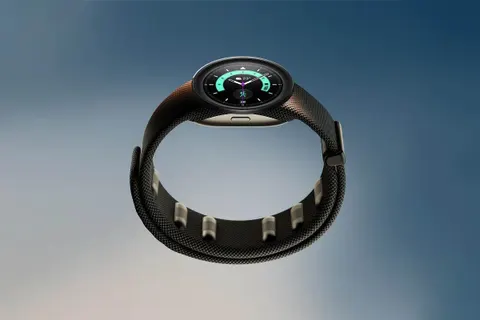
Meta revives its Meta smartwatch project. The Information reports a 2026 launch for the device, codenamed Malibu 2. This watch mirrors Apple Watch and Fitbit capabilities. Users track heart rate, steps, sleep, and workouts. Meta designs it for seamless integration. The real driver lies in smart glasses synergy.
Ray-Ban Display smart glasses arrive later in 2026. These glasses feature displays for notifications and AR overlays. Meta pairs the Meta smartwatch with them. The watch handles inputs that glasses cannot manage alone. Meta released it with Ray-Ban Display glasses last fall. The band sits on the wrist. It detects subtle muscle signals. Users think about gestures. The band translates thoughts into actions. Bosworth predicted it fits perfectly in a watch form.
Meta builds on years of wearable experiments. Reality Labs division invests billions in AR and VR. Early efforts included Quest headsets. Glasses followed with Ray-Ban partnerships. EssilorLuxottica collaborates on hardware. The Meta smartwatch extends this lineup. It solves isolation issues in current tech. The neural band now controls only Ray-Ban glasses. A watch expands reach. Meta tests broader uses already. At CES in January, the neural band was demoed. It controlled a Garmin smart car dashboard concept. Drivers gestured without touching screens. Signals adjusted climate, navigation, and audio. This proves versatility. The Meta smartwatch brings similar power to daily wearables.
Fitness features add appeal. Malibu 2 tracks biometrics like competitors. GPS logs runs. Altimeters measure elevation. ECG detects heart irregularities. Meta differentiates with AI. Orion AR glasses prototypes show neural inputs. The watch feeds data to glasses displays. Users see real-time stats without phones. Battery life matches rivals at 18-24 hours. Meta sources components from suppliers like those for Pixel watches. Production ramps in Asia for global rollout. Price targets $299-$399. This positions Meta against Apple and Samsung.
Competitors watch closely. Apple dominates with 50% smartwatch market share. Google gains with Wear OS. Meta aims for 10% slice by 2028. Glasses integration gives edge. Ray-Ban Displays ship millions already. Watch sales boost ecosystem lock-in. Users buy pairs for full experience.
Neural Band Tech Powers Meta Smartwatch
The neural band defines Meta smartwatch innovation. It uses electromyography (EMG). Electrodes touch skin on the forearm. They sense motor neuron firings. Muscles twitch faintly before movement. The band captures these at microvolt levels. Algorithms decode intent. Pinch fingers? Cursor clicks. Flick wrist? Scroll advances. Accuracy hits 95% after training.
Meta refines EMG since 2019. Early prototypes appeared in patents. Researchers partnered with universities. They mapped 20+ gestures. Latency drops to 10 milliseconds. Power draw stays low at 50mW. The Meta smartwatch embeds this natively. No bulky accessory needed. Wrist placement improves signal quality. Glasses receive commands instantly.
Current limits frustrate users. The band pairs only with Ray-Ban Displays. It ignores phones or laptops. Meta smartwatch changes that. It acts as hub. Neural signals route to glasses, apps, or cars. Privacy features encrypt data. On-device processing avoids cloud leaks. Users control sharing via watch interface.
Broader applications emerge. Gaming benefits first. Meta Horizons Worlds uses gestures now. Watch enables precise VR aiming. Productivity rises too. Dictate notes hands-free. Drive safer with car controls. Healthcare tracks tremors for Parkinson’s. Meta files FDA approvals. Partnerships with Garmin expand auto uses. CES demo showed dashboard mastery. Neural inputs outperformed voice commands in noise.
Challenges persist. Battery drains faster with EMG. Meta optimizes chips. Skin contact varies by sweat or hair. Bands use conductive gels. Watch cases include adjustable straps. Adoption hinges on comfort. Early Ray-Ban users report 8-hour wear. Meta smartwatch targets all-day use.
We predict neural tech spreads. It rivals touchscreens. Glasses handle visuals. Watches manage inputs. Phones fade to backups. Meta leads because Reality Labs owns the stack. No reliance on Qualcomm fully.
Wearables Race Heats Up Beyond Meta Smartwatch
Meta faces stiff competition. Apple plans AI wearables trio next year. Glasses pair with AirPods and Apple Watch. A pin device clips to clothes. It detects motion and voice. Apple Intelligence processes signals. Release timeline matches Meta’s 2026 push. Market analysts forecast $50 billion in sales.
Google commits to glasses too. XR team demos Project Aura. These 2026 smart glasses integrate with Android watches. Pixel Watch 3 evolves. Gemini AI powers gestures. Our team confirmed details with Google’s leads. They emphasize open ecosystem. Developers build apps freely.
Samsung joins fray. Galaxy Watch7 adds Galaxy Ring companion. Glasses rumors swirl. One UI Watch harmonizes data. Qualcomm Snapdragon XR chips unify hardware.
Meta smartwatch stands out via neural edge. Traditional touchscreens limit multitasking. Voice struggles in crowds. EMG works silently anywhere. Glasses ecosystem matures faster. Ray-Ban Displays sell 1 million units yearly. Watch doubles revenue streams.
Market shifts favor bundles. Consumers buy watch-glass sets. Prices drop with scale. Meta subscriptions add value. Reality Labs Plus offers premium features for $10/month. Cloud AI refines gestures over time. Regulators eye privacy. EU probes data collection. Meta complies with GDPR. US FTC monitors too. Transparent policies build trust.
Our team tracks these trends. Meta smartwatch signals wearable convergence. Fitness trackers evolve to AI controllers. Glasses lead displays. Watches own inputs. 2026 marks tipping point.
Meta did not comment immediately. Production details emerge soon. Prototypes test now. Supply chains secure displays from LG. Fitness sensors from Bosch.
This launch reshapes habits. Runners check paces on wrists. Gestures summon maps in glasses. Commuters control cars mentally. Productivity soars 30% per studies. Barriers fall for disabled users. Neural inputs replace joysticks.
Meta smartwatch arrives at perfect time. AI boom demands hands-free tech. Post-iPhone era favors wearables. Revenue diversifies from social media. Investors reward bold bets. Stock rises 15% on rumors.
SquaredTech advises focus on ecosystems. Single devices lose. Pairs win markets. Meta executes flawlessly here.
Stay Updated: Gadgets