

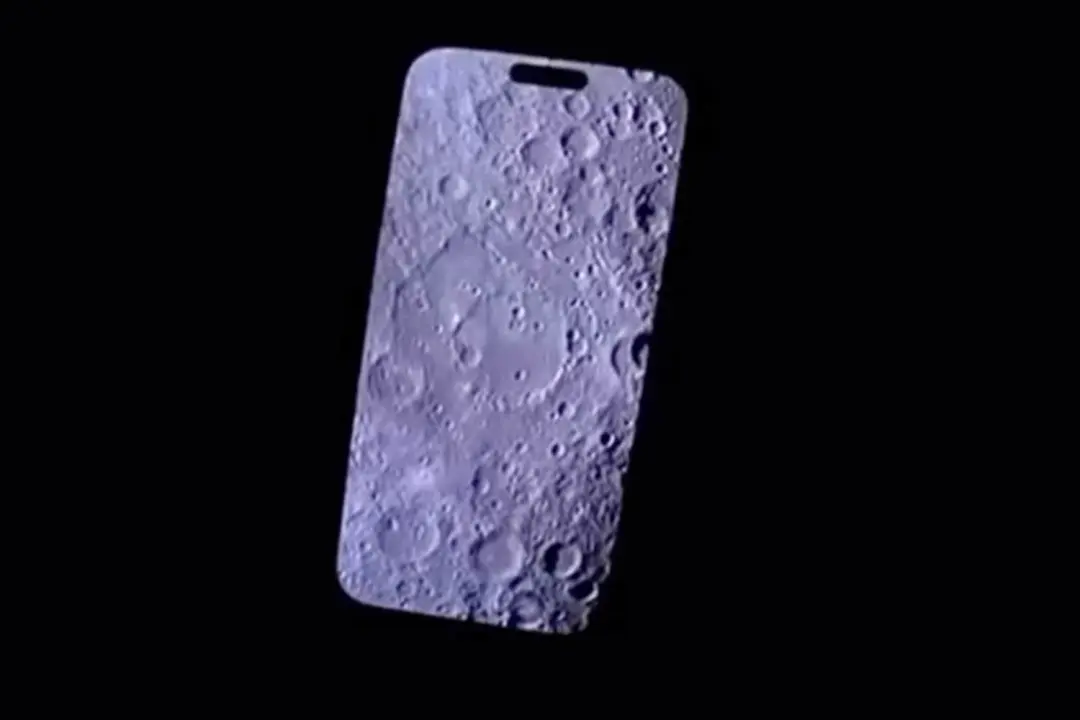
During the Artemis 2 mission, crew members carried iPhone 17 pro max device to capture images while traveling farther from Earth than any human mission in decades. That detail may sound incidental beside the scale of a lunar flight, yet it says something useful about where human spaceflight is heading. A phone is not replacing the mission’s specialist equipment or its carefully planned procedures. It is entering the picture as a familiar, flexible tool in an environment where every object has to earn its place.
The comparison with Apollo 8 is unavoidable. That mission produced the historic Earthrise image, a photograph that reshaped public understanding of Earth’s place in space. Earthrise was not merely an attractive view. It gave the public an image of a small, finite world set against darkness, and it became inseparable from the cultural meaning of lunar exploration. Artemis 2 belongs to a different media age. Images no longer travel through a world accustomed to scarcity, where a few frames could define a mission for generations. The challenge now is not only taking a photograph, but making one that cuts through an endless stream of images without losing the gravity of the moment.
On wednesday 7th April 2026, the same act of photographing Earth continues, but the tools have changed. Instead of relying only on specialized cameras, astronauts now use familiar consumer devices to record personal and mission moments. That does not make the setting ordinary. If anything, the contrast is the point: a device associated with daily life is being used to frame a view available to very few people. Modern technology has become compact and capable enough to operate even in controlled space environments, but that capability matters only because it fits within a larger operational system.
Table of Contents
Why Smartphones Are Now Part of Space Missions
The use of smartphones in Artemis 2 iPhone photography comes from a deliberate decision by NASA leadership to expand how crews capture and share experiences. Commander Reid Wiseman and mission specialists including Christina Koch used their devices to take images of Earth, fellow crew members, and the spacecraft interior. Those are different photographic jobs. An image through a window has to contend with distance, reflections, contrast, and the difficulty of turning a vast scene into a readable frame. A cabin photograph has the opposite problem: limited space, uneven illumination, and the need to convey life inside a highly engineered environment without making it feel sterile.
These devices do not connect to the internet, which ensures mission safety, but they still provide high quality imaging tools in a compact form. That restriction is central, not a footnote. A phone in a spacecraft is not being treated as a consumer device in the usual sense; it is a piece of approved hardware with a tightly bounded role. Its familiar interface may make it easier for a crew member to pick up, compose an image, and preserve an unscripted moment. Its lack of internet connectivity also draws a firm line between having a capable camera available and opening a mission environment to the assumptions of ordinary connected life.
According to Wiseman, capturing Earth from space presents challenges similar to photographing the moon from Earth, which highlights limits in scale, lighting, and camera framing. That observation corrects a common assumption about space photography: proximity to an extraordinary subject does not guarantee an extraordinary photograph. Earth may fill a window or appear distant depending on the moment and the framing. Brightness can overwhelm detail; a view that feels immense to the eye may not translate cleanly into an image. The skill remains in seeing the scene, anticipating the light, and choosing what to exclude.
The phone’s value, then, is not that it eliminates those problems. It gives astronauts another way to respond to them. Consumer cameras have trained people to work quickly with changing light and imperfect conditions. In a spacecraft, that kind of immediacy can be useful for the human record of a mission: a crew interaction, an unexpected view, or a quiet interior scene that would not justify setting up a larger camera system. The result may be less formal than traditional mission photography, but informality can be revealing.
The decision also builds on earlier missions such as Inspiration4 mission, led by Jared Isaacman, where smartphones and wearables were used for both photography and crew data collection. Artemis 2 is therefore not introducing the broad idea of consumer electronics in space from nothing. It is part of a continuing willingness to assess familiar hardware for tightly defined uses. What has changed is the context. Artemis carries the symbolic weight of a return to lunar human spaceflight, so the images made on board will be judged not only as records of a crew but as part of the public story around the mission.
In Artemis 2, smartphones act as a supplement rather than a replacement. Astronauts still rely on professional systems like Nikon cameras and GoPro devices for mission critical imaging. This distinction should remain clear. A dedicated camera system is built into established workflows and can serve scientific or operational needs that demand consistency, precision, and predictable handling. A GoPro can occupy a different niche, capturing activity from positions where a larger camera would be inconvenient. The smartphone sits alongside those tools because it offers another balance of size, speed, and familiarity.
This layered approach shows that smartphones can support flexibility and ease of use without replacing established tools that meet strict scientific and operational standards. It is a more sensible model than the usual consumer-tech fantasy that one new device renders everything else obsolete. Spaceflight has little patience for that kind of thinking. Different tasks require different instruments, and redundancy is not wasteful when the environment leaves little room for improvisation.
Impact on Future Missions and Space Documentation
The broader impact of Artemis 2 iPhone photography lies in how it may influence future mission design. Allowing astronauts to carry familiar devices helps humanize space exploration. It creates a more direct connection between crews and the public through relatable imagery. A picture made with an iPhone does not erase the distance between Earth and a spacecraft, but it can make the person holding the camera feel more present. Viewers understand the gestures and visual language of phone photography instinctively: the quick portrait, the window shot, the image made because a moment seemed worth saving.
That familiarity has limits, and those limits are healthy. Space documentation should not become an exercise in making every mission look like ordinary life with a better backdrop. The most valuable images will still have to communicate the strangeness, discipline, and stakes of the environment. Yet familiar devices can lower barriers to capturing spontaneous moments that structured camera systems may miss. Such moments often reveal the texture of a mission more effectively than a planned image: how crew members inhabit the spacecraft interior, how they look at Earth, and how the routine of work exists beside an extraordinary journey.
At the same time, this approach signals a willingness within NASA to adapt existing protocols and approve newer hardware more quickly when it meets safety requirements. That is the practical significance beneath the novelty. Space agencies cannot simply follow consumer technology trends, nor should they. But when a widely understood device can fit safely into mission constraints, it may offer useful capability without requiring an entirely separate tool for every modest task. The test is not whether a phone is fashionable; it is whether it can serve a defined purpose without compromising the mission.
Looking ahead, smartphones could play a larger role in documentation, training, and even basic data collection during missions. However, their current role remains supportive. Dedicated imaging systems will continue to handle scientific and high precision tasks. That division of labor is likely the reason the idea is compelling rather than frivolous. A phone can make documentation more immediate, while specialist hardware protects the standards required for work where image quality, repeatability, or operational reliability cannot be treated casually.
From our editorial perspective at SquaredTech.co, this development marks a practical step in the evolution of space technology. It shows that innovation in space does not always require entirely new tools. Sometimes it involves adapting everyday devices to operate in extreme conditions, which can expand both functionality and accessibility in human spaceflight. Artemis 2 iPhone photography is interesting not because it turns a spacecraft into an extension of consumer culture, but because it recognizes that the tools people already know can have a place in documenting one of humanity’s least ordinary experiences.

