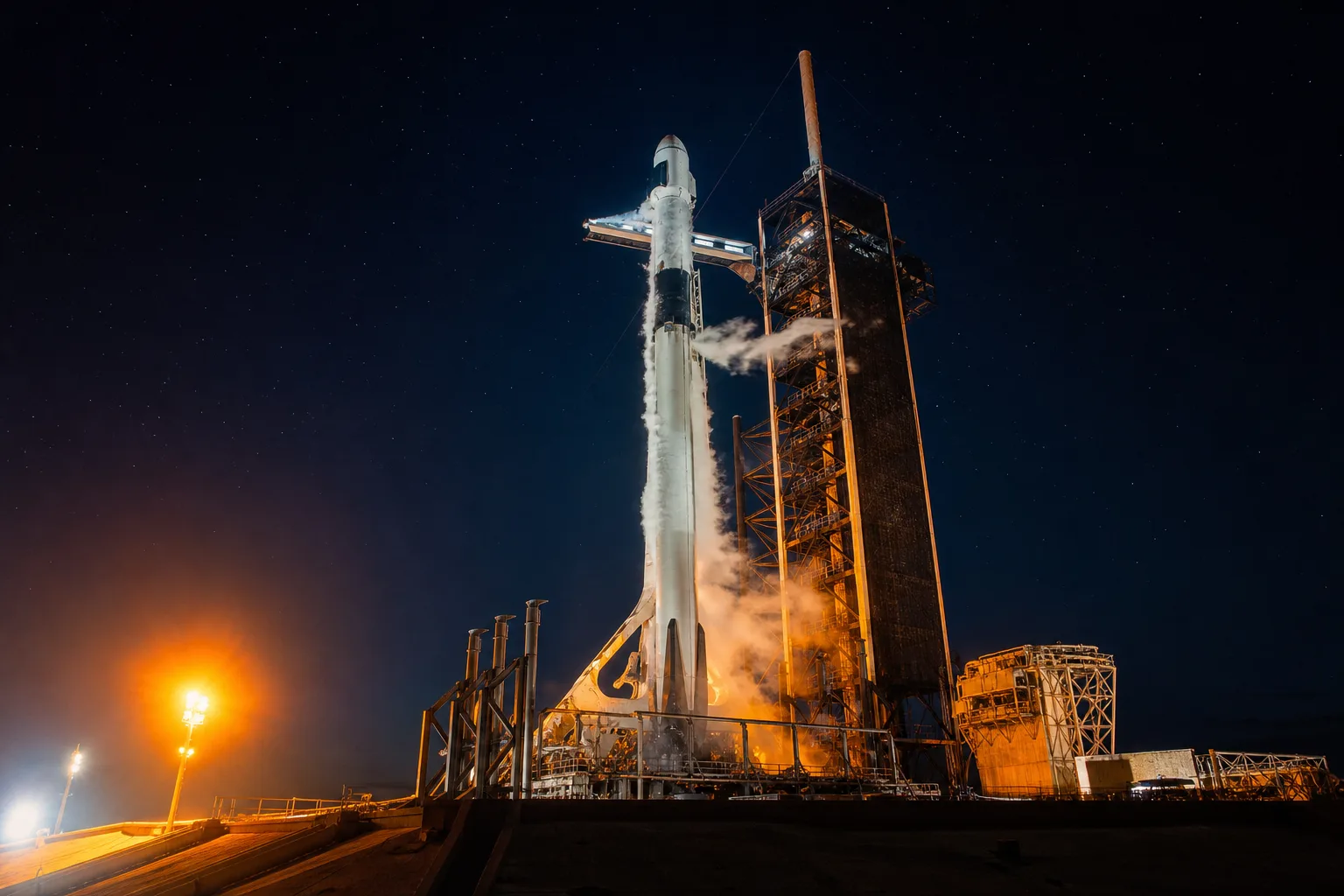
- The SpaceX IPO filing warns investors that new equity issuances could dilute ownership stakes in future transactions.
- SpaceX IPO documents target a staggering $1.75 trillion valuation — potentially the largest public listing in history.
- SpaceX reported $2.59 billion in operating losses in 2025, with its AI division alone burning $6.36 billion.
- Elon Musk retains voting control post-IPO through Class B shares carrying 10 votes each versus one for public investors.
Table of Contents
SpaceX IPO Comes With a Candid Warning Attached
The SpaceX IPO is shaping up to be one of the most anticipated — and most complicated — public market debuts in recent memory. Before investors even get a chance to pile in, though, SpaceX is telling them something they probably need to hear: the company might significantly dilute their ownership stake down the road. That warning, tucked into an amended IPO filing published on Monday, is not the kind of thing you typically see front and centre in pre-IPO hype cycles. It’s a signal worth paying attention to.
SpaceX disclosed in the filing that it “may issue a significant amount of equity in connection with future transactions” — which is careful legal language for: we’re probably going to do more big deals, and we’ll likely pay for them in shares. Whether those deals involve further AI acquisitions, satellite technology partnerships, or something else entirely remains to be seen. But the company isn’t hiding its ambitions, and it isn’t pretending that the current structure is the final one.
The Numbers Behind the World’s Potentially Biggest IPO
SpaceX is gunning for a $1.75 trillion valuation, which would make the SpaceX IPO the largest in history — surpassing Saudi Aramco’s record-breaking 2019 listing. The company plans to trade on Nasdaq under the ticker SPCX, with Goldman Sachs, Morgan Stanley, Bank of America, Citi, and JPMorgan signed on as lead underwriters. That’s essentially every major Wall Street name in one syndicate, which tells you something about how much fee revenue is at stake here, not just for SpaceX but for the banks jostling for a front-row seat.
SpaceX filed its IPO documents confidentially with the SEC back in April, then made them public in May. For a company that has operated largely outside public disclosure requirements for over two decades, the sudden transparency is jarring — and illuminating. The financials paint a picture of a business generating serious revenue but also spending at a pace that would make most CFOs sweat.
According to the filing, SpaceX posted $18.67 billion in revenue during 2025. Impressive, right? But the company also reported a $2.59 billion operating loss. The AI division — pulled in via the xAI acquisition — accounted for $6.36 billion in operating losses on its own. Starship R&D burned through roughly another $3 billion. These aren’t rounding errors. They’re structural cost centres that public market investors will need to get comfortable with.
xAI, X, and a Much More Complex Business Than Just Rockets
The SpaceX IPO is not really an IPO for a rocket company anymore. That framing hasn’t been accurate for a while, but the amended filings make it undeniable. After xAI acquired X (formerly Twitter) last year, SpaceX announced in February that it would in turn acquire xAI — folding Grok, X’s social infrastructure, and Musk’s broader AI operation into the same corporate entity that launches Falcon 9s and operates Starlink’s satellite constellation.
That’s a genuinely unusual structure. Investors buying into the SpaceX IPO are essentially getting exposure to orbital launch, broadband internet from orbit, generative AI, and a major social media platform — all under one roof. For some investors that’s a compelling bundle. For others, it’s an accountability nightmare: four very different businesses, four very different risk profiles, one stock price.
The xAI integration also explains much of the dilution warning. Big acquisitions paid in equity are standard practice in tech, and if SpaceX is planning further moves in AI or adjacent sectors — and the filing language strongly implies it is — then share issuances are a natural consequence. The company even flagged the specific risks of acquisition-related surprises, writing that it “may assume unexpected obligations or incur costs associated with acquired businesses, including litigation, regulatory compliance, environmental liabilities, or contractual disputes, which could result in material losses or divert management focus from ongoing operations.”
That’s not just boilerplate. Given that X arrived with significant legal and advertiser baggage, and that xAI’s Grok competes directly against OpenAI and Google’s Gemini in a crowded market, those warnings have real-world context behind them.
Musk Keeps the Keys — Public Investors Get a Seat, Not a Vote
Anyone expecting the SpaceX IPO to meaningfully shift control of the company is going to be disappointed. The dual-class share structure being implemented here is as lopsided as they come. Public investors receive Class A shares, each carrying a single vote. Elon Musk holds Class B shares, each carrying 10 votes. The math is unambiguous: Musk retains decisive control over every major corporate decision, regardless of what percentage of economic ownership public shareholders accumulate.
This isn’t unusual in Silicon Valley. Alphabet has a similar structure, as does Meta. But it does raise real questions for institutional investors with governance mandates. Large pension funds and ESG-oriented funds increasingly avoid dual-class structures precisely because they remove accountability mechanisms. Whether that limits the investor pool for SPCX — and by extension affects the ultimate valuation achieved — is something the underwriters will be navigating carefully in the weeks ahead.
The Risks That Don’t Make the Headlines
Beyond dilution and governance, the SpaceX IPO filing surfaces some risks that are easy to overlook amid the valuation excitement. The company devoted specific language to ground-level operational dangers, noting that “launch vehicles and satellites can be damaged or destroyed during transport, fueling, integration, or ground testing.” It also warned that early satellite retirement could force accelerated depreciation charges, hitting the bottom line in ways that are hard to predict.
Starship is arguably the single biggest wildcard here. The $3 billion in R&D spending on the vehicle represents a massive bet on a rocket that still hasn’t achieved a fully successful mission profile. If Starship becomes the workhorse that SpaceX envisions — enabling cheaper launches, Moon missions, and eventually Mars — the payoff could dwarf the investment. If development drags or a high-profile failure rattles confidence, those R&D costs become a liability narrative fast.
For all the attention on the headline valuation, the SpaceX IPO is ultimately a bet on execution across multiple simultaneous frontiers — rockets, satellites, AI, and social media. That’s an extraordinary scope for any public company to manage, let alone one going through the scrutiny of life as a listed stock for the first time. The dilution warning isn’t the scariest thing in this filing. The ambition might be.