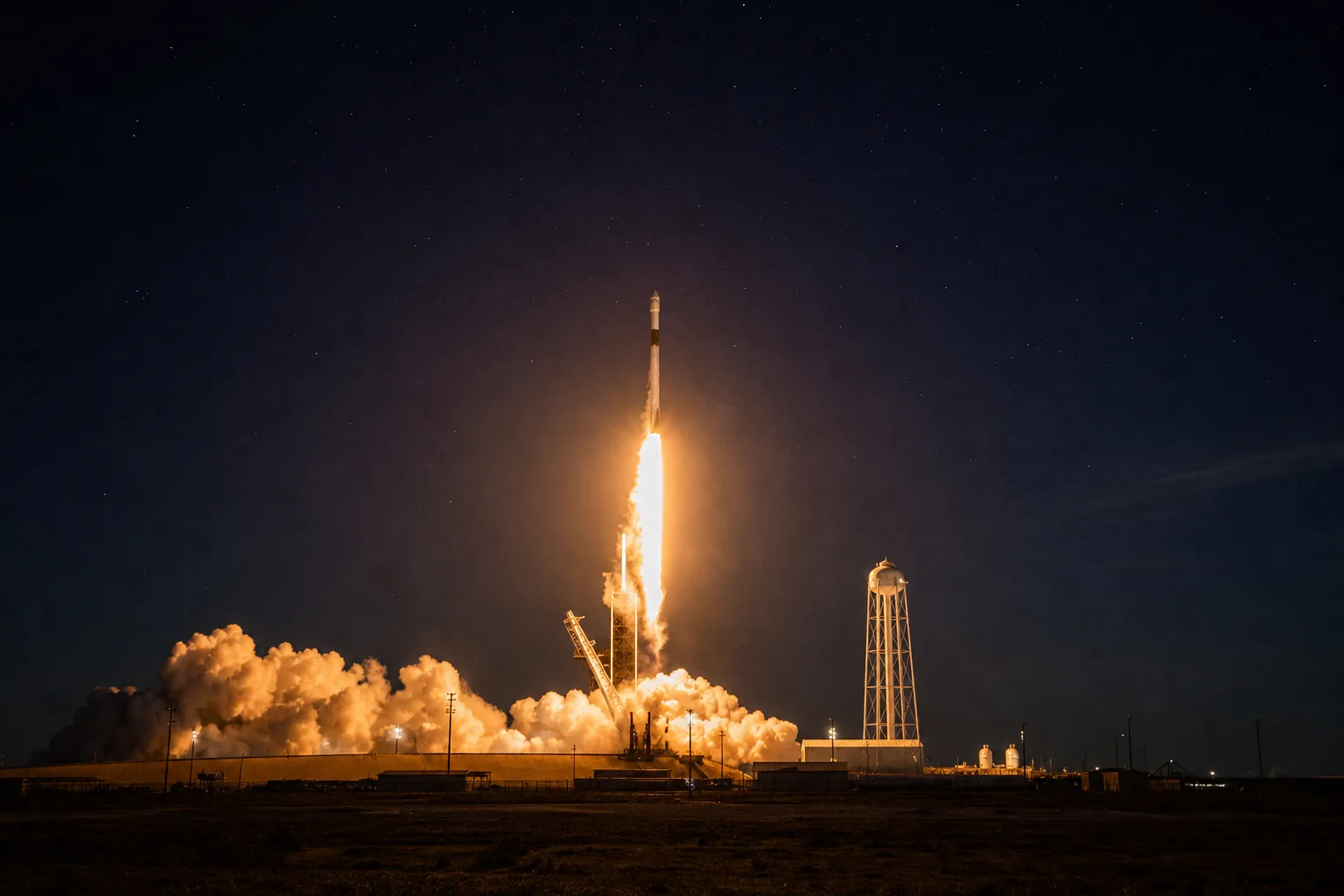
SpaceX pulled off another SiriusXM satellite launch late Saturday night, sending the hefty SXM-11 spacecraft toward geosynchronous orbit from Cape Canaveral Space Force Station in Florida. The mission is a straightforward commercial launch on paper — but the details reveal just how industrialised orbital access has become in 2026.
- The SiriusXM satellite launch carried the 15,400-pound SXM-11 spacecraft to geosynchronous transfer orbit aboard a Falcon 9.
- This SiriusXM satellite launch marks SpaceX’s fourth SiriusXM mission, following SXM-8, SXM-9, and SXM-10.
- The Falcon 9 first stage booster, designated B1085, landed on the drone ship ‘A Shortfall of Gravitas’ — its 17th flight.
- SpaceX has now flown 75 Falcon 9 missions in 2026 alone, with roughly 80% of those dedicated to Starlink constellation builds.
Table of Contents
What Is SXM-11 and Why Does It Matter?
SXM-11 is a substantial piece of hardware. Tipping the scales at 15,400 pounds (roughly 7,000 kilograms), it’s the kind of satellite that would have required a dedicated heavy-lift rocket not so many years ago. Today, a Falcon 9 handles it without breaking a sweat. The spacecraft is destined to join SiriusXM’s fleet of radio broadcast satellites — a constellation that, prior to this SiriusXM satellite launch, numbered seven spacecraft serving tens of millions of North American subscribers with commercial-free music, sports, news, and talk content.
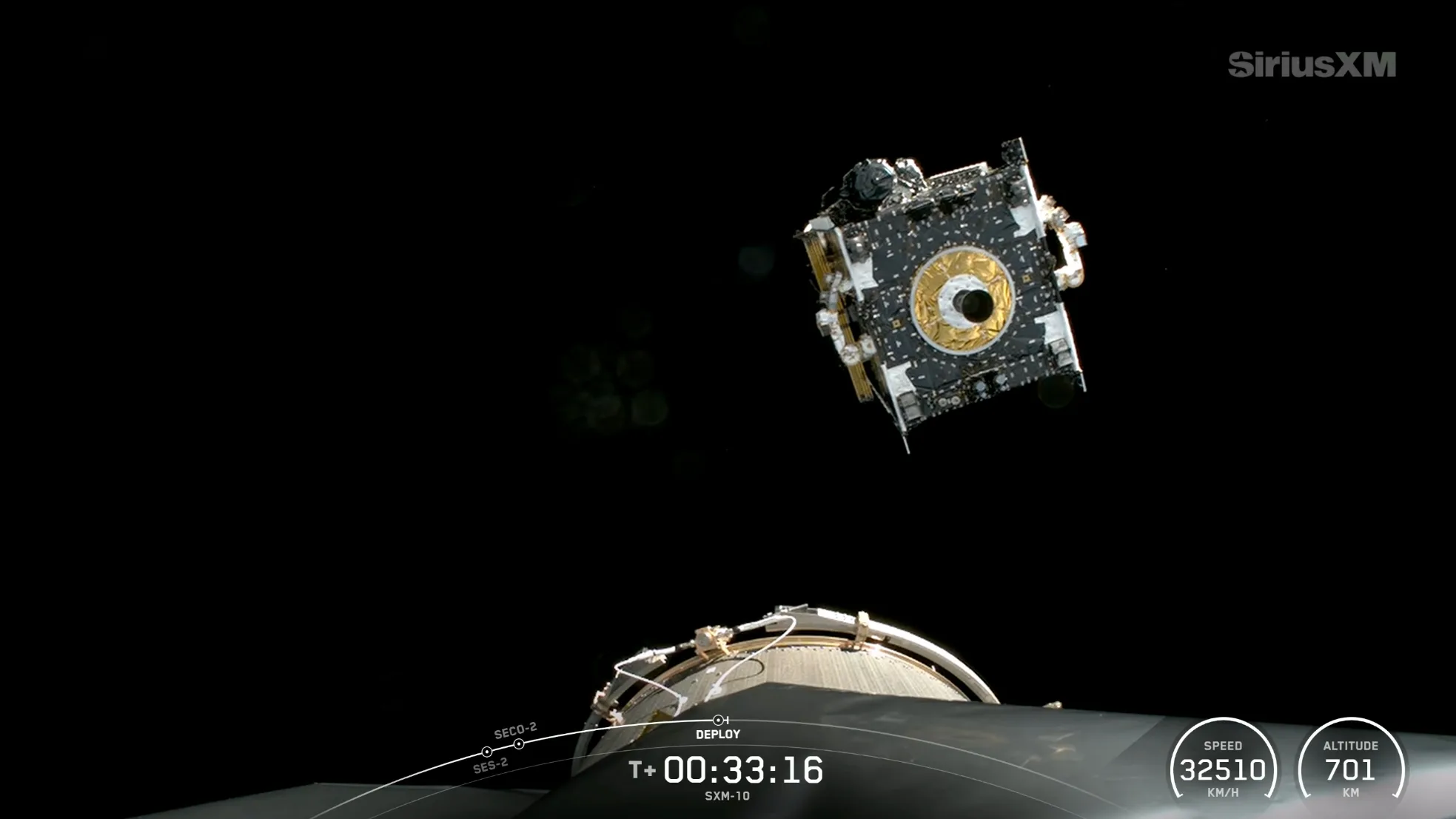
The mission launched during a four-hour window that opened at 10:25 p.m. EDT on June 28 (02:25 GMT on June 29). About 34.5 minutes after liftoff, the Falcon 9’s upper stage released SXM-11 into an elliptical geosynchronous transfer orbit. From there, the satellite will use its own onboard propulsion to raise and circularize its orbit, eventually parking in a geosynchronous slot roughly 35,800 kilometres above Earth — the same orbital neighbourhood used by television broadcast satellites, weather platforms, and communications relays worldwide.
A Booster With a Résumé: B1085’s 17th Flight
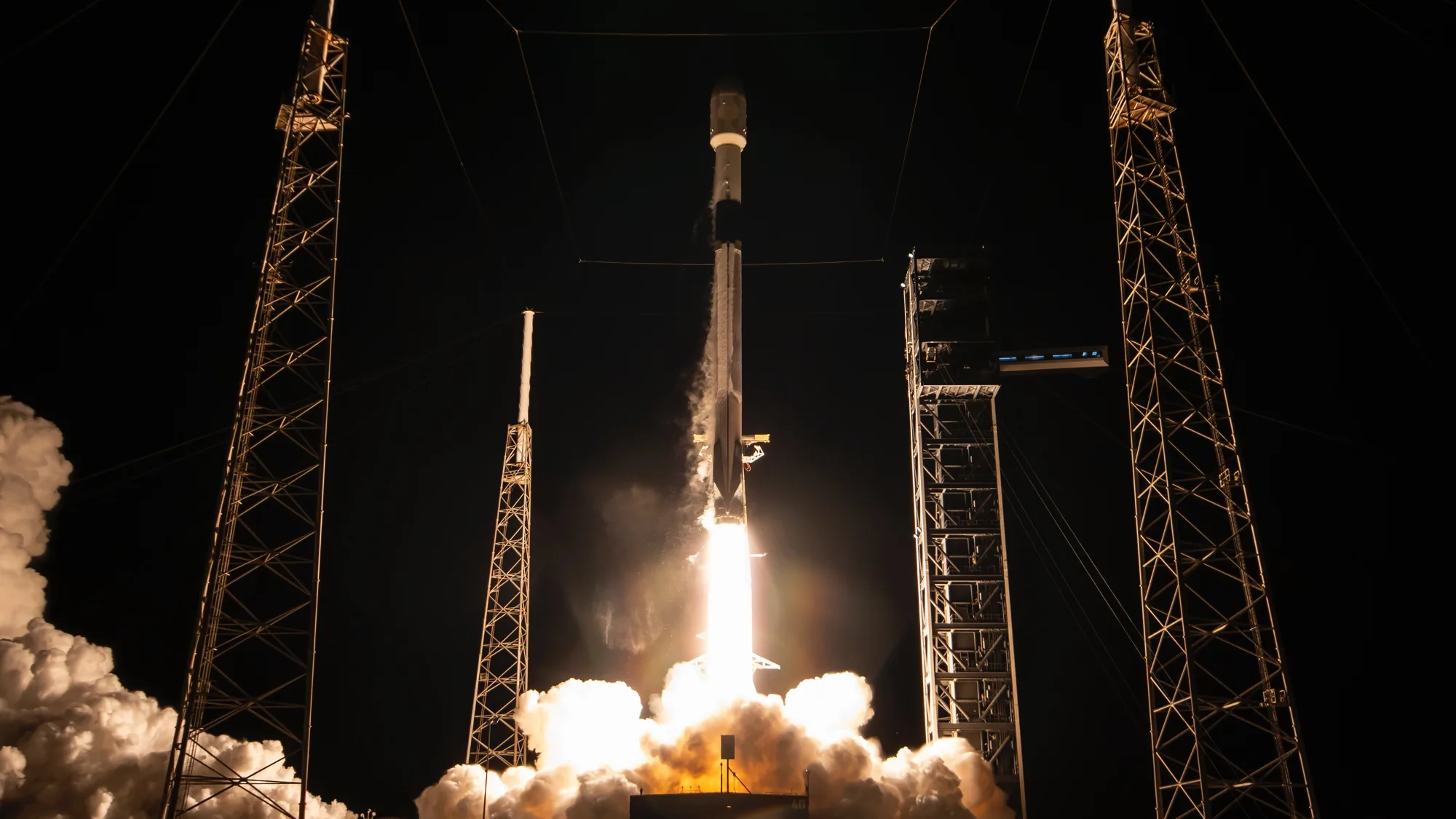
One of the more quietly remarkable aspects of this SiriusXM satellite launch was what happened eight and a half minutes after liftoff. The Falcon 9’s first stage, designated B1085, separated from the upper stage and executed a precisely choreographed series of burns to guide itself back toward the Atlantic Ocean. It touched down on SpaceX’s drone ship ‘A Shortfall of Gravitas’ — a name lifted from Iain M. Banks’ Culture sci-fi novels — completing its 17th successful flight and landing.
Seventeen flights on a single booster is no longer shocking in the SpaceX playbook, but it’s worth pausing to appreciate what that number represents commercially. Each reuse is a direct cost reduction — estimated by industry analysts to cut per-launch costs significantly compared to expendable alternatives. For a company like SiriusXM, which is paying premium rates to get a 15,000-pound satellite into a high-energy orbit, the reusability equation matters. It’s one of the core reasons SpaceX has locked up so much of the commercial GEO launch market that was once split between Arianespace, International Launch Services, and others. Every SiriusXM satellite launch SpaceX conducts reinforces that dominance.
SpaceX’s Growing SiriusXM Partnership
SXM-11 is the fourth SiriusXM satellite SpaceX has launched, continuing a working relationship that began with SXM-8 in June 2021. SXM-9 followed in December 2024, and SXM-10 lifted off just weeks before this mission in June 2025. All three rode Falcon 9 rockets. The pattern is hard to miss — each successive SiriusXM satellite launch has demonstrated that SiriusXM has effectively standardised on SpaceX for its next generation of orbital hardware, much like a growing number of commercial satellite operators that have quietly shifted away from legacy providers.
That loyalty makes business sense. Falcon 9 has an exceptional reliability record — SpaceX’s own mission history page tracks hundreds of consecutive successful launches — and the launch cadence SpaceX maintains means operators can get manifest slots more readily than with rivals who fly far less frequently. For SiriusXM, whose satellite radio service depends on uninterrupted coverage across North America, keeping a reliable pipeline of replacement and supplementary spacecraft is existential, not optional.
75 Falcon 9 Missions in 2026 — and Counting
The SXM-11 SiriusXM satellite launch is just one data point in a much larger story about SpaceX’s launch pace. By this mission, the company had already completed 75 Falcon 9 flights in 2026 — a cadence that works out to roughly one launch every three days. That’s a throughput no other launch provider on Earth can match right now, not even close.
Around 80% of those 75 flights have been dedicated to SpaceX’s own Starlink broadband megaconstellation, which continues to grow in low Earth orbit. The remaining 20% — roughly 15 missions — covers everything else: NASA contracts, military payloads, commercial GEO satellites like SXM-11, and rideshare missions for smaller operators. Each commercial SiriusXM satellite launch sits within this smaller slice, competing for manifest slots alongside a wide variety of other customers. The commercial launch market hasn’t disappeared, but it increasingly exists in the margins of SpaceX’s own internal demand. That’s a strange dynamic for the industry — the dominant launch vehicle operator is also its own biggest customer by far.
Competitors are watching closely. United Launch Alliance’s Vulcan Centaur is still establishing itself after its debut, Blue Origin’s New Glenn is in early operational phases, and Europe’s Ariane 6 has had a rocky introduction. None are flying at anywhere near SpaceX’s rate. The gap isn’t just about technology — it’s about operational rhythm, manufacturing scale, and the compounding advantage of having a reusable booster fleet already in rotation.
What Comes Next for SXM-11
After deployment from the Falcon 9 upper stage, SXM-11 begins what’s typically a weeks-long process of orbit raising and system checkouts before it enters operational service. Geosynchronous transfer orbits are deliberately elliptical — the satellite passes through the Van Allen radiation belts during this phase, which is one of the more stressful periods for spacecraft hardware. Once it reaches GEO altitude, engineers will run through commissioning procedures before allowing it to carry live broadcast traffic.
With SXM-11 added to the mix, SiriusXM is clearly investing in long-term infrastructure rather than simply maintaining the status quo. The company faces ongoing questions about its business model — streaming competitors have eroded its once-unique position in car audio — but a robust satellite fleet remains its core technical differentiator. You can’t stream Spotify in a dead zone on the interstate, but a satellite signal gets through. That’s still the argument SiriusXM is making, and a successful SiriusXM satellite launch like this one is the hardware backing it up.
As SpaceX continues to rack up missions at an extraordinary pace and commercial operators increasingly depend on a single provider for access to orbit, the concentration of launch infrastructure in one company’s hands is a dynamic the broader space industry will need to reckon with — particularly as newer entrants try to establish footholds in a market that keeps moving faster than they can keep up.