

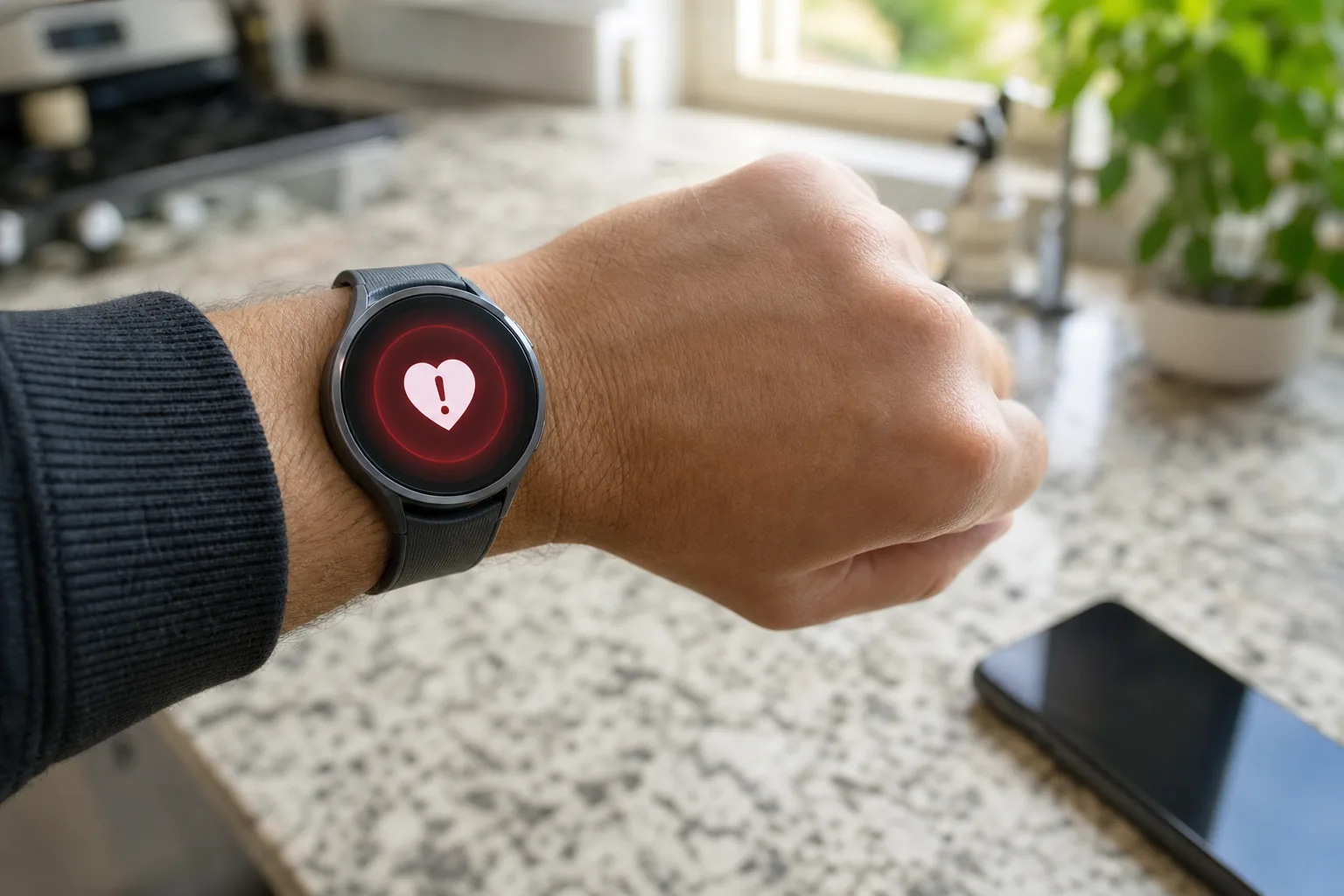
- Breathing Emergency Detection is coming to both Pixel Watch 4 and Pixel Watch 5 across 10 European countries.
- Google’s Breathing Emergency Detection uses several sensors and a phased alarm before it contacts emergency services automatically.
- The feature excludes long sleep periods, an important limitation intended to reduce mistaken alerts linked to sleep apnea.
- US availability remains unclear as Google works through local emergency-service support and country-specific rollout requirements.
Table of Contents
Breathing Emergency Detection reaches the Pixel Watch 4
Google’s new Breathing Emergency Detection feature may be the Pixel Watch 5 announcement that matters most, and thankfully it isn’t being held hostage as a reason to upgrade. The company is also switching it on for the Pixel Watch 4, a welcome bit of restraint in an industry that often treats last year’s hardware like a rental car due back tomorrow.
The feature sits inside Google’s new Health Guardian safety suite. Its purpose is grim but practical: identify signs that someone may have suffered a serious respiratory event, cannot respond to the watch, and needs help placed on their behalf. Google cites scenarios including choking, severe pneumonia, and accidental drug overdoses.
For now, Breathing Emergency Detection is available in the UK, Germany, France, Ireland, Austria, Denmark, the Netherlands, Norway, Sweden, and Switzerland. It’s a meaningful start, but the list still leaves out the US, Canada, Australia, and much of the rest of the world. Google says it plans to add countries, though there is no timetable.
That geographic caution isn’t mere bureaucracy. A watch that calls an emergency dispatcher must work with local calling systems, location handling, and language requirements. The hard part of a feature like this is spotting a crisis and then getting the right information to the right emergency operator without creating a mess.
How Breathing Emergency Detection decides something is wrong
Breathing Emergency Detection does not claim to directly diagnose a medical condition. Instead, Google says its algorithm looks for a worrying combination of signals from the watch: heart rate, movement, altitude, and blood-oxygen data. The system first checks whether the wearer is largely motionless and whether there has not been a rapid altitude change.
That altitude check sounds oddly specific until you think about it. A sharp shift in elevation can happen in a lift, on a flight, or during other ordinary movement that may affect readings. Smartwatch health features live or die by this kind of filtering. A sensor can be remarkably good in isolation and still create chaos when real people sweat, sleep, exercise, travel, or simply wear a band too loosely.
Google has also built in a particularly sensible guardrail: the watch will not evaluate an event as an emergency if the wearer has been asleep for more than 30 minutes. That is meant to avoid treating sleep apnea-like breathing disruptions as an acute incident. It will not solve every false-positive problem, but it acknowledges a basic fact that health-tech marketing sometimes skips over: bodies produce messy data.
According to Google’s Pixel product blog, the company developed the system with input from internal medicine doctors, cardiologists, anaesthesiologists, emergency specialists, emergency services, and public-health leaders. Google also says it tested the algorithm in supervised clinical simulations and against hundreds of thousands of hours of real-world data.
Those are encouraging signals, though they are not the same thing as a public, peer-reviewed accuracy study. My read is that users should see Breathing Emergency Detection as a backup layer, not a pocket-sized pulmonologist. If you have an ongoing respiratory condition, a watch alert can complement a care plan; it cannot replace one.
The watch gives you several chances to stop the call
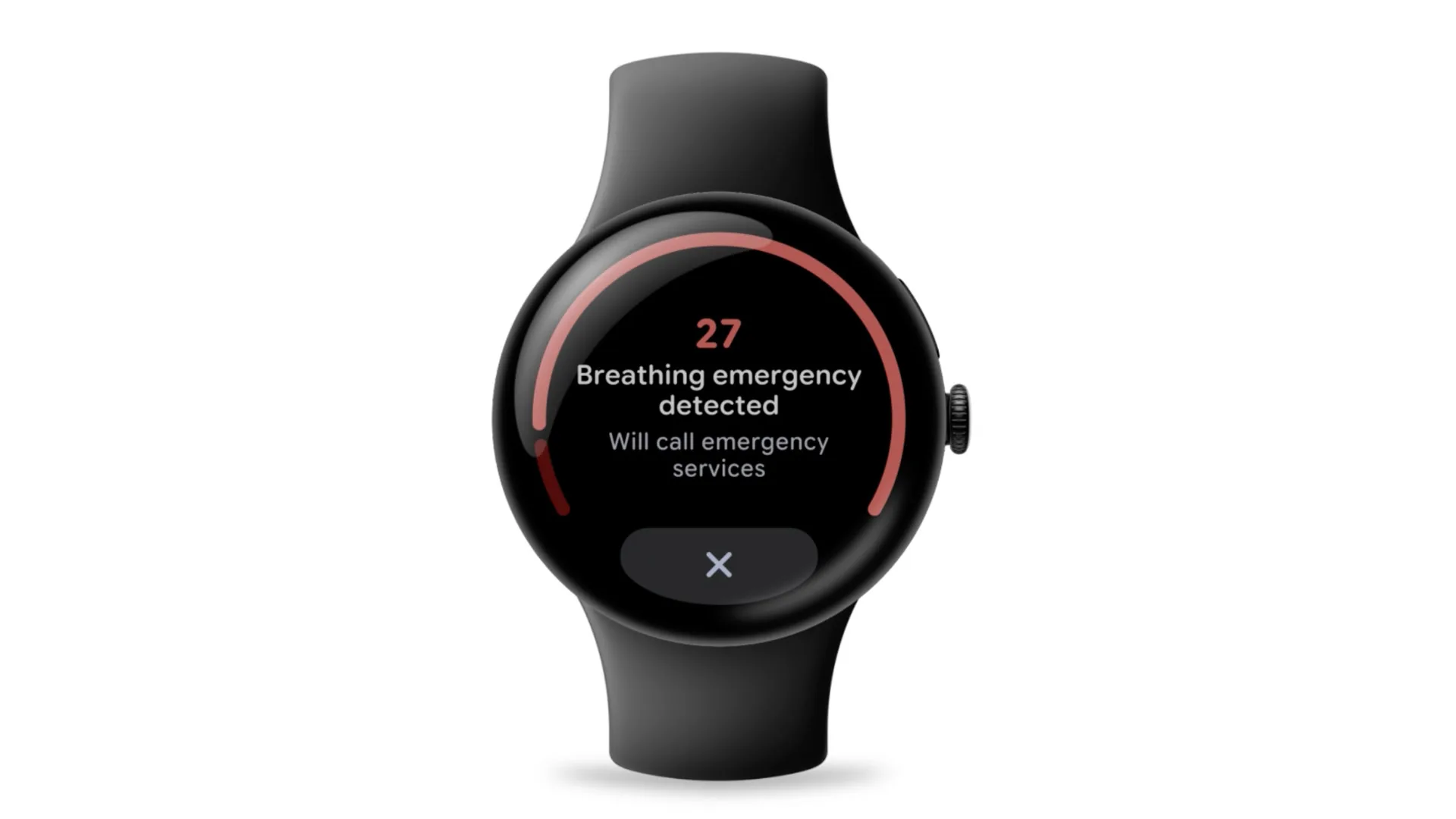
The escalation path is deliberately gradual. When Breathing Emergency Detection believes it has found a potential crisis, the Pixel Watch starts with a forceful vibration and a full-screen alert. If the wearer does not dismiss it, the device adds an audible alarm and begins a 30-second countdown.
Only after those stages pass without a response does the watch place the emergency call. It can do that through a paired phone or directly from an LTE-enabled Pixel Watch. The automated message tells the dispatcher that a potential breathing emergency was detected, says the wearer is unresponsive, and shares location information. Configured emergency contacts can receive an alert too.
That flow is better thought through than a single dramatic siren. Someone who is conscious but disoriented gets multiple cues. Someone who is unconscious has a path to outside help. And, crucially, a person who has merely nodded off on the sofa has a chance to cancel before an ambulance gets involved.
A safety feature is only useful if people can trust it
Apple has spent years turning the Apple Watch into a credible safety device through fall detection, crash detection, irregular-rhythm alerts, and Emergency SOS. Google has offered several similar tools on Pixels, but Breathing Emergency Detection pushes into a more medically sensitive category than detecting a hard impact.
It also makes the Pixel Watch 4 more attractive after the Pixel Watch 5 launch. Supporting recent hardware is not pure generosity, obviously; Google wants a larger pool of users inside its health platform. Still, this is the right call. If the necessary sensors already exist, withholding a potentially life-saving software feature to create artificial product separation would be hard to defend.
The real test will be expansion and transparency. Google needs to explain where the feature works, what connectivity it requires, and how often it produces alerts that turn out not to be emergencies. If those numbers hold up in everyday use, Breathing Emergency Detection could become one of the rare smartwatch features people hope never to use but genuinely want on their wrist.

