


- Nvidia succession risk has become a market concern because Jensen Huang remains unusually central to customers, strategy and investor confidence.
- The Nvidia succession risk may matter more than the alleged personal conduct if an investigation finds business, security or governance failures.
- Nvidia shares were already under pressure from doubts about AI infrastructure spending before the latest reports rattled investors.
- A credible internal successor could limit market damage, but Nvidia has not publicly identified an obvious heir to Huang.
Table of Contents
Nvidia succession risk is now part of the AI trade
The market has spent three years treating Nvidia as the cleanest possible bet on artificial intelligence. That’s why the sudden Nvidia succession risk surrounding chief executive Jensen Huang matters far beyond one executive’s private life. Investors aren’t merely asking whether Huang stays. They’re being forced to ask what, exactly, would remain unchanged if the person most associated with Nvidia’s modern dominance walked out the door.
That concentration is the core of the Nvidia succession risk investors are now trying to quantify.
Shares reportedly fell as much as 8% in Monday trading amid allegations involving Huang and a business executive said to have been connected to Chinese intelligence. Nvidia’s board has reportedly launched an independent investigation, while expressing confidence in Huang’s leadership and stating it has seen no reason to believe company secrets or US national security information were compromised.
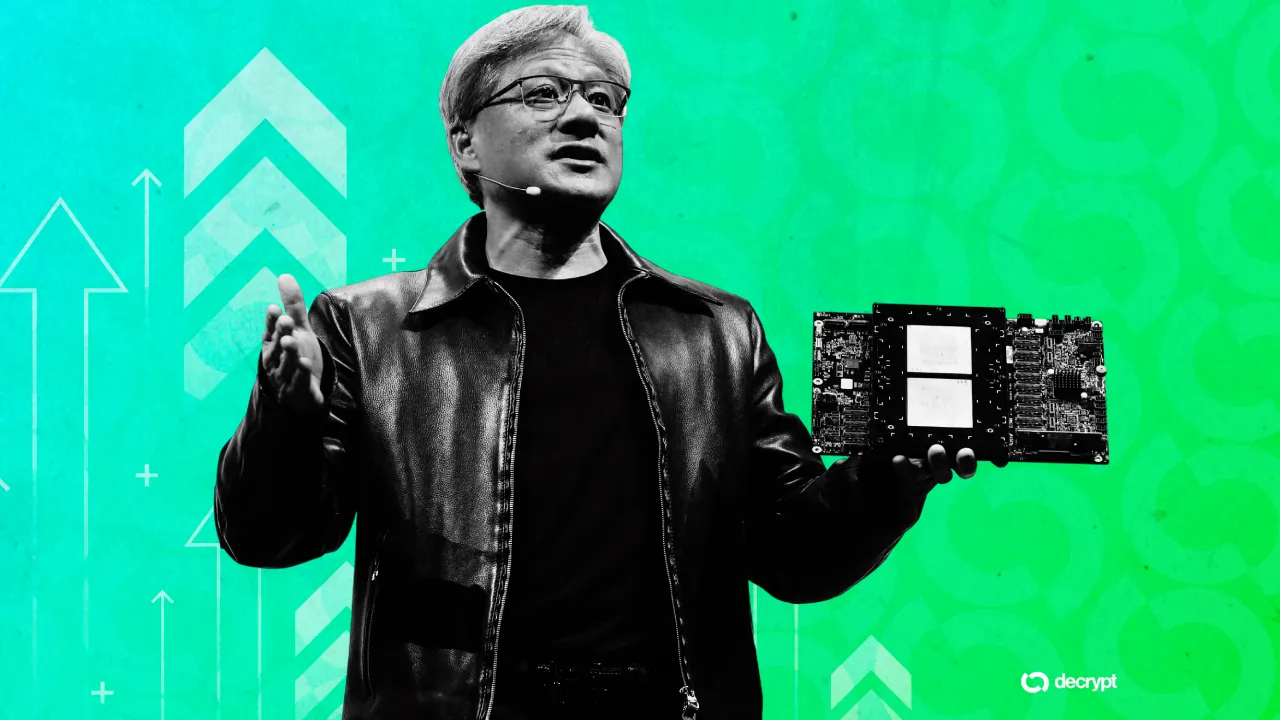
That last qualification is the whole ballgame. An affair, however embarrassing, is not automatically a corporate catastrophe. But any finding that sensitive information was exposed, business decisions were compromised, or company controls failed would be a very different kind of problem. Nvidia designs the processors at the center of an intense US-China technology contest; this is not a consumer app company trying to survive an awkward executive memo.
My read is that investors are pricing uncertainty more than they are pricing a confirmed operational disaster. Still, markets hate a vacuum, and Nvidia’s is unusually large because Huang has been the company’s co-founder, chief executive, chief storyteller and de facto ambassador to governments and customers since 1993.
Why Jensen Huang is difficult to replace
Plenty of companies lose charismatic founders and survive. Apple endured the death of Steve Jobs. Microsoft moved beyond Bill Gates. Intel has changed chief executives often enough to make executive turnover look almost routine. Nvidia is different because Huang’s leadership has coincided with a period in which the company turned a highly technical chip business into the supply line for the AI economy.
He has also cultivated relationships that don’t fit neatly into an org chart: hyperscale cloud customers, Taiwan-based manufacturing partners, server makers, enterprise buyers, national governments and AI labs that have built entire roadmaps around Nvidia hardware. A new CEO could inherit the same products and the same software ecosystem, but not immediately the same trust.
That is the practical version of Nvidia succession risk. It is less about whether somebody else can introduce a Blackwell successor on stage. Nvidia has many capable engineers and operators. The harder question is whether a successor can arbitrate customer allocation during shortages, defend margins, manage export restrictions and keep the CUDA software ecosystem from becoming vulnerable to competitors.
This is why Nvidia succession risk can affect valuation even if the company’s product road map remains intact.
Dan Ives of Yorkville Ives & Co. called Huang ‘not replaceable’, a phrase that is probably too absolute but captures the sentiment. No executive is literally irreplaceable. Yet the market has attached a founder premium to Nvidia, and it would be naive to pretend otherwise. Remember the reaction whenever Elon Musk’s attention appeared to drift from Tesla? Investors can be remarkably rational about cash flows right up until they are not.
The stock had problems before this episode
There is another reason not to blame every red candle on the investigation. Nvidia had already lost substantial value from its October peak, falling from roughly $5.78 trillion to $4.51 trillion in market capitalization over about a month, according to data cited by market watchers. That is a staggering decline in dollars, though it needs perspective: Nvidia remains one of the world’s most valuable companies by a very wide margin.
The concern predates this episode. The AI industry is spending enormous sums on data centers, power contracts, networking and accelerators. Microsoft, Meta, Alphabet, Amazon and Oracle can fund major buildouts, but the question hanging over Wall Street is whether demand for AI services will eventually justify the capital expenditure binge. Nvidia benefits first from that spending. It would also feel a slowdown early.
Technically, the stock’s move below its 50-week exponential moving average has attracted attention because Nvidia spent much of the post-ChatGPT rally above that trend line. Traders are watching the area near $164, followed by the psychologically important $150 level. Those markers can shape short-term positioning, but they do not explain the business. A chart cannot tell us whether the next generation of data-center buyers will keep spending at today’s pace.
The broader market response is revealing. The S&P 500 and Nasdaq reportedly rose while Nvidia slipped, and other semiconductor shares held up. That suggests investors see this as company-specific rather than a verdict on AI hardware as a category. For now, at least, the Nvidia succession risk has not become an industry-wide exit signal.
What the board needs to prove
Nvidia’s board faces a tougher task than issuing a statement of support. It must establish that the investigation is genuinely independent, explain enough of its process to satisfy shareholders, and show that it has contingency planning for the CEO role. That does not require publicly naming a replacement tomorrow. It does require demonstrating that Nvidia is a company, not a one-man operating system.
The board has formal responsibilities, but formal structures and investor confidence are not the same thing. See Nvidia’s investor relations site. The board’s eventual credibility will depend on whether it addresses the security allegations directly and whether its findings match the seriousness of a company whose products sit at the heart of strategically sensitive computing infrastructure.
A credible succession plan would likely focus on continuity: protect the product road map, keep cloud customers close, reassure Taiwan Semiconductor Manufacturing Co. and other suppliers, and make clear that export-control compliance remains non-negotiable. Investors would also want to know who has decision-making authority if Huang is distracted or temporarily unable to serve. These are dull questions, admittedly. They are also the questions that separate a temporary scandal from a true Nvidia succession risk.
How the board answers them will determine whether Nvidia succession risk remains a headline concern or becomes a lasting governance discount.
The next signal will not come from a chart
Huang may well survive this. The available allegations, as reported, do not establish that he shared sensitive information or knowingly worked with a foreign intelligence service. If the investigation reaches that conclusion and Nvidia’s core business continues to deliver, the stock could recover faster than today’s anxiety suggests.
But the episode exposes an awkward truth about the AI boom. Nvidia’s valuation has been built on exceptional execution, yes, but also on the market’s confidence in one particular leader’s judgment. The company now has to show it can sustain that confidence without asking shareholders to simply take it on faith. If it can, the Nvidia succession risk may prove to be a passing market scare. If it cannot, Wall Street will learn how much of Nvidia’s premium was tied to the leather jacket.