

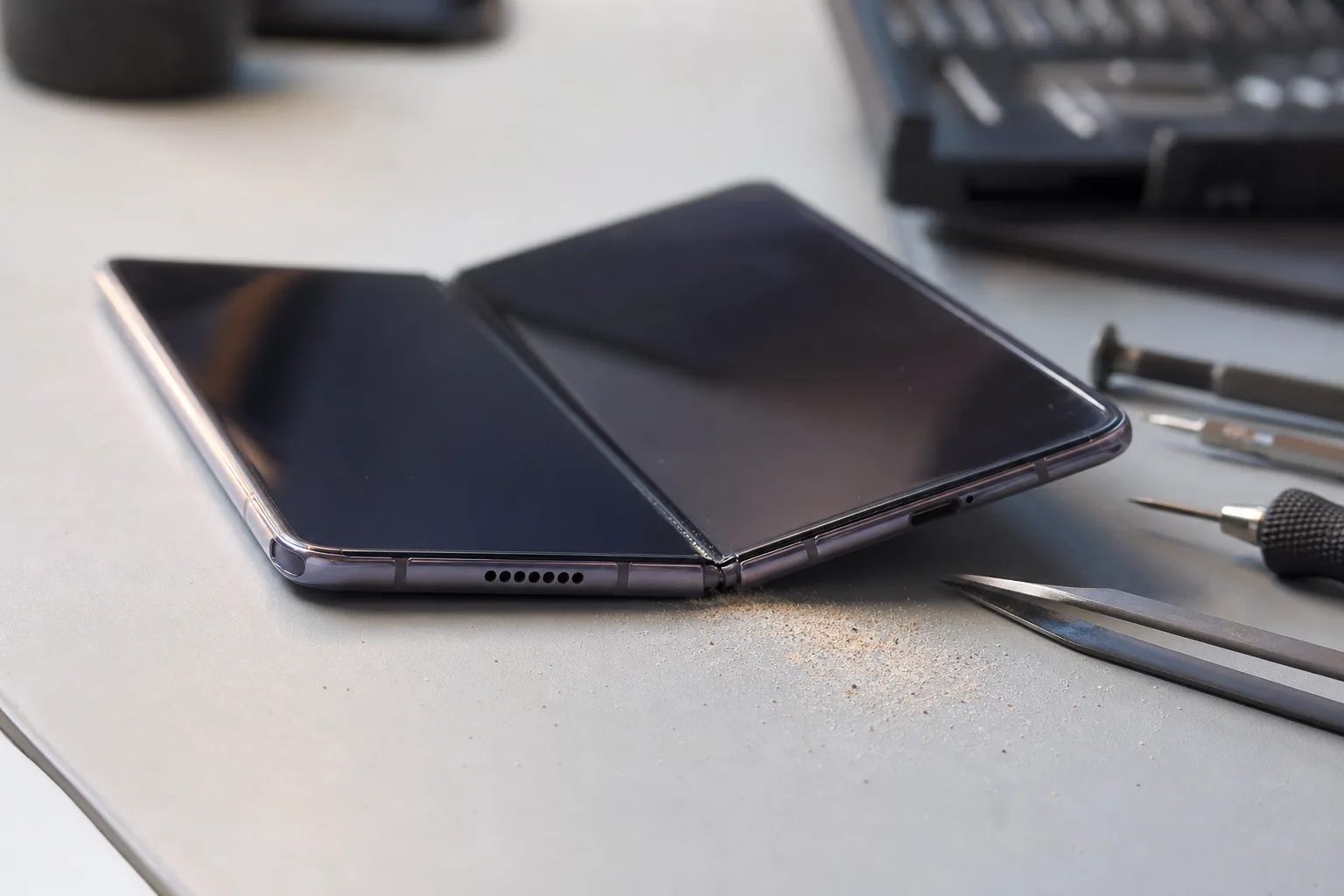
The Galaxy Z Fold8 is a reminder that foldable phones still have a rather awkward enemy: dirt. Not dramatic drops. Not a software bug. Dust. The kind that lives in a jacket pocket, settles on a kitchen counter, or gets everywhere after one afternoon at the beach.
That mundane reality is what makes iFixit’s latest teardown so useful. Samsung has spent years refining its book-style foldables, and the Fold8 appears designed to answer some of the category’s oldest complaints. It opens flatter, looks more like a small tablet when unfolded, and moves away from the tall, narrow proportions that made earlier Galaxy Folds feel like expensive experiments. But iFixit’s findings suggest the mechanical compromise at the center of the category hasn’t gone away.
Apple is reportedly preparing its own foldable iPhone, which makes this more than a Samsung story. The teardown offers a preview of the hard part Apple cannot market its way around.
- The Galaxy Z Fold8 hinge failed to open normally after fine dust exposure, despite improved protection against larger particles.
- iFixit gave the Galaxy Z Fold8 a 4 out of 10 repairability score because display removal blocks access to core components.
- Samsung’s flatter design and titanium-reinforced display structure reduce visible compromises, but neither eliminates the inner-screen crease.
- Apple’s rumored foldable will face the same basic physics: a thin hinge, flexible display and debris-prone moving parts.
Table of Contents
Galaxy Z Fold8 durability meets the dust problem
Samsung rates the Galaxy Z Fold8 at IP48. The first number is the relevant one here: the phone has protection against solid objects larger than 1mm, while the second indicates serious water resistance. That is better than the old days of foldables, when a splash near a hinge felt like tempting fate. But a 1mm threshold leaves a substantial gap between laboratory language and real life.
iFixit fed fine particles into the hinge, including material smaller than the rating’s stated protection level. The result was, in the repair group’s words, “truly awful crunching and grinding noises.” Eventually, the handset no longer opened as it should. The teardown found that debris did not freely invade every sealed section of the device, which is not nothing. But if the hinge becomes unreliable, the phone’s central feature has effectively stopped working.
That’s the awkward truth of foldable design. A normal slab phone can survive a surprising amount of pocket grime because it has no externally stressed moving joint. A foldable has to repeatedly bend a display, manage cable routing, maintain resistance against water, and fold with a pleasing amount of force — all inside a body that buyers expect to be slimmer every year. It is like building a waterproof wallet that also needs to function as a tiny door hinge thousands of times a month.
Samsung is hardly alone here. The entire industry is grappling with the same physics. Google’s Pixel Fold line has pursued a different path, and reports around the upcoming Pixel 11 Pro Fold point to IP68 protection and a gearless hinge. If that device delivers truly sealed dust resistance, it would be a meaningful differentiator, not a spec-sheet footnote. Fine dust is precisely what a foldable cannot afford to treat as somebody else’s problem.
A better shape does not erase the crease
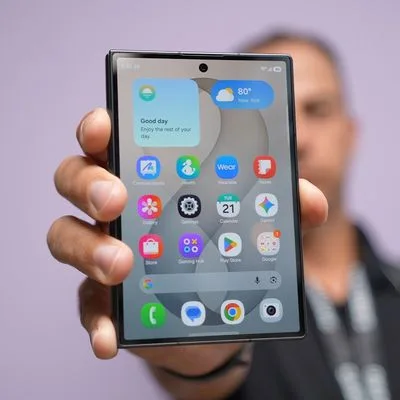
The Galaxy Z Fold8 makes a strong case for how far Samsung has come. Its roughly 5.5-inch outer display is more usable than the skinny cover screens on older models, while the 7.6-inch internal display gives it the footprint of a compact tablet. For people who actually read, edit documents, or live in split-screen apps, that change matters more than another modest camera upgrade.
Samsung also introduced a revised hinge and a titanium-reinforced display structure intended to help the inner panel sit flatter. The Galaxy Z Fold8 crease remains, though. It may be less obtrusive than before, but it is still visible under the wrong light and tangible under a fingertip. Tom’s Guide reported that the crease appeared more noticeable after only a week of use. That is not a long-term durability verdict, but it is exactly the sort of early signal shoppers should notice on a phone likely to cost well into four figures.
Frankly, the crease debate can become a little silly. Most foldable owners adapt to it quickly, much as people stop noticing a laptop’s webcam notch or a slightly uneven trackpad click. The more important question is whether the crease changes over years of daily openings. Screens age, adhesives relax, and the stress always concentrates at the same narrow line. Samsung has made impressive progress, but it has not repealed material science.
The Galaxy Z Fold lineup has also helped establish a practical truth: people will accept a small visual compromise if the expanded screen is useful enough. The challenge is that any compromise feels less forgivable when the device costs so much, looks delicate and is difficult to repair.
Galaxy Z Fold8 repairability is still the expensive catch
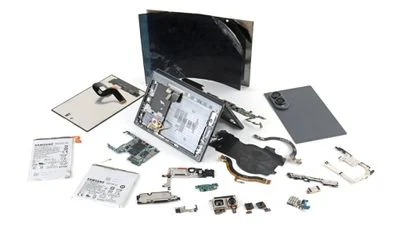
iFixit awarded the Galaxy Z Fold8 a repairability score of 4 out of 10, and the reasons are depressingly familiar. Accessing the hinge requires taking off the inner display. Removing the battery means dealing with the outer display. The bezel around the internal screen reportedly broke apart during removal. A repair technician is forced to dismantle the phone’s most costly and fragile components just to reach the parts that wear out.
iFixit called it “an expensive, painful repair even when everything goes right.” That line gets to the heart of the problem. Repairability is not merely about whether a skilled person can eventually swap a component. It is about how many expensive things can go wrong on the way there, how long the job takes, and whether a routine battery replacement becomes financially irrational.
The Galaxy Z Fold8 is not uniquely bad because it has a 4 out of 10 score; folding hardware is inherently more complex than a conventional phone. Still, complexity should not become a permanent exemption from good repair design. A consumer paying premium-laptop money for a handset should have a clearer path to replacing a battery than “remove another display and hope.”
Apple’s foldable test will be more brutal
Apple has stayed out of the foldable market long enough that expectations are now absurdly high. The company is rumored to introduce a foldable iPhone alongside iPhone 18 Pro models at a September event, with reports pointing to a Samsung Display panel, optically clear adhesive and a liquid-metal hinge. The goal, apparently, is a crease so faint that Apple can present it as something competitors never quite solved.
Maybe it can. Apple is very good at waiting for a component supply chain to mature, then spending heavily on the versions it wants. But my read is that a nearly invisible crease would be only half the achievement. The bigger test is whether Apple can produce a foldable that stays smooth after years of dust exposure, survives a battery service without a display casualty, and does not ask customers to treat a phone like heirloom china.
The Galaxy Z Fold8 teardown matters because it lays out the hazards still facing foldables, from fine debris to repair-hostile layering. If Apple’s first foldable clears those hurdles, it will have earned the inevitable hype. If it doesn’t, the company will discover what Samsung already knows: folding a phone is easy compared with making one that people can live with.
Frequently Asked Questions
Why did the Galaxy Z Fold8 struggle in iFixit’s dust test?
The Galaxy Z Fold8 has an IP48 rating, meaning it is designed to resist water and objects larger than 1mm. iFixit used much finer particulate material, which entered the hinge area, caused grinding noises and eventually prevented the phone from opening normally.
What does an IP48 rating mean for a foldable phone?
IP48 means the device has strong water protection and some protection from solid objects larger than 1mm. It does not mean a phone is sealed against fine sand, pocket lint or powder-like dust, which are especially troublesome around a foldable hinge.
Will Apple’s foldable iPhone avoid the Galaxy Z Fold8 problems?
Nobody knows yet. Rumors suggest Apple is pursuing a low-crease display and a liquid-metal hinge, but it will not be clear whether those measures address crease and hinge issues until the device is available.

