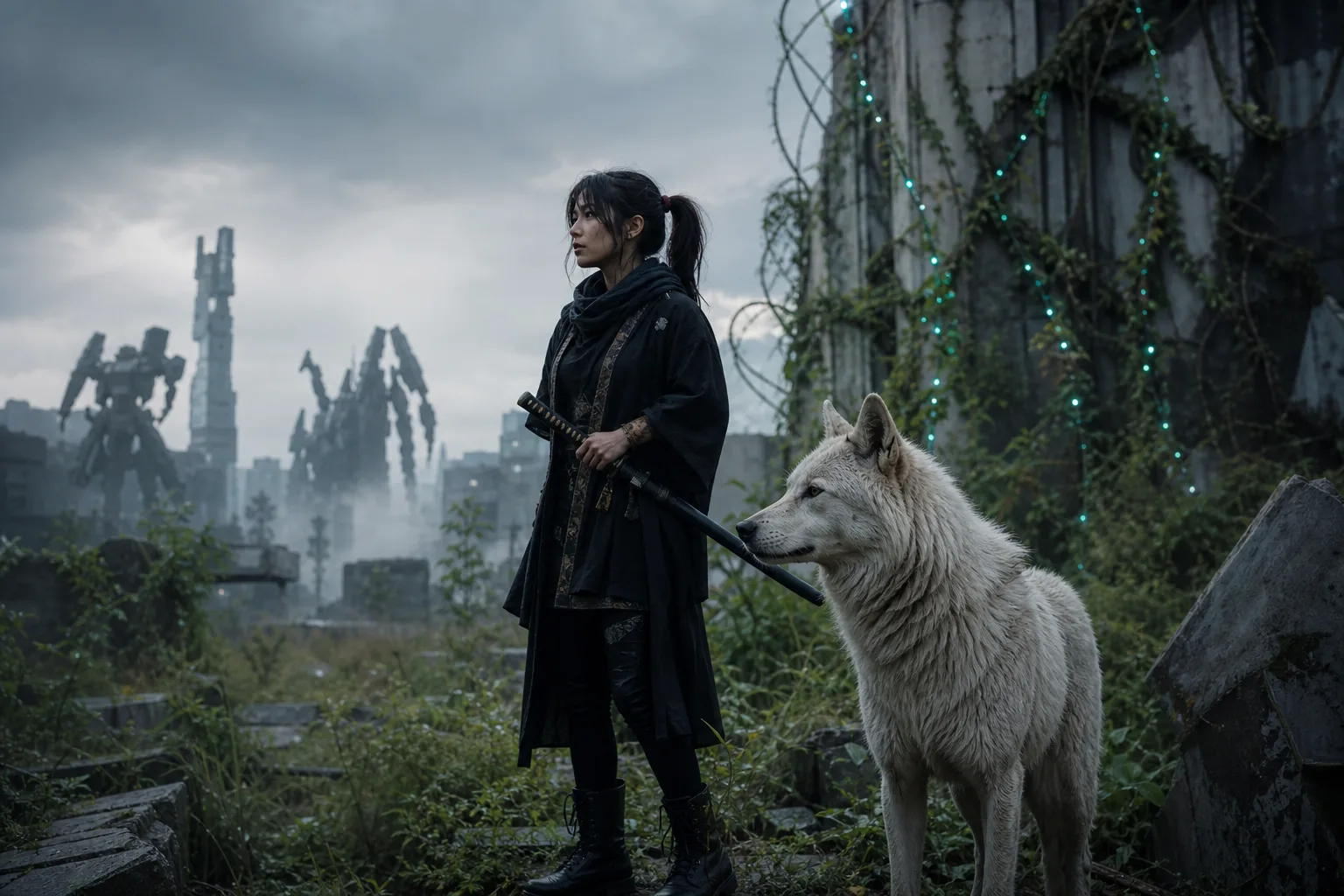
- Beast of Reincarnation gives Game Freak an energetic action system built around mobility, supernatural hair powers, and a giant canine ally.
- The strongest Beast of Reincarnation moments arrive in combat, where Emma’s expanding abilities create welcome room for improvisation.
- Its world borrows heavily from Nier, Monster Hunter, Death Stranding, and science-fiction cinema without developing comparable emotional weight.
- Game Freak’s experiment suggests the studio needs more time to turn its intriguing non-Pokémon concepts into fully distinct worlds.
Table of Contents
Beast of Reincarnation needed a clearer point of view
By SquaredTech Staff
Game Freak has long made Pokémon feel like a permanent fixture of the game industry, but Beast of Reincarnation is a reminder that the studio still wants to escape its own shadow. That impulse is welcome. Frankly, it is healthy. A developer that ships enormous franchise installments on a relentless schedule needs somewhere to put its stranger ideas.
The trouble is that Game Freak’s latest detour often feels like a collage of other developers’ best work. Beast of Reincarnation has a compelling surface: a ruined Japan set 2,000 years ahead, human consciousness housed in mechanical bodies, diseased wildlife mutating into violent threats, and an immortal monster waiting at the end of the road. But beneath that striking pitch sits an action RPG that too rarely answers the basic question every new franchise needs to answer: why is this world uniquely yours?
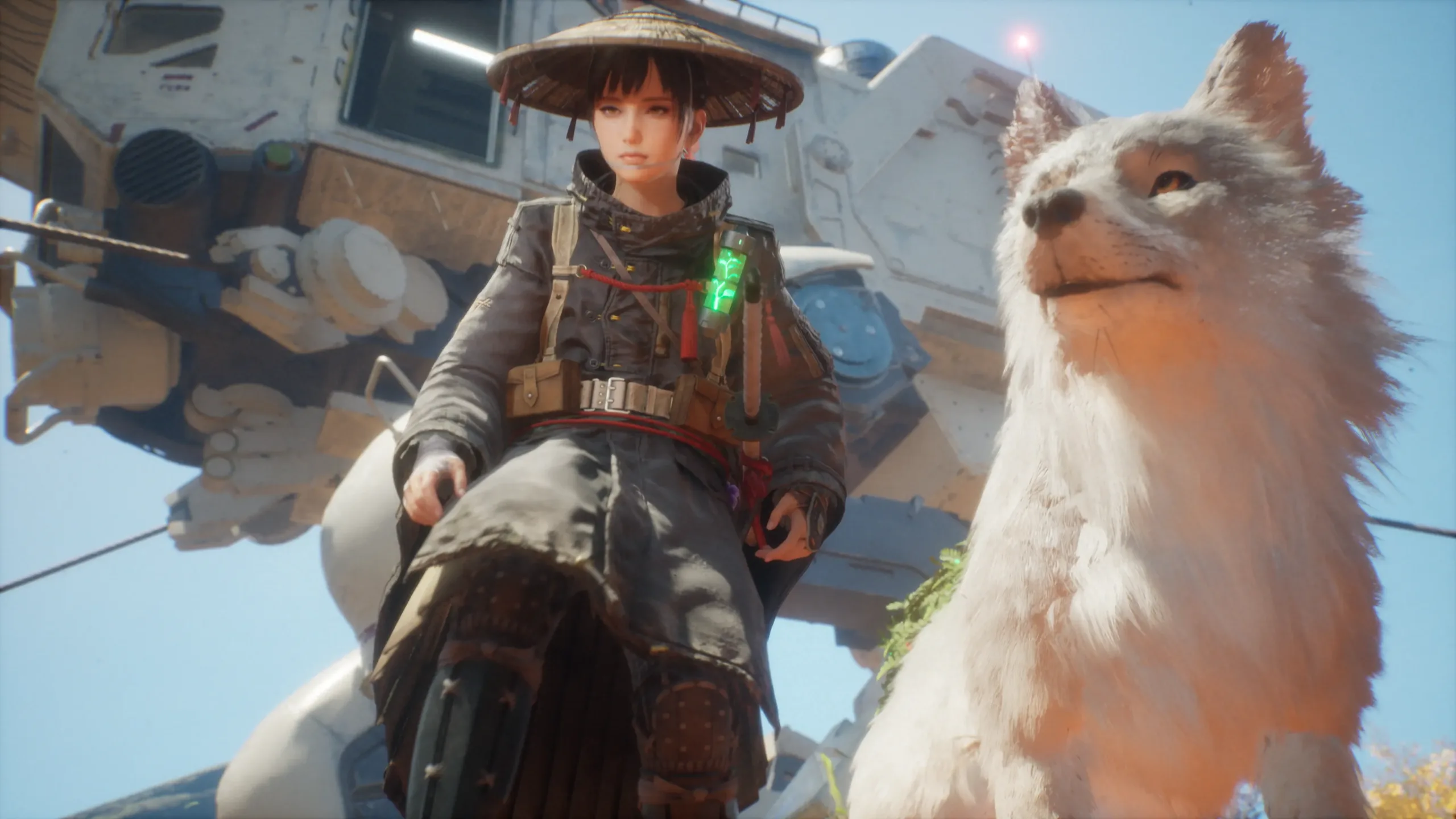
That is frustrating because the game has pieces that absolutely work. Its combat has momentum. Its atmosphere can be quietly unnerving. And its central character, Emma, has an ability so visually odd that it should have become the game’s calling card: living vines erupt from her hair, turning traversal and fighting into something genuinely tactile.
Instead, the game repeatedly brushes against originality and then retreats into familiar genre habits. For a studio with Game Freak’s history, that feels like a missed chance rather than a total failure.
A fast, flexible action system carries the game
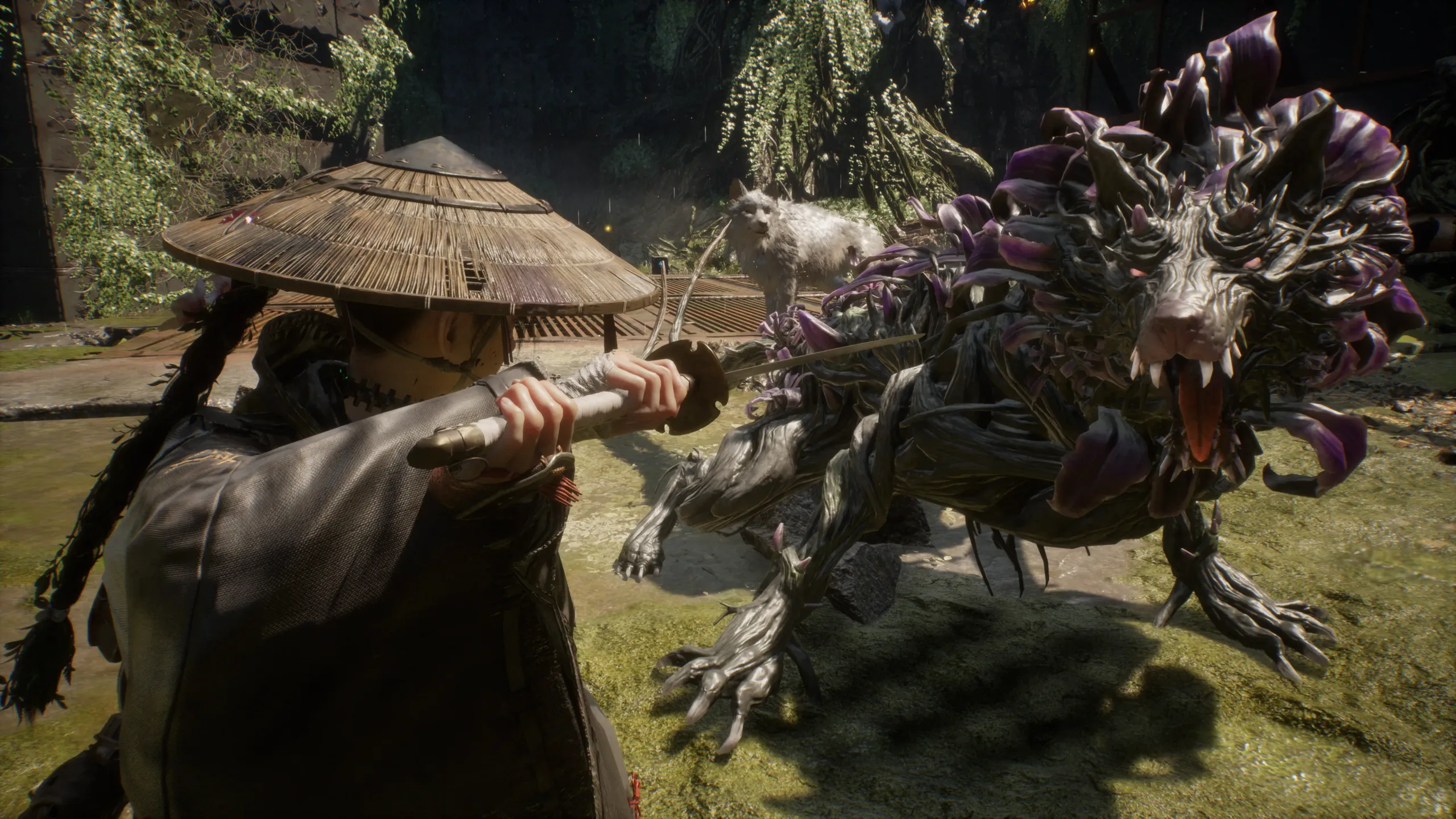
Beast of Reincarnation initially presents itself in the familiar language of punishing action games. Emma carries a blade, uses ranged weapons, and has to read enemy behavior carefully. A mistimed dodge or parry can hurt. Anyone who has spent time with FromSoftware’s games will recognize the rhythm immediately.
But the system becomes more interesting as Emma absorbs powers from defeated mutants. Her plant-like hair is not merely decorative anime logic, though it is very much anime logic. It can pull her across gaps, create routes through the environment, close distance in a fight, and set up aerial attacks. Later abilities allow her to reshape the flow of encounters rather than simply waiting for a safe opening and tapping attack.
Her giant magical dog companion also matters. It can assist in battles and handle the mildly tedious work of collecting drops, which sounds small until you remember how much time action games can waste making players jog back and forth over glowing scraps. The dog is useful, charming, and perhaps the game’s most efficient design decision.
This is where Beast of Reincarnation shows a glimpse of what Game Freak could do outside Pokémon: build a system around a bold, slightly weird idea and let players discover combinations over time. One stealth ability causes tall grass to grow around Emma while she crouches, briefly giving her improvised cover. That is the kind of specific mechanical flourish the rest of the game needed more of.
A post-apocalypse built from borrowed parts
The larger problem is not that the game has influences. Every game has influences, and pretending otherwise is silly. The problem is how plainly those influences announce themselves. The android-and-human melancholy evokes Nier: Automata; massive creature encounters call to mind Monster Hunter; the mobile shelter has the practical, lonely-road-trip energy of Death Stranding. At points, the visual references are so direct that the game risks feeling like a convention-floor pitch assembled from recognizable mood boards.
There is even a mechanical walker-like base that invites the obvious Star Wars comparison. Homage can be fun. But when players are constantly naming the thing a game resembles, the game has lost some control over its own identity.
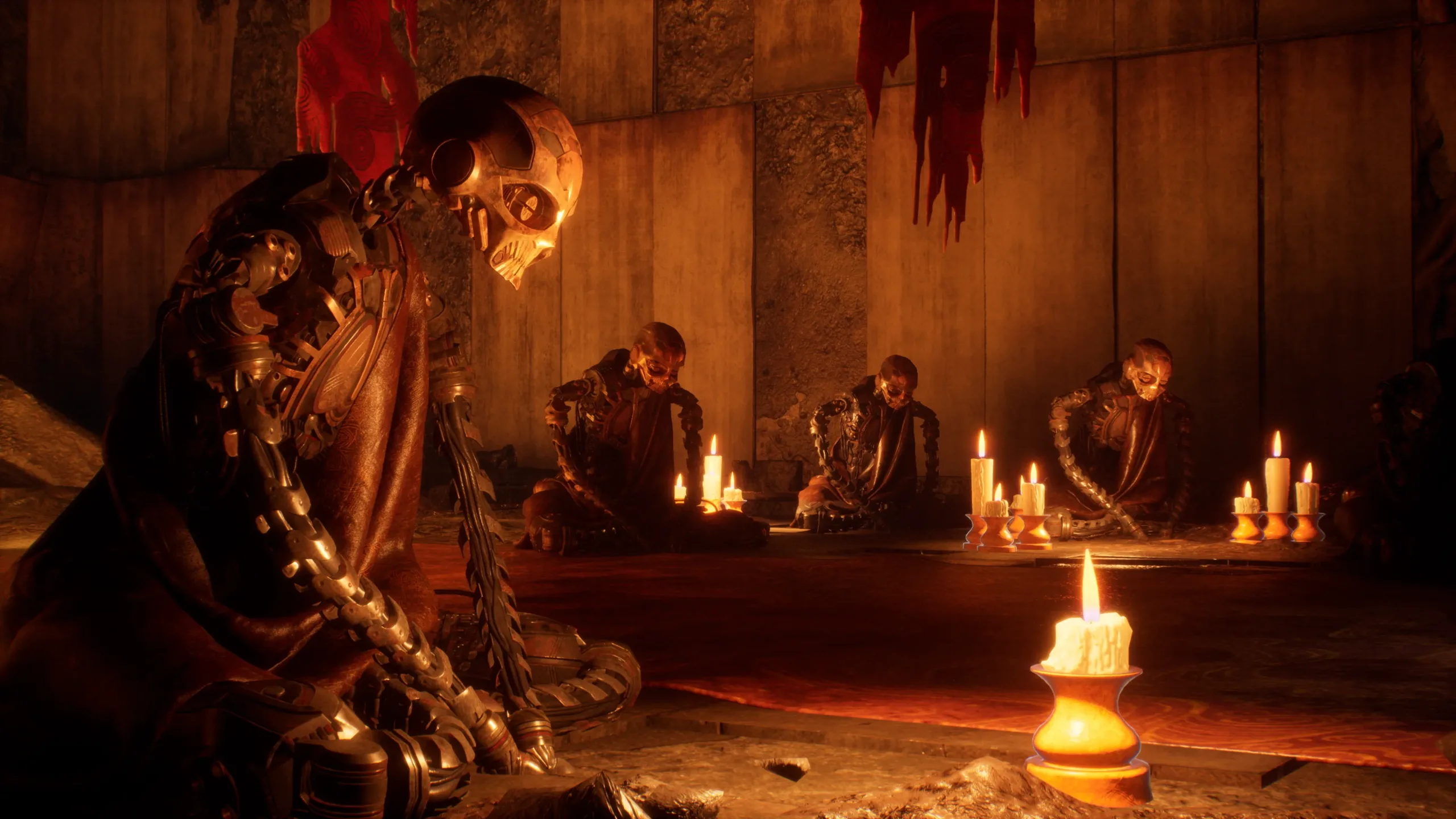
Beast of Reincarnation could have escaped that trap through deeper writing. Its premise contains fertile material: people who left flesh behind to survive, communities of sentient golems evolving their own customs, and a devastated landscape shaped by a mysterious blight. Those are not minor background details. They are the foundation for questions about memory, personhood, faith, and survival.
Yet the storytelling reportedly holds its cards for too long, turning mystery into fog. Nearly every person, creature, place, and narrative thread arrives with a question mark attached. A little ambiguity is powerful; players like connecting dots. But if the game withholds basic stakes for a dozen hours, curiosity starts to curdle into impatience. And when answers arrive without enough emotional or thematic force, the secrecy feels less like craft and more like delay.
Game Freak’s non-Pokémon future deserves more patience
The studio has never been solely a Pokémon factory, even if that is how much of the public sees it. Game Freak has released unusual side projects over the years, from the elephant-led action game Tembo the Badass Elephant to the horse-racing card game Pocket Card Jockey. Those projects were sometimes messy, but they had personality. You could tell somebody in the building had an itch they wanted to scratch.
That makes Beast of Reincarnation feel oddly conservative. The production values are larger, the genre is more fashionable, and the world is grander than those earlier experiments. But the design frequently takes the safest route: straightforward levels, shallow resource systems, predictable upgrade loops, and platforming that seems to exist because an action game is expected to have platforming.
The literal skill tree is almost too perfect a metaphor. It works. It is functional. It also says nothing.
There is a route forward here, but it requires Game Freak to resist the temptation to retreat to Pokémon after a mixed response to Beast of Reincarnation. The studio needs the room, budget, and development time to make projects like this, then push much harder on the ideas no other team would make. Its next original game does not need another familiar post-apocalypse or another checklist of respected action-RPG mechanics. It needs a stranger conviction.
Players have seen what happens when major publishers treat experimental games as disposable side dishes—remember when Google killed Stadia and left its internal creative ambitions scattered behind it? Game Freak has an enviable safety net and a global audience. My read is that it should use both to take bigger creative risks, because the flashes of life in Beast of Reincarnation suggest the studio is closer to a new voice than this uneven debut lets on. For more on the studio’s current work, see Game Freak’s official site. The question is whether it will let that voice get loud enough next time.