


- MacBook Pro battery life rose from about seven hours in 2011 to 30 hours and 46 minutes in recent testing.
- MacBook Pro battery life improved far more than battery capacity, with the pack growing only around 30 percent over 15 years.
- The latest 16-inch model is lighter and thinner than its 2011 predecessor despite carrying a larger battery.
- A 140W USB-C adapter makes a 30-minute charge meaningful, potentially providing more browsing time than the older laptop’s full battery.
Table of Contents
MacBook Pro battery life is an efficiency story
Fifteen years ago, getting seven hours from a 15-inch professional laptop felt genuinely impressive. Today, MacBook Pro battery life on Apple’s 16-inch M5 Max machine has reportedly reached 30 hours and 46 minutes in a rundown test. That is more than four times the endurance from a notebook with a bigger screen and vastly more computing muscle. Frankly, the striking part is not the headline number. It is how little the battery itself had to grow to get there.
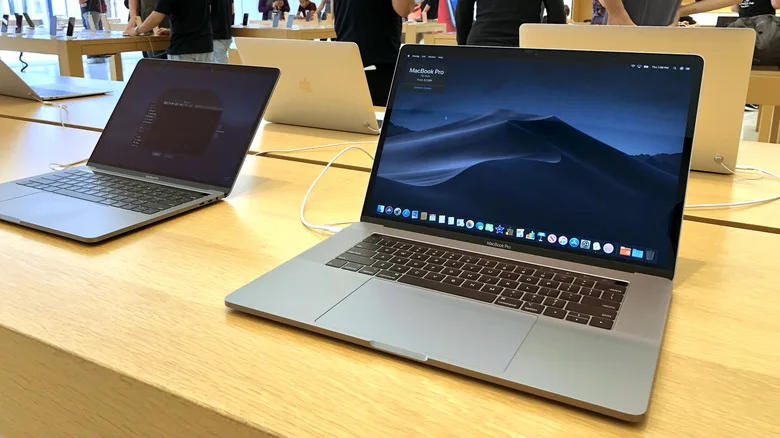
The early-2011 15-inch MacBook Pro used a 77.5 watt-hour battery. The current 16-inch model sits at 99.6Wh, just under the 100Wh line that matters for air travel. A 22Wh increase is meaningful, but it is nowhere near enough to account for the modern result on its own. Apple has spent the past decade and a half reducing the amount of electricity each piece of the laptop needs to do its job.
That is the real arc of MacBook Pro battery life: not a bigger fuel tank, but an engine that burns dramatically less fuel.
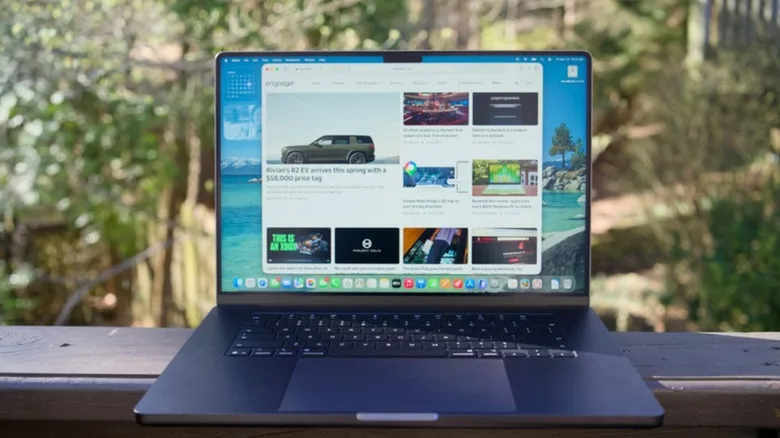
The comparison is unusually fair as laptop comparisons go. The older model had a 15.4-inch display, while the current machine has a 16.2-inch panel. These are both large portable workstations, intended for people editing video, writing software, processing photos, or simply living in a browser with enough tabs to concern their family. Neither is a tiny ultraportable being compared with a desktop replacement.
Apple’s own web-browsing estimates point in the same direction. Dividing the battery capacity by the quoted runtime suggests average power draw falling from roughly 11 watts in 2011 to about 6.2 watts now. That drop is the foundation of modern MacBook Pro battery life. Independent rundown testing cited for the two machines suggests an even sharper reduction, although test methods, websites, display settings, and software have all changed enough that the figures should not be treated as laboratory-perfect twins.
Still, the direction is impossible to miss. The 2011 MacBook Pro was built around an Intel processor, discrete graphics options, spinning hard drives in many configurations, and a conventional backlit LCD. The new system uses Apple silicon, unified memory, fast solid-state storage, dedicated media engines, and a display that can intelligently manage refresh behavior. Every one of those choices trims waste.
The battery got bigger, but the MacBook got smaller
There is another detail that makes the MacBook Pro battery life comparison more interesting. The newer 16-inch laptop is listed at 4.7 pounds and 0.66 inches thick. The 2011 15-inch model weighed 5.6 pounds and measured 0.95 inches thick. So Apple squeezed a modestly larger battery into a chassis that is around 16 percent lighter and roughly 31 percent thinner.
That is no small packaging achievement. Laptop makers are perpetually trading battery volume against cooling, ports, speakers, rigidity, repairability, and the plain fact that nobody wants to carry a brick through an airport. Apple has often made questionable calls in those fights, particularly on ports and repair access. But the physical efficiency of the modern MacBook Pro is hard to dismiss.
The 99.6Wh figure is also highly deliberate. The FAA’s guidance for lithium batteries treats 100Wh as a key threshold for passenger travel. Go above it and airline approval may be required. Apple is effectively parked at the curb, with 0.4Wh to spare.
That leaves limited room to improve MacBook Pro battery life simply by installing a larger cell. Unless aviation rules change, future gains will mostly have to come from chips, displays, operating systems, and smarter decisions about when hardware can sleep. My read is that this constraint may be healthy: it forces manufacturers to chase efficiency instead of selling us heavier machines with ever-larger packs.
Apple silicon changed the laptop power equation
With the first M1 Macs, the industry response was a mix of admiration and a little panic. Windows laptops had long made battery promises that dissolved under real workloads; Apple delivered performance that often held up while unplugged. Remember when the usual advice was to carry your charger everywhere? For many MacBook owners, that stopped being standard operating procedure.
The M5 Max is not merely an efficient chip in the abstract. Its architecture can assign work to specialized components instead of waking a general-purpose processor for every task. Video playback can use dedicated media hardware. Light background tasks can run on efficient cores. Memory sharing reduces the need to shuttle data between separate pools. These are engineering details, yes, but users experience them as a laptop that survives a workday without the low-battery anxiety ritual.
That does not mean the machine will deliver 30 hours while rendering a feature film, compiling a huge application, or playing a demanding game. Battery ratings generally measure lighter workloads, and Apple’s browsing tests are not a stand-in for every person’s day. Display brightness matters. Browser extensions matter. External drives and monitors matter. So does the occasional Chrome tab that behaves like it has taken up crypto mining as a hobby.
But MacBook Pro battery life has become much less fragile. A long benchmark result now signals real headroom, even after normal use cuts it down.
Fast charging changes the practical math
The other major advance is less glamorous but arguably more useful at 4:45 p.m. The 2011 MacBook Pro shipped with an 85W MagSafe power adapter. The 16-inch M5 Max comes with a 140W USB-C adapter, and Apple says it can reach 50 percent charge in about 30 minutes with an appropriate high-wattage USB-C charger and cable.
On the published browsing estimate, that half-hour charge could buy about eight hours of use. That is longer than the full battery life of the 2011 laptop under comparable light-use conditions. Put differently: a coffee-shop stop can now restore what used to require plugging in overnight. It is difficult to overstate how much that alters the daily experience of MacBook Pro battery life for frequent travelers and students.
There is a caveat. Fast charging does not repeal physics. Charging slows as batteries approach full capacity, sustained heavy work can outpace certain chargers, and USB-C cables are a mess of labels and capabilities. Still, moving to USB-C Power Delivery means owners have more options than they did in the MagSafe-only era. A compatible 140W charger can serve more than one device, rather than becoming another proprietary power brick in a drawer.
The next gains will be harder won
Apple says both machines are designed to retain 80 percent of original capacity after 1,000 charge cycles. That continuity is revealing. Battery chemistry has improved, but not at the same spectacular rate as processor efficiency. The 2011 MacBook Pro is now marooned on macOS High Sierra, which makes its nominal cycle rating mostly academic for many people. The current model, by contrast, may still be useful long after its battery has declined, assuming Apple supports it for a reasonable stretch and repairs remain viable.
That last part matters. Great MacBook Pro battery life is valuable, but a sealed battery that becomes difficult or expensive to replace is still a weak point in the ownership story. Apple has improved some repair options in recent years, though its laptops remain far from champions of simple home maintenance.
The next 15 years probably will not produce another clean fourfold leap. The battery is already pressing against airline limits, screens are already highly efficient, and chip gains get more expensive as the easy wins disappear. But if Apple can keep shaving power draw while maintaining performance, MacBook Pro battery life may be less about chasing 40-hour marketing claims and more about something better: laptops that remain genuinely dependable on their fourth or fifth year of use.
Frequently Asked Questions
Why has MacBook Pro battery life improved so much?
The primary reason is more efficient hardware rather than a much bigger battery. Battery capacity increased from 77.5Wh to 99.6Wh, but that roughly 30 percent gain cannot explain a jump from about seven hours to more than 30 hours.
Is the 16-inch MacBook Pro battery below the airline limit?
Yes. Apple lists the 16-inch MacBook Pro battery at 99.6Wh, narrowly below the 100Wh threshold used by the FAA for lithium-ion batteries carried without airline approval. That limit constrains how much larger laptop battery packs can become.
Does faster charging reduce MacBook Pro battery lifespan?
Apple rates both the 2011 and current MacBook Pro batteries for up to 1,000 charge cycles before they reach 80 percent of original capacity. Faster charging changes the convenience equation, but Apple’s published cycle-life target has not materially changed between these two generations.