
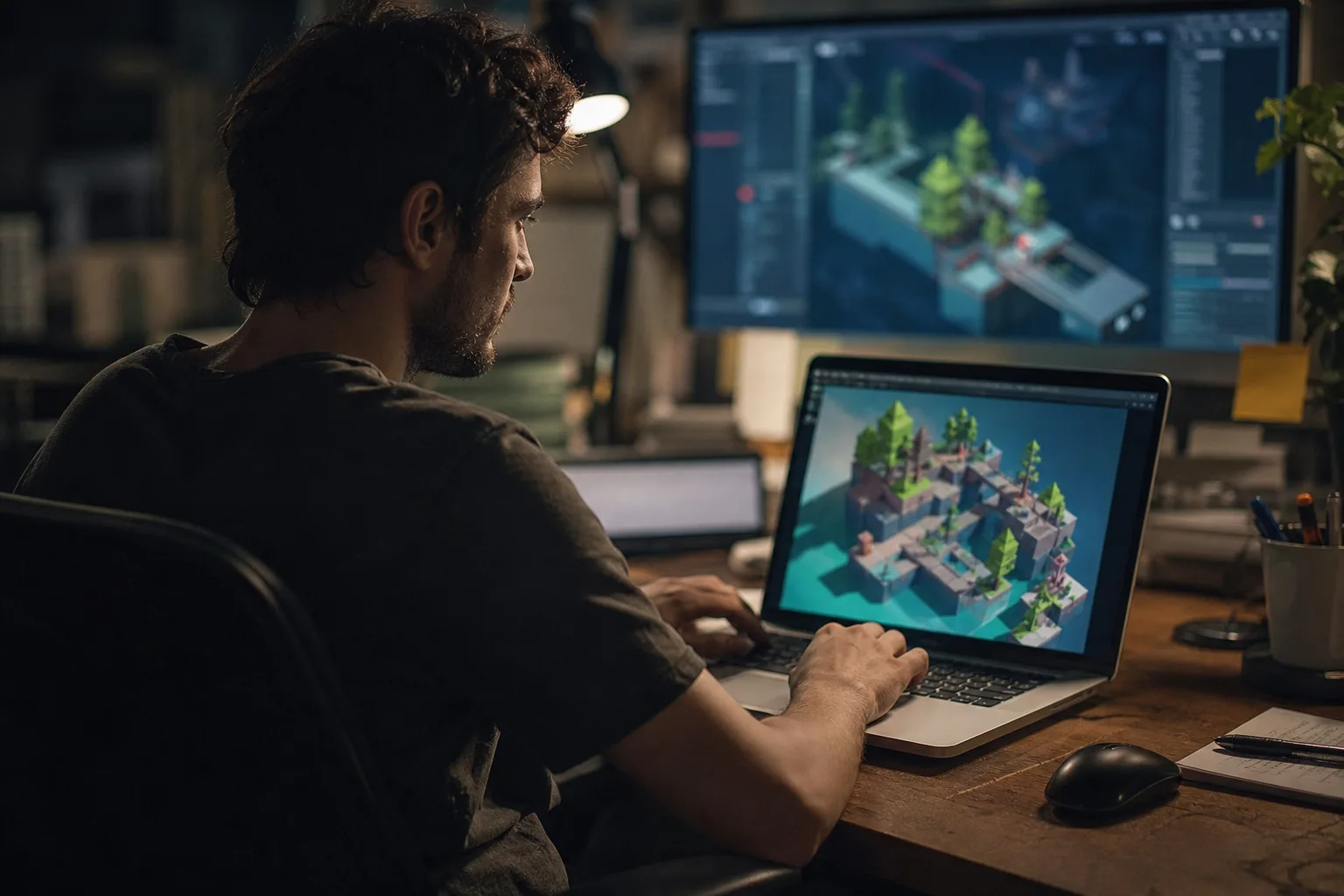
- Claude game cloning is now restricted when users ask Anthropic’s coding tool to reproduce a specific existing game.
- The Claude game cloning rule allows original titles and genre-inspired projects, but says little about copying other kinds of software.
- Anthropic’s policy exposes the gap between policing generated outputs and the unresolved copyright debate around AI training data.
- Game publishers may welcome the move, though larger software companies will likely demand similarly explicit protections.
Table of Contents
Claude game cloning gets a line in the sand
Claude game cloning has become the latest pressure point in the AI industry’s increasingly awkward relationship with copyright. Anthropic has updated instructions for Claude Code, telling the model not to build a recreation of a specific existing game, even when a user changes its name or presents the request as an original concept.
That sounds obvious. If someone asks an AI coding tool to rebuild a commercial game they do not own, the answer should probably not be a cheerful pile of runnable code. Yet this is where the industry is now: models are capable enough to produce passable prototypes, clones and visual knockoffs quickly, while the rules governing what they should refuse are being written in public, one embarrassing example at a time.
Addy Osmani, Anthropic’s Engineering and Evangelism Leader, said the company added two sentences to Claude Code’s Opus 5.5 prompt because using Claude to infringe intellectual property violates its usage policy. Claude can still make original games, games that borrow a genre’s broad conventions, and projects built from a user’s own designs and assets.
The distinction matters. A request for a moody, third-person monster-hunting RPG is one thing; a request to rebuild The Witcher 3 with altered character names is another. In theory, anyway. In practice, the distance between inspiration and imitation is often where lawyers make their money.
Why the Claude game cloning policy is so narrow
Anthropic’s intervention is welcome, but it is also conspicuously specific. The rule addresses a particular existing game. It does not appear to create a sweeping prohibition on recreating named software products, popular apps, websites, enterprise dashboards, or whole product experiences that happen not to involve dragons and a health bar.
That leaves a large hole. Ask for a lookalike of Photoshop, Notion, Figma, Slack, or a pricey vertical-industry platform, and the economic stakes can be enormous. Software interfaces, workflows and branding are protected in different ways, and not every act of imitation is automatically illegal. But a tool designed to translate plain English into functional code makes copying far more accessible. You no longer need a development team and six months; you need a very specific prompt and a free afternoon.
My read is that games are simply the most visible early target. They are easy to describe, easy to demonstrate, and culturally legible in a way that, say, cloning payroll software is not. A video of an AI-made version of a recognizable game travels fast online. It also puts a giant bullseye on the AI company that enabled it.
Anthropic’s own usage policy already bars activity that infringes intellectual-property rights. The new language seems intended to make that principle operational inside the coding product, rather than leaving it as legal text that only appears after something has gone wrong. That is a sensible step. It is not a complete solution.
Prompt rules are a brittle way to police copying
The problem with a narrow Claude game cloning ban is that it relies on anticipating the exact shape of a questionable request. Models can be instructed not to recreate a named title. Users can respond by describing the same title in painstaking detail without using its name. They can request a composite: take this world, that combat loop, another studio’s art direction, then please make it feel ‘totally original.’ You can see where this goes.
This is less like locking a house and more like posting a list on the front door of every item a burglar may not take. The list will always be behind reality.
There is a tougher alternative: set clearer affirmative boundaries around what the model may produce when a user is working from protected material, then require evidence of owned assets or authorized source code for certain requests. That would create friction, and developers hate friction. But copyright compliance is supposed to involve a little friction. If copying a commercial product becomes as casual as ordering takeout, the people who built that product have a legitimate complaint.
Claude game cloning also raises a difficult technical question: can a general-purpose model reliably tell when an apparently original request is actually an attempt to reconstruct a specific work? Not always. Models do not possess a clean, legally vetted catalogue of every game and its protected elements. They infer patterns from prompts and training. False refusals will happen. So will evasions.
The training-data contradiction remains
There is an irony here that AI companies have not resolved. Anthropic, OpenAI, Google and their peers are increasingly willing to stop users from generating outputs that look too much like someone else’s work. Meanwhile, courts are still sorting out whether the massive datasets used to train generative models involved copyright infringement in the first place.
Those are legally distinct questions, and companies will stress that point. Training a model and asking it to output a direct substitute for a copyrighted game are not identical acts. Still, for creators watching their work get absorbed into systems that can then imitate commercial products, the moral distinction can feel awfully thin.
Remember when the industry’s pitch was that generative AI would mostly remove busywork? We are now debating whether it can recreate a recognizable game faster than a small studio can make an original one. That is not merely a productivity story. It is a market-structure story.
For legitimate developers, the useful version of Claude game cloning is not cloning at all. It is asking for help scaffolding a combat prototype, debugging a physics system, generating placeholder assets, or translating a design document into an initial build. Those uses can save real time without pretending another company’s finished work is public property.
Expect the rulebook to grow
Games will not be the last category to get its own explicit clause. The more capable coding agents become, the more pressure Anthropic and its rivals will face from companies whose products are expensive to build and easy to imitate at the surface level. Adobe, Microsoft, Salesforce and countless smaller software vendors have every reason to watch this space closely.
And that is the uncomfortable part: enforcement may arrive first where the rights-holder has money, famous brands and a legal department large enough to make a nuisance of itself. Independent creators deserve meaningful protection too, not a policy system where the loudest complaint gets added to the prompt.
Anthropic has drawn a useful first boundary with Claude game cloning. Now it has to prove that the boundary is a principle rather than a patch note.