

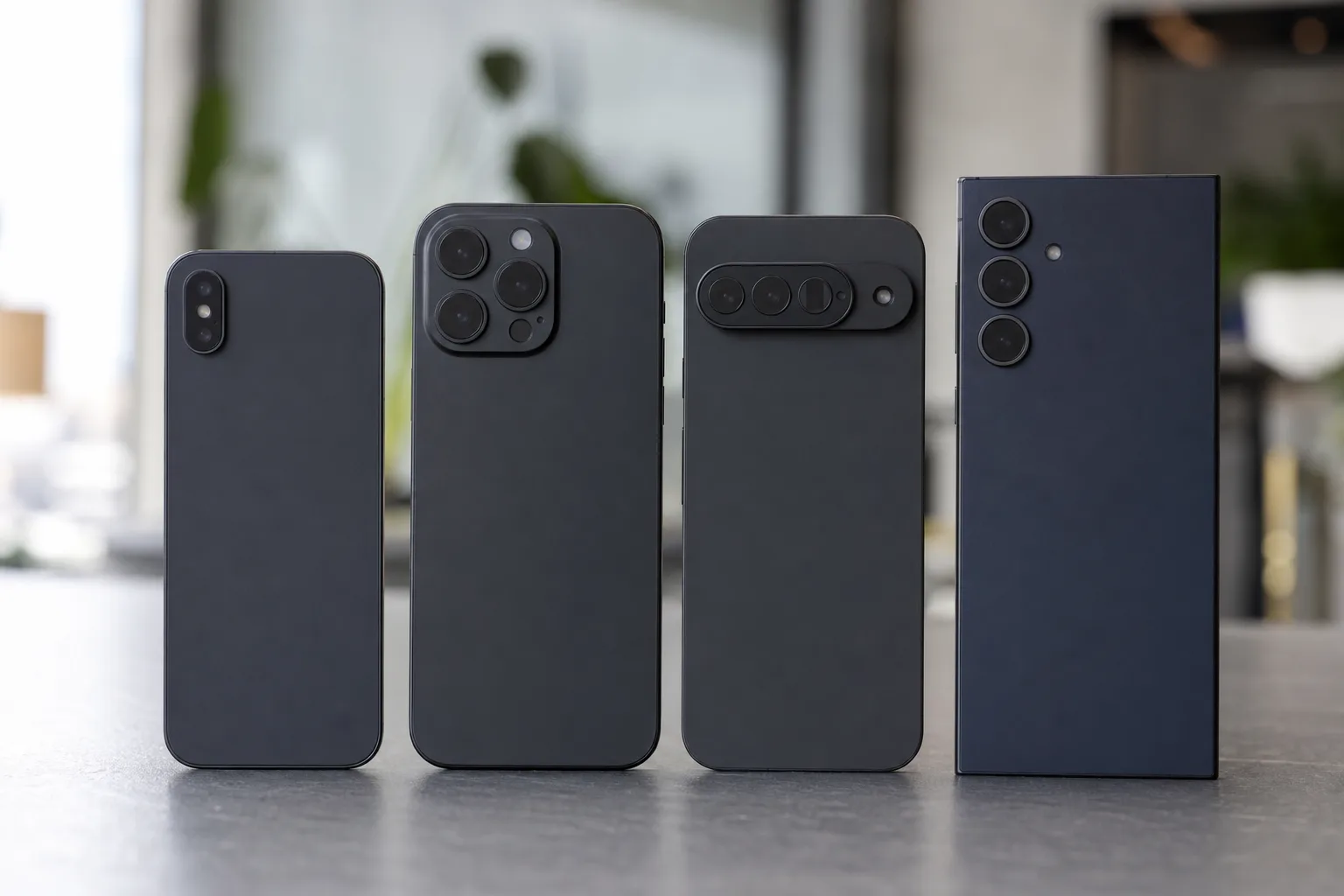
- The Galaxy S27 Ultra is reportedly Samsung’s next Ultra, with the company preparing it to face a crowded field.
- The Galaxy S27 Ultra leak focuses on physical proportions rather than confirmed specifications, so its practical implications remain uncertain.
- Samsung appears to be wrestling with the familiar Ultra problem: how to fit top-tier hardware into its largest phone without making it feel like a small tablet.
- Future flagship phones may look increasingly alike from the front, putting the real competition in cameras, software, and day-to-day comfort.
Table of Contents
Galaxy S27 Ultra dummy leak puts size back in the spotlight
Phone leaks are usually obsessed with the glamorous stuff: camera sensors, chip names, charging wattage, and occasionally a wildly optimistic benchmark score. This Galaxy S27 Ultra report is more mundane, but potentially more useful. Samsung’s future top-tier phone will face competition.
That comparison matters because a dummy model can reveal the part of a phone spec sheet that never reads well in a table: physical presence. Is it tall? Does it look awkwardly wide? Are the corners aggressive? How much of the front is screen versus frame? You can’t settle any of that with a rendered press image floating against a white background.
The caveat belongs in bold, though. These are alleged dummy units, not retail hardware, and the source material provides no confirmed Samsung specifications, measurements, release date, or official photographs. A dummy is essentially the phone industry’s dress rehearsal prop. It can be very good at communicating external dimensions and very bad at telling us what will actually ship.
My read: this is an early signal that Samsung is already working through the familiar Ultra dilemma. The company needs room for a large display, substantial battery, high-end cameras, and its S Pen system, while avoiding a device that feels like carrying a hardcover novel in a pocket.
What the comparison can, and cannot, tell us
Placed against a current-generation predecessor and future rivals, the alleged Galaxy S27 Ultra model appears intended to make a visual argument about Samsung’s direction rather than disclose a finished device. The key question is not whether one outline is a millimeter narrower than another. It is whether Samsung is continuing to soften the Ultra’s silhouette after years of phones that prioritized sheer capability over comfort.
That was sensible. Flat sides and severe corners look purposeful in product photography, but they can dig into a palm during a long train ride or a 20-minute doomscroll. Nobody buys a premium handset to admire its industrial design while it sits on a desk.
If the dummy is close to reality, Samsung may be trying to keep its flagship visually distinct without growing it in every direction. That is harder than it sounds. Camera modules need depth. Batteries occupy an enormous amount of internal volume. Thermal systems need space, especially as flagship processors chase laptop-class performance claims. And Samsung’s built-in stylus gives the Ultra a constraint that the iPhone and Pixel simply do not have.
There is also a limit to what the comparison proves. Dummy shells do not confirm display technology, camera hardware, button placement, weight, materials, wireless charging arrangements, or the all-important feel of the rear finish. They definitely do not prove that the Galaxy S27 Ultra will use a particular processor or camera configuration. Treat anyone claiming otherwise with the same skepticism you would apply to a restaurant menu that promises the world’s best burger.
Samsung is competing with more than Apple and Google
The mention of the iPhone 18 Pro and Pixel 11 Pro makes for a neat future-facing lineup, but Samsung’s competitive pressure is broader than the two obvious Western rivals. Chinese brands have spent the last several years pushing huge camera hardware into increasingly polished flagship bodies. Xiaomi, Oppo, Vivo, and Honor have all shown that an oversized camera sensor does not automatically require a phone that feels like a brick.
For the Galaxy S27 Ultra, that creates a less forgiving market than Samsung faced during the early Galaxy Note years. Back then, screen size was its calling card. Now large displays are normal, premium cameras are everywhere, and nearly every manufacturer has some form of on-device AI pitch. Samsung has to make its physical design do more of the selling.
Apple faces a different version of this problem. Its Pro iPhones retain a familiar, relatively conservative shape, and that continuity is an asset for buyers who upgrade every few years. Google, meanwhile, has been steadily refining the Pixel’s camera-bar identity while relying on photography and software personality to stand apart. Samsung cannot simply copy either approach. The Ultra has to look capable enough to justify its price, but not so elaborate that it becomes visually exhausting.
That balance has real consequences for people who actually use these phones. A thinner frame can make a big handset easier to grip, but it may leave less room for cooling or battery capacity. A flatter display can improve S Pen use and screen protector compatibility, but curved glass can make side bezels appear slimmer. Every supposed design improvement involves a trade-off, even if marketing slides politely skip that part.
The real fight will be about usability, not millimeters
It is tempting to turn a side-by-side dummy leak into a horse race: which model is smallest, which camera bump is largest, which corners are roundest. Frankly, that misses the bigger story. By the time these phones are expected to matter, flagship hardware will likely be even more visually converged than it is today. Black glass rectangle, bright OLED panel, titanium or aluminum frame, giant camera system. We know the routine.
What will separate them is how well each company turns that hardware into a phone people want to live with. Samsung has a credible advantage in multitasking, display quality, stylus support, and feature depth through One UI. Apple has ecosystem lock-in that competitors would happily bottle and sell. Google remains unusually strong at making computational photography and Android software feel approachable.
Samsung has also begun putting its software promises in writing. Its Galaxy S24 series announcement is relevant context for long-term support discussions. Whether a comparable policy applies to a future Galaxy S27 Ultra is unknown, but long-term support has become part of the flagship buying calculation. It should be. A phone at this price ought to outlast the excitement of its launch event.
The early Galaxy S27 Ultra comparison offers a sketch, not a verdict. It hints that Samsung is thinking carefully about the body around its future hardware, which is encouraging. But the company’s next Ultra will not win because it is fractionally shorter than an iPhone or marginally less broad than a Pixel. It will win if Samsung can make its most ambitious phone feel less like a compromise in your hand.
That is the awkward truth of modern flagships: the hardware is already excellent. The manufacturer that makes a massive phone disappear in daily use may have the more meaningful advantage.