- App Store hidden gems are multiplying as AI-assisted development cuts the cost and time required to ship focused mobile software.
- The best App Store hidden gems solve familiar problems with clear interfaces instead of turning every interaction into an AI chatbot.
- Albo saves social-media inspiration, Coop connects nearby makers with buyers, and Sofa Time offers a clean replacement for TV Time.
- A bigger app catalog will bring plenty of disposable software. Discovery and product taste, though, are where the real advantage lies.
Table of Contents
App Store hidden gems are having a real moment
The loudest story in software right now is that AI agents will eventually do everything for us: book the table, find the recipe, compare the shoes, perhaps even spare us the ordeal of opening an app. My read is less dramatic. App Store hidden gems are multiplying because people still want tools with a point of view — software that does one slightly annoying thing well, then gets out of the way.
A recent report cited by TechCrunch put worldwide new app releases across Apple’s App Store and Google Play at 60% higher year over year in the first quarter of 2026. Apple’s store reportedly saw an 80% increase. Those figures deserve caution without the underlying methodology in front of us, but the direction tracks with what developers are saying privately: AI coding assistants have made it cheaper to get from a rough idea to a working build.
That does not mean every person with a weekend and a chatbot is suddenly a product designer. Frankly, the flood of flimsy, vibe-coded utilities is already a tax on discovery. But a crowded store also means more strange little experiments, and some of them are genuinely good. The most interesting App Store hidden gems do not lead with an AI badge; they use technology quietly to make a human task feel less tedious.
The pattern is familiar. The first iPhone app gold rush produced an awful lot of flashlight apps and digital beer, but it also gave us categories that became ordinary: ride hailing, mobile photo editing, password managers, pocket banking. Today’s smaller apps may not become billion-dollar companies. That is not the only measure of whether they deserve to exist. The best App Store hidden gems can be valuable simply because they make a narrow task feel better.
Save the things the algorithm keeps throwing at you
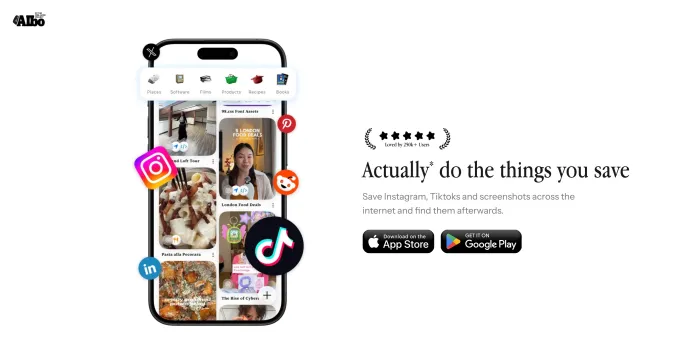
Albo, formerly called Sortd, is perhaps the clearest example of an app built for contemporary internet behavior. You see a restaurant in an Instagram Reel, a workout on TikTok, a book recommendation on Threads, and a travel tip in a group chat. You tell yourself you will remember it. You will not remember it.
Albo turns that pile of almost-forgotten links into organized collections. Users can share content from TikTok, Instagram, YouTube, Pinterest, Reddit, LinkedIn, Facebook, X, Chrome, Safari and elsewhere; screenshots work too. The app extracts details and categorizes the item, letting someone build lists for recipes, trips, places to try or films to watch. It also aims to preserve the reference after a creator deletes the original post, an increasingly practical feature in an internet where links rot with alarming speed.
The London studio behind it, The Feel Good Project, says it is trying to make tech that leaves people inspired rather than depleted. Good ambition. Albo’s subscription prompts during setup reportedly feel overly eager, which is a familiar mobile-app own goal: do the useful thing first, ask for money after a user understands why they need you. Still, among App Store hidden gems, it addresses a real modern problem without pretending it has invented a new human need.
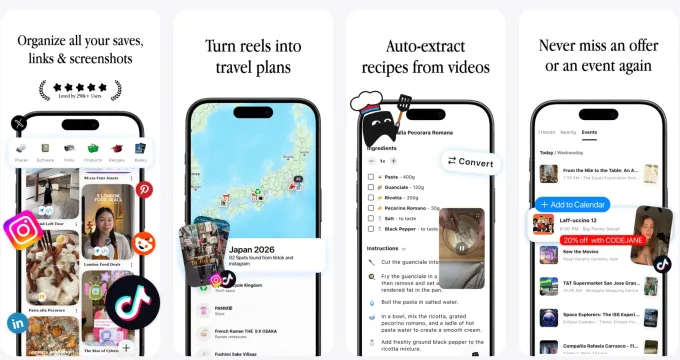
Its broader lesson is that “AI-powered” has become a marketing costume more than a product category. If automation helps sort a hundred saved clips into something usable, great. I do not need a conversational assistant to explain that it has organized my pasta videos.
Local commerce and social software with some personality
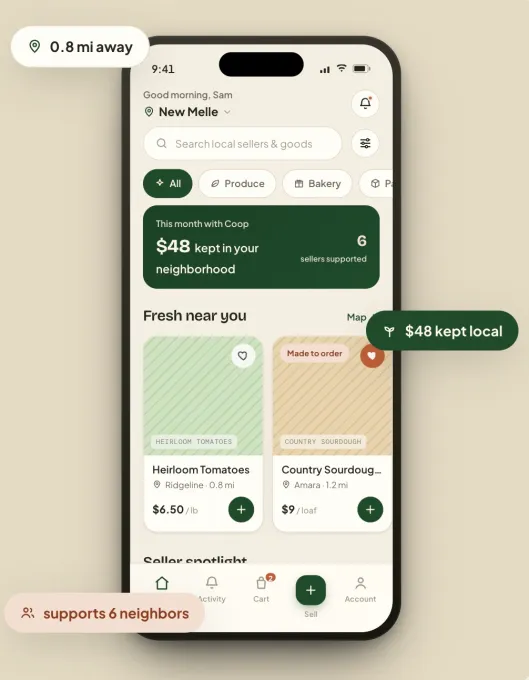
Coop takes a different route: it makes nearby buying and selling feel more like a neighborhood noticeboard than a sprawling marketplace. The app lets local growers, bakers, makers and hobbyists list goods, while buyers can browse sellers nearby, follow favorites and pay through Stripe before arranging pickup. Someone with surplus eggs, homemade bread, seedlings or a craft business gets a lightweight storefront; someone else gets an alternative to driving across town for a weekend market.
There are obvious hard parts. Trust, food safety, fulfillment and the cold-start problem all become brutally tangible when an app moves from a screen to a driveway. But Coop’s small-scale premise is appealing precisely because it does not try to be Amazon. The internet spent two decades flattening local commerce into giant search results. A few of the better App Store hidden gems are pushing in the other direction.
PI.FYI by Perfectly Imperfect is similarly allergic to the standard feed. Built around a newsletter community and styled with an intentionally scrappy retro sensibility, it gives people places to share lists, articles, recommendations and interests through themed “scenes” including music, literature, retro and whimsy. That may sound like social media with decorative stationery — and it partly is — but the distinction matters. Products like this show why App Store hidden gems can feel more personal than another engagement-maximizing feed.
Lettre pursues the same craving for slower, more deliberate connection. It is a digital pen-pal service where users can meet people through the app or write to existing contacts by email. No, it is not actual post, at least not yet. But adding a little ceremony to correspondence is a better idea than another service designed to turn friendships into streaks.
The post-TV Time opportunity is bigger than it looks
Sofa Time is one of several services competing for people displaced by TV Time’s shutdown. It tracks movies and television shows, manages watchlists, suggests places to stream and reminds users about releases. Those are basic functions, but basic is not an insult. A clean interface that remembers where you stopped watching can be more valuable than a flashy app that wants to become your entire entertainment ecosystem.
Sofa Time also has early social features, including comments, GIF and image reactions, plus translation for a global audience. It does not yet have the scale of TV Time’s old community, and communities cannot be copied with a feature checklist. Still, it has a clear opening. When a beloved service disappears — remember when Google killed Stadia and customers were left wondering which digital commitment was safe? — the replacement that respects users can gain lasting loyalty. For people seeking App Store hidden gems, that kind of respect is often the deciding factor.
ThingsBook, a writing-focused product from Naver’s US subsidiary, rounds out the list as the corporate outlier. It is not an indie project, but its arrival speaks to the same appetite: more intentional spaces for publishing and sharing, rather than one more feed that reduces every thought to bait for an algorithm.
Discovery, not creation, is the real bottleneck
The uncomfortable part of this app revival is that making software is becoming easier faster than finding it. Apple’s App Store search and editorial curation remain enormously influential, while Google Play has its own discovery challenges. Apple’s official App Store developer page makes a persuasive case for global distribution, but distribution is not discovery. Ask any independent developer who has watched a polished app vanish beneath hundreds of keyword-stuffed clones.
That is why App Store hidden gems matter beyond a listicle impulse. They are evidence that the mobile app model has not been replaced; it is being renegotiated. AI may help create the next wave of apps, and it may eventually handle parts of how we use them. But people will still choose products that feel trustworthy, focused and a little bit made for them. The winners will not be the apps with the most AI in their launch copy. They will be the ones readers keep opening after the novelty wears off.
Frequently Asked Questions
What are App Store hidden gems?
App Store hidden gems are interesting apps worth exploring, including fun, creative, and innovative tools, experiences, and other efforts. In this case, they include tools for saving online ideas, buying locally, finding pen pals, tracking shows, and sharing recommendations outside conventional social feeds.
Why are more indie mobile apps launching now?
AI coding may be helping people ship software more quickly and allowing novices to participate in the app ecosystem. A report cited in recent coverage said global new app releases rose year over year in the first quarter of 2026.
Is Albo available on Android?
Yes. Albo is available on iOS and Google Play. The app accepts links from social platforms and browsers, then organizes saved posts, videos, screenshots, and web pages into collections that can also be shared with other people.