

Table of Contents
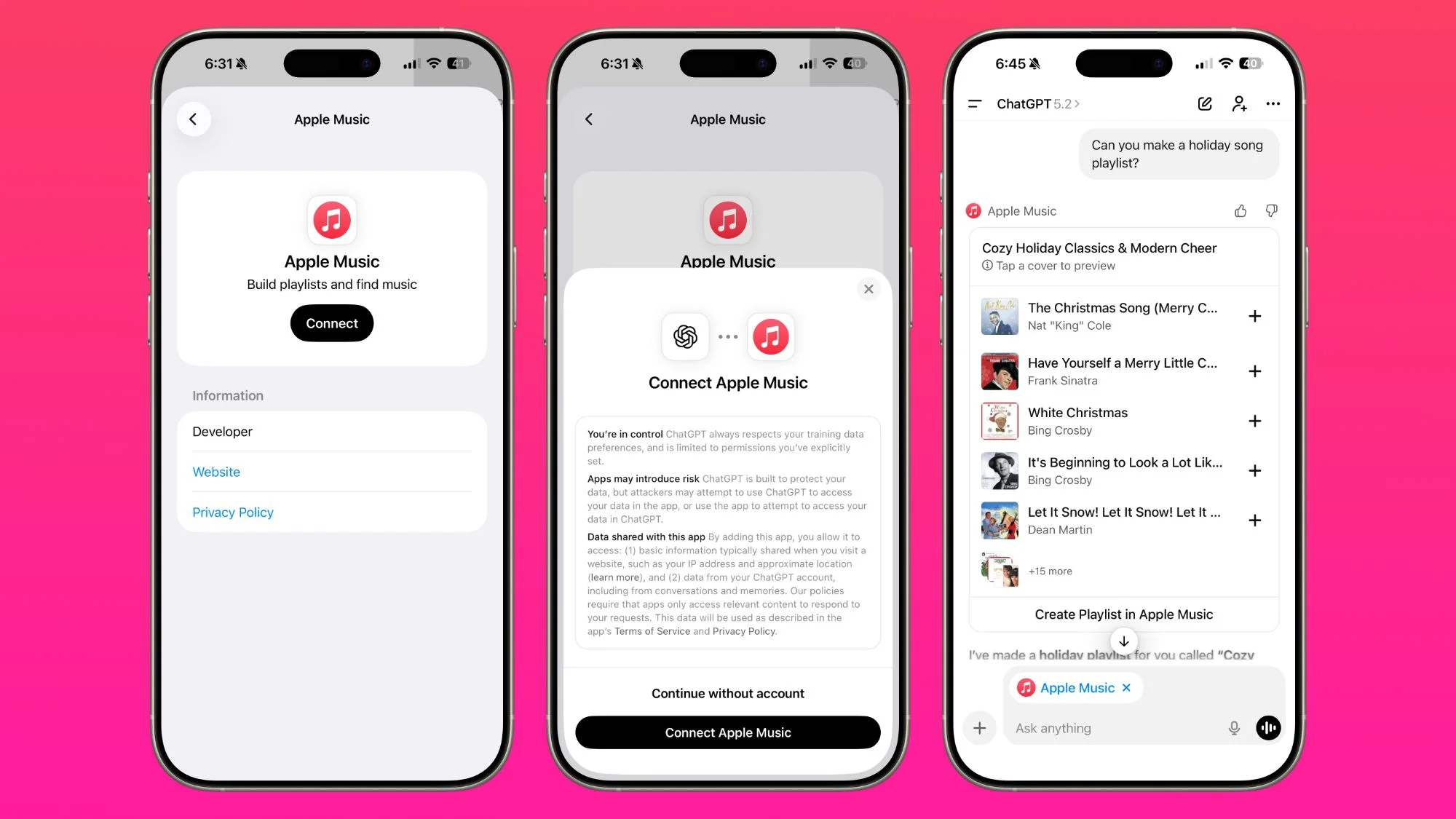
Apple Music on ChatGPT is now live, and this launch marks a clear shift in how people discover and organize music. Apple Music on ChatGPT does not turn ChatGPT into a streaming player. Instead, it turns ChatGPT into a smart assistant that understands music requests in plain language and acts on them inside Apple Music.
This update follows Apple’s earlier confirmation that Apple Music would appear as an app inside ChatGPT. That promise is now fulfilled. Apple Music subscribers can connect their accounts and start using natural language to create playlists, search for songs, and rediscover tracks they only half remember. SquaredTech sees this as a meaningful step in AI assisted media discovery that removes friction from common music tasks.
Apple Music on ChatGPT focuses on curation, discovery, and organization. It does not replace the Apple Music app. It does not stream full tracks inside ChatGPT. Instead, it bridges user intent and Apple Music’s catalog with far less effort than manual search.
What Apple Music on ChatGPT Actually Does and What It Does Not Do
Apple Music with ChatGPT has already led to confusion. Many users assume that the integration allows full song playback directly inside ChatGPT. That assumption is incorrect. Apple Music with ChatGPT does not stream complete tracks. Users may hear short samples when songs appear in results, but listening still happens inside the Apple Music app.
The real value of Apple Music with ChatGPT sits in control and intent translation. The integration allows Apple Music subscribers to speak or type requests the same way they think about music. ChatGPT then translates those requests into structured actions inside Apple Music.
For example, a user can ask ChatGPT to create a thirty song rock and roll Christmas playlist that avoids overplayed tracks. Apple Music on ChatGPT will select songs, create the playlist, and save it directly to the user’s Apple Music library. The user does not need to search each song, check availability, or manually add tracks.
Apple Music on ChatGPT also helps with vague memory based searches. Many people remember a song by context, scene, or sound instead of title and artist. With Apple Music on ChatGPT, a user can describe the song in natural language. ChatGPT processes that description and finds the most likely match in Apple Music’s catalog.
This makes Apple Music with ChatGPT useful for discovery as well as recovery. It helps users find music they lost track of years ago. SquaredTech views this as one of the strongest use cases for AI in consumer media today.
What Apple Music on ChatGPT does not do is replace music recommendation algorithms entirely. It works alongside Apple Music’s existing systems. It also requires an active Apple Music subscription. Without a subscription, users cannot save playlists or access full tracks.
How Apple Music on ChatGPT Changes Music Discovery and Playlist Creation
Apple Music on ChatGPT changes the process of playlist creation by removing manual steps. Before this integration, users needed to search for each track, confirm the correct version, and add songs one by one. That process took time and focus.
With Apple Music on ChatGPT, users describe the mood, theme, or reference point. ChatGPT handles the selection and organization. This makes playlist creation faster and more personal.
For example, a user can request a playlist inspired by a television show, a film scene, or a fictional character. Apple Music on ChatGPT understands the cultural reference and builds a playlist that matches tone and era. This level of contextual understanding is difficult to achieve with standard search filters.
Apple Music on ChatGPT also supports music exploration. Users can ask for albums similar to a favorite record. They can ask for artists connected to a specific genre period. They can ask for songs that fit a workout, study session, or late night drive. The system responds with Apple Music results that reflect the request.
From SquaredTech’s editorial view, Apple Music on ChatGPT shifts discovery from scrolling to conversation. Instead of browsing endless lists, users describe intent and receive a focused result. This reduces fatigue and improves satisfaction.
Another key change is how Apple Music on ChatGPT handles uncertainty. Users often struggle to remember exact lyrics or titles. The integration accepts imperfect descriptions. A user can describe a melody, a scene, or even a sound effect. ChatGPT processes that input and searches Apple Music accordingly.
This feature is especially valuable for casual listeners who do not track artists or album names. Apple Music on ChatGPT lowers the knowledge barrier and opens the catalog to broader use.
How to Use Apple Music on ChatGPT and What Subscribers Need to Know
Using Apple Music on ChatGPT is simple for subscribers. Once the Apple Music app appears in ChatGPT, users can select it from the app selector. They can also start prompts with a clear Apple Music reference. After activation, ChatGPT can use Apple Music automatically based on context.
This means users do not need to repeat Apple Music in every request. If a prompt clearly involves music discovery or playlist creation, ChatGPT can tap into Apple Music on its own.
Apple Music on ChatGPT requires an active subscription. Apple Music costs 10.99 dollars per month and includes a one month free trial for new users. Without a subscription, ChatGPT cannot save playlists or add songs to a library.
From a technical perspective, Apple Music on ChatGPT connects OpenAI’s language model with Apple Music’s catalog and account system. ChatGPT handles understanding and intent. Apple Music handles licensing, storage, and playback. This division keeps playback inside Apple’s ecosystem while expanding access points.
SquaredTech notes that this approach fits Apple’s platform strategy. Apple protects its media experience while allowing AI tools to improve access and control. Users gain convenience without losing the Apple Music interface they already know.
Privacy also remains a consideration. Apple Music on ChatGPT processes requests to create playlists and search content. Users should understand that requests are interpreted by ChatGPT and then passed to Apple Music. Apple has not positioned this feature as a data collection tool, but awareness remains important.
From an adoption perspective, Apple Music on ChatGPT appeals to both power users and casual listeners. Power users save time on complex playlist building. Casual listeners benefit from easier discovery. This dual appeal explains why SquaredTech expects strong engagement with this feature.
As more services follow this pattern, conversational control will likely become a standard layer across digital platforms. Apple Music on ChatGPT shows how that future can work today without forcing users to learn new systems or workflows.
Stay Updated: Tech News

