Table of Contents
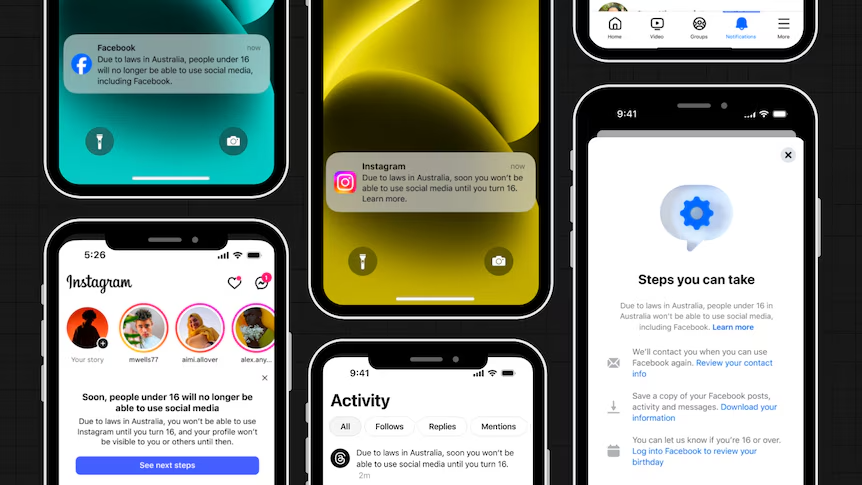
Australia has introduced a groundbreaking law that bans social media access for users under 16. This new regulation represents a significant step in global efforts to control the influence of Big Tech platforms on young people. The social media ban goes into effect on December 10, 2025, and Meta, the parent company of Instagram, Facebook, and Threads, has already begun blocking hundreds of thousands of accounts belonging to teenagers under 16 in Australia. This early action by Meta signals the seriousness and rapid enforcement of the law well before the deadline.
Australia’s Teen Social Media Ban Sets a Global Example
Our research team observed that Australia’s decision marks a crucial turning point. The country’s eSafety Commissioner, Julie Inman Grant, initially worried that banning under-16s might be a severe or blunt approach. However, after witnessing the limits of gradual regulatory adjustments, she now supports the ban, as it offers the clearest method to protect young people from the harmful effects of social media. By following Australia’s lead, other nations may soon implement similar laws to address the challenges posed by Big Tech’s influence on children and teenagers.
Read more on our article, Australia’s YouTube Ban Could Make Kids Less Safe Online, published on December 4th, 2025 SquaredTech.
Why Australia’s Social Media Ban Matters to Big Tech and Users
Australia’s internet regulator has described this move as the “first domino” in a broader push to rein in Big Tech firms’ impact on society, signaling that this ban could pave the way for more global changes. At Squaredtech, understanding how this ban affects users, platforms, and governments provides insight into a new era of internet regulation.
Social media companies like Meta, TikTok, Snap, and YouTube had resisted the ban for more than a year. They argued that blocking under-16 users was an extreme response that could disrupt user experience and freedom of expression. Despite their opposition, all major players have now agreed to comply with Australia’s law, which carries penalties of up to A$49.5 million (approximately $33 million) for non-compliance. This compliance marks a clear signal that governments worldwide are gaining leverage in regulating digital platforms.
This article highlights that social media is deeply rooted in the lives of Australian teens. Recent eSafety data shows that 96% of Australian teenagers under 16 already have social media accounts. This high percentage illustrates the scale of change the new law will bring. Platforms have undertaken steps beyond simple warnings. Meta has already begun deactivating underage accounts ahead of the official law date. Other platforms provide underage users options to download their data and either delete or freeze their accounts until they turn 16. These measures demonstrate the practical challenges of enforcing age restrictions on popular social platforms.
Meta begins blocking Australian teens under 16 from social media
The Social and Mental Health Impact of the Ban
The teen social media ban also raises important questions about mental health and family well-being. We note that families in Australia have reacted positively to the policy change. For example, Jennifer Jennison, a Sydney mother, shared her relief that the ban reduces parental pressure in managing teenagers’ social media use. She pointed out that limiting social media can give children more time to relax after school and spend quality time with their families, away from the stress and mental health risks associated with constant online interaction.
We support clear public discussion on how social media affects younger users. The regulator emphasized that social media’s business model relies heavily on user data, which powers algorithms designed to keep users engaged. These algorithms sometimes employ design choices that can be harmful or deceptive, making it difficult even for adults to resist addictive behaviors. For children and teenagers, who are still developing self-control and critical thinking skills, the risk is even higher. This concern motivated Australia’s decisive action to enforce a strict age limit for social media access.
The Political and Legal Backdrop to Australia’s Decision
The law is significant not only for its social impact but because of the political dynamics it has stirred internationally. Platforms opposing the ban reportedly lobbied against the measure by appealing to the United States government. The U.S. has viewed Australia’s attempts as an overreach affecting the principle of free speech. The Australian eSafety Commissioner revealed that Meta and others pushed their case to U.S. lawmakers, leading to a request for her to testify before the U.S. House Judiciary Committee on issues of digital regulation and jurisdiction.
We noted an interesting exchange here — while the U.S. questions Australia’s law as an extraterritorial imposition, Australia’s regulator pointed out that the request itself is an example of extraterritorial reach. This complex interaction highlights ongoing global tensions as governments try to regulate multinational tech firms that operate across borders. It also shows the evolving landscape where digital policy, national sovereignty, and corporate power intersect.
Australia’s pioneering teen social media ban sets a precedent for digital regulation worldwide. As Meta and other big platforms begin enforcing the ban, the focus shifts to enforcement challenges, user impact, and future regulation. Squaredtech will continue following these developments to ensure technology users understand how such laws affect their digital lives and what changes lie ahead in the regulation of social media.
Stay Updated: Tech News