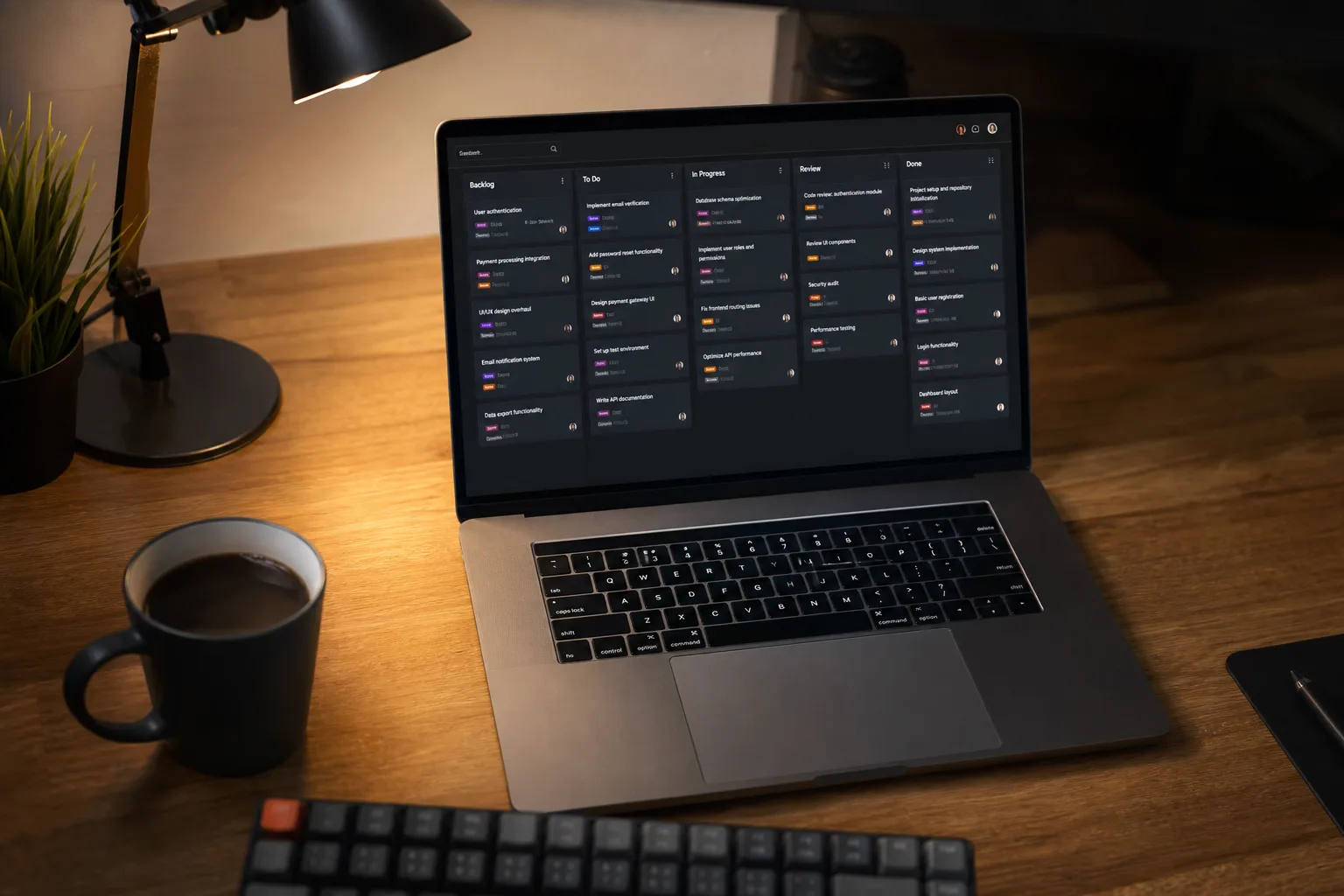
- Kanbots lets you run parallel AI agents on every Kanban card, each in its own isolated git worktree.
- The free, MIT-licensed desktop app supports parallel AI agents via Claude Code and OpenAI’s Codex CLI with zero telemetry.
- An autopilot mode dispatches up to four agents simultaneously, splitting parent issues into subtasks without manual intervention.
- All data stays local — code, configs, and SQLite database never leave your machine, even in the cloud team edition.
Table of Contents
A Kanban Board That Actually Does the Work
Kanbots is a new open source desktop app that puts parallel AI agents directly on a Kanban board — and it’s making a surprisingly strong case that the right interface for agentic coding isn’t a chat window. It’s a board. Drop a folder into the app, and within seconds you have a live project board where each card can dispatch its own AI agent, running independently in a separate git worktree on a dedicated branch. The board updates in real time as work progresses, costs accrue, and decisions surface for your review.
That’s a genuinely different take on how AI fits into a development workflow. Most AI coding tools today — GitHub Copilot, Cursor, Codeium — are essentially chat interfaces bolted onto an editor. Kanbots argues there’s a better mental model: project management as the primary surface, with agents as workers rather than conversation partners.
How Parallel AI Agents Actually Work Here
The core mechanic is straightforward but well thought through. Every card on the board can trigger a dedicated agent run. That agent gets its own git worktree, branched off main under a kanbots/issue-N naming convention, so nothing touches your working directory. Multiple parallel AI agents can run at the same time — the app supports up to four concurrent slots — and each one operates in complete isolation from the others.
Two CLI backends are supported: Anthropic’s Claude Code and OpenAI’s Codex CLI. Kanbots wraps both behind a single AgentCliAdapter, meaning you switch between them per dispatch without changing anything else about your workflow. You reuse your existing claude /login session or your OPENAI_API_KEY environment variable — no new accounts, no extra API key juggling.
The decision layer deserves attention. Rather than letting agents silently mutate your codebase, Kanbots pauses runs when an agent hits a fork — a choice that needs human input. You see numbered options, pick one, and the run resumes. There are slash commands for common operations: /spec to draft a specification before code gets written, /review to trigger a review pass, /split to break a large issue into subtasks. It’s reviewable by design, which addresses one of the genuine criticisms of fully autonomous coding agents: you don’t always know what they did or why.
Autopilot Mode and the Persona System
If you want parallel AI agents running without constant supervision, there’s an autopilot mode. Hand kanbots an issue and a budget. The orchestrator assigns it to a roster of personas — named system prompt snippets that define a role, like “product manager,