

Table of Contents
CES 2026 showcases gaming monitors that redefine PC displays. Companies push bigger OLED screens with higher speeds. The event covers TVs, laptops, and monitors. Manufacturers update gaming monitor lineups at the show. Firms display expanded OLED panels. These panels boost refresh rates, brightness, and colors. Others present glasses-free 3D concepts. Squaredtech highlights top gaming monitors announced so far.
LG leads with the UltraGear GX7 gaming monitor. This 27-inch model sets records for speed and brightness. LG Display powers it with 4th-gen RGB Tandem 2.0 OLED technology. The tech splits the yellow layer from 3rd-gen into red and green. Blue layers stack on top. This setup creates brighter screens with less power use.
The UltraGear GX7 reaches 335 nits typical brightness. VESA DisplayHDR True Black 500 certification ensures deep contrast. Dark areas stay black while bright spots pop. Dual Mode lets gamers switch settings. One mode runs 540Hz at QHD resolution for sharp images. The other hits 720Hz at HD for pure speed.
LG promises smooth play in both modes. A 0.02ms response time eliminates blur. NVIDIA G-Sync and AMD FreeSync Premium Pro prevent tearing. Gamers pair it with any GPU. Nintendo priced it at $1,000. We see it as a benchmark for OLED gaming monitors.
Samsung enters with the Odyssey 3D gaming monitor. This 32-inch LCD claims world’s first 6K glasses-free 3D. Resolution hits 6,144 x 3,456 pixels. Eye-tracking adds depth to 2D games. Terrain, distance, and objects gain separation. A 165Hz refresh rate boosts to 330Hz in Dual Mode. One millisecond response time keeps action crisp.
Samsung also updates the 32-inch Odyssey OLED G8. A 4K QD-OLED panel runs at 240Hz. Glare-free coating improves visibility. VESA DisplayHDR True Black 500 matches competitors. Brightness caps at 300 nits. Gamers value the anti-reflect tech for dark rooms.
LG and Samsung Gaming Monitors Push OLED Boundaries
OLED technology evolved since 2017 launches. Early panels suffered burn-in. New tandem stacks double light layers. LG’s RGB split refines colors further. Gamers notice purer reds and greens. Brightness jumps support HDR content.
The LG UltraGear GX7 excels in esports. Competitive players pick 720Hz for fluid motion. Casual users stay at QHD 540Hz. Ports include HDMI 2.1 and DisplayPort. USB hubs connect peripherals. Our team analyzes Dual Mode as a game-changer.
Samsung Odyssey 3D transforms titles like Lies of P: Overture. Depth layers make soulslike bosses more immersive. Non-3D mode still impresses at 330Hz. QD-OLED in G8 delivers infinite blacks. Glare-free surfaces cut distractions.
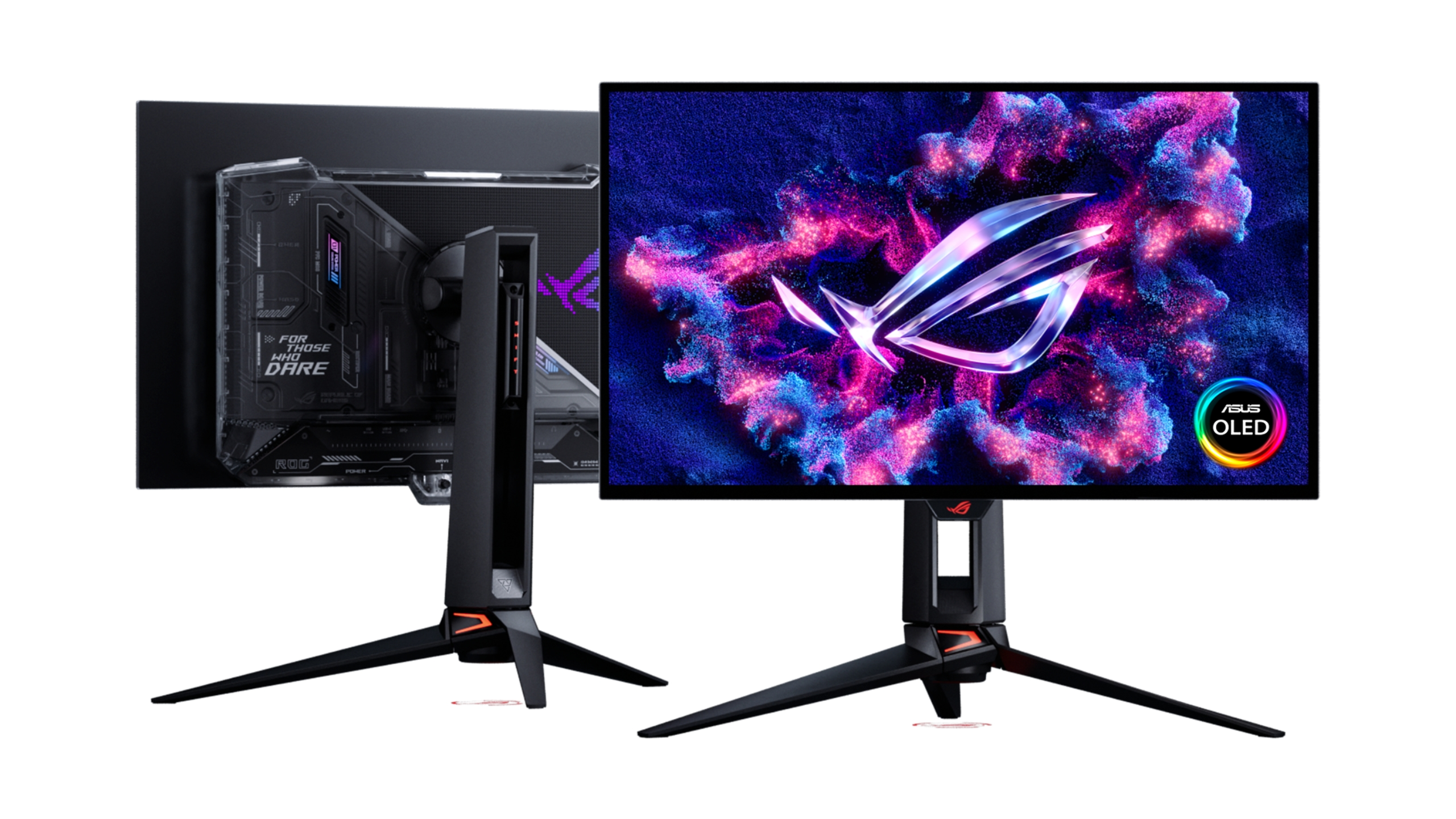
ASUS debuts ROG Swift OLED PG27UCWM. This 27-inch uses Tandem OLED with two light layers. RGB Stripe layout arranges full RGB sub-pixels. Text sharpens over past QD-OLED. Colors match 99% DCI-P3 gamut.
Run it at 4K 240Hz or FHD 480Hz. A 0.03ms response time clears motion. Neo Proximity Sensor dims screen when eyes look away. Burn-in prevention activates automatically. ASUS pairs it with NVIDIA G-Sync Pulsar tech.
The ROG Strix Pulsar XG27AQNGV supports Pulsar first. Variable backlighting cuts blur for pros. 27-inch 1440p panel hits 360Hz. ASUS claims fastest 1440p LCD response. Ports cover DisplayPort, HDMI 2.1, and USB 3.2.
MSI’s MPG 314CQR QD-OLED X36 uses V-stripe QD-OLED. Sharper text aids strategy games. ViewSonic VX2738 offers 27-inch 2K QHD QD-OLED at 240Hz. 0.03ms response supports FreeSync and G-Sync. Esports mode scales to 24.5-inch. Price hits $500 with HDMI 2.1.
ASUS, MSI, and ViewSonic Gaming Monitors Innovate for Pros
ASUS RGB Stripe stems from LG research. Sub-pixel order boosts clarity. Gamers read chat logs without blur. Tandem layers mimic Apple iPad Pro displays. Double emitters raise peak brightness.
ROG Swift PG27UCWM suits mixed use. 480Hz crushes FPS titles. 240Hz 4K handles RPGs. Sensor tech extends panel life. Pulsar on Strix Pulsar sharpens competitive edges. Backlight pulses match frame rates.
MSI and ViewSonic target value. QD-OLED cuts costs over tandem. V-stripe improves sub-pixel rendering. ViewSonic esports mode shrinks view for focus. $500 price undercuts rivals.
HP launches HyperX Omen OLED 34. Curved 34-inch QD-OLED uses V-stripe tech. 21:9 aspect ratio immerses racers. 360Hz refresh and 0.03ms response fly in sims. 100W USB-C charges laptops. KVM switch toggles sources. 3D-printable headphone hook adds flair.
Acer Predator XB273U F6 breaks speed records. 27-inch 1440p IPS defaults to 500Hz. DFR mode boosts to 1000Hz at 1280×720. 350 nits brightness covers 95% DCI-P3. 2-watt speakers fill small rooms. Ports include HDMI 2.1 and DisplayPort 1.4. Q2 2026 launch prices at $800.
CES history traces to 1967. Gaming monitors surged post-2020. OLED adoption grew with burn-in fixes. Refresh rates climbed from 144Hz to 1000Hz. Sizes expanded for ultrawides.
CES 2026 Gaming Monitors Reshape PC Battles
HyperX Omen OLED 34 unifies HP brands. Curve wraps ultrawide views. KVM streamlines work-play switches. USB-C powers setups fully. Acer F6 targets overclockers. 1000Hz mode demands top GPUs. IPS reliability beats OLED longevity fears. Color accuracy suits creators too.
Squaredtech predicts OLED dominance. Tandem and QD-OLED vie for brightness crowns. Glasses-free 3D and Pulsar niche in esports. Prices drop as production scales. Gamers upgrade for fluid 4K fights.
CES 2026 cements gaming monitors as stars. Bigger panels deliver cinema immersion. Faster rates erase blur. Companies compete on specs. Players win with choices.
Stay Updated: Tech News

