Table of Contents
Samsung’s 2026 gaming monitors lineup pushes boundaries with 6K resolution, glasses-free 3D, and extreme refresh rates up to 1,040Hz, giving gamers sharper visuals and smoother play. Gamers ready to experience the future of displays have a lot to look forward to in 2026.
Odyssey 3D Leads Samsung’s 2026 Gaming Monitors
Samsung launches the Odyssey 3D G90XH as the flagship. This 32-inch IPS panel delivers the first 6K display with glasses-free 3D. Real-time eye-tracking adjusts depth and perspective based on head position. This immersive tech brings game worlds to life without extra glasses or peripherals.
The monitor runs at 165Hz natively. Users activate Dual Mode to hit 330Hz at 3K resolution. This setup balances high detail with fast motion for competitive gaming.
Samsung upgrades from its 2025 CES model. That version used a 27-inch 4K screen. The 2026 model doubles size and jumps to 6K for denser pixels and wider views.
Eye-tracking uses built-in sensors. The system tracks pupil movement 100 times per second. Depth layers shift in real time to create 3D without glasses.
Games like Stellar Blade receive specific optimizations. Lies of P: Overture and The First Berserker: Khazan join the list. Black Myth: Wukong, Hogwarts Legacy, Palworld, and Silent Hill 2 support 3D effects too.
Samsung partners with developers early. Studios tweak shaders for 3D pop-out. Players immerse in environments without hardware add-ons.
Other brands offer 6K monitors. Asus targets pros with color accuracy. Dell adds webcams for hybrid work. LG integrates Thunderbolt 5 for fast data.
Samsung focuses on gaming immersion. 3D effects pull enemies forward in shooters. Racing sims gain realistic curves and distances.
We see this as a leap for console gamers. PlayStation 5 and Xbox Series X scale to 6K upscaling. PC rigs with RTX 5090 handle native output.
Refresh rates prevent tearing. AMD FreeSync Premium and NVIDIA G-Sync sync frames. Input lag drops below 1ms in competitive modes.
Production starts mid-2026. Supply chains ramp for OLED panels and sensors. Early adopters test beta firmware for game profiles.
Extreme Speeds Define Odyssey G6 in 2026 Gaming Monitors
Samsung claims the Odyssey G6 G60H as the world’s first 1,040Hz gaming monitor. This 27-inch display hits that speed at HD resolution. Native 1440p caps at 600Hz for balanced play.
High refresh rates blur motion. Pixels update over 1,000 times per second at low resolution—ideal for esports pros chasing milliseconds in performance.
Users switch modes via the OSD menu. HD mode suits FPS titles like Valorant. 1440p handles open-world games at high frames.
AMD FreeSync Premium eliminates stutters. NVIDIA G-Sync adds variable sync. Both standards certify low latency.
Samsung engineers overclock panels. Custom drivers push silicon limits. Cooling fans keep thermals stable during marathons.
Background traces esports demands. Monitors evolve from 60Hz CRTs to 500Hz OLEDs. 1,040Hz targets 0.1ms response times.
Competitors chase speeds. Alienware hits 500Hz at 1440p. Samsung doubles down on extremes.
Gamers pair with 6000-series CPUs. Intel Core Ultra 9 or AMD Ryzen 9 feed frames. DDR6 RAM accelerates at 10,000MT/s.
Our team analyzed competitive edges. Pros gain microseconds in aim duels. Casual players notice silkier scrolling.
Resolution trade-offs exist. HD mode sacrifices detail for speed. Smart scaling upsamples to full panel.
Firmware updates add profiles. Titles like Counter-Strike 3 auto-tune. Over-the-air patches fix glitches.
Release aligns with 2026 GPU launches. NVIDIA RTX 60-series supports it fully.
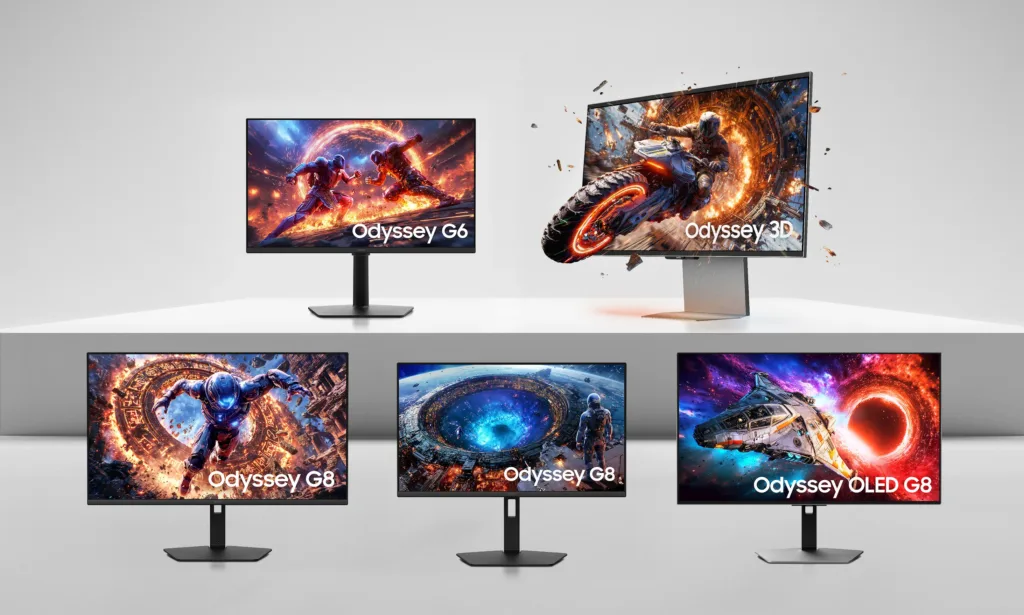
Odyssey G8 Variants Expand Samsung’s 2026 Gaming Monitors
Samsung unveils three Odyssey G8 models in its 2026 gaming monitors. The 32-inch G80HS packs 6K at 165Hz. Dual Mode boosts to 330Hz at 3K.
The 27-inch G80HF offers 5K resolution. Base speed hits 180Hz. It doubles to 360Hz at 1440p for versatility.
A 4K OLED G8 rounds the trio. This panel reaches 240Hz with 300-nit brightness. True Black 500 certification delivers deep contrast.
All G8 monitors support AMD FreeSync Premium Pro. NVIDIA G-Sync ensures broad GPU compatibility. HDR10+ enhances dynamic range.
OLED avoids IPS glow. Pixels turn off for pure blacks. Burn-in protection activates pixel shift.
6K G80HS rivals Apple Pro Display XDR. Gamers get 98% DCI-P3 color. Factory calibration hits Delta E under 2.
5K G80HF suits content creators. Adobe RGB coverage aids editing. Gaming modes prioritize speed.
Pricing starts high. Expect $1,500 for OLED. 6K models near $2,500. Previous 3D hit $2,000 at 4K.
Samsung skips exact dates. Q2 2026 shipments likely. Preorders open at CES 2026.
Squaredtech compares lineups. Odyssey covers budgets from $800 to $3,000. Mix of resolutions fits setups.
Ports include DisplayPort 2.1 and HDMI 2.1a. USB-C with 240W power delivery charges laptops.
Software integrates SmartThings. Users control lighting and profiles via app.
Market Shifts from Samsung’s 2026 Gaming Monitors
Samsung controls roughly 40% of the gaming monitor market, and this lineup raises the bar for competitors. 6K resolution demands high-end PCs, while HD options allow broader accessibility.
Glasses-free 3D revives a niche technology, previously popularized by the Nintendo 3DS, now scaled to desktops. Developers optimize titles with Unity and Unreal Engine plugins, supporting both AAA and indie games.
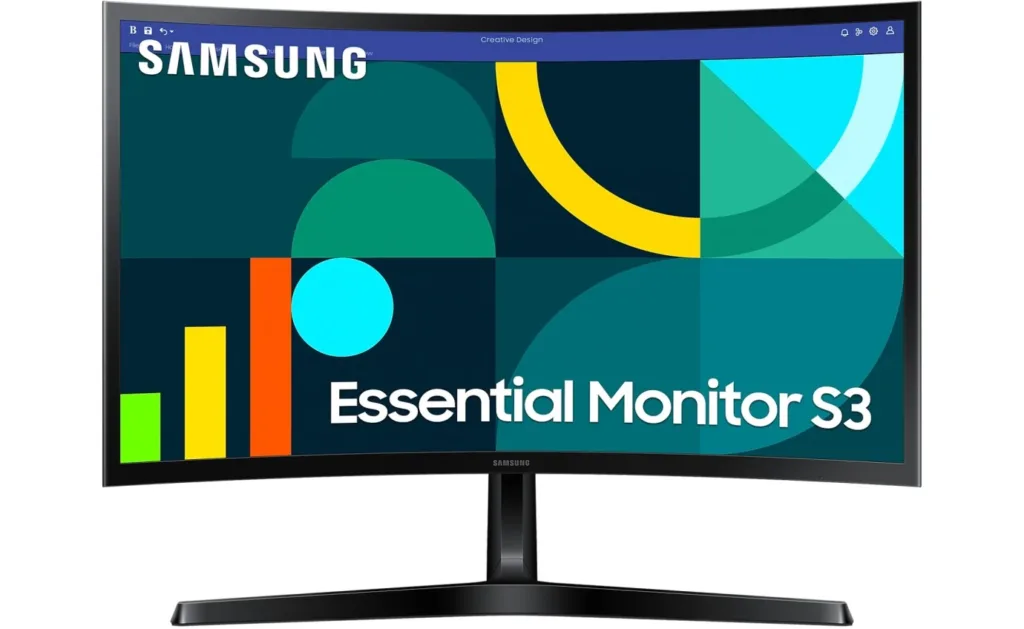
Retailers showcase monitors in demo zones, and Amazon bundles them with GPUs. Esports leagues test monitors live, highlighting clarity and responsiveness. Samsung’s $10 billion investment in display technology ensures ongoing innovation.
Annual upgrade cycles accelerate. Gamers trade in old 144Hz screens for future-proofed rigs. Accessories, microLED technology, and 8K previews are already on the horizon.
Stay Updated: Gaming