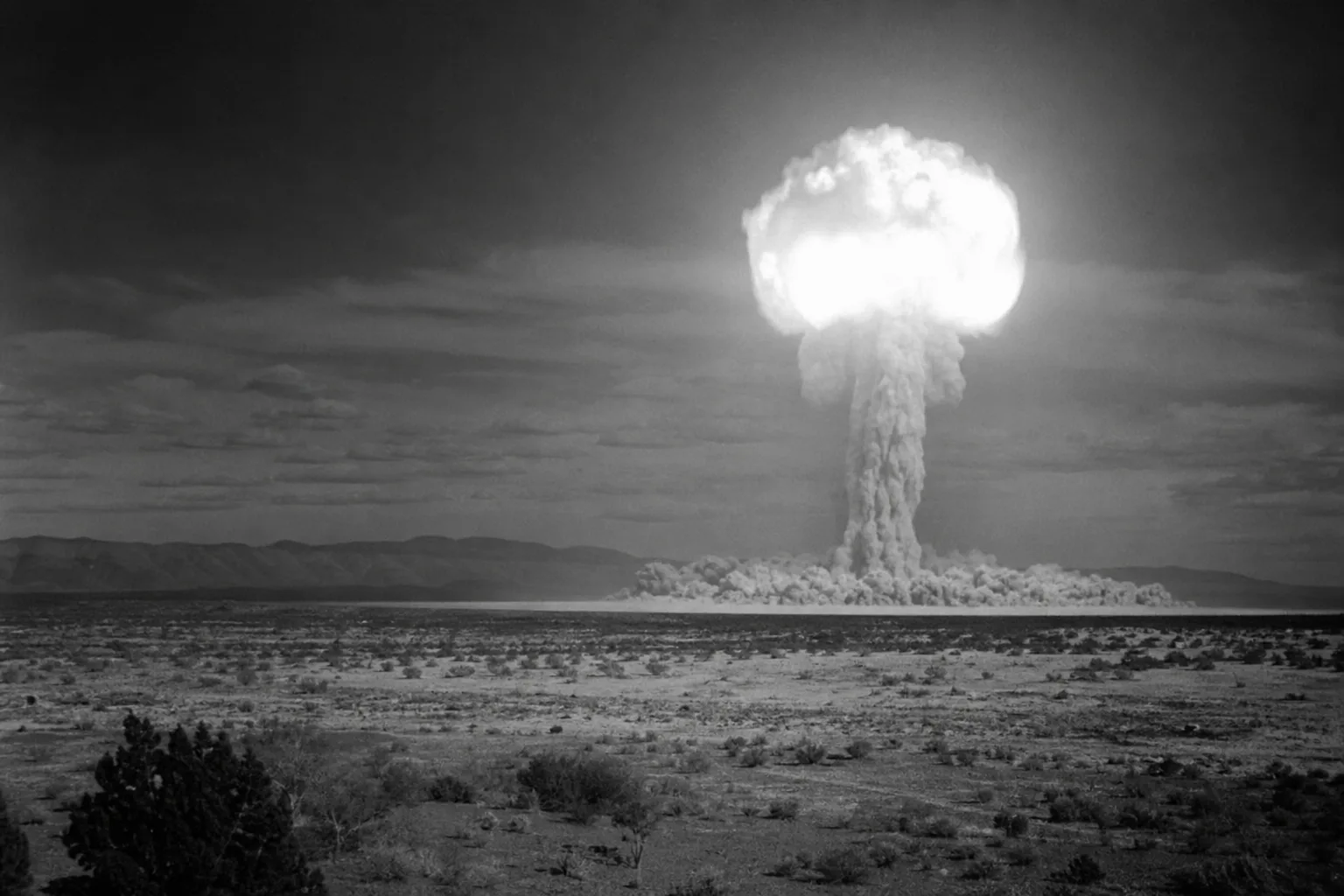
- Restored Trinity nuclear test footage captures the first atomic detonation in July 1945 with unprecedented visual clarity.
- The Trinity nuclear test was far more powerful than predicted, overwhelming most cameras and diagnostic instruments on site.
- Only 11 of 52 cameras produced usable images, yet the footage still spans from 25 milliseconds to 60 seconds post-detonation.
- A new illustrated history from the University of Chicago Press brings forgotten photos and firsthand accounts back into focus.
Table of Contents
The Trinity Nuclear Test Through a New Lens
The Trinity nuclear test took place in the New Mexico desert on 16 July 1945 — and it didn’t just change the course of the war. It changed what humanity understood about its own destructive potential. Eighty years on, a forthcoming illustrated history, Trinity: An Illustrated History of the World’s First Atomic Test by Emily Seyl with contributions from Alan B. Carr, published by the University of Chicago Press, is surfacing photographs that have spent decades buried in archives. The images are striking. And in many ways, they’re more unsettling now than ever.
What makes this release significant isn’t just historical nostalgia. It’s the technology behind capturing those images — primitive by today’s standards, but extraordinary in context — and what those images still can and cannot tell us about the most consequential explosion in human history.
The Man With His Head in a Camera Turret
To understand how these images exist at all, you have to start with Berlyn Brixner. Stationed in the North 10,000 photography bunker — 10,000 feet from ground zero — Brixner was one of the only people at the test site actually instructed to look toward the blast. He wore welder’s glasses and had his head inside a turret packed with cameras and film, tasked with tracking the fireball as it climbed into the sky.
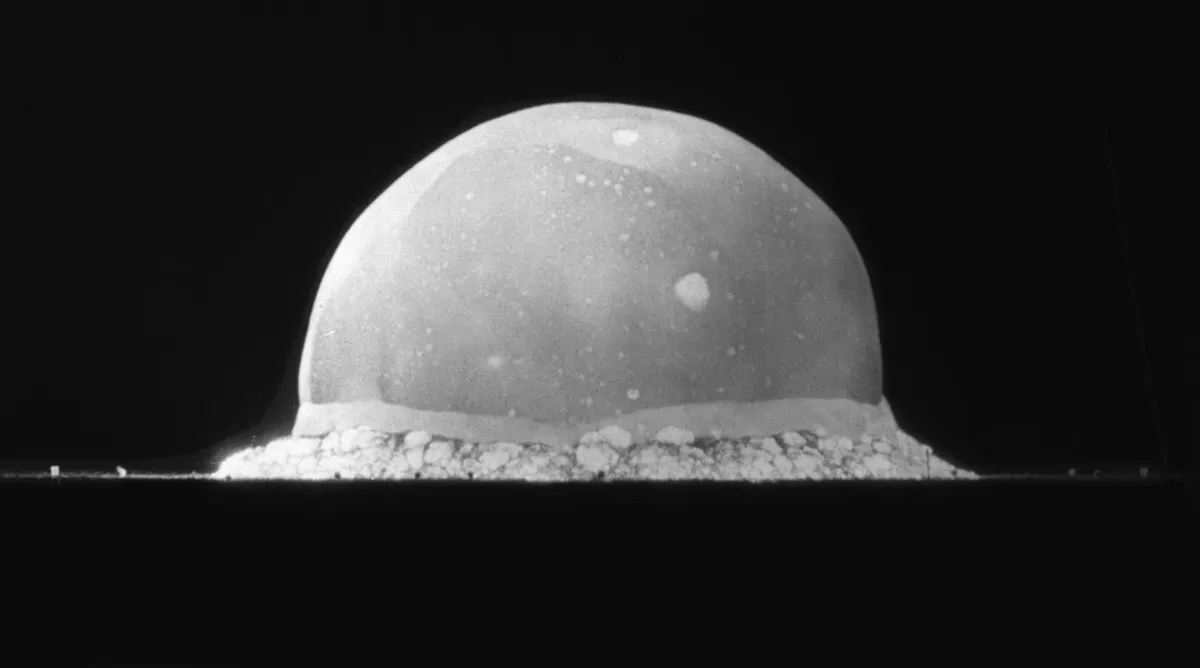
His two Mitchell movie cameras produced the best footage of the entire test. That footage wasn’t just archival material — it was working scientific data. Los Alamos physicists used it to make some of the first quantitative measurements of a nuclear explosion’s effects. A high-speed Fastax camera in the same bunker, shooting through a thick glass porthole, captured a translucent orb erupting through darkness less than one-hundredth of a second after detonation.
Think about what that means technically. In the fraction of a second before any human observer could register what was happening, the camera had already recorded the birth of the nuclear age. Frame rates and shutter speeds that were considered experimental in 1945 were the only tools capable of keeping pace with what the Gadget — the plutonium implosion device — was doing.
What the Cameras Saw That Humans Couldn’t
The physics of the Trinity nuclear test detonation are almost incomprehensible in their speed. Thirty-two blocks of conventional high explosive fired simultaneously, driving a shockwave inward toward a dense plutonium core. The compression was instantaneous. A precisely timed burst of neutrons triggered an uncontrolled fission chain reaction — and then, almost as fast as it started, it was over. The Gadget was gone. In its place: a fireball expanding at a rate no human eye could meaningfully track.
Footage compiled from multiple cameras shows the fireball growing from 25 milliseconds to 60 seconds after detonation — by which point the mushroom cloud had already pushed past three kilometres in height. The blast was measurably, significantly more powerful than Los Alamos scientists had predicted. That miscalculation overwhelmed a large portion of the photographic and diagnostic equipment on site. The Manhattan Project’s official historical record documents how extensively the yield exceeded expectations across multiple measurement systems.
Julian Mack, the leader of the Spectrographic and Photographic Measurements Group, was candid about the limits of what even a successful photographic record could convey. Over 100,000 frames were captured, yet Mack acknowledged they still