

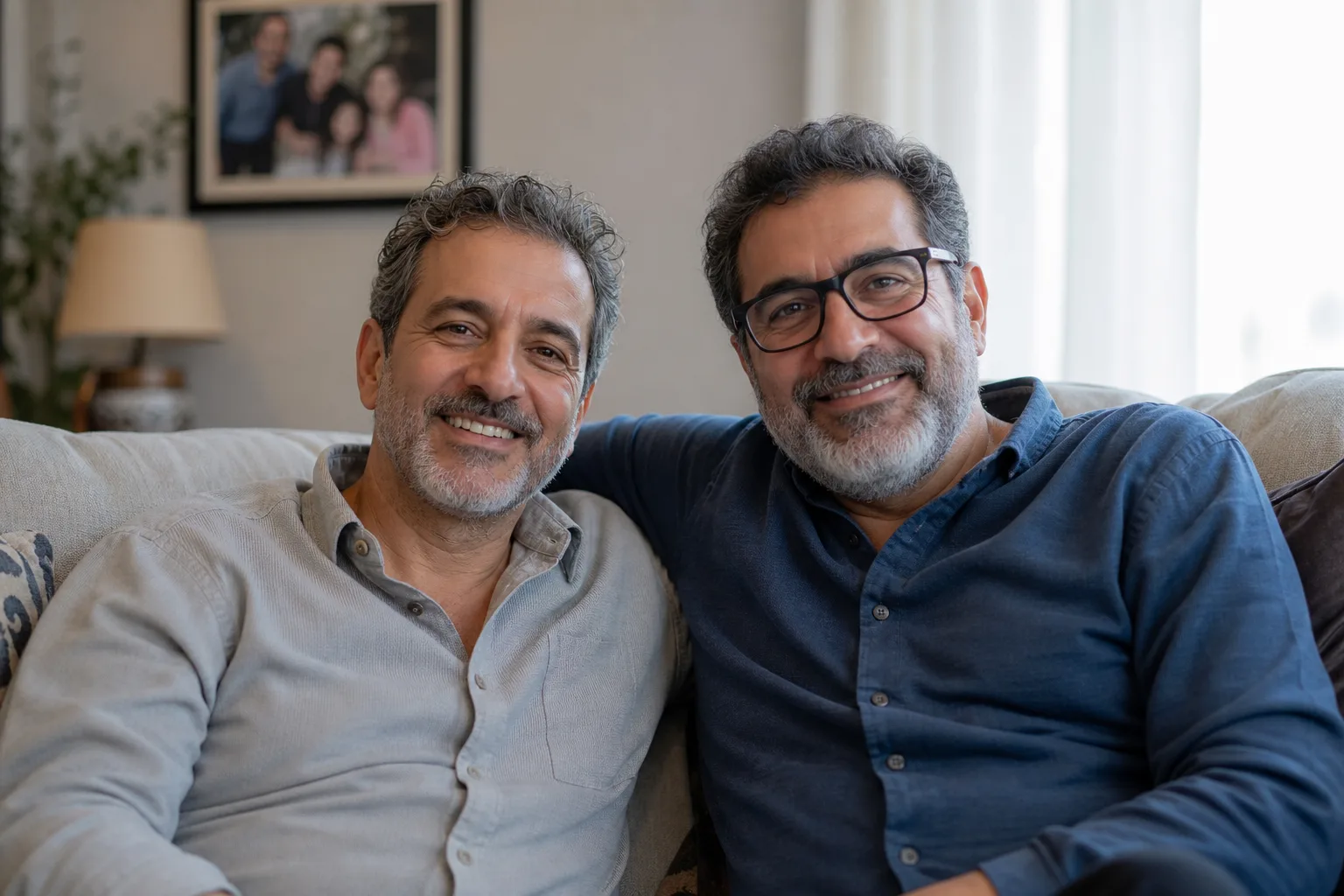
- The subway baby adoption began in August 2000 when Danny Stewart found a newborn at Union Square station, umbilical cord still attached.
- This subway baby adoption case took an unexpected turn when a judge asked Danny — just weeks later — if he wanted to adopt the child.
- Danny and his partner Pete had just 24 hours to prepare before bringing baby Kevin home after being granted custody on December 20.
- Kevin, now 26, works as a software developer and remains close with his two dads, who have since published a children’s book about their family.
Table of Contents
The Night Everything Changed: A Subway Baby Adoption Nobody Planned
The subway baby adoption story that reshaped three lives started, as so many extraordinary things do, with a missed dinner reservation. It was August 2000. Danny Stewart, then 34, was a social care worker living in New York City — rushing through Union Square subway station toward a turnstile when something in the corner of the platform stopped him cold. A bundle of clothes. Moving.
He peeled back a dark sweatshirt and found a newborn baby, umbilical cord still attached, lying alone on the subway floor. This subway baby adoption would go on to capture the attention of the entire country.
“I was in shock,” Stewart has said. He sprinted to street level, found a payphone — this was 2000, remember, when that was still the logical move — and called 911. Then he ran back down to the platform and crouched beside the baby, stroking his head until the police arrived. The baby pulled a face at the touch. “OK, you don’t like that,” Stewart told him. They stared at each other.
What happened next unfolded across weeks rather than minutes. After giving a police statement and going home to process what he’d just witnessed, Stewart and his partner Pete talked through the night — about why a mother might leave a newborn in a subway station, about the strange geography of the choice: Union Square, right in the heart of what was then the cultural epicentre of gay New York.
From Witness to Father: How the Adoption Came Together
Twelve weeks after that August evening, Stewart was summoned back to court to testify. The baby’s mother had not been found. Then, without warning, the judge asked Stewart directly: did he have any interest in adopting the child? He hadn’t considered it for a single moment before that instant — and yet, he says, he knew immediately that he wanted to say yes. For Danny, the subway baby adoption was no longer just a news story he happened to witness; it was his future.
Pete’s reaction was the opposite. They’d never discussed having children. They were in debt. They didn’t even live together. By every conventional measure, adopting a newborn made no sense. But Stewart was immovable. He convinced Pete to at least visit the baby in foster care.
It didn’t take long. The moment Pete held the baby, according to Stewart, “every morsel of resistance instantly evaporated.” They left the foster home as a united front.
On December 20, they were back in court and granted custody. The judge’s parting question: “How would you like him for the holidays?” They bought parenting books that night and read them cover to cover within 24 hours. Stewart moved into Pete’s apartment. They named the baby Kevin — after Pete’s older brother, who had died before Pete was born. His parents had always told Pete he had a guardian angel named Kevin watching over him.
Raising Kevin: The Reality Behind the Story
Taking a newborn home with a single day’s notice is, to put it plainly, terrifying. For weeks, Danny and Pete took turns sitting up through the night just to confirm the baby was still breathing. That particular anxiety — the raw, sleepless vigilance of new parenthood — is universal. The circumstances around it, in their case, were anything but.
They were two gay men in New York City in 2001, raising an abandoned infant they’d been asked to adopt by a judge on something close to a whim. The subway baby adoption had placed them in uncharted legal and social territory. Same-sex adoption laws in the United States were a patchwork of uncertainty at the time, varying sharply by state, and the social landscape for LGBTQ families — while more accepting in New York than most places — was still navigating terrain that straight parents simply didn’t have to think about.
To help Kevin understand his own origins, Danny and Pete wrote him a story — a simple, direct account of how their family came to be. Kevin made them read it repeatedly. He took it to school. It became, in its own small way, a foundational document for him.
When Kevin was 11, New York legalised same-sex marriage. Danny and Pete told him they wanted to get married. Kevin’s response was characteristically direct: “Don’t judges marry people?” He suggested the judge who had granted his adoption. She agreed. They were married by the same woman who had asked, a decade earlier, if they’d like a baby for the holidays.
The Harder Questions — and How Kevin Found His Footing
Not every chapter of this subway baby adoption story is warm and uncomplicated. As a teenager, Kevin went through an extended period of searching — emotionally and literally. He wanted to put up posters in the subway system looking for his birth mother. Danny and Pete would notice him scanning strangers’ faces, looking for a resemblance, some biological echo of himself in the crowd.
That kind of searching is entirely expected in adoptees, particularly those whose origins involve abandonment rather than a clean legal transfer between known parties. Child psychologists have long documented the identity work that adopted children — especially those adopted from ambiguous or traumatic circumstances — must do in adolescence. Kevin’s case was more visible and more public than most, but the emotional territory he was navigating was deeply familiar.
He’s made peace with it now, by his father’s account. The not-knowing has become something he carries rather than something that defines him.
A Software Developer, a Children’s Book, and a Story That Keeps Going
Kevin is 26 today. He works as a software developer — which, for a subway baby adoption story that began on a New York City platform, has a certain neat irony to it, the kid found on the platform now building the digital infrastructure of modern life. He works out of state, but by all accounts remains close to his dads.
Pete has written a memoir about the family’s journey. The story Danny and Pete originally wrote for Kevin as a child has since been turned into a published children’s book, accompanied by a short animation. Their intent is practical and direct: to show children that families are formed in all kinds of ways. That biology isn’t the only blueprint.
“We want other children to understand there are lots of ways to become a family,” Stewart has said. It’s a straightforward message, but it lands differently when it comes from a man who found his son on a subway platform with the umbilical cord still attached.
The subway baby adoption case attracted a brief flurry of media attention in 2000 and then, as these things do, receded. Life went on. But the story’s second act — the memoir, the children’s book, the animation, the now-grown software developer — suggests it wasn’t finished. There’s a whole genre of books and campaigns trying to tell children that family is whatever love makes it. Danny, Pete, and Kevin don’t have to argue the point. They just are it.

