

Table of Contents
The RAM crisis and why it hurts Windows PC makers
The RAM crisis is not just a blip; it is a structural shift in how memory chips get allocated. Three giants—SK Hynix, Samsung, and Micron—control more than 90 percent of global memory output. Those companies are shifting more wafers toward AI data centers, which now consume about 70 percent of high‑end memory in 2026. That leaves fewer chips for consumer PCs, laptops, and smartphones, which drives up prices and causes supply shortages. Counterpoint Research data show memory and SSD prices jumped roughly 50 percent in Q4 2025 and could rise another 40–50 percent by the end of 2026.
Those jumps hit PC makers hard because RAM and storage already account for a big slice of each laptop’s bill of materials. TrendForce warned that PC manufacturers could raise prices up to 40 percent if they try to protect their margins. A $900 laptop could easily become a $1,260 laptop just from memory and SSD costs. HP recently told investors that RAM now makes up more than a third of its PC cost, a number that reflects how tight the supply is. For Windows OEMs like ASUS, Lenovo, Dell, and HP, PC sales are their core business, so higher parts costs translate directly into smaller profits or higher retail prices.
Apple does not face the same pressure. The iPhone’s record‑setting quarter brought $85.27 billion in revenue, which dwarfs the Mac business and cushions the impact of component‑cost swings. Even though Mac revenue dipped slightly year‑over‑year, Apple’s overall profit still rose because of services and phones. PC‑makers like ASUS, in contrast, operate on margins around 15 percent, far below Apple’s consolidated gross margin of about 46.9 percent overall and roughly 37 percent on hardware. In other words, the RAM crisis hits Apple’s competitors harder and gives Apple more room to play price games.
How the MacBook Neo exploits Apple’s RAM‑efficient design
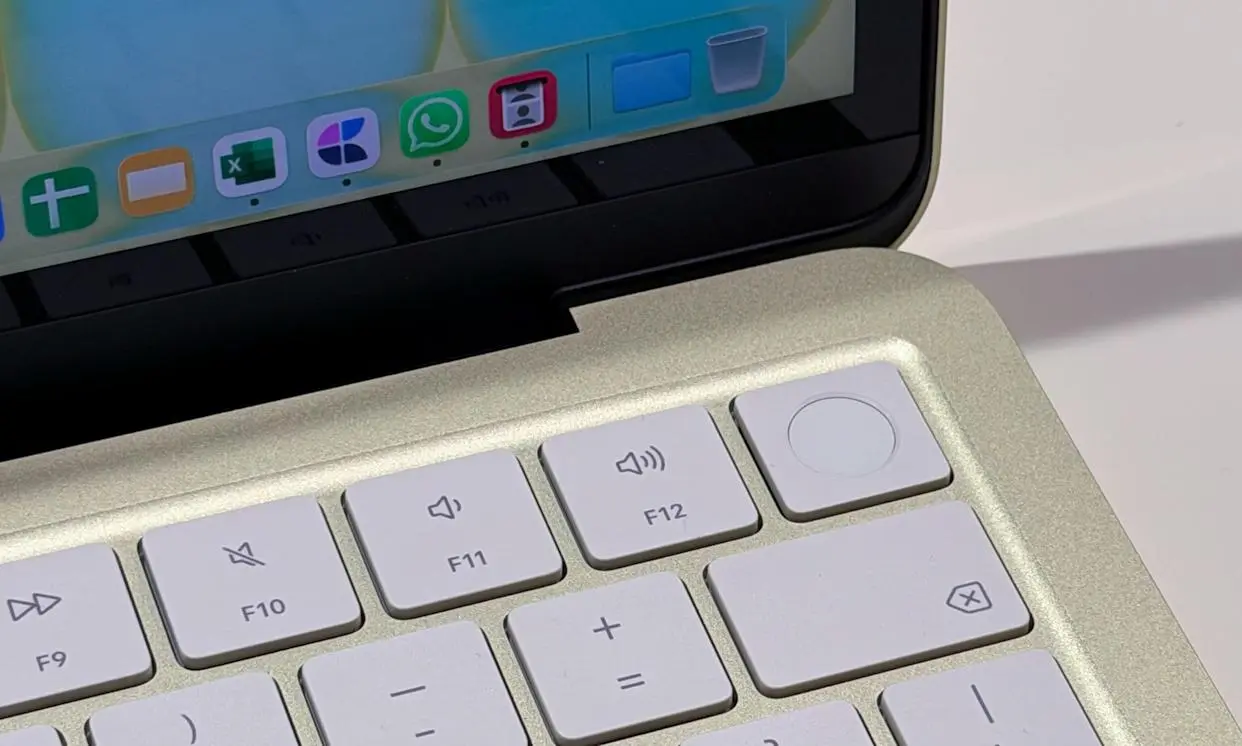
The MacBook Neo is the clearest example of how Apple can turn the RAM crisis into a competitive edge. The laptop starts at $599 with 8GB of unified memory and 256GB of storage, a configuration that would feel limiting on most Windows machines. However, the Neo uses the A18 Pro chip, which is built around a unified memory architecture (UMA) where the CPU, GPU, and Neural Engine share a single high‑speed memory pool. That eliminates the bottleneck of copying data between separate RAM and GPU memory, and macOS also compresses inactive data more aggressively than Windows, so 8GB can feel like 12–14GB of usable RAM on a typical Windows laptop.
The Neo’s memory is soldered into the Apple Silicon package, so users cannot upgrade it later. Apple made that trade‑off on purpose to keep the unit cost low and the design compact. The same A18 Pro core powers the iPhone 16 Pro, so Apple can reuse mature production and control yields across its product lines. Unified memory, plus efficient memory management in macOS, lets the Neo run Apple Intelligence features and everyday apps without obvious stuttering, even at 8GB. For us, this design signals a deeper shift: Apple’s architecture is built to squeeze more performance out of less physical RAM, while the Windows PC industry still relies on adding more DIMMs and more storage.
The Neo forces Windows OEMs to rethink their whole PC stack. Microsoft’s Copilot+ AI‑PC rules already require 16GB of RAM and 256GB of storage, which pushes Windows laptops toward higher‑cost configurations just to qualify for the branding. Even that push only got Copilot+ devices to about 1.9 percent of PC sales in early 2025, so many users may not see clear value for the extra cost. Now, with the RAM crisis, OEMs cannot easily cut back to 8GB without hurting performance on Windows, yet they also cannot afford to keep RAM stockpiles. The result is a catch‑22: raise prices, cut RAM, or deliver a slower‑feeling notebook.
Why this RAM crisis is Apple’s best PC‑market chance in decades
The RAM crisis is not just a technical issue; it reshapes the playing field for the PC market. Apple’s share of global PC shipments sits around 9–10 percent, usually placing it around fourth among PC makers. Outside of the smartphone space, Apple has never matched Windows’ dominance, in part because of low‑cost commodity PCs and aggressive pricing by Lenovo, HP, Dell, and ASUS. The RAM crisis flips that dynamic because one single part now drives a large share of a PC’s cost. When RAM is this expensive, traditional PC makers lose the price advantage they used to enjoy.
Apple already has several built‑in advantages. It designs its own chips, Wi‑Fi, Bluetooth, and power‑management silicon, so it avoids paying some third‑party fees and can optimize the whole stack. Apple does not pay Microsoft a per‑device Windows license, which saves a few dollars on every Mac compared with Windows PCs. Those small savings add up when RAM is one of the most expensive line items. Apple’s high hardware margins also mean it can choose to lower prices, raise storage, or hold pricing steady while rivals must either jack up prices or cut back on RAM.
The MacBook Neo shows what Apple can do: sell a Mac at roughly the same street price as many budget Windows laptops, but with a fast‑feeling interface, long‑lasting battery, and Apple’s ecosystem perks. Analysts describe the Neo as a “shock to the entire market,” with OEMs like ASUS saying it will need a year or more to respond. Windows makers are stuck between x86‑based designs, Copilot+ rules, and now a RAM shortage. Qualcomm’s Snapdragon X2 and X2 Plus chips offer some ARM‑based alternatives, but those platforms still depend on Windows and 16GB‑style configurations, and OEM support remains limited.
From a Squaredtech.co perspective, Apple should treat this RAM crisis as a generational window. The company can maintain or even lower Mac prices while competitors raise them, which would push more students, families, and small businesses to consider Macs for the first time. Apple has already increased prices slightly on the MacBook Air and MacBook Pro, but it could keep its base models closer to $600–$700 territory while Windows laptops drift above $1,000. If the RAM shortage lasts into 2030, as SK Hynix’s leadership has suggested, Apple’s unified‑memory‑driven efficiency and premium margins position it better than almost any PC maker.
What Apple must do next to capture more PC market share
Apple’s next move should be strategic, not just reactive. The RAM crisis gives Apple a chance to anchor its brand deeper in homes, schools, and small businesses by making the Neo and similar models available in more regions and configurations. Expanding education‑focused bundles, volume discounts, and trade‑in programs could accelerate adoption while Apple still benefits from high margins. Apple should also lean into services—iCloud, Apple Music, Apple TV+, and Apple Arcade—to keep users inside the ecosystem once they buy a Mac.
At the same time, Apple can keep refining its hardware‑software stack. Future MacBook Neo‑style models can add more storage, better battery life, or secondary microphones and cameras without requiring more RAM, because unified memory makes efficient use of what they already have. If Apple keeps price below or near key Windows price points while delivering better efficiency, the RAM crisis could quietly push Apple from a niche PC player into a much larger slice of the global market.
Stay Updated: TechNews

