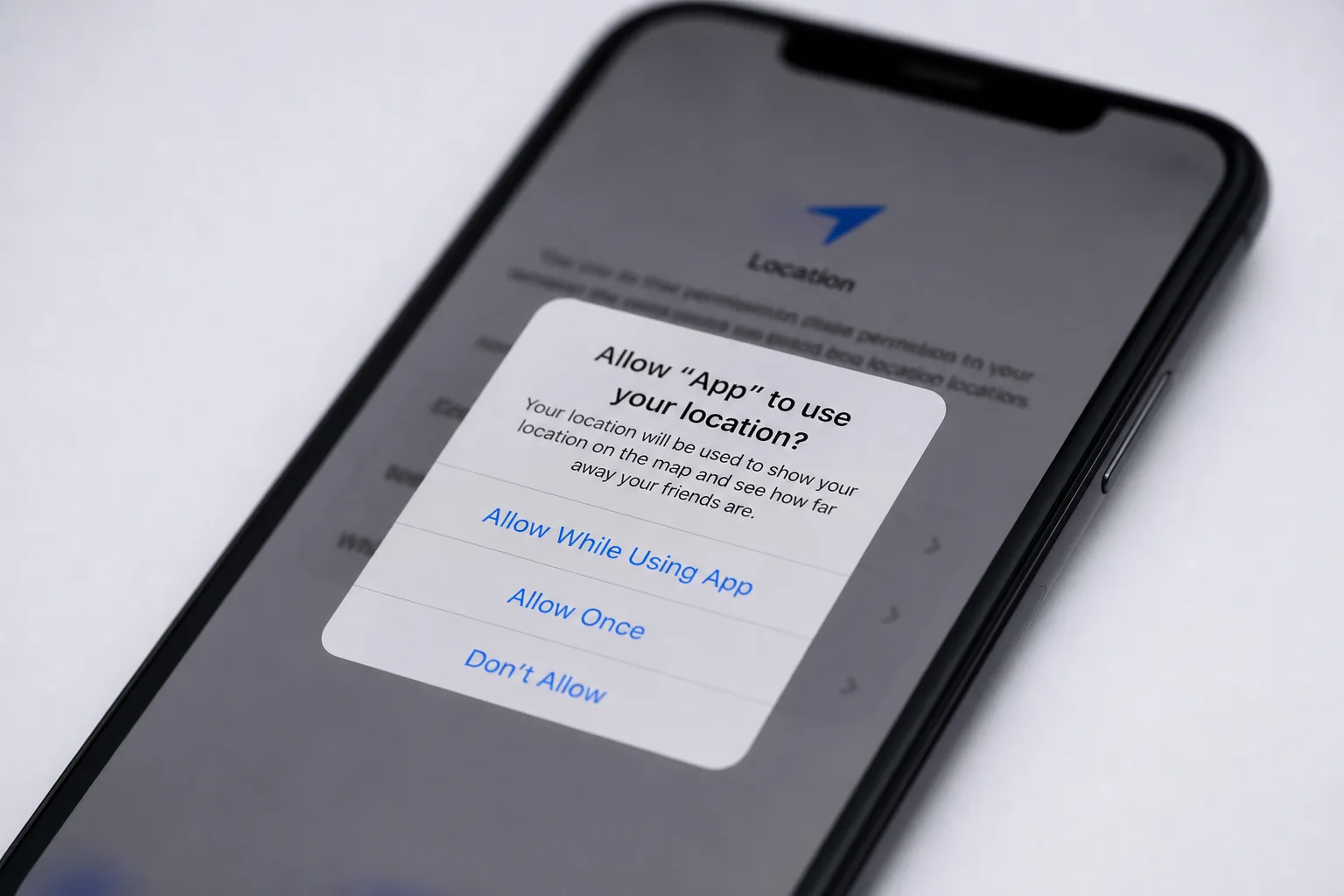
Apple Intelligence has always been sold, in part, on privacy. Since its debut in 2024, the promise was simple: powerful on-device AI, and when the cloud had to be involved, it would be Apple’s own locked-down servers. That promise is now getting more complicated. With iOS 27 — and, it turns out, already in iOS 26 — Apple Intelligence is routing some AI requests through Google Cloud, and Apple is using a new permission popup to make sure users know it’s happening.
- Apple Intelligence now routes some AI requests through Google Cloud servers, marking a significant shift from Apple’s all-own-hardware approach.
- A new permission popup in iOS 27 and iOS 26 asks users to consent before Apple Intelligence sends data to Google Cloud infrastructure.
- Apple insists the same architectural security patterns from Private Cloud Compute apply to its Google Cloud implementation.
- The change is already live in iWork on iOS 26, with shape generation features triggering the Google Cloud consent prompt.
Table of Contents
A Quiet but Major Infrastructure Shift
When Apple introduced Private Cloud Compute (PCC) alongside Apple Intelligence in 2024, security researchers were genuinely impressed. The system was designed so that even Apple itself couldn’t access the data being processed — a claim that, unusually for the industry, held up to independent scrutiny. The architecture ran exclusively on Apple silicon servers, and that homegrown control was central to the security story.
What’s changed now is the hardware underneath. For specific features — shape generation in iWork is the confirmed example on iOS 26, with similar functionality coming to Freeform in iOS 27 — Apple Intelligence is sending data to Google Cloud rather than Apple’s own infrastructure. This isn’t a wholesale migration, but it’s a meaningful one. Apple has built these new AI models in direct collaboration with Google, and those models need somewhere to run.
The change was first spotted in the iOS 27 beta, but it’s already active in production. When Apple Creator Studio received its advanced AI feature update last week, the same Google Cloud permission prompt appeared. That’s a notable detail — it means this isn’t just a beta experiment. It’s shipping code, right now, on devices people are using daily.
The New Permission Popup — and Why It Matters
Apple’s response to this shift is a new consent prompt. Before Apple Intelligence sends data to Google Cloud infrastructure, users see a popup explaining what’s happening and asking for permission. It’s a straightforward approach, and it’s the right one — but it also represents an admission that the old model is no longer fully intact.
The prompt itself is the kind of thing most users will tap through without reading. That’s the uncomfortable reality of consent UX in 2025 and beyond — permission dialogs have been conditioned out of us by years of cookie banners and app permission screens. Apple knows this. The popup is a legal and ethical safeguard, but it’s not a guarantee that users will genuinely understand what they’re agreeing to.
Still, the existence of the prompt matters from a transparency standpoint. Apple didn’t have to surface this at all. The company could have buried the disclosure in a privacy policy update, the way most tech firms handle this sort of thing. Choosing a runtime prompt — one that appears at the moment the data transfer is about to happen — is a more honest approach than the industry norm.
Apple Intelligence on Google Cloud: What the Security Looks Like
The obvious question is whether the privacy guarantees that made Private Cloud Compute notable still hold when the ‘private’ part is running on someone else’s infrastructure. Apple’s answer is that the same architectural patterns apply regardless of whose hardware is underneath.
The company describes the implementation this way: network data parsing for each request happens in a dedicated process within its own namespace; shared inference software is recycled with a short time-to-live duration; and attested keys are held in a separate, dedicated confidential VM that’s isolated from external inputs. In other words, Apple is claiming that PCC on Google Cloud is structurally equivalent to PCC on Apple silicon.
Whether that claim holds up to the same level of independent scrutiny that the original PCC received remains to be seen. The original Private Cloud Compute launched with a detailed Apple Security Research blog post and a virtual machine research environment that allowed outside researchers to verify Apple’s claims. It would be reasonable to expect Apple to offer a similar verification path for the Google Cloud implementation — and if it doesn’t, that gap will be noticed.
There’s also a philosophical question here that no technical architecture fully resolves: does using Google’s infrastructure change the trust calculus, even if the security properties are preserved? Google is a direct competitor in the AI space. Google DeepMind is building models that compete with Apple’s own. Using Google Cloud for Apple Intelligence workloads creates an unusual interdependency between two companies with fundamentally different business models and data incentives. Apple’s privacy framework may technically prevent Google from accessing the data — but the relationship is still worth watching carefully.
What This Means for the Broader Apple Intelligence Strategy
The Apple-Google partnership here is part of a wider pattern. Apple already integrates Google Search as the default in Safari, a deal reportedly worth around $20 billion a year. The two companies have a long and financially significant relationship that often gets obscured by their public positioning as rivals. Adding AI infrastructure to that relationship deepens the dependency.
It also signals something about the state of Apple’s own AI ambitions. Apple has invested heavily in its neural engine hardware and its on-device model capabilities, but building and operating large-scale cloud AI infrastructure is genuinely hard. The fact that Apple is turning to Google’s cloud for some Apple Intelligence workloads suggests that either the computational demands are exceeding what Apple’s current server infrastructure can handle, or the specific models being used were simply built to run on Google’s stack from the start — a natural consequence of co-developing them together.
Either way, the era of Apple Intelligence as a purely Apple-contained system is over. The features rolling out in iOS 27 this fall — including the Freeform AI tools — will rely on Google Cloud for at least some of their processing. For users who chose Apple devices specifically because of the company’s privacy positioning, that’s a shift worth understanding before tapping ‘Allow’ on that new popup.