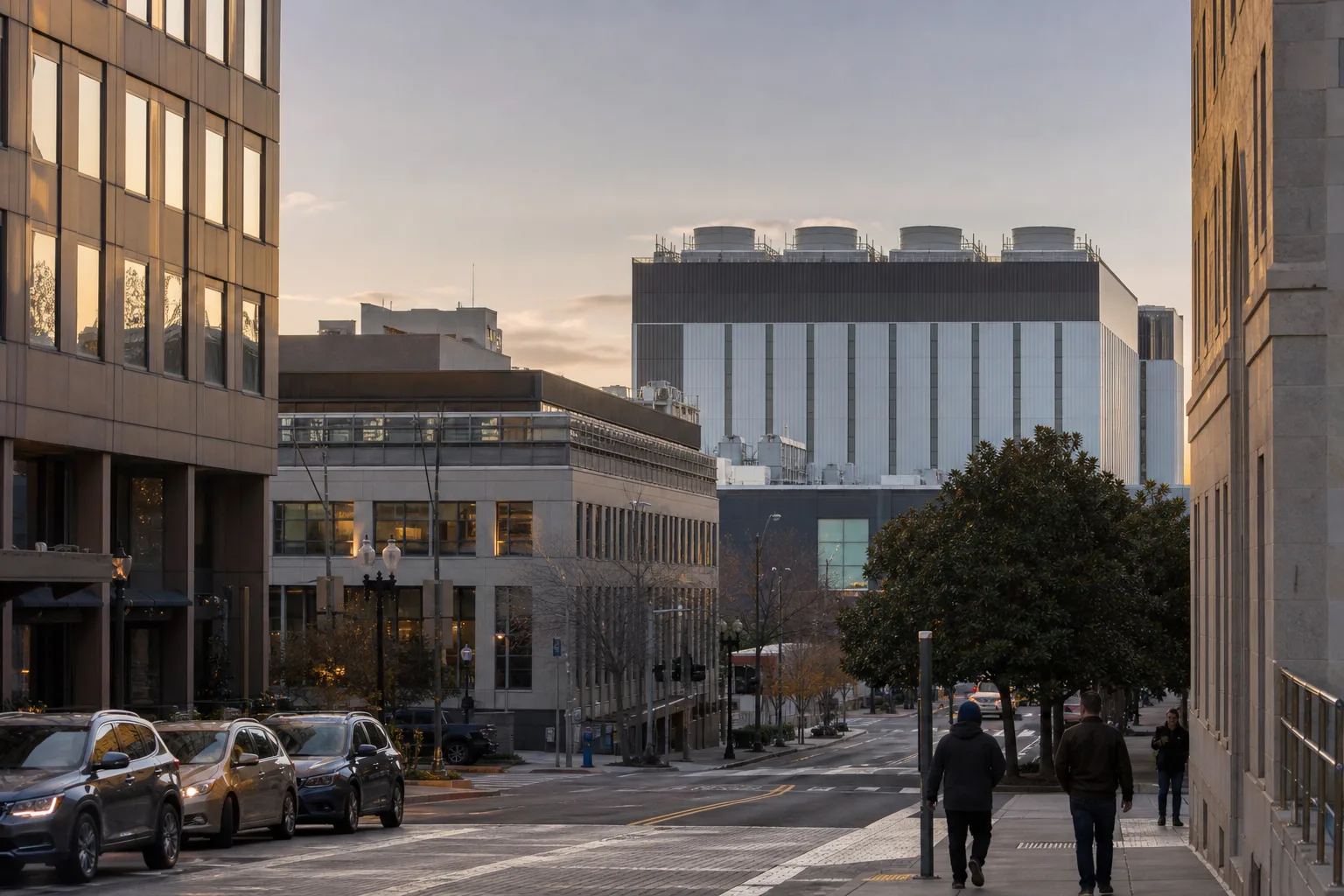
An Oakland AI data center sounds, at first glance, like the kind of project a city chasing tech investment should welcome. More infrastructure for the AI economy, a use for downtown real estate, potentially new tax revenue. But the pushback now reaching Oakland City Hall points to a harder question: what does a city actually get when a data center moves in?
That question sits at the center of a proposed downtown facility that has prompted local concerns, according to CBS News reporting. A city councilmember has addressed the resistance, placing the debate in the familiar Bay Area collision between technology’s enormous appetite for physical infrastructure and residents’ reasonable demand for transparency.
My read is that Oakland should not treat this as a simple pro-tech or anti-tech fight. A data center is not a software company opening an office full of engineers buying lunch downtown. It is an industrial-scale computing utility, one that can run quietly behind concrete walls while consuming a startling amount of electricity and water. The details matter more than the AI label.
- The proposed Oakland AI data center is drawing public pushback as city leaders weigh a major downtown infrastructure project.
- Supporters say an Oakland AI data center could bring investment, while critics want clearer commitments on energy, jobs and neighborhood impact.
- Data centers can create valuable tax revenue but typically employ far fewer ongoing workers than office or mixed-use developments.
- Oakland’s decision will test whether cities can demand public value before approving AI infrastructure with substantial power needs.
Table of Contents
Why the Oakland AI data center is drawing scrutiny
The public debate appears to be about what a downtown project would mean for Oakland, not abstract objections to artificial intelligence. That is the right frame. Cities have learned, sometimes painfully, that the word “technology” can make almost any development proposal sound future-proof before anyone has answered the basic questions about resources, jobs and public accountability.
An Oakland AI data center would be part of a much larger buildout. Generative AI systems require racks of high-performance chips, networking gear, cooling equipment and backup power. Unlike a conventional commercial tenant, these facilities operate around the clock. Training a major model and serving millions of AI queries are very different workloads, but both make the grid do real work.
That is why communities from Northern Virginia to Phoenix have started asking tougher questions about data-center growth. Virginia’s Data Center Alley became a global hub because it offered fiber connectivity, available land and favorable business conditions. It also became a warning: infrastructure success can create its own backlash, from pressure on power systems to disputes over transmission lines and fierce arguments about who pays for upgrades.
Oakland is a different place with different constraints. Downtown land is scarce, housing needs are acute, and the city’s finances remain a serious concern. An Oakland AI data center that occupies valuable urban space has to clear a higher bar than one built in an isolated industrial park. Construction activity alone is not enough. Residents should know the expected permanent employment, the project’s electrical load, its backup-generator plans, its cooling approach and whether it will affect nearby air quality.
AI infrastructure is physical, not magical
For years, the tech industry sold cloud computing as something almost weightless. Your files floated somewhere else; your apps lived in a cloud. AI has made that metaphor especially misleading. The cloud is warehouses, substations, diesel generators, water pipes and increasingly scarce high-voltage equipment.
AI-related computing is becoming an energy story as much as a software story.
That does not make an Oakland AI data center inherently a bad idea. Digital infrastructure is a legitimate economic asset, and California needs capacity if it wants its AI companies and research institutions to operate close to home. But developers and public officials should stop pretending these projects are frictionless. You would not approve a large logistics facility without discussing truck traffic. You should not approve AI computing infrastructure without discussing power and cooling.
There is a practical civic issue here, too. Data centers frequently create fewer permanent jobs than the scale of their buildings suggests. They need technicians, security staff, facilities managers and contractors, but they are not office campuses. If a developer seeks special treatment, expedited approvals or public concessions, Oakland should insist on measurable commitments: local hiring targets, apprenticeship pipelines, community-benefit payments and real reporting on environmental performance.
What Oakland officials should demand before approval
Public skepticism is often dismissed as a knee-jerk reaction to change. Frankly, that is lazy. People who live near major infrastructure have watched enough promises evaporate once ribbon cuttings are over. The councilmember’s response signals that the project’s opponents are being heard, but listening needs to produce a record the public can examine.
For the Oakland AI data center, the city should seek clear answers in writing. How much electricity will the facility require at full operation? Which utility upgrades are anticipated, and who pays for them? What energy sources will serve the site? How much water, if any, will cooling consume during hot periods? What is the expected noise profile from cooling systems and emergency generators? And how many direct, permanent positions will exist after construction wraps?
Those are not gotcha questions. They are the basic due diligence for a project built around concentrated computing power. Oakland’s official planning process already gives residents a way to follow development proposals and public meetings through the City of Oakland’s planning and building department. The challenge is describing AI infrastructure plainly enough for ordinary people to judge its tradeoffs.
There is a strategic opportunity here. If the Oakland AI data center proceeds, the city could press for cleaner design choices as approval conditions rather than leave them to voluntary marketing language. That might include requirements around energy efficiency, transparent reporting, limits on local emissions from backup systems and contributions to workforce training. Cities are often told they have to compete for investment by asking for less. In a market where AI compute is desperately needed, that assumption may be outdated.
The downtown question is bigger than one facility
An Oakland AI data center is ultimately a test of what the AI boom looks like once it leaves product demos and investor decks. Silicon Valley’s favorite narrative is that AI will make everything more efficient. Maybe. But the machines running it still need land, electrons and permission from cities.
Oakland has good reasons to pursue investment and reuse underutilized property. It also has good reasons to be choosy about a project whose economic footprint may be much smaller than its physical and electrical one. The answer may depend on details that have not yet been made public. If those details hold up under scrutiny, the facility could become a useful piece of Bay Area infrastructure. If they do not, a downtown building with a fashionable AI label will not be much of a bargain.
The more interesting question is whether Oakland will demand terms that match the value of the resource it is being asked to provide: a place to put the machines powering the next phase of the tech industry.