

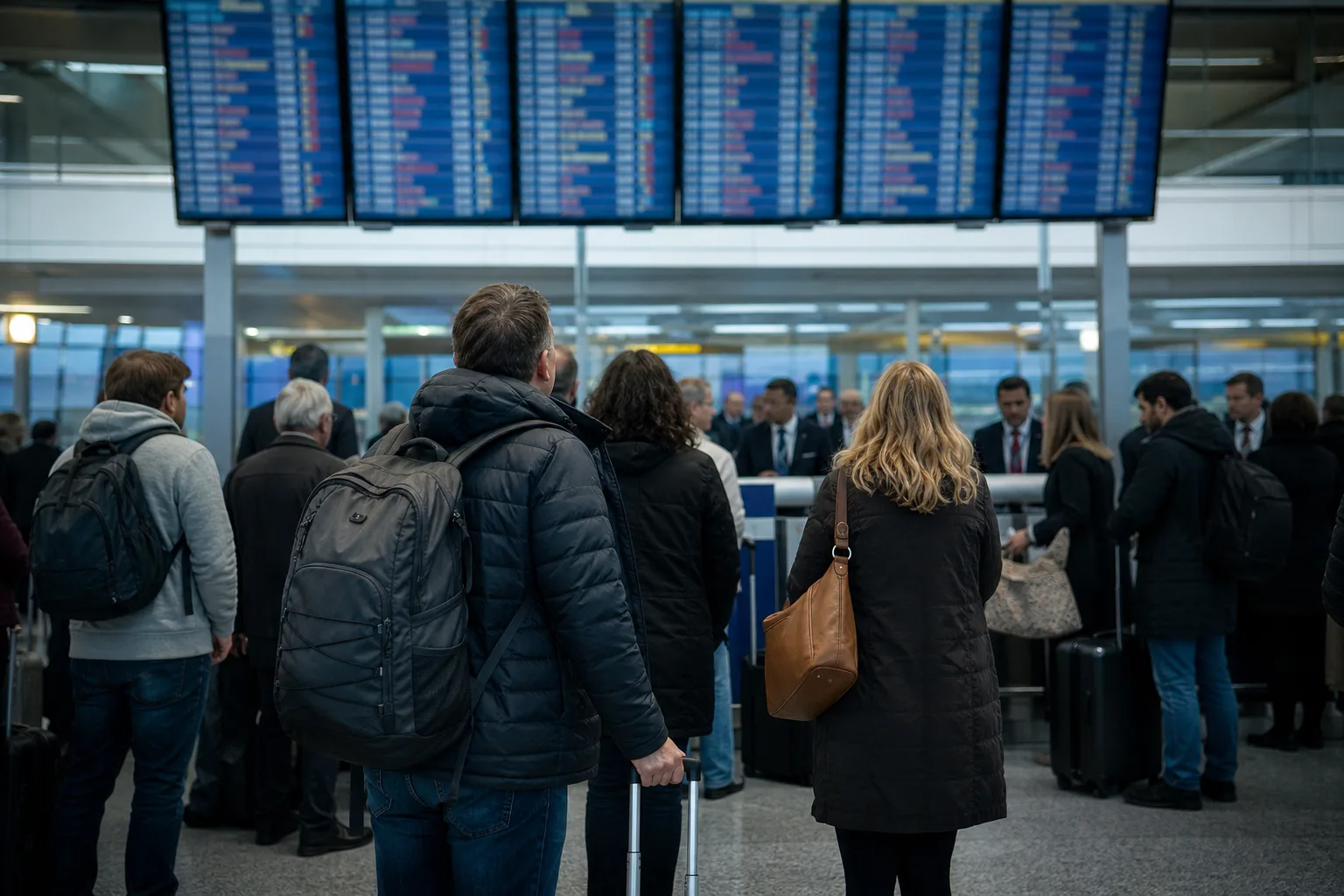
- The FAA ground stop lasted roughly five hours, disrupting more than 15,000 delayed or canceled flights across the United States.
- The FAA ground stop appears tied to strain between aging communications equipment and an unfinished modernization project.
- L3Harris is upgrading legacy FAA network sites while AT&T prepares to build a replacement communications backbone.
- Federal auditors have warned that the FAA’s accelerated modernization effort lacks integrated schedules and reliable lifetime cost estimates.
Table of Contents
The FAA ground stop was a warning, not a one-off
A five-hour FAA ground stop turned a buried piece of aviation infrastructure into a very public national problem. More than 6,300 flights within, into, or out of the US were canceled, while roughly 9,500 were delayed, according to FlightAware data cited during Friday’s disruption. For travelers, the immediate experience was familiar misery: missed connections, stranded crews, luggage headed somewhere without its owner. But the bigger story sits behind the departure boards.
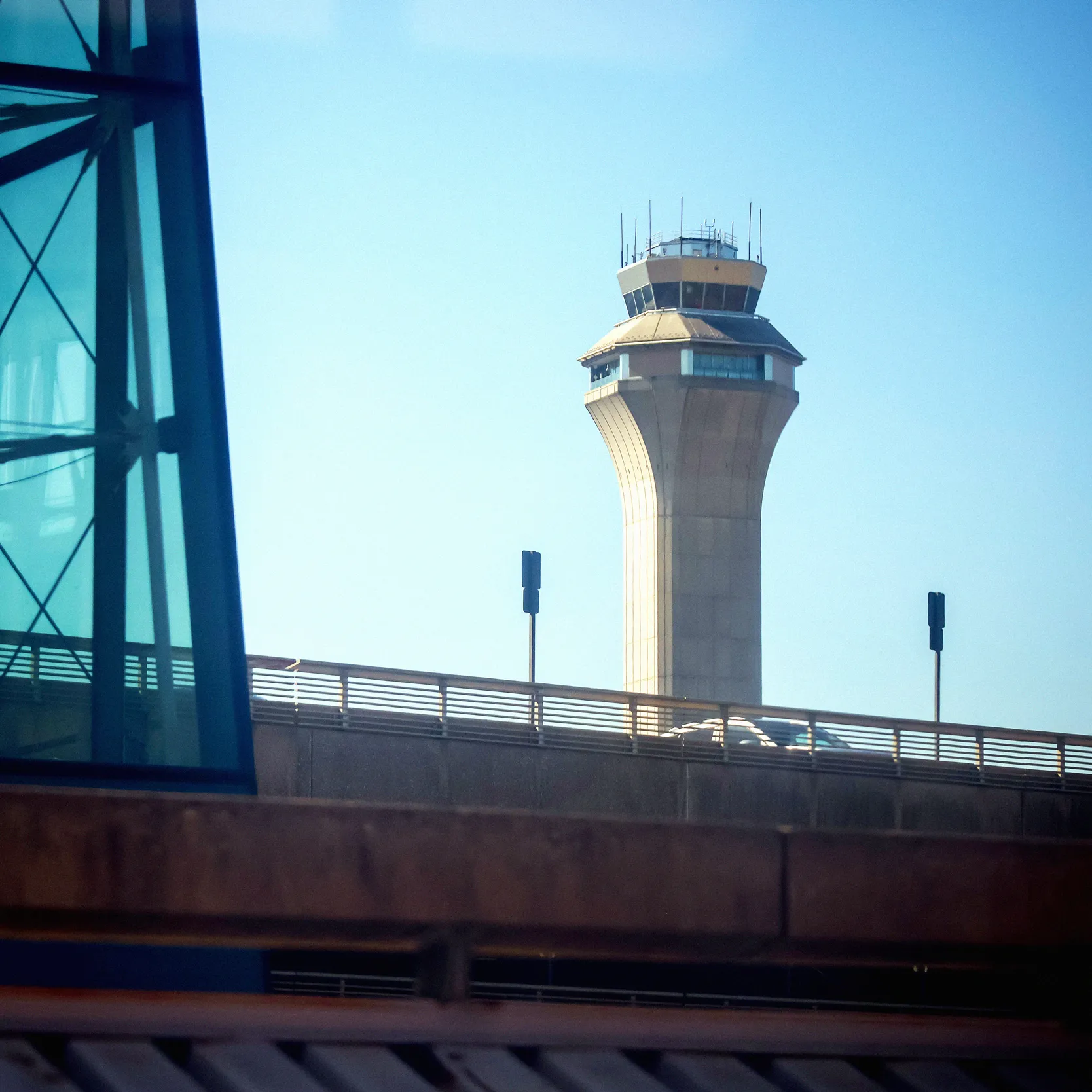
The failure reportedly involved the FAA Telecommunications Infrastructure, or FTI, the private network that carries communications among the FAA, controllers, and pilots. This was the most consequential nationwide halt to US air travel since the post-September 11 shutdown, and it arrived while the government is attempting to replace the very systems suspected of contributing to the mess.
That is an awkward place to be. Rebuilding air traffic control is less like swapping out an office Wi-Fi router and more like replacing plumbing in a skyscraper while every floor remains occupied. You need the old pipes to keep working as the new ones go in. Friday showed what happens when that handoff goes wrong.
Why the FAA ground stop hit so hard
Airlines do not recover from a nationwide interruption by simply reopening the gates. Aircraft and crews are carefully sequenced through a day, with pilots subject to strict duty-time rules and planes needing to be in particular cities for their next flights. When the system pauses for five hours, those plans unravel outward. A delayed flight from Chicago can become a canceled overnight service from Denver, then leave a morning route in Seattle without an aircraft.
Transportation Secretary Sean Duffy said at a White House briefing that passengers should expect continued disruption as airlines unwind the backlog. “It will take us some time to unwind what has happened,” he said. Duffy blamed “old switches, old routers” and a “data overload,” describing the kind of aging technology problem that has become almost routine across US public infrastructure.
Freight and mail flights were caught up too. The FAA ground stop mattered beyond the airport: cargo aircraft move overnight packages, medical supplies, industrial parts, and mail through tightly timed networks. A passenger delay is frustrating. A broad logistics delay can quietly surface days later as a missed delivery, an empty shelf, or a factory waiting on one component.
The FAA lifted the FAA ground stop, but lifting it was the easy part. Restoring normal operations will take days, and possibly longer in the most heavily affected airline networks. Anyone who has watched a winter storm ripple through a hub knows the pattern. The weather clears; the schedule remains broken.
A modernization project caught between old and new
The FTI network has been undergoing a multiyear transition from decades-old copper connections to fiber-optic links. L3Harris, which manages the existing system, said in May that it had completed half of the modernization work. The company said earlier this month that fiber upgrades had reached 70% of FAA sites.
Those figures sound encouraging until you consider the operational reality: the unfinished 30% may include difficult locations, complicated integrations, or both. And fiber alone does not solve every problem. Network hardware, software, interfaces, redundancy plans, and operational procedures all have to work together. A shiny new connection plugged into a brittle legacy environment can create its own failure points.
Department of Homeland Security Secretary Markwayne Mullin said patches being applied as new equipment came online had overwhelmed older systems. “The new technology was overwhelming the older system,” he said. He added that officials had no indication of a cyberattack, although there was not complete certainty at the time.
That distinction matters. A cyberattack would expose a security emergency; a failed transition exposes a management and engineering emergency. Neither is comforting, frankly. But they demand different fixes. My read is that the FAA ground stop should force the FAA to explain precisely what failed, how the network was designed to fall back safely, and why that fallback did not prevent a nationwide halt.
L3Harris has said its familiarity with the national airspace system allows it to upgrade systems without disrupting operations. That is a reasonable ambition, but Friday’s outcome will put that claim under intense scrutiny. The contractor did not respond to a request for comment.
The money is big; the execution challenge is bigger
The Trump administration wants to overhaul US air traffic control by the end of 2028. In August, the FAA selected AT&T to upgrade the FTI into a new communications system under an initial $73 million contract that could grow dramatically over time. Verizon had previously been selected for the work, while L3Harris is expected to keep operating the legacy network during the transition.
Meanwhile, Duffy asked Congress for $30.1 billion to improve air traffic control and airports, then raised the figure to $50 billion during Friday’s briefing. The case for significant investment is obvious. The FAA ground stop underscores the need for infrastructure capable of handling conventional aviation alongside drones, electric vertical-takeoff aircraft, and other proposed air-taxi services. You cannot credibly add more automated, connected aircraft to US airspace while the communication foundation is still vulnerable to old routers.
The spending, however, does not solve the management problem. A Government Accountability Office review released in September warned that the FAA’s push to speed up modernization could prioritize pace over cost discipline and limiting disruption. The watchdog found no well-documented lifecycle cost estimate for the programs it examined. It also found 11,389 separate schedules that were not integrated into a master plan.
Eleven thousand schedules is not a plan. It is a filing cabinet with an anxiety disorder.
What should happen after the FAA ground stop
The FAA ground stop has made an abstract modernization debate painfully concrete. The argument over modernization now has a very public test: whether the country can maintain the system that moves millions of people and enormous volumes of commerce every day while rebuilding it under live conditions.
The FAA should publish a detailed incident account once its investigation is complete, including the affected components, the role of software patches or data volume, the availability of redundant paths, and the decision process behind the nationwide halt. Travelers deserve that transparency, but so do airlines, airports, cargo operators, and lawmakers preparing to authorize billions more.
After an event like this, the political reflex is to demand a faster rollout. That may be politically satisfying and technically dangerous. The better answer is a disciplined one: integrated schedules, independent testing, realistic cost estimates, staged cutovers, and redundancy that works when the main path does not. If the US wants next-generation aviation, it first has to make sure the present-day network can survive its own upgrade.