

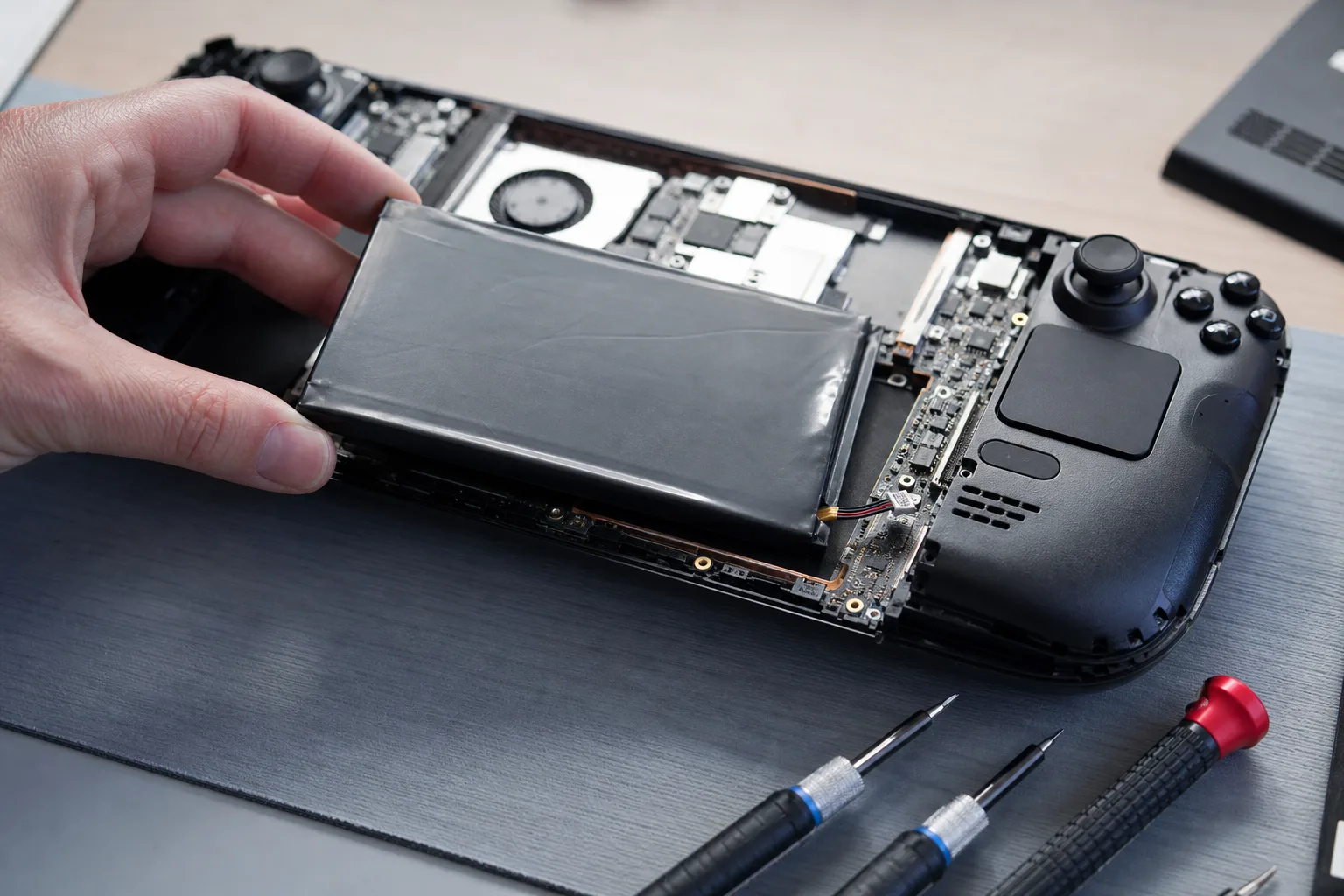
For a few uneasy hours, it looked as if one of the Steam Deck’s biggest selling points — the ability to keep it alive rather than toss it — was about to take a hit. Now Valve says Steam Deck batteries will remain available through iFixit, with fresh stock expected as soon as next week.
That’s the sensible outcome, and frankly the only one that made much sense for a PC handheld designed to be opened. Valve’s Kaci Aitchison Boyle told reporters that iFixit will receive “the same OEM parts sourced through Valve’s partners that they always have.” So the original LCD Steam Deck battery has not reached the end of its service life after all.
- Steam Deck batteries are expected back at iFixit next week after Valve connected the repair specialist with an OEM supplier.
- Valve says Steam Deck batteries will remain the same official parts sourced through its existing manufacturing partners.
- The brief supply scare exposed how fragile long-term repair support can be, even for unusually repair-friendly hardware companies.
- Replacing the original Steam Deck battery still requires careful work because the pack is strongly adhered inside the handheld.
Table of Contents
Steam Deck batteries were nearly a repair dead end
The confusion began when iFixit appeared to learn that Valve was winding down replacement batteries and screens for the original LCD Steam Deck. iFixit CEO Kyle Wiens initially confirmed that understanding, before saying Valve had found a path forward. “They have hooked us up with a supplier, we’re working on it,” Wiens said.
That sequence matters. This wasn’t internet telephone gone wild; iFixit had a credible reason to believe the parts pipeline was closing. But Valve and its repair partner moved quickly enough to prevent a fairly embarrassing outcome: owners of a still-capable handheld being unable to buy the one component guaranteed to wear out.

Every lithium-ion battery has a clock ticking inside it. Charge cycles, heat and age gradually reduce capacity, regardless of how carefully someone treats their hardware. As the original Steam Deck ages, early adopters are entering the period where a replacement battery shifts from a theoretical repair to a practical need.
Wiens offered a pretty plausible explanation: forecasting. Parts makers have to guess how many repair components will be needed years ahead, and those guesses are costly either way. Order too few and customers hit an empty shelf. Order too many and warehouses fill with inventory that may never move. The trouble is that a battery isn’t a decorative shell or a spare button; it is the difference between a functioning portable PC and an expensive paperweight.
Why the iFixit relationship matters
Valve has generally done better than most of the games business on repair. Its partnership with iFixit brought official Steam Deck parts to consumers, including SSDs, thumbsticks, displays, cooling hardware and Steam Deck batteries. That approach stood in sharp contrast to the console world, where getting official parts and documentation often feels like trying to obtain a state secret.
Valve is selling a PC, not a locked-down appliance with a conventional five-to-seven-year console cadence. People expect to tinker with PCs. They upgrade storage, swap sticks when drift appears, install operating systems, and — eventually — replace worn Steam Deck batteries. If Valve wants the Steam Deck to be regarded as a durable computing platform, repair support cannot be treated as an optional accessory.
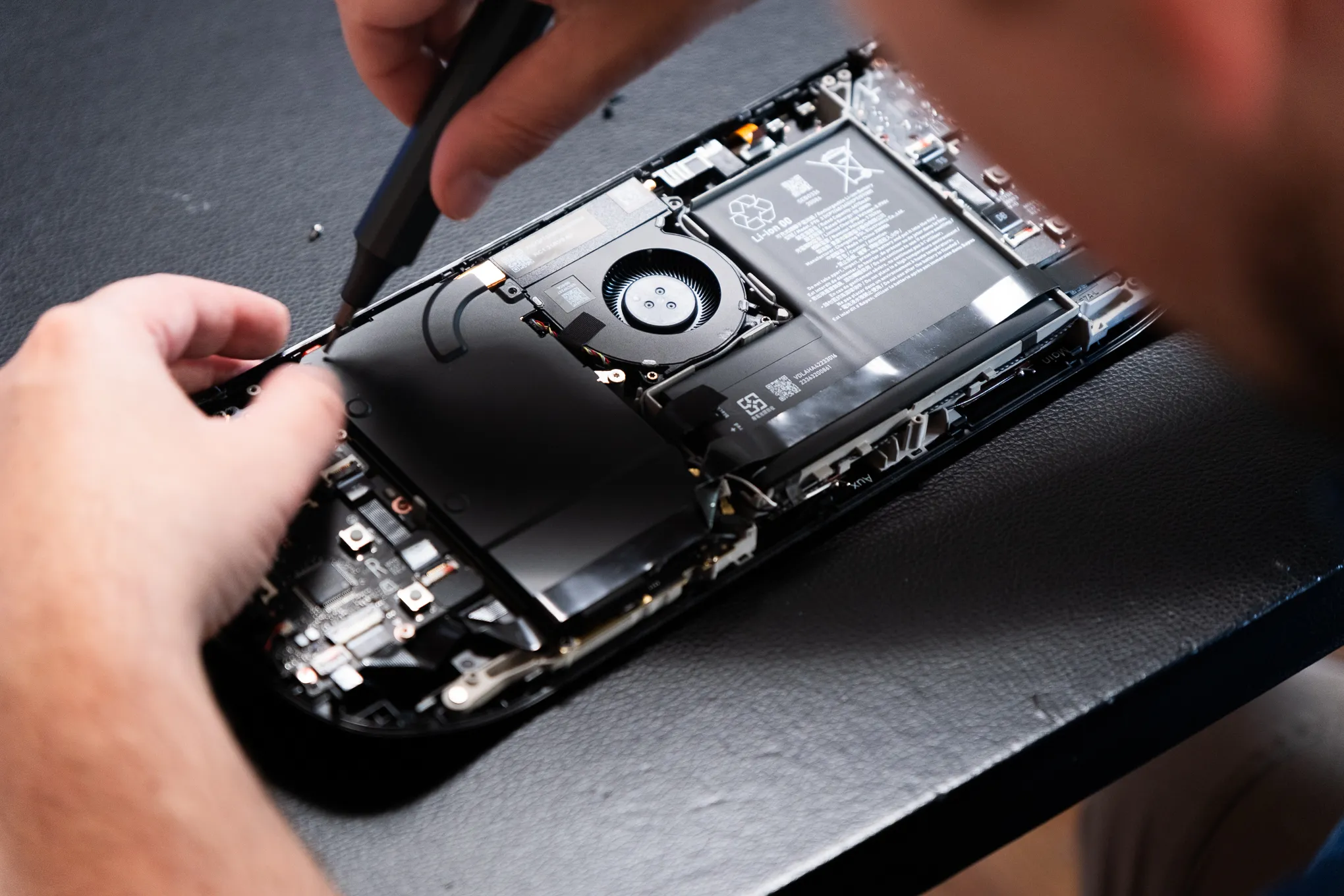
iFixit says it has a fallback if Valve eventually retires the OEM part: an aftermarket supplier. Wiens put the promise plainly: “I want people to know we are going to find a way to get batteries for these things.” That’s welcome news, but an aftermarket pack still has to prove itself against a factory-spec part backed by Valve’s supply chain. Battery quality, protection circuitry and fit all deserve scrutiny, especially in a compact device that spends much of its life against somebody’s hands.
The official path remains open for now. Readers looking for parts should keep an eye on iFixit’s Steam Deck parts store rather than assuming an empty listing means permanent discontinuation.
Replacing Steam Deck batteries is still not casual maintenance
Continued availability does not make the job easy. The battery in the LCD model is heavily glued into the chassis. Removing it requires patience and controlled heat or adhesive softener, and it is absolutely not a component to pry out with enthusiasm. Puncturing a lithium-ion pouch cell can create a serious fire hazard.
That is the lingering contradiction in the Steam Deck repair story. Valve deserves credit for selling parts and publishing repair-minded design choices, but the most consumable major component remains one of the trickier jobs inside the device. It’s more like replacing a glued-down smartphone battery than swapping AA cells in a controller.
Valve designers previously acknowledged dissatisfaction with the adhesive arrangement. Electrically releasable or shock-release adhesive systems would be better, but they cost more and remain uncommon in mass-market handhelds. A few extra dollars on a bill of materials can become a major budget fight at scale. Still, I’d argue a future Deck should spend that money. A handheld PC should be built to outlast its first battery.
Repair rules may not save old handhelds
Europe’s upcoming battery regulations have put fresh pressure on hardware makers to make batteries replaceable, with new requirements taking effect in 2027. Yet those rules are unlikely to be the reason the LCD Deck’s Steam Deck batteries survived this particular scare. Valve stopped selling that model as its mainstream option last year, and regulatory obligations generally focus on products newly placed on the market.
US right-to-repair laws offer uneven protection as well. Several states have passed measures covering consumer electronics, but game consoles are often excluded. The Steam Deck complicates the category question because it is both a gaming machine and a fully fledged x86 PC. Would Valve frame it as a PC if that helped preserve access to parts? Perhaps. But customers should not have to depend on a classification argument to buy a battery.
The immediate news is good: Steam Deck batteries are not disappearing from iFixit’s catalog. The broader lesson is less comfortable. Repairability only works when the parts remain available years after launch, not merely when a teardown video makes a product look friendly on day one. Valve has corrected course this time. The next test is whether it can make that promise feel routine rather than provisional.

