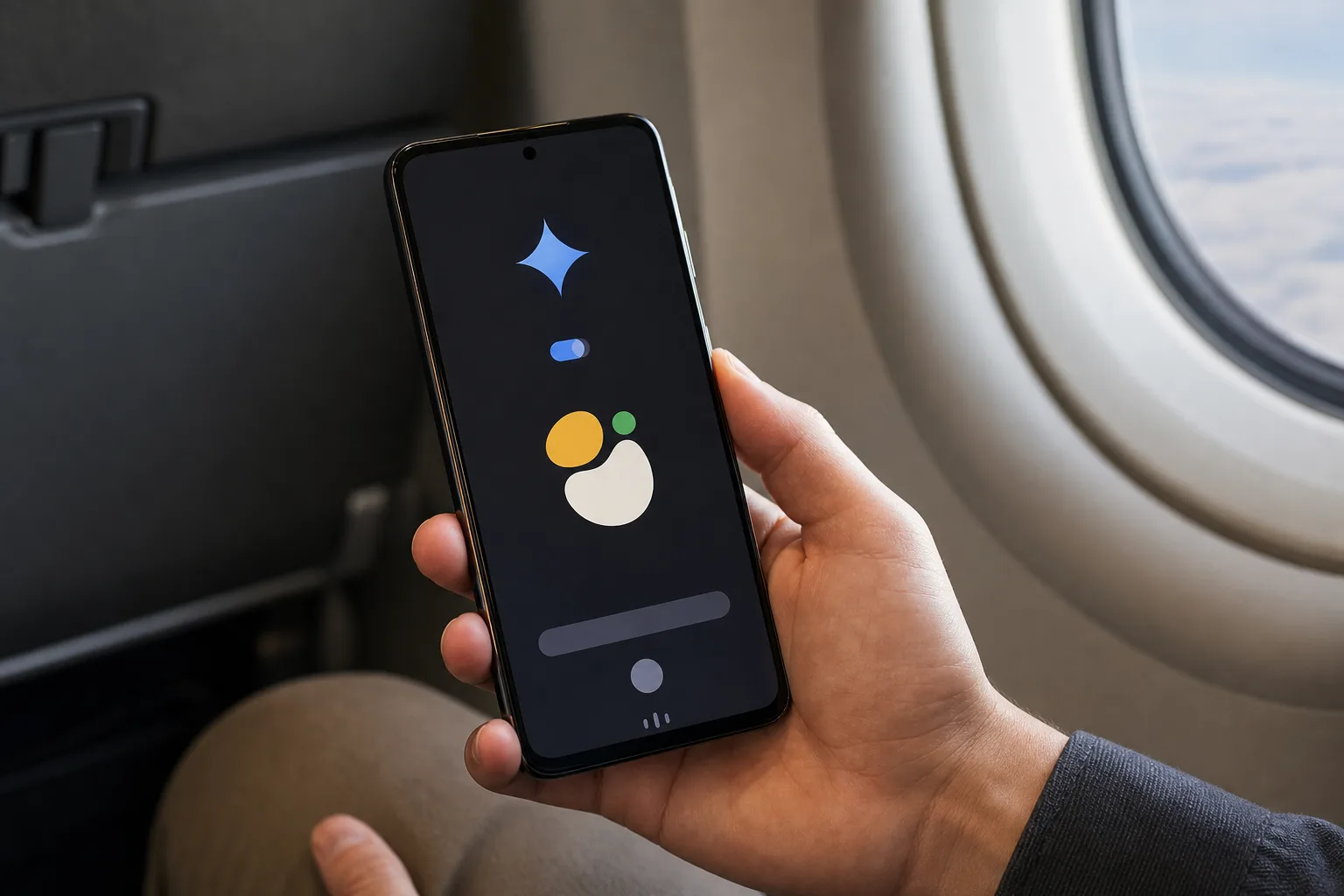
For years, phone makers have sold AI as a cloud service wearing a handset-shaped hat. Pixel on-device AI is Google’s attempt to reverse that arrangement: make the phone do more of the work itself, even when the nearest Wi-Fi network is a hotel login page from 2009.
Google has introduced Gemma 4 E2B for TPU, a smaller version of its Gemma model family designed specifically for the Tensor Processing Unit inside Pixel phones. The basic pitch is refreshingly practical. Apps can send certain requests to the local model, receive an answer faster, keep sensitive material on the handset, and continue operating without a network connection.
That doesn’t mean every Google AI feature is suddenly private, local, or available on an airplane. It does mean Google is putting more serious weight behind a computing model that Apple and Samsung have also embraced: use the cloud when a task needs enormous scale, but stop treating a data center as mandatory for every mundane question.
- Pixel on-device AI uses a compact Gemma model to process selected requests locally rather than routing every task through Google servers.
- Google says Pixel on-device AI can support offline trip planning, transcription, image recognition, and hands-free phone controls on Pixel 10.
- The approach could improve privacy and response times, though real usefulness will depend on which developers adopt Google’s local model tools.
- Google’s Tensor chip strategy now looks less like a benchmark contest and more like a bet on practical AI features people can use anywhere.
Table of Contents
Pixel on-device AI puts the Tensor chip to work
Gemma 4 E2B for TPU matters because it is tailored to Pixel hardware rather than being a generic model squeezed into a phone at the last minute. Google’s Tensor chips have always been sold as AI-first silicon, though that claim has sometimes felt more like a roadmap than a daily benefit. A locally optimized model gives the hardware a clearer job. That is the practical foundation of Pixel on-device AI.
Google says developers can use the model for local processing, avoiding the round trip to a remote server. That means faster responses, offline access, and less data leaving the device. The privacy point deserves particular attention. If a request involves a voice note, a photo, or details about a planned trip, local processing reduces the number of systems that need to touch that information. It doesn’t erase privacy concerns around an app’s broader data practices, but it narrows the path.
Google has been building toward this through its Gemma family, which it positions as openly available models for developers. The company recently expanded that line with Gemma 4 12B, a larger model with multimodal capabilities and native audio input intended for consumer computers. It also released quantization-aware versions meant to reduce memory demands while preserving usable output quality. In plain English: Google is trying to make capable models fit into devices that don’t have a warehouse full of GPUs behind them.
The offline demos are more useful than the usual AI theatre
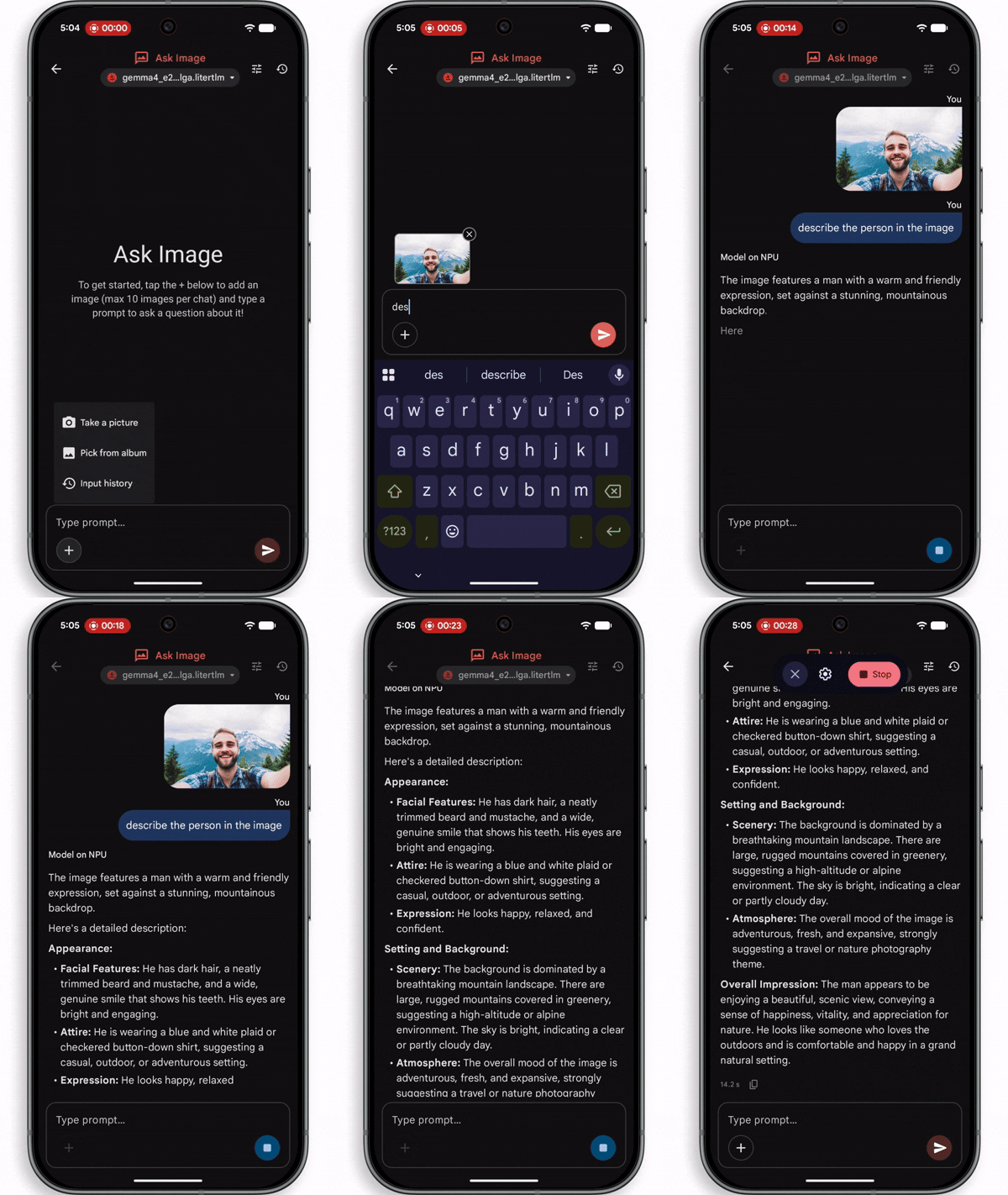
At Google I/O India, the company demonstrated what Pixel on-device AI could look like on the Pixel 10. The examples included planning a trip, suggesting recipes, controlling smart-home devices, identifying landmarks and plants from photos, transcribing lectures and voice notes, and holding AI conversations without an active connection.
Some of that will sound familiar if you’ve watched a modern phone launch in the past two years. Every company has a demo where somebody circles an object in a photo or asks an assistant to turn a vague idea into a dinner plan. But the offline angle changes the value proposition. Pixel on-device AI is more compelling when it works beyond the reach of a cellular signal. A plant identifier is nice. A plant identifier that works on a trail with no signal is actually a tool.
The same goes for transcription. Journalists, students, field workers, and anyone who has ever sat through a meeting with unreliable Wi-Fi know the annoyance of recording something and then waiting for a cloud service to process it. Local transcription could make a Pixel considerably more useful in those moments, assuming Google can keep accuracy high across accents, noisy rooms, and technical vocabulary. That last part is where polished stage demonstrations tend to meet real life.
Mobile Actions may be the feature people actually notice
Google also showed a feature called Mobile Actions, which can carry out device commands from voice or text prompts locally. The examples were straightforward: turn Wi-Fi on or off, or open Google Maps. No one needs a language model to flip a switch, obviously. But natural-language control can be helpful when it reduces the friction between an intent and a setting buried three menus deep.
This is the less glamorous side of Pixel on-device AI, and I’d argue it may be the more important one. The technology wins when it saves a few seconds repeatedly without forcing users to think about AI at all. Google Assistant once promised that kind of utility, then became an awkwardly inconsistent collection of commands and cloud dependencies. Mobile Actions has an opportunity to restore some of that original promise, provided Google doesn’t turn it into another product name that disappears in 18 months. Remember when Google killed Stadia? Consumers remember too.
Privacy claims need a little fine print
Running a model on the phone is inherently more private than sending the same material to a server, but the phrase should not be read as a blanket guarantee. The underlying app may still collect information. Some requests may still require online services. And users need clear indicators showing when a feature is working locally versus when it has handed data to the cloud.
That transparency is especially important as Google pitches Pixel on-device AI for business uses. The company has suggested offline store maps for retail workers and photo-based tools that could help mechanics spot faulty vehicle parts. Those are plausible scenarios, but they also raise obvious questions around accuracy, accountability, and access controls. A bad recipe suggestion is forgettable. A wrong diagnosis on a car part is not.
Still, the direction is sound. Apple has made private on-device processing a central part of its Apple Intelligence story, while Samsung’s Galaxy AI approach splits work between the handset and cloud services. Google has an edge in model research and Android reach, but it has to prove that its local tools are dependable enough to escape the demo loop.
The developer question will decide whether this matters
The biggest unknown is adoption. Google can ship Gemma 4 E2B for TPU and pack the Pixel 10 with local capabilities, but a platform succeeds only if developers build useful things on top of it. Pixel on-device AI will matter most when developers use it for more than chatbot clones. The best outcome is not 50 chatbot clones. It is a travel app that still helps when roaming data fails, an accessibility tool that reacts instantly, or a field-service app that works in a basement.
Pixel on-device AI also gives Google a more coherent reason to keep investing in Tensor. Raw performance comparisons against Qualcomm’s latest Snapdragon chips have rarely favored Google cleanly. But if Tensor enables features that feel fast, private, and present when connectivity vanishes, benchmark charts become less relevant.
My read is that this is Google’s most sensible AI phone strategy yet. Not because a compact local model will replace the cloud, but because it acknowledges an obvious truth: your phone should remain smart when the internet isn’t.