

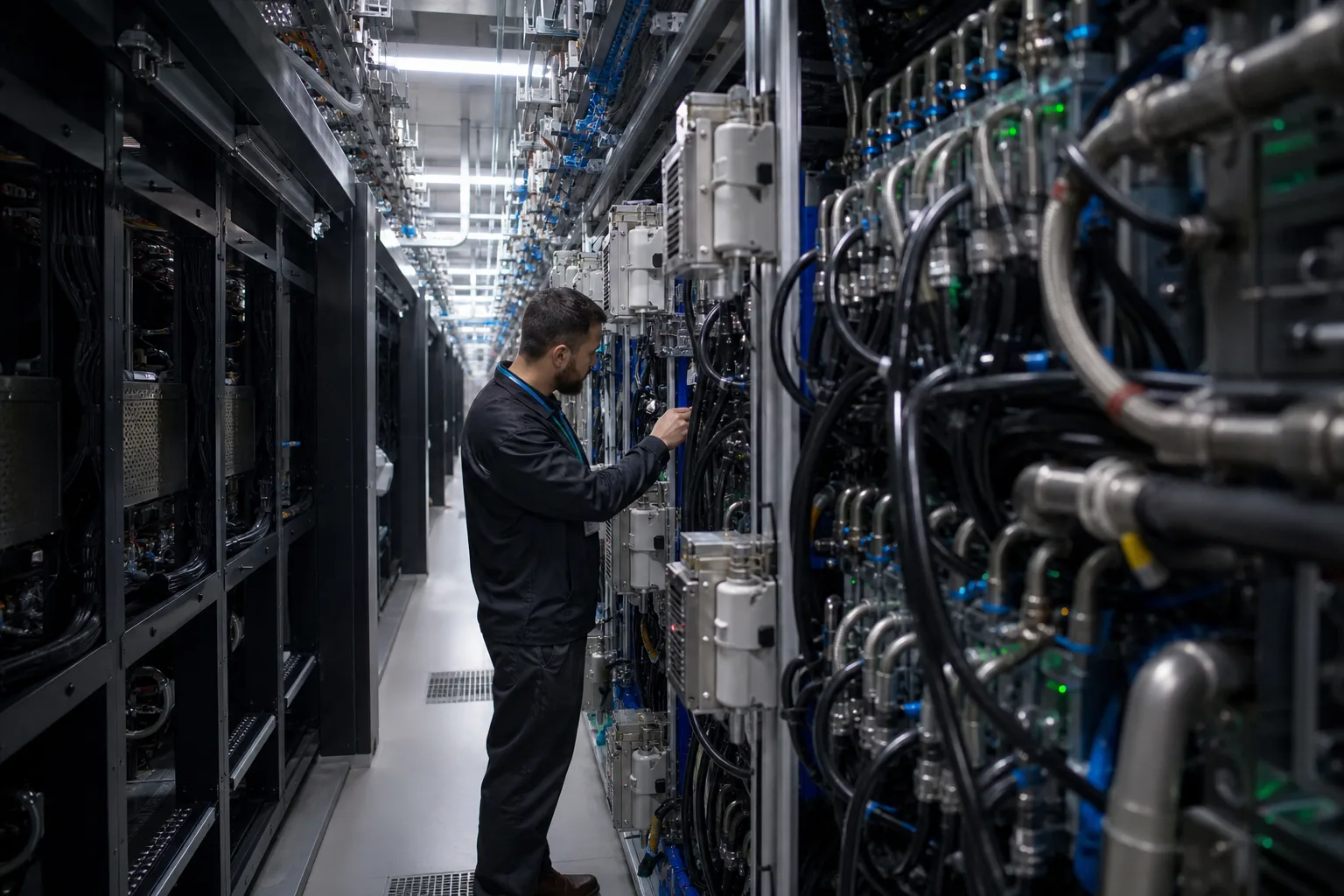
- The 3M Microsoft partnership links a materials giant with a cloud leader as AI data centers face growing power and cooling pressure.
- Details remain limited, but the 3M Microsoft partnership points to a reality the industry often overlooks: enterprise AI infrastructure reaches well beyond chips and software.
- 3M’s industrial materials expertise could matter in thermal management, connectivity, component protection, and the unglamorous layers that keep data centers running.
- Microsoft needs to expand AI capacity while containing energy use, construction costs, and the operational limits of physical infrastructure.
Table of Contents
Why the 3M Microsoft partnership matters
AI’s great dirty secret is that it is intensely physical. Behind every polished chatbot answer and AI-generated spreadsheet sits a data center drawing power, shedding heat, and consuming a startling amount of specialized equipment. That is why the 3M Microsoft partnership, announced as a strategic effort around AI data center infrastructure and enterprise transformation, deserves more attention than a standard corporate handshake.
On its face, this is a pairing of two companies from very different corners of the technology economy. Microsoft sells cloud capacity, enterprise software, and increasingly the AI services layered across Azure, Microsoft 365, Copilot, and its wider developer stack. 3M is the industrial materials company that most consumers know from Post-it Notes and Scotch tape, but whose business runs far deeper into adhesives, films, filtration, electronics materials, and manufacturing processes.
That overlap may sound unglamorous. Frankly, it is also where the real constraints are piling up. The AI boom has pushed data center operators into a costly race for electricity, land, networking gear, cooling systems, and hardware that can keep GPUs operating within safe thermal limits. Nvidia may get the headlines; the less visible suppliers solving heat, insulation, protection, and component-level reliability are becoming increasingly consequential.
The announcement itself offers a broad framing rather than a detailed product roadmap. It identifies AI data center infrastructure and enterprise transformation as the targets, but does not publicly spell out commercial terms, deployment timelines, revenue commitments, or named facilities. That means readers should resist treating the 3M Microsoft partnership as evidence of a finished new platform. It is better understood, at least for now, as a declaration of where both companies believe the next infrastructure bottlenecks will emerge.
The AI data center problem is becoming a materials problem
For years, cloud infrastructure was largely a story about servers, chips, and software orchestration. Generative AI has changed the balance. Training and running large models puts far denser computing equipment into racks, which creates more heat in a smaller footprint. Cooling that equipment can involve air systems, liquid loops, heat exchangers, pipes, pumps, monitoring hardware, and a lot of electricity.
Every one of those layers depends on materials choices. Adhesives and protective films must tolerate heat and long operating cycles. Components need insulation and electromagnetic shielding. Filtering and fluid-management systems need to work predictably at industrial scale. A single part that degrades too early can turn into a maintenance headache across thousands of servers. Think of it like a high-performance kitchen: buying better ovens helps, but the operation still falls apart if the ventilation, wiring, refrigeration, and plumbing cannot keep pace.
That is the practical case for the 3M Microsoft partnership. 3M brings longstanding experience in specialized material science, while Microsoft sees firsthand the operational strain created by hyperscale cloud and AI workloads. The useful work could range from component design to facility efficiency, though neither company has publicly defined the exact technical scope.
The announcement does not specify how this work relates to Microsoft’s official efficient cloud computing page. Lower heat and lower energy overhead can directly improve the economics of delivering AI services.
Enterprise transformation needs the physical layer
The phrase “enterprise transformation” can mean nearly anything in corporate press releases, so it needs translating. For Microsoft customers, the immediate goal is usually to bring AI into day-to-day work: search internal knowledge, automate administrative tasks, analyze documents, support customer service, or build custom assistants. But those experiences depend on capacity that Microsoft and its partners can actually build and operate.
The 3M Microsoft partnership sits behind the software tools employees will eventually touch. If better infrastructure materials help data centers operate more efficiently or reliably, Microsoft may have more room to scale AI services without passing every added cost to customers. That is a big “if,” and it will take real deployment data to prove it. Still, the logic is hard to dismiss.
There is also a broader lesson here for companies buying into enterprise AI. The industry has spent the past two years talking about models as though the only contest that mattered was intelligence. The more durable contest may be operational: who can deliver usable AI capacity at a predictable cost, under power constraints, and without waiting years for new facilities to come online?
Microsoft is hardly alone in confronting this. Google, Amazon, Meta, Oracle, and a growing group of AI-focused infrastructure firms are all pursuing massive data center expansion. They are competing for GPUs and electricity, yes, but also for the ecosystem that makes high-density computing practical. The most valuable partner may not always be another model developer. Sometimes it is a company that knows how to keep industrial systems functioning when the temperature rises.
What to watch next
The missing details are the story now. Will the 3M Microsoft partnership produce a specific cooling, connectivity, or facility-management product? Will Microsoft test 3M-developed materials in Azure facilities, or will the work focus on solutions offered to enterprise customers and data center builders? And will either company put numbers behind promised efficiency gains?
Those answers matter because this is a sector increasingly crowded with vague AI alliances. A credible next step would include named technology areas, pilot sites, performance measurements, or a clear path from research to deployment. Without that, the announcement remains strategically interesting but commercially hard to evaluate.
My read is that the partnership reflects an overdue correction in how the industry talks about AI. Models get smarter in software, but AI scales in concrete buildings filled with equipment. If 3M and Microsoft can turn that unglamorous reality into measurable improvements, the 3M Microsoft partnership could end up saying more about the next phase of AI than another splashy chatbot launch.

