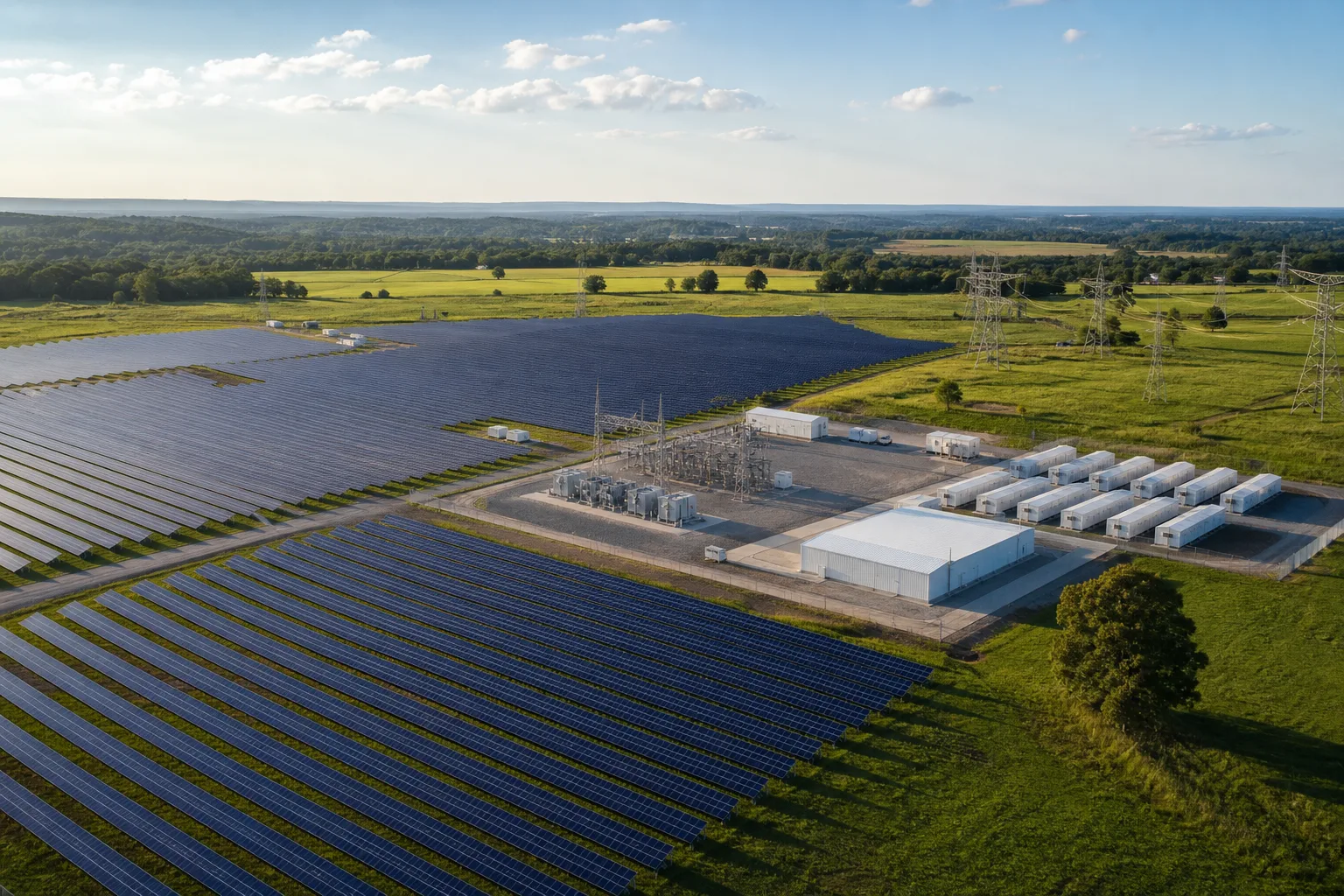
- Google solar deal will take the initial 1.6GW output from Arkansas’ Steel River Energy Center when it begins operating in 2029.
- The Google solar deal adds renewable generation to a regional grid, but does not directly power the company’s data centers hour by hour.
- Steel River’s first two phases received $3.5 billion in financing and prioritize solar panels and steel made in the United States.
- Rising AI data-center demand has made corporate clean-power contracts necessary, yet they remain an imperfect answer to real-time fossil generation.
Table of Contents
Google solar deal puts 1.6GW on the books
Google has signed up for all of the first 1.6 gigawatts of output from a vast Arkansas renewable project, and the scale of the Google solar deal tells us something uncomfortable about the AI boom: Big Tech’s clean-energy plans are now racing to catch up with its electricity appetite.
The company will purchase the initial generation from the Steel River Energy Center when the project comes online in 2029, according to reporting by the Financial Times. That first slice includes 1.6GW of solar capacity and 2GW of battery storage. Project backers say the solar generation could serve roughly 315,000 homes, though household-equivalent figures are always a slightly slippery shorthand. Homes do not consume electricity in the same pattern as hyperscale computing campuses, which run around the clock and can pull enormous loads during the grid’s most strained hours.
Still, this is a meaningful contract. Steel River is expected to reach 2.45GW of solar capacity and 2.9GWh of battery energy storage across three phases. The first two phases have secured $3.5 billion in financing, with a stated preference for US-made steel and solar modules. In an industry where projects regularly get bogged down by interconnection queues, equipment costs and local opposition, financing of that size is not a footnote. It is the difference between a press release and steel actually going into the ground.
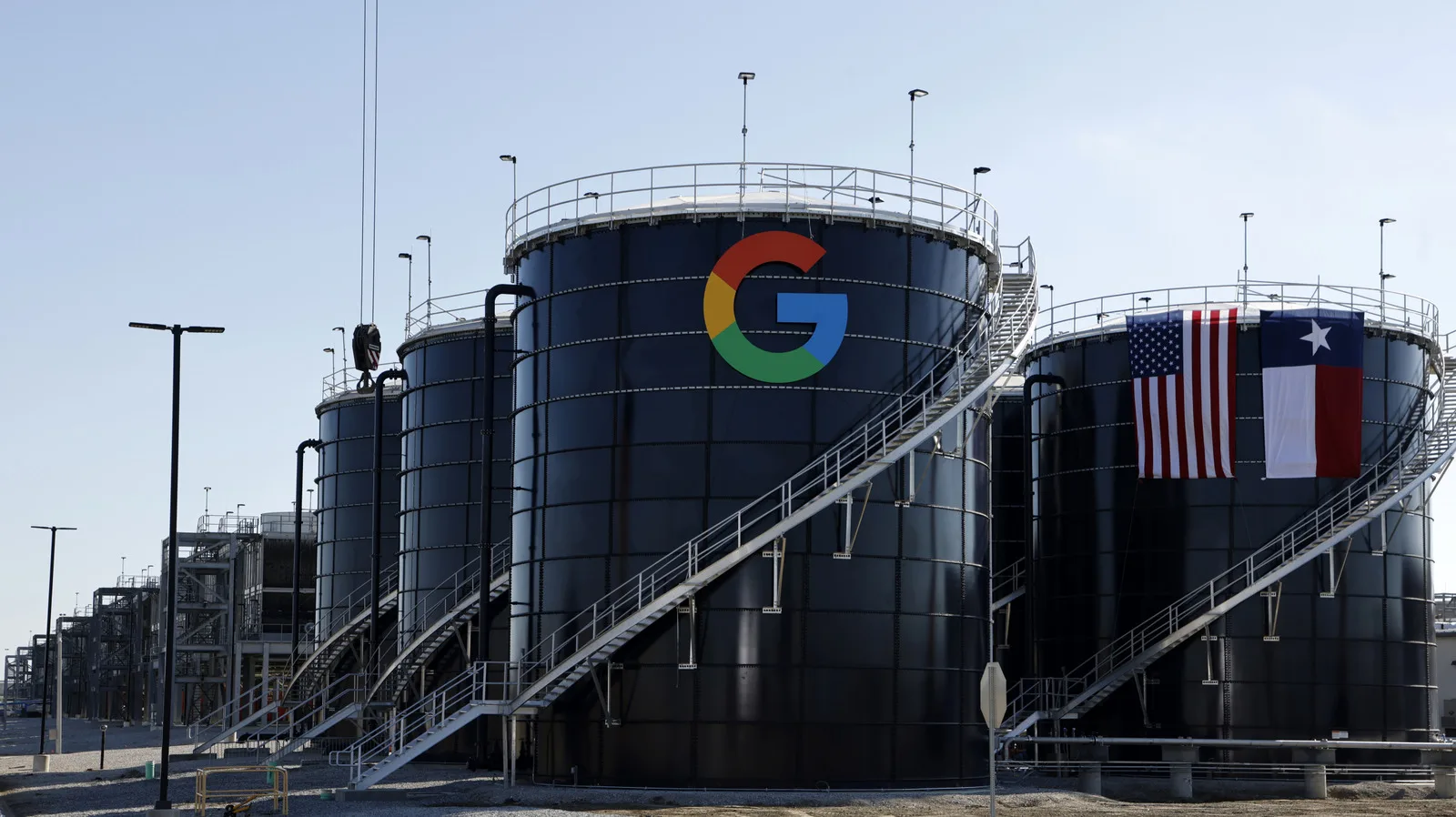
Google will pay a fixed price for the power, giving the developer a predictable customer and giving Google a long-term hedge against volatile energy markets. It’s a familiar arrangement for the largest technology companies, and it explains why the Google solar deal matters beyond one Arkansas site: corporate buyers are increasingly functioning as the anchor tenants for giant renewable projects that might otherwise struggle to obtain financing.
The grid does not work like a private extension cord
Here’s the crucial caveat: the Google solar deal does not mean sunshine in Arkansas will flow directly into a Google server rack. Google will continue drawing electricity from the grids where its facilities operate, alongside its own on-site generation, which can include gas turbines and engines. Steel River’s output enters the regional grid mix; Google receives the contractual clean-energy attributes associated with its purchase.
That distinction is the heart of the criticism around corporate offsets and power-purchase agreements. A solar farm can help displace fossil generation over a year, and new projects plainly matter. But solar output peaks in daylight. Data centers do not politely stop processing queries, training runs or video streams after sunset. If a local grid turns to natural gas or coal at 8 p.m., an annual clean-energy accounting claim does not physically erase those emissions.
I would not dismiss this as greenwashing by default. Building new low-carbon capacity is far preferable to buying cheap certificates from a project that was already going to exist. Google has a sustainability site. But the Google solar deal is best understood as progress, not proof that clean power is available every hour.
The batteries are especially interesting, if their deployment matches the ambition. Storage can move some solar generation into the evening and reduce reliance on fossil peaker plants. Yet 2.9GWh is an energy quantity, while 2GW describes potential discharge power. At full output, that works out to less than an hour and a half of storage. Useful? Absolutely. A complete answer to 24-hour clean computing? Not remotely.
AI’s energy bill is coming due
Google’s own numbers show why contracts of this size are suddenly on the menu. Its electricity consumption rose 37 percent last year, and its grid-based emissions increased by the same percentage. Generative AI is not the only cause — cloud services, YouTube and the company’s broader infrastructure all consume power — but AI training and inference have turned the data-center energy question from a back-office concern into a boardroom problem.
The rest of the sector is following the same playbook. Meta has agreed to buy the output from a 200MW Texas solar facility, while Amazon has moved to acquire the troubled 1.2GW Sunstone solar-and-storage project in Oregon. These are not boutique environmental gestures. They are procurement deals measured in gigawatts because the companies buying them have begun to consume electricity on the scale of industrial regions.
And frankly, that is where the easy narrative breaks. Tech firms can rightly say their contracts help bring new renewables onto the system. Communities can also rightly ask what happens when a data center arrives faster than the transmission lines, generation and water infrastructure needed to support it. Somebody pays for the upgrades. Sometimes it is the company; sometimes it is utility customers; often it is a blend so opaque that even regulators struggle to explain it cleanly.
What would make this cleaner than an accounting exercise?
The strongest version of the Google solar deal would pair new generation with more transparent reporting: which grids Google uses, what hours its loads are highest, and how much fossil generation remains on those systems at those times. Hourly carbon matching is harder and more expensive than annual matching, which is precisely why it is a better measure of whether a company is reducing real-world emissions.
Google also needs clean power where its computing demand sits, not merely where renewable construction is easiest. Arkansas solar can be valuable to the broader US grid, but geography matters in electricity. Transmission constraints are real, and renewable power in one region cannot magically clean up a gas-heavy grid hundreds of miles away.
My read is that this is a serious investment rather than a symbolic one. A 1.6GW commitment creates actual incentives to build actual infrastructure, and that is more than plenty of corporate climate announcements can claim. Yet the Google solar deal also exposes the next test for Big Tech: can these companies build enough clean, reliable power for AI without treating annual renewable purchases as a permission slip for another decade of fossil-fueled growth?