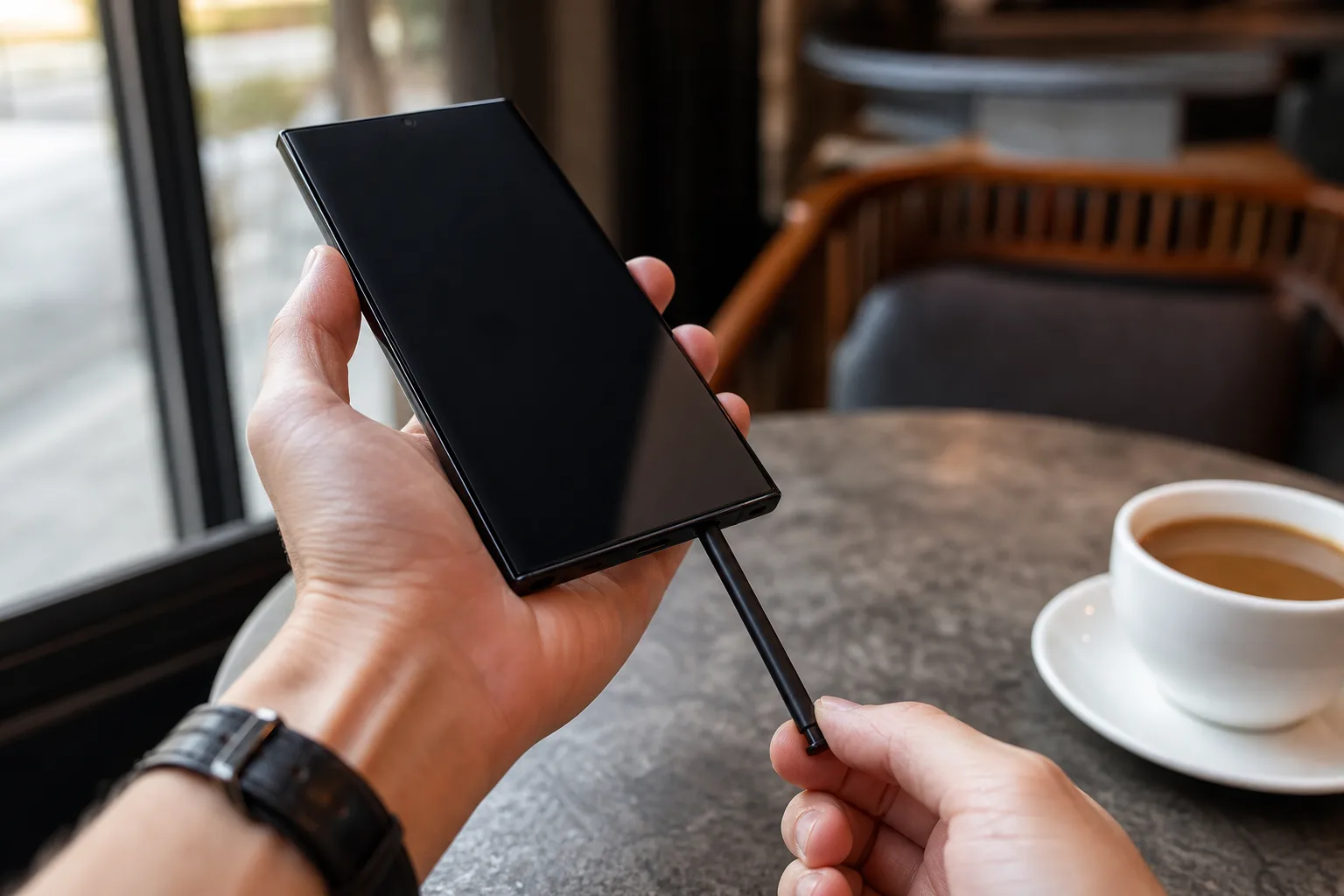
- A reader poll found 58.3% of respondents want the Galaxy S27 Ultra to receive a meaningful battery-capacity increase.
- The Galaxy S27 Ultra faces pressure because Samsung has held its Ultra battery at 5,000mAh since the line began.
- Camera improvements ranked second, while relatively few respondents identified display brightness or charging speed as their largest concern.
- Samsung may face a difficult internal design trade-off between a larger cell and preserving the built-in S Pen.
Table of Contents
Galaxy S27 Ultra battery anxiety is getting hard to ignore
Samsung can put a brighter panel, a sharper camera sensor, or another slick AI shortcut into the Galaxy S27 Ultra. But if it again arrives with a 5,000mAh battery, plenty of its most loyal buyers may see straight through the upgrades. A reader poll of nearly 2,400 people makes the point rather bluntly: 58.3% picked battery capacity as their main request for Samsung’s next Ultra phone.
This was not a narrow win. It was a landslide, and it tells Samsung something more useful than the usual annual spec-sheet grumbling. People are not primarily asking for a phone that refills a few minutes quicker. Only 5.7% selected charging as their top concern. They want the Galaxy S27 Ultra to last longer before it needs the cable in the first place.
Frankly, that feels overdue. Samsung’s Ultra models have used a 5,000mAh pack since 2020. Six years is an eternity in phone hardware, even if the company has steadily squeezed more endurance from efficient Snapdragon chips, LTPO displays, and software tuning. Efficiency is welcome, but it has a limit. You can only keep tightening the tap before users ask why the bucket itself has not gotten bigger.
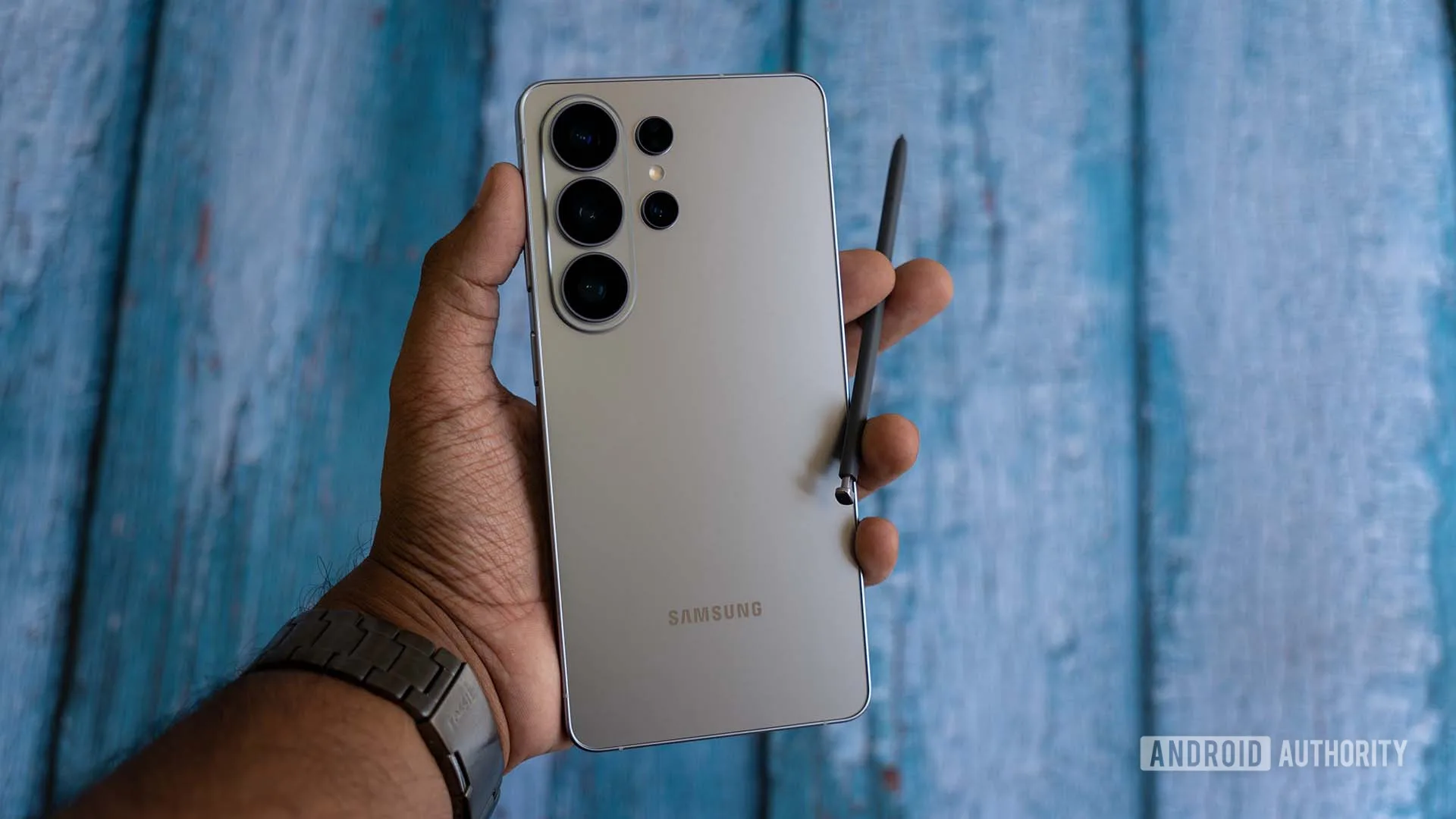
The Galaxy S26 Ultra remains a highly capable handset, especially for people who value its large display, versatile cameras, and the included stylus. But flagship buyers paying Ultra money have every reason to look across the aisle when competing phones pair similarly large screens with battery capacities that move well beyond Samsung’s familiar ceiling.
Why 5,000mAh now looks like an old ceiling
The uncomfortable comparison for Samsung is not with cheap phones. It is with Chinese premium flagships that have adopted silicon-carbon battery chemistry, which can pack more energy into a similarly sized physical space than conventional lithium-ion cells. Rivals have introduced new battery chemistries that can allow for larger capacities in similarly sized devices.
Those numbers do not automatically translate into identical real-world endurance. Software behavior, cellular radios, display settings, processor load, and camera use all matter. Still, battery capacity gives manufacturers breathing room. It is the difference between ending a long travel day at 27% and nervously hunting for an airport outlet at 6%. Anyone who has used a giant-screen phone for navigation, photos, messaging, and streaming knows which version of that day they prefer.
Samsung has reason to be conservative when it comes to battery safety. Battery safety is understandably a priority. Yet caution cannot become a permanent excuse for standing still while rivals make larger, safe batteries a normal part of the flagship conversation.
My read is that the Galaxy S27 Ultra does not need to chase the biggest number on a spec sheet. A well-engineered 5,500mAh or 5,800mAh cell, combined with Samsung’s mature optimization work, would be a serious and credible step. Another 5,000mAh battery paired with promises of minor efficiency gains would feel like the company is asking customers to applaud housekeeping.
The S Pen trade-off could turn ugly
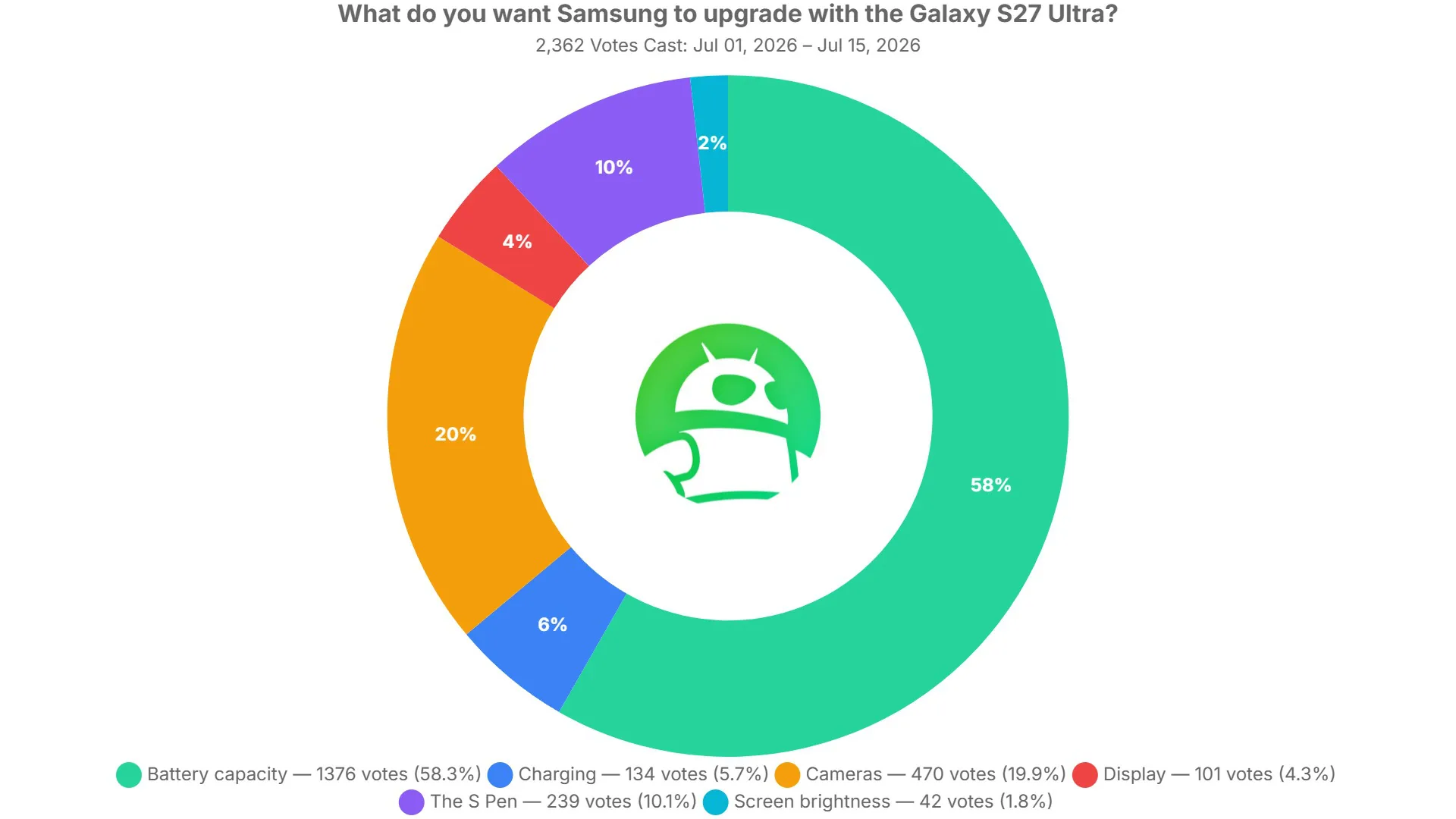
There is, of course, a stubborn physical problem: the Galaxy S27 Ultra already has a crowded interior. It needs room for large camera hardware, thermal components, antennas, wireless charging, and the silo that houses its S Pen. Something has to give if Samsung wants substantially more capacity without making the phone thicker or heavier.
The poll suggests the stylus still has meaningful support. More than 10% of respondents named S Pen improvements as their priority, making it the only option beyond battery and cameras to clear that mark. That may sound modest, but the S Pen has a special status. It is the feature that separates Samsung’s Ultra from every generic oversized Android slab. Remove it, and Samsung risks replaying the familiar tech-industry mistake of cutting a distinctive feature because a spreadsheet says only a minority uses it.
Remember when Google killed Stadia while still telling buyers it was committed? Hardware loyalty is hard won and easy to burn. Samsung should not casually toss out the S Pen to gain a few hundred milliamp-hours. But it also cannot pretend the current layout is sacred if the battery gap keeps widening.
A smarter route may involve denser chemistry, better component packaging, or accepting a tiny increase in thickness. Most people will forgive an extra fraction of a millimeter if the Galaxy S27 Ultra reliably survives a heavy day. They are far less forgiving of an expensive phone that reaches for a charger before dinner.
Cameras still matter, but the display is not the problem
Just under 20% of poll respondents chose camera upgrades, putting the camera system in a distant but clear second place. Samsung’s imaging package remains competitive, particularly in versatility and zoom, but it has not felt especially adventurous lately. Competitors have pushed larger sensors, variable apertures, and more ambitious telephoto designs. Samsung will need to keep pace, especially as computational photography narrows the gap between raw hardware advantages.
Even so, cameras are no longer the obvious weak link for the Galaxy S27 Ultra. Its display received very little criticism in the poll: display quality and brightness together accounted for only 6.1% of responses. That tracks with reality. Samsung makes some of the best smartphone panels in the business, and the S26 Ultra’s Privacy Display feature suggests there is still room for practical screen innovation without chasing meaningless peak-brightness bragging rights.
The larger message is that buyers have become selective. They do not need Samsung to reinvent every part of the phone each January. They want the company to fix the part of the daily experience that still feels constrained. Battery life is not glamorous, but neither is plumbing, right up until it stops working.
Samsung has one clear assignment
A poll is not a market study, and nearly 2,400 readers do not represent every Samsung customer. Some buyers will care more about the next camera sensor, thinner bezels, faster charging, or new Galaxy AI features. But the margin here is too wide to dismiss. The Galaxy S27 Ultra battery question has become a test of whether Samsung is willing to update its hardware priorities rather than refine the same formula again.
If Samsung delivers meaningful extra capacity while retaining the S Pen and its premium camera range, it will have a compelling answer to the growing crop of big-battery Android flagships. If it does not, Samsung may find that six years of 5,000mAh has turned from a sensible baseline into a symbol of complacency. The interesting question is not whether Samsung can make a larger battery. It is whether it finally decides that its most expensive phone deserves one.