
- The Exynos 2700 must sustain high CPU performance, rather than posting impressive bursts that collapse once a phone warms up.
- For the Exynos 2700, credible gaming performance means stable frame rates after ten minutes, not a flashy benchmark chart.
- Samsung’s 2nm manufacturing progress will determine whether ambitious clock-speed and efficiency claims survive inside retail Galaxy phones.
- Open AI acceleration could give Samsung a useful edge if developers can use standard Arm features without proprietary toolkits.
Table of Contents
The Exynos 2700 has one job: end the regional lottery
Buy a flagship Galaxy phone in London and you may get a different processor from the person buying the same model in Los Angeles. That has been Samsung’s awkward reality for years, and the Exynos 2700 is shaping up as its latest attempt to make the split less painful.
Samsung has confirmed that a next-generation Exynos chip is on the way, while industry reporting has tied it to the 2027 Galaxy S27 family. The likely arrangement will sound familiar: Exynos-powered Galaxy S27, S27 Plus and perhaps S27 Pro models across much of the world, with Qualcomm Snapdragon versions in the US, China and other major markets. The Ultra, at least according to current chatter, could again avoid the whole argument with Snapdragon across the board.
Frankly, that last detail says plenty. Samsung knows the Exynos name still carries baggage among its most demanding customers. The issue has never been that Exynos chips are universally bad. Some generations have delivered respectable battery life and perfectly good day-to-day speed. But flagship phones cost flagship money everywhere, and nobody wants to wonder whether their regional variant is the one that throttles harder in Genshin Impact or gets weaker modem results on a train platform.
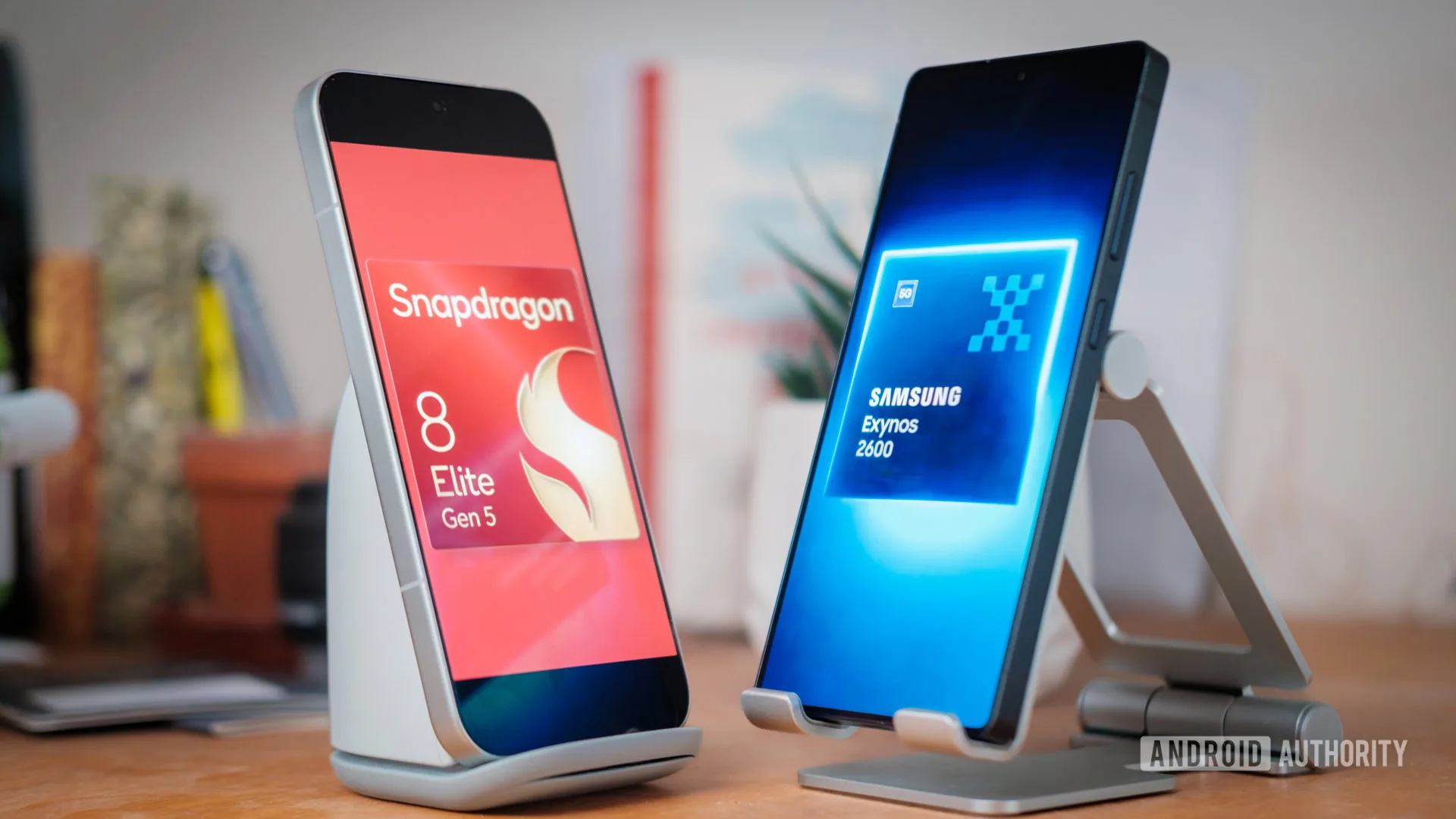
The Exynos 2700 does not need to win every synthetic benchmark by a hair. It needs to make the processor question boring. That means matching Snapdragon where people can feel the difference: sustained speed, heat, connectivity and software support.
Exynos 2700 needs sustained CPU speed, not a five-minute stunt
Qualcomm’s recent advantage begins with its custom Oryon CPU designs, which have put serious pressure on both Arm-based rivals and Apple’s long-standing mobile CPU lead. Samsung, after retiring its ill-fated custom Mongoose core project, has depended on Arm’s designs. That was the sensible call, but it also means Samsung has less room to differentiate when Qualcomm is building a high-performance core of its own.
Rumors suggest the Exynos 2700 could use Arm’s next major CPU family, potentially reaching a headline-grabbing 5GHz. Treat that number with healthy skepticism. A phone chip hitting a peak frequency in a controlled lab is like a compact car touching its top speed downhill: technically real, not necessarily useful on a daily commute.
The real constraint is Samsung Foundry. The chip is expected to use the company’s second-generation 2nm Gate-All-Around process, known as SF2P. Samsung has advertised improvements over its first-generation 2nm node, including higher performance potential and lower power use. But yield rates matter as much as node names. If the process cannot produce enough high-quality chips that hold their intended clocks efficiently, Samsung will either lower frequencies or accept more heat. Neither outcome helps the Exynos 2700 argument.

Samsung should prioritize a CPU profile that remains quick after the camera has been recording, maps have been running and the phone is charging in a car. That is a far better test than chasing a one-off peak score. Apple built its reputation on this kind of consistency; Qualcomm is now doing much the same. Samsung needs to join them.
Gaming is where Samsung cannot hide a thermal problem
The current generation provides a useful warning. Testing cited around the Exynos 2600 found that its Xclipse 960 graphics could begin an Asphalt Legends session near 110 frames per second, then settle around 82fps after roughly ten minutes as temperatures rose. Internal temperatures approaching 45°C are not a trivia question for benchmark obsessives. They are the point where a premium phone starts behaving like it would prefer you stop using it.
That is why the Exynos 2700 needs to treat thermal control as the product, not merely an engineering footnote. Samsung reportedly plans a revised package layout that shifts DRAM into a side-by-side position rather than placing it above the die. In theory, that creates more room for the Heat Pass Block system intended to pull heat away. Good. Put it to work.
Samsung and AMD have spent years building the Xclipse graphics identity around RDNA architecture and mobile ray tracing. Ray tracing looks terrific in a controlled demo, but it remains a niche feature in actual phone games. I’d argue that Samsung should favor traditional rasterized performance, sensible upscaling and stable power draw over another round of ray-tracing bragging rights. A locked 60fps is more valuable than a 100fps launch sequence that falls apart halfway through a bus ride.
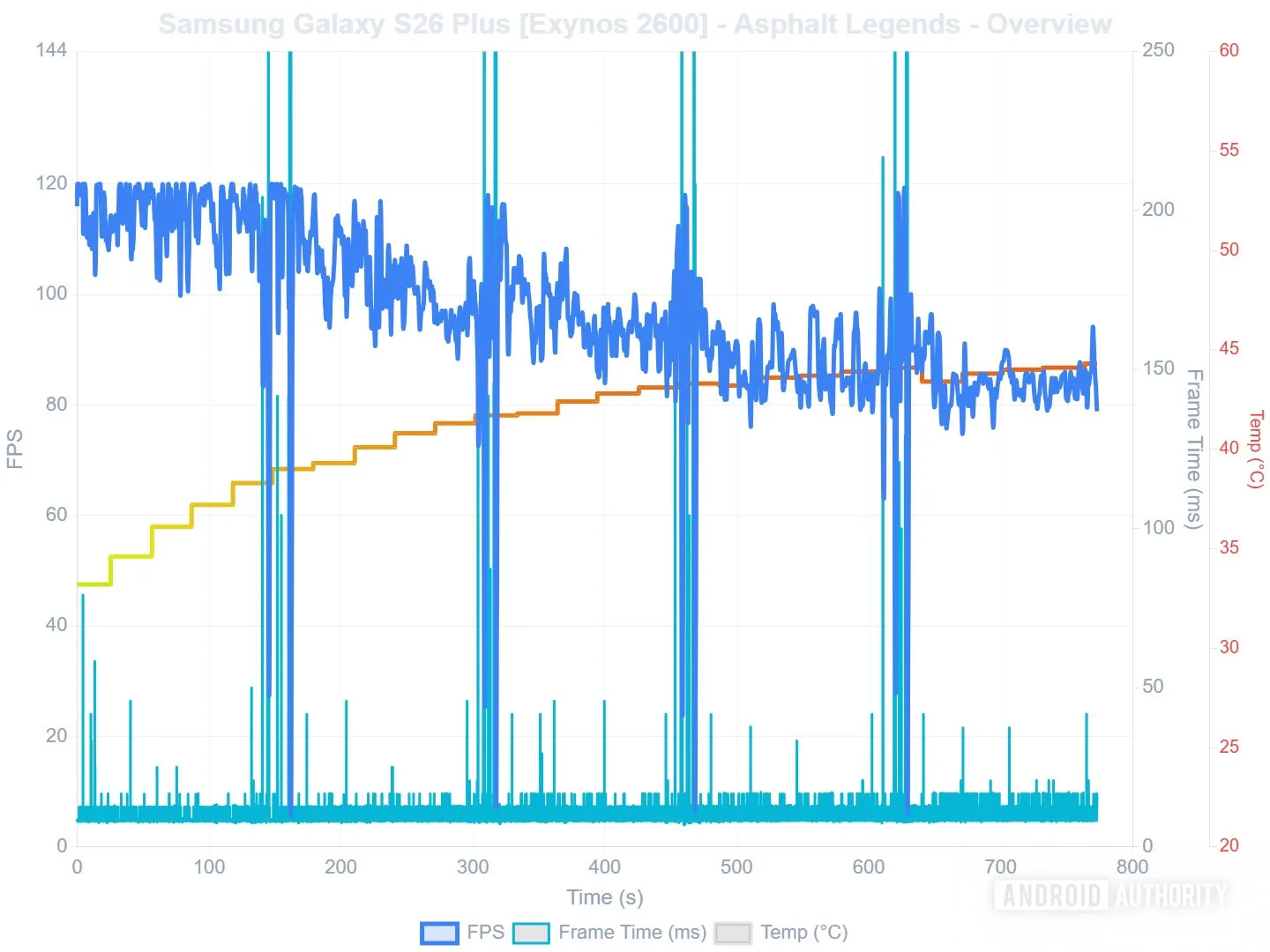
There is room for software to help, too. Technologies such as neural super sampling can reduce rendering load when deployed well. Yet no software trick can fully rescue a chip that is generating too much heat. The Exynos 2700 has to prove its frame-rate curve stays flatter than its predecessor’s, across a range of games and not only Samsung’s preferred test titles.
AI only counts when developers can actually reach it
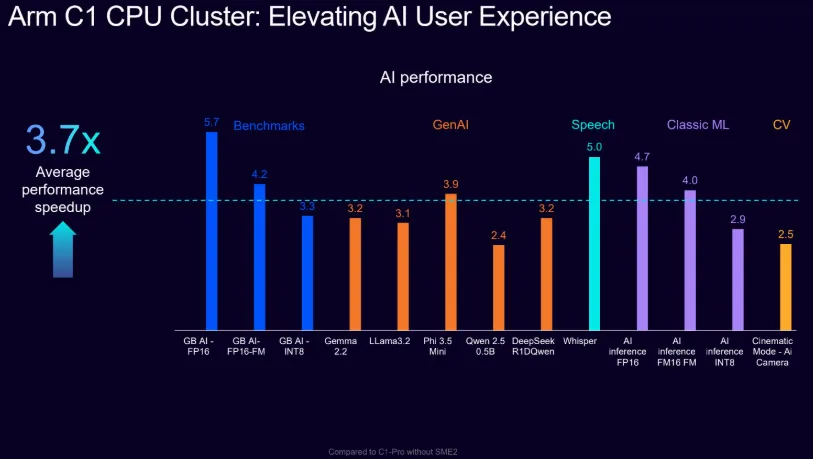
There is one area where Samsung could have a quietly meaningful advantage. Arm’s SME2 instruction set, supported by the current flagship Exynos platform, adds CPU-level acceleration for AI-oriented math. Arm says such extensions can materially lift performance on compatible tasks, and the appeal is straightforward: developers may access it through more standard CPU tooling rather than integrating a vendor-specific neural processing unit stack.
The distinction is practical, not academic. Every chipmaker now advertises an NPU in giant letters. But developers have limited time and little appetite for maintaining a separate implementation for one chipset used in one manufacturer’s phones. The best on-device AI hardware is the hardware app makers can use without filing extra paperwork, metaphorically speaking.
If Samsung retains and improves SME2 support in the Exynos 2700, it could make features such as local transcription, image processing and language tools easier to accelerate across compatible apps. Qualcomm’s Hexagon NPU remains formidable, and Snapdragon’s larger installed base gives it a natural developer advantage. Samsung should not pretend otherwise. Its opening is to make the more open route the easier route. Arm’s CPU portfolio offers a clearer view of the platform Samsung is building upon.
The modem and the Galaxy experience still matter
There is a fourth requirement Samsung cannot afford to overlook: network efficiency. Processor comparisons often collapse into CPU bars and GPU charts, while modem behavior gets ignored until a phone drains battery hunting for signal or runs warmer than it should on 5G. Qualcomm has an enormous amount of modem experience, and Samsung’s Exynos history in this area has been uneven.
For the Exynos 2700, Samsung needs reliable signal performance, predictable battery draw and feature parity across the bands and carrier combinations that matter in each market. A Galaxy S27 owner should not need a spreadsheet to learn whether their model has the better chip, better battery endurance or more stable gaming performance.
That is the standard. Not ‘good for Exynos.’ Not ‘competitive on paper.’ The Exynos 2700 has to be good enough that Samsung can sell one flagship experience with a straight face. If it gets there, Qualcomm loses a useful piece of leverage in the Android flagship market. If it misses again, the regional lottery will become harder than ever to defend.
Frequently Asked Questions
What phones could use the Exynos 2700?
Reports point to the Galaxy S27, S27 Plus and a possible Galaxy S27 Pro using Samsung’s chip in many international markets. Samsung is expected to continue shipping Snapdragon versions in the US, China and selected other regions, while the Ultra model may remain Snapdragon-only.
Why has the Exynos versus Snapdragon debate lasted so long?
Samsung has often sold the same flagship Galaxy name with different chips by region. Past Exynos models have often delivered lower app and gaming performance and, at times, less efficient network behavior than Snapdragon variants, leaving some buyers feeling they received a different experience for the same premium price.
Will the Exynos 2700 be better for gaming?
That depends less on its peak graphics score than on heat management. The Exynos 2600 reportedly loses performance after sustained play, so Samsung needs the next chip to maintain more consistent frame rates during gaming.
What is SME2 and why does it matter for mobile AI?
SME2 is an Arm CPU instruction extension designed to speed up AI-style numerical workloads. It can help software run certain tasks faster without routing everything through a chipmaker-specific neural processor API, which may make it easier for more developers to take advantage of the hardware.