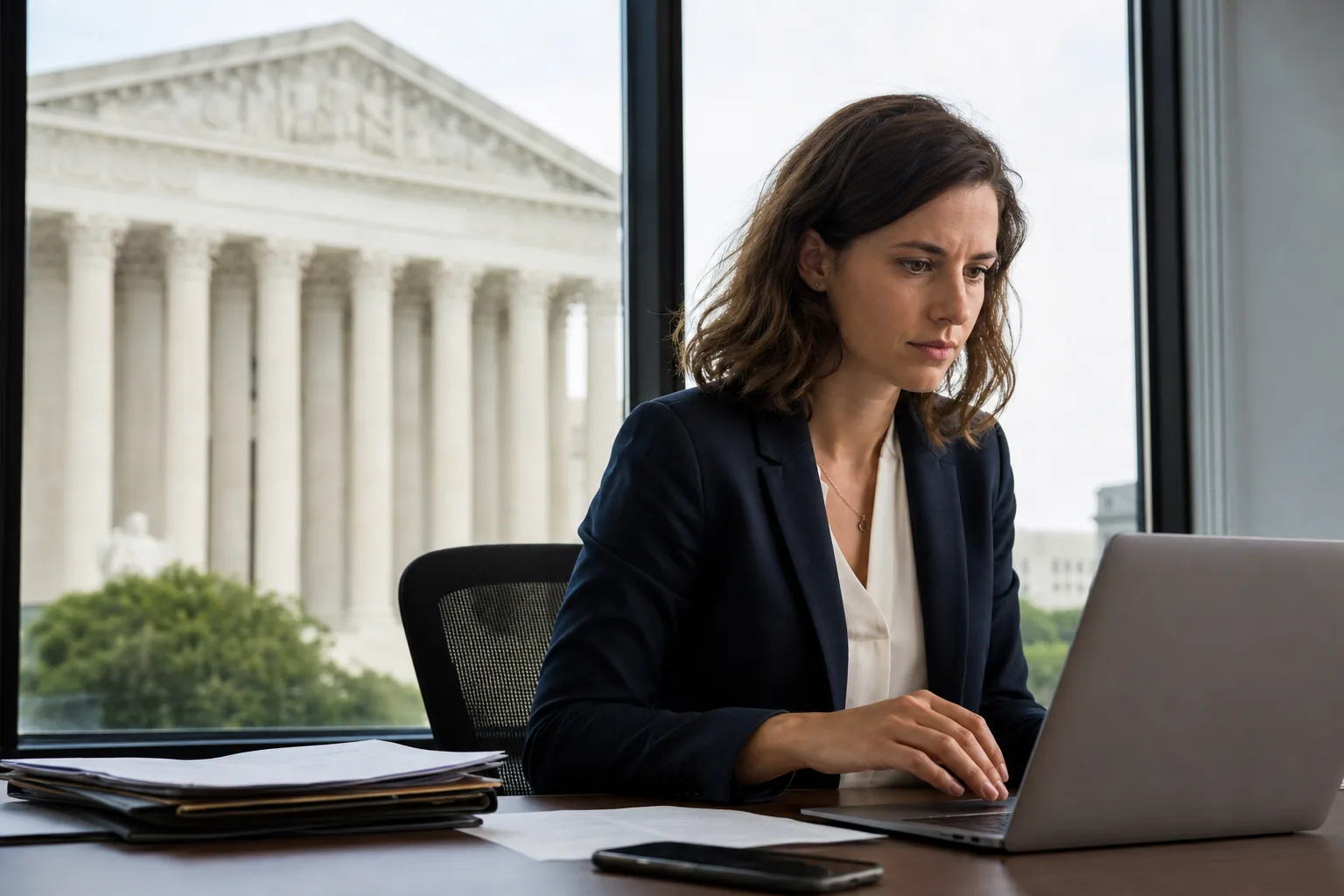
- A federal judge halted enforcement of the content moderation visas policy while a coalition’s challenge to the State Department policy proceeds.
- The content moderation visas policy could make noncitizen trust and safety professionals fear immigration penalties for ordinary work.
- Judge James Boasberg found officials had not tied five targeted researchers to foreign efforts to manipulate American public debate.
- The ruling protects a wider set of researchers and platform workers, not only members of the organization that brought suit.
Table of Contents
Content moderation visas hit a legal wall
The administration’s campaign against content moderation visas has run into a problem that should have been obvious from the start: a government cannot turn an unresolved political argument about online speech into an immigration dragnet. US District Judge James Boasberg this week issued a preliminary injunction stopping the State Department from enforcing its policy against noncitizens who work in misinformation research, fact-checking, platform compliance, advocacy, and trust and safety.
That sounds technical. It isn’t. For a researcher with a green card, or an immigrant employee on a social platform’s policy team, the practical message was brutal: work on the wrong side of America’s content-moderation fight and your right to remain in the country could be questioned. That is the central danger of content moderation visas. Boasberg’s order puts that threat on ice while the underlying lawsuit moves forward.
The case was brought by the Coalition for Independent Technology Research, which challenged a policy nominally aimed at people who help foreign adversaries suppress American speech or manipulate public opinion. On its face, that target has broad appeal. No serious person wants a foreign government quietly steering US debate. But a policy’s label matters less than how officials use it.
According to the court’s account, the State Department had not shown that five named researchers were connected to a foreign power trying to censor Americans. That gap is the heart of this ruling. If the government can investigate immigration status based on routine work in an unpopular professional field, the alleged foreign-influence rationale starts to look like a hood ornament rather than an engine.
The risk went far beyond a handful of researchers
Boasberg rejected the State Department’s preferred narrow remedy, which would have protected only coalition members. Instead, he blocked enforcement more broadly because the policy could chill an entire workforce. The judge wrote that a lawful permanent resident on a platform’s trust-and-safety team, a noncitizen researcher advocating stronger labels for disinformation, a compliance employee applying platform rules, or an advocate pushing advertisers away from falsehood-heavy sites could reasonably see their immigration status as being at risk.
That is a remarkably clear description of why content moderation visas are such a dangerous policy idea. Modern internet companies rely on people whose jobs involve ugly, difficult judgment calls: identifying coordinated influence operations, handling election-related falsehoods, enforcing harassment rules, and deciding whether a post crosses a platform’s line. These workers already get hammered from both directions. Add possible deportation or green-card scrutiny, and many will rationally choose silence.
Silence is not neutral in this context. It favors the loudest actors, the best-funded propagandists, and anyone willing to turn a platform’s reluctance into a distribution strategy. We have watched this movie before. After years of partisan pressure around alleged censorship, platforms cut or reduced trust and safety teams, researchers faced legal and personal attacks, and the public was somehow asked to believe that less information about coordinated manipulation would make debate healthier. Content moderation visas would intensify that pressure by making immigration status part of the political fight.
The immigration angle makes the chilling effect more acute. A US citizen can lose a job or face online abuse for controversial research. A noncitizen may also worry about a visa renewal, a green-card review, or removal proceedings. Those are not remotely equivalent risks.
A court refuses to pick a side in the moderation wars
Boasberg did not declare that every form of content moderation is wise, fair, or constitutional. Frankly, he did not need to. Platforms make bad calls all the time, and their rules can be opaque, inconsistently applied, and maddeningly difficult to appeal. Criticizing moderation is legitimate. So is advocating for less of it.
But the court found the government was placing its enforcement weight on one side of that argument. In Boasberg’s view, someone who favored more moderation appeared more exposed under the policy than someone who favored less. That is a major distinction. The government may investigate genuine foreign influence. It should not use immigration enforcement to reward a preferred view of how private companies should govern speech. That is why content moderation visas raise concerns that go beyond ordinary disputes over platform rules.
Secretary of State Marco Rubio had said the department was prepared to expand the list of people it targeted, a statement Boasberg cited in explaining why a limited injunction would not do. The wider block recognizes the obvious reality: once a policy sends a warning through a profession, protecting five people does not un-send it.
Immigration authority is substantial, but it is not a permission slip to discard constitutional protections or punish people for protected views. The federal judiciary’s role in reviewing executive action is a core part of the system, as the US Courts explains in its overview of the federal judiciary. In this case, the preliminary injunction means the coalition has shown enough likelihood of success, and enough potential harm, to justify preserving the status quo before a final decision.
Why the tech industry should care
The immediate beneficiaries of the ruling are noncitizens who work in research and platform governance. The bigger beneficiary may be the public’s access to independent scrutiny of online systems. Researchers who study misinformation campaigns and content enforcement often produce work that inconveniences platforms, political movements, governments, or all three. That inconvenience is usually the point.
My read is that content moderation visas were designed to exploit a politically combustible issue while avoiding the harder task of proving actual foreign coordination. It is much easier to imply that a fact-checker or safety analyst is part of an elite censorship machine than to demonstrate they acted for a foreign state. Boasberg’s order forces the government back toward that evidentiary burden.
The policy’s supporters may argue that the injunction ties officials’ hands against real influence operations. It does not. The ruling objects to targeting people merely because they work in content moderation, not to investigations backed by evidence of foreign control or coordination. Those are very different categories, and content moderation visas should not blur them.
For now, the preliminary injunction gives tech workers and researchers room to do their jobs without treating every policy recommendation as an immigration hazard. The final merits decision will matter, and the administration could appeal. But the warning from this court is already plain: if the government wants to punish someone under the banner of foreign influence, it has to show more than a disliked opinion about how the internet should be moderated.