

- The Skullcandy Crusher 1080 brings Bose-backed noise cancellation to a bass-first headphone line without losing its strange, physical charm.
- With 50 hours of ANC playback, the Skullcandy Crusher 1080 outlasts many premium rivals and supports USB-C or 3.5mm wired listening.
- Its haptic bass control remains polarizing, but it gives electronic music, films and workouts a physical impact conventional headphones cannot replicate.
- Bose audio technology makes this Skullcandy flagship a credible alternative to Sony, Bose and Sennheiser at roughly $270.
Table of Contents
Skullcandy Crusher 1080 makes a serious bid for premium territory
For years, buying a Crusher headphone meant accepting a pretty clear bargain: Skullcandy would give you absurd bass and a lot of fun, while Sony, Bose and Sennheiser handled refinement. The Skullcandy Crusher 1080 tries to tear up that old contract. At around $270, it still has the company’s signature bass dial and chest-rattling haptics, but it now arrives with audio and active noise cancellation technology developed through Bose.
Skullcandy has historically treated noise cancellation as an expected feature, not a reason to buy. This time, the company is leaning on Bose’s QuietControl ANC, WaveForm tuning and TrueSpatial directional audio. Put bluntly: the Crusher 1080 is Skullcandy’s attempt to make a headphone that works on a noisy train before it goes anywhere near a squat rack.
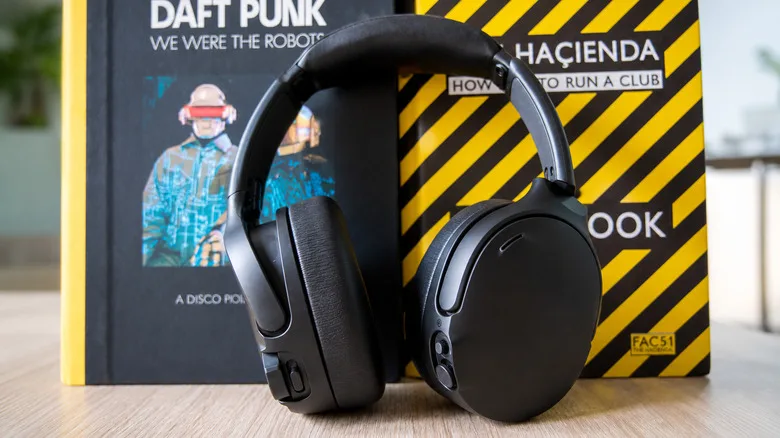
My read is that this is the most strategically sensible thing Skullcandy could have done. The market is awash with competent wireless headphones, and the company’s haptic bass gimmick—yes, gimmick can be affectionate—was no longer enough to lift it above the pack. Bose brings credibility in exactly the areas where Skullcandy needed help. The question is whether that collaboration produces a coherent headphone, or a bass cannon wearing a dinner jacket.
Mostly, it works. Not flawlessly. But well enough that Sony and Bose shoppers should at least stop pretending Skullcandy is only for people who think subtlety is a personality defect.
Bose tech changes the Skullcandy Crusher 1080 sound
The biggest shift with the Skullcandy Crusher 1080 is not actually its physical bass. Switch that feature off and these headphones sound far more balanced than older Crushers. The low end is present but controlled; the soundstage has more space; upper-midrange detail is pushed forward enough to give snare hits, hi-hats and vocals some real bite.
That tuning won’t suit everyone. Compared with a more neutral Sennheiser model, the Crusher can feel a little more energetic and less airy. But that character has practical upside. Older albums and less aggressively mastered tracks can benefit from the extra available volume and the prominence in percussion. Music doesn’t feel sterilized in the pursuit of audiophile correctness.
Skullcandy says its Bose Sound integration covers WaveForm audio processing and TrueSpatial audio alongside ANC. The terminology is a little brand-heavy, admittedly, but the results are more persuasive than the labels. There is a meaningful difference between a conventional Crusher presentation—dense, bass-led and somewhat closed-in—and what Skullcandy is doing here.
For readers comparing specs, the company’s official product catalog is the right place to verify regional pricing and availability. Headphone pricing moves around constantly, particularly when retailers begin discounting a new flagship within a few months. At its quoted $270 range, though, the Skullcandy Crusher 1080 lands below many flagship options from Bose and Sony while asking to be judged in the same conversation.
The noise cancellation is the real upgrade
Frankly, active noise cancellation is where this headphone earns the right to cost more than a typical Skullcandy model. Constant low-level noise—the ventilation drone in an office, road rumble, the tedious wash of a train carriage—is reduced convincingly. It’s the sort of benefit you notice after taking the headphones off, when the outside world abruptly returns like someone has opened a window.
Bose has been one of the ANC benchmarks for years, and that history matters. Its own current headphones still have the edge, while Sony remains brutally good at shutting out the world. The Skullcandy Crusher 1080 doesn’t appear to dethrone either brand. But it closes a gap that used to be enormous, and that’s more relevant than a neat winner’s podium.
Transparency mode is also competent, providing a natural enough passthrough for a quick conversation or a station announcement. You probably won’t want to wear any over-ear headphones during a long chat with a colleague—please, spare us all that particular modern ritual—but it does the job without the artificial, brittle sound cheaper implementations often produce.
Physical controls, big battery, one annoying layout choice
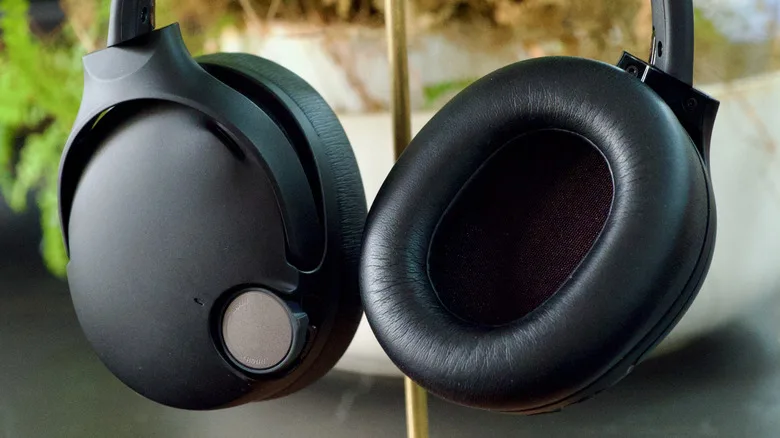
Skullcandy has avoided the touch-control trend, and I think that’s a win. The Crusher’s large physical buttons are easy to find without removing the headset or fumbling with a phone. There is a joystick-style control for playback and volume, a power and pairing button, plus the enormous bass dial that remains the product’s visual calling card.
The trouble is placement. The bass dial sits close to the switch used for ANC and transparency controls, which makes accidental mode changes too easy. It’s not a catastrophic flaw, just the kind of repeated irritation that becomes obvious after a week. Premium headphones should feel predictable in the hand; the Skullcandy Crusher 1080 occasionally asks for a second attempt.
Elsewhere, the specification sheet is reassuringly full. There is multipoint Bluetooth, Auracast support, wear detection, app-based EQ and controls, plus both USB-C and 3.5mm wired playback. Battery life is rated at 50 hours with ANC on and 60 hours without it. Those are genuinely strong numbers. Plenty of high-end competitors ask you to charge more often for the privilege of a slimmer silhouette.
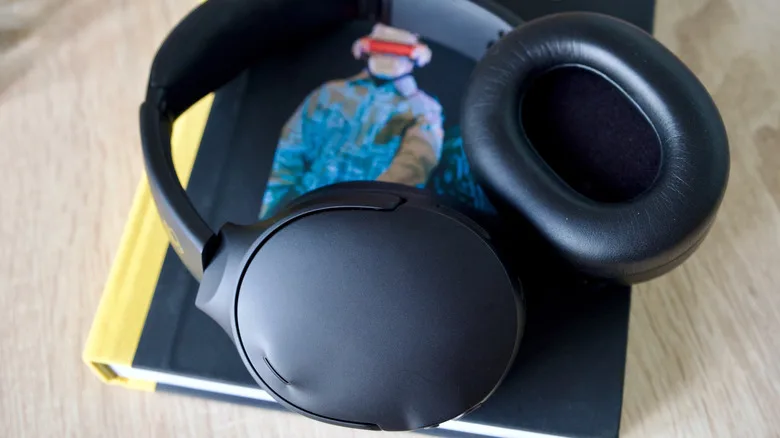
The design itself is substantial rather than sleek, with metal headband accents that help justify the price. It looks a little like Skullcandy took a well-built headphone from the early 2010s and upgraded its internals. Some people will prefer that sturdiness. Others will look at Bose’s cleaner lines and feel the Crusher is carrying a few extra pounds.
Crusher Bass is still either the point or the problem
There is no polite way to describe Crusher Bass: it is a physical effect that can make your head feel like it has been placed near a car subwoofer. The dial controls haptic vibration, not merely an EQ bass boost, and at higher levels it can overwhelm the actual recording. That is precisely why some people adore it.
On the right track, at a sensible setting, it adds an enjoyable sense of impact. Electronic music, hip-hop, action movies and workout playlists all make a strong case for it. On acoustic tracks, podcasts or anything already heavy in the low end, it can become a distraction. I’d argue the best use of the feature is moderation: enough to add weight, not so much that every kick drum becomes a small domestic earthquake.
The feature earns its keep because it gives the Skullcandy Crusher 1080 two distinct personalities. It can behave like a fairly mature premium headphone when you want peace, clarity and all-day battery life. Then, with one twist of the dial, it can become the bizarre, bass-obsessed Crusher people remember. That duality is more valuable than Skullcandy’s old one-note identity.
We’ll see whether Bose’s involvement becomes a long-term platform for Skullcandy or a limited experiment. But if this model is the template, the company has found a better answer than simply turning the bass up again: make the sensible parts good enough that the silly part feels like a choice.
Frequently Asked Questions
Is the Skullcandy Crusher 1080 good for commuting?
Yes. Its Bose QuietControl active noise cancellation handles sustained background sound well, making trains, offices and cafes substantially less distracting. It does not appear to equal Bose’s own best headphones or Sony’s category leaders, but it is a major improvement for Skullcandy.
How long does the Skullcandy Crusher 1080 battery last?
Skullcandy rates the headphones for up to 50 hours with active noise cancellation enabled and 60 hours with it switched off. They also support fast charging, so a short charge can cover a commute or an extended work session.
What is Crusher Bass on Skullcandy headphones?
Crusher Bass is Skullcandy’s signature haptic bass feature, adjusted with a dedicated dial on the headphones. It is an iconic but divisive feature, though the reviewer enjoys it in the right moments.

