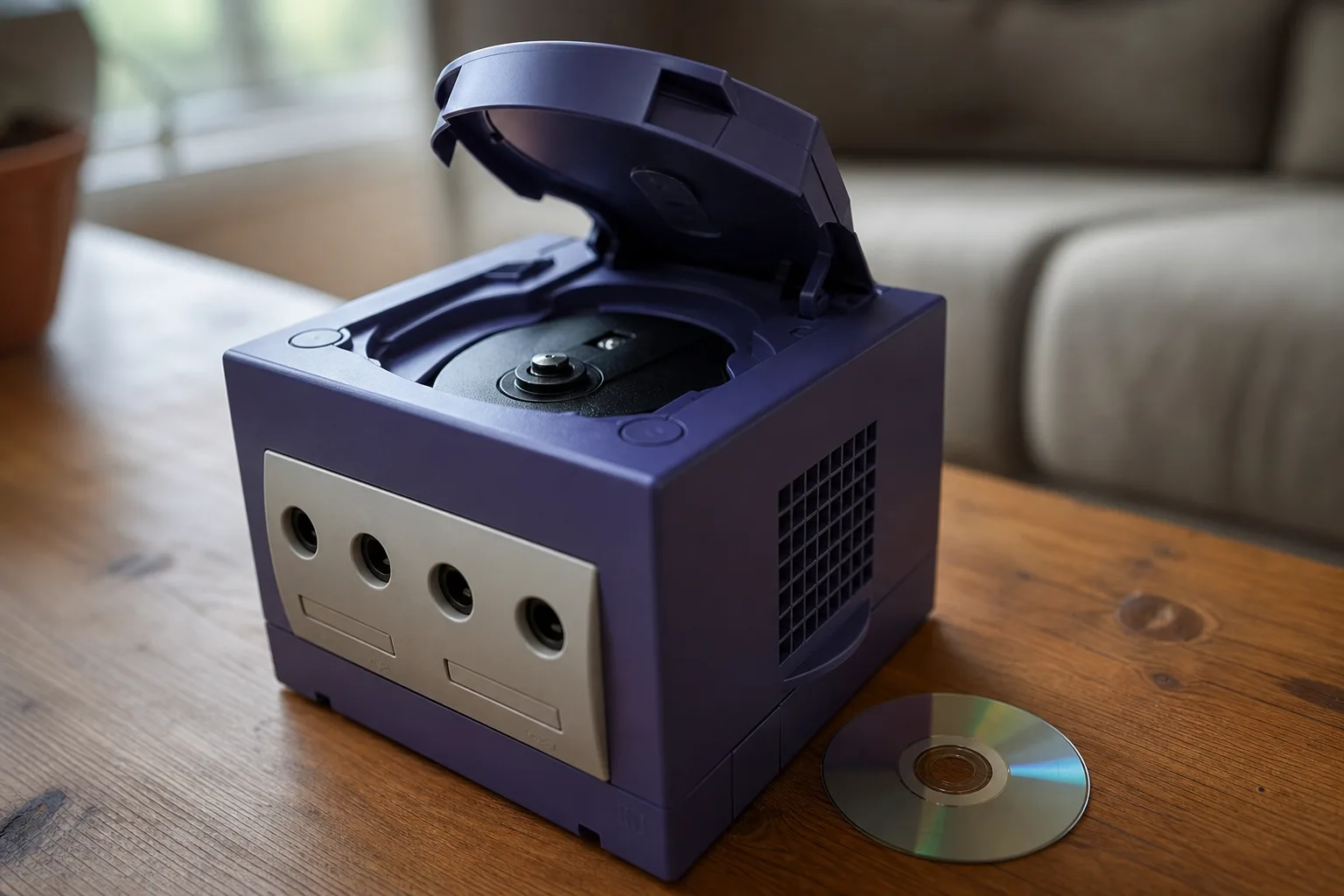
The GameCube mini discs were a tiny piece of plastic carrying an enormous strategic bet. Nintendo looked at a market rushing toward DVD players, bigger storage, and all-purpose living-room boxes, then shipped a purple lunchbox with a handle and a disc smaller than a coffee coaster. I still think it is one of the most Nintendo decisions Nintendo has ever made: practical, charming, defensive, and ultimately a little self-defeating.
Launched in late 2001, the GameCube arrived against Sony’s PlayStation 2 and Microsoft’s original Xbox. Its unusual discs are often treated as a cute bit of retro trivia. They were much more than that. The format shaped the machine’s price, physical design, loading behavior, piracy story, and its place in a console generation Sony came to dominate.
- GameCube mini discs reduced drive size, improved access times, and made Nintendo’s console unusually portable for a home system.
- Nintendo chose GameCube mini discs partly to avoid DVD licensing costs and make ordinary PC-based copying harder in 2001.
- The format held roughly 1.5GB, forcing developers to manage data tightly while Sony’s PlayStation 2 offered DVD movies.
- The GameCube sold 21.74 million units, behind Xbox at 24 million and PlayStation 2 at roughly 160 million.
Table of Contents
Why GameCube mini discs were so small
Nintendo used proprietary 8-centimeter optical media, commonly called Nintendo GameCube Optical Discs. Standard DVDs measure 4.17 inches across; these were about 3.15 inches in diameter and held just under 1.5GB. That sounds almost comically restrictive now, when a PlayStation 5 game can arrive on a 100GB Blu-ray disc before asking for another enormous download. But in 2001, disc capacity was only one part of the equation.
The smaller media allowed for a smaller drive, and the smaller drive helped create a remarkably compact console. The GameCube weighed roughly 5.7 pounds, compared with about 8.8 pounds for the original Xbox. Nintendo even fitted the thing with a handle, an accessory that looked toy-like at first and turned out to be genuinely useful for hauling Mario Kart: Double Dash!! to a friend’s house. In that sense, the GameCube mini discs shaped the console’s dimensions as much as its storage budget.
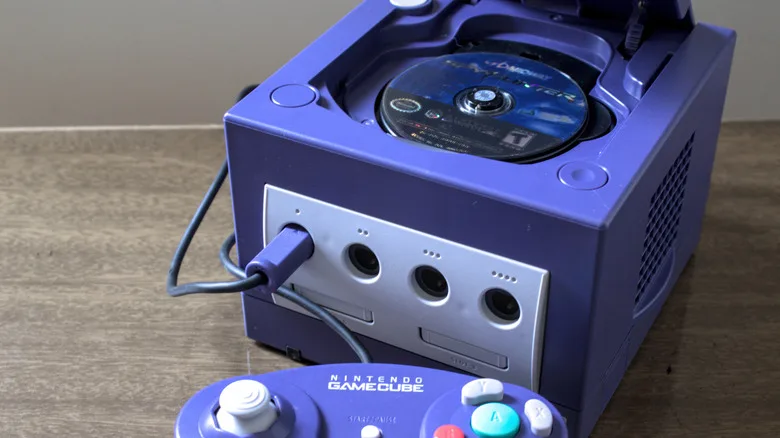
There was also a performance upside. An optical pickup has less physical distance to cover on a smaller disc, and Nintendo tuned the system around brisk data access. That did not eliminate loading screens, obviously, but GameCube games often felt snappy beside their DVD-based rivals. Nintendo has long treated waiting as a design failure when it can avoid it, from cartridge consoles to the Switch’s quick wake-and-play rhythm. The GameCube’s format fits that instinct perfectly.
The GameCube mini discs also made copying games less convenient. At launch, ordinary consumer PC drives could not simply read the proprietary media. That did not make the platform invulnerable forever—nothing with a devoted modding community is—but it raised the effort required for piracy at a time when burned PlayStation discs were increasingly familiar territory.
A cost-saving choice with a real consumer benefit
Nintendo’s price target mattered. The GameCube launched at $199 in the US, while the PlayStation 2 and Xbox debuted at $299. Avoiding DVD movie playback meant Nintendo could sidestep DVD Forum licensing costs that reportedly ran around $20 per console. Twenty dollars does not sound devastating in isolation. Across millions of machines, though, it is the difference between a useful price cut, better margins, or a component bill that does not spiral out of control.
This was Nintendo at its most single-minded: build one clear-purpose machine and cut anything that does not directly serve play. Nintendo’s GameCube hardware history presents the console. That distinction was intentional.
Developers paid for the decision in a different currency: careful asset management. Because GameCube mini discs carried less data than full DVDs, a large game could span multiple discs, as Metal Gear Solid: The Twin Snakes did, or teams could compress audio and video aggressively. Yet the constraint did not stop ambitious work. The Legend of Zelda: The Wind Waker delivered a vast ocean to sail, while Resident Evil rebuilt a 1996 survival-horror classic with lavish pre-rendered backgrounds and cinematic presentation.
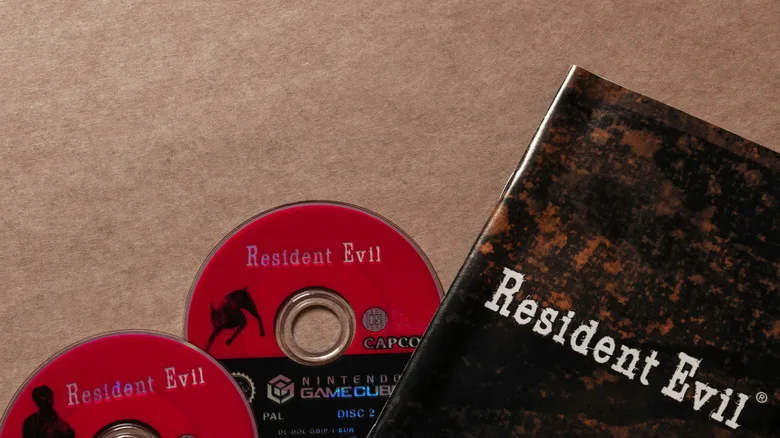
Frankly, the storage ceiling may have pushed some teams toward discipline. Bigger media is not automatically better art; it can also invite bloat. Still, there is no romanticizing a 1.5GB ceiling when competitors could use full DVDs. Multi-platform publishers had to account for it, and every extra engineering problem gives a publisher one more reason to prioritize the market leader.
The DVD problem was bigger than it sounds now
For readers who grew up with Netflix, a console lacking DVD playback may sound like a bizarre dealbreaker. Back then, DVD was the premium home-entertainment format. A PlayStation 2 could sit beneath a television as both a game console and a family movie machine. The Xbox could do the same with a separate DVD Playback Kit. That made their higher prices easier to justify to parents and roommates who were not buying a console solely for games.
The GameCube mini discs made that kind of dual-purpose pitch impossible. Nintendo could have included a conventional DVD drive, but then the little cube would have been larger, more expensive, and less distinct. It chose focus over flexibility. A defensible call on a spec sheet; a tougher sell in an actual electronics store, where a PS2 buyer could walk away with games and a DVD player in one box.
That was the real trap: consumers were not necessarily chasing the neatest technical design. They wanted the box that spared them from buying another box later. Sony understood that with the PS2 and later with Blu-ray in the PlayStation 3. Microsoft understood it with Xbox Live’s online infrastructure. Nintendo, in this generation, bet that games alone would carry the room.
The format was not the whole reason GameCube lost ground
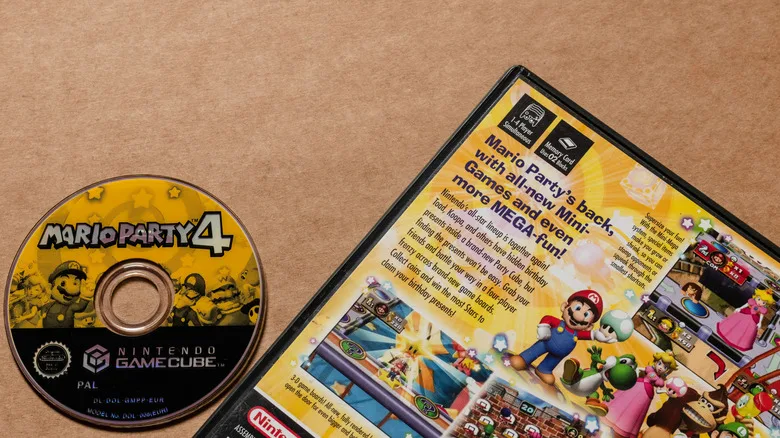
It would be lazy to blame the GameCube mini discs for everything. The console sold 21.74 million units worldwide, a respectable total by most standards. Microsoft’s first Xbox reached around 24 million, while Sony’s PlayStation 2 crossed an almost absurd 160 million. Sony did not win merely because it played DVDs; it had momentum from the original PlayStation, massive third-party support, and the kind of cultural gravity that gets a machine into every dorm room.
Nintendo’s third-party problem was especially painful. The GameCube missed mainline Final Fantasy releases and did not receive Grand Theft Auto entries during the period when Rockstar’s series became a mainstream phenomenon. Capcom supported the system enthusiastically for a time, including the Resident Evil remake and Resident Evil 4, but even that relationship became a cautionary tale when Resident Evil 4 later expanded beyond its supposed GameCube exclusivity.
What the GameCube mini discs did do was reinforce Nintendo’s position as the specialist. That had downsides in 2001, but it also created a machine people remember with unusual affection. The GameCube feels coherent. Its controller, its games, its boot sound, its physical proportions—everything points toward playing rather than managing a stack of media features.
Nintendo’s later hardware tells the story
Nintendo’s next systems make the lesson fairly clear. The Wii retained a standard-sized optical drive and played GameCube discs, though it still skipped DVD playback in most markets. The Wii U adopted a proprietary optical format. The Switch abandoned discs entirely for game cards, returning Nintendo to a format it controls tightly and can package in a small, portable device.
That makes the GameCube mini discs less of a weird dead end than a prototype of Nintendo’s modern hardware philosophy. The company repeatedly favors a controlled format, a distinct form factor, and a purpose-built experience over matching the multimedia checklist of its rivals. Sometimes that creates a hit. Sometimes it leaves money on the table.
My read is that the GameCube’s disc was both smart engineering and a commercial misread. GameCube mini discs helped make a $199 console that was compact, quick, and hard to casually copy. But they also asked shoppers to buy another box for movies at exactly the moment one-box entertainment was becoming the dream. Nintendo eventually found a much larger audience with the Wii. The question, as physical games become less central everywhere, is whether its next format gamble will still feel as charming when there is no disc tray left to open.
Frequently Asked Questions
What are GameCube mini discs?
GameCube mini discs are Nintendo’s proprietary optical game format for the GameCube. They measure 3.15 inches across, compared with 4.17 inches for a standard DVD, and hold just under 1.5GB of game data.
Can a normal DVD player read GameCube games?
No. Nintendo used a proprietary format and physical size that standard DVD drives could not read, making the discs harder to pirate.
Why could the GameCube not play DVD movies?
The GameCube’s proprietary miniDVD format did not support DVD movie playback. This meant Nintendo did not have to pay DVD Forum licensing royalties, but it also denied the console a feature available on the PS2 and Xbox.
Did GameCube mini discs hurt GameCube sales?
They likely contributed, though they were far from the only issue. The lack of DVD playback made the GameCube less useful as a living-room media device, while uneven third-party support and the absence of franchises such as Grand Theft Auto also mattered.