

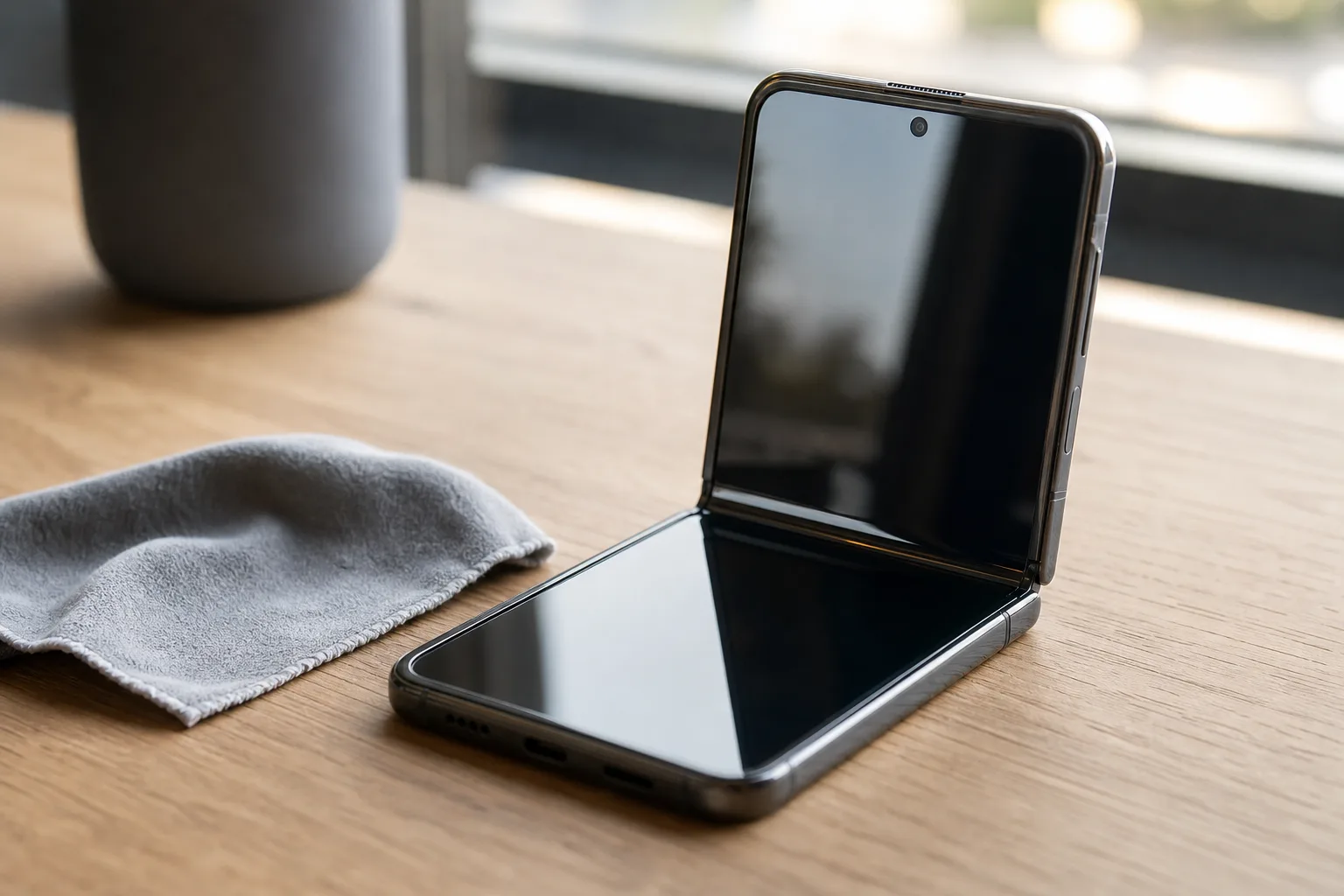
- Good foldable phone care begins with protecting the flexible inner screen from pressure, debris and unsuitable accessories.
- A case, deliberate cleaning routine and sensible charging habits make foldable phone care far less complicated than expensive repairs.
- Never peel the factory-installed inner screen protector unless the manufacturer or an authorized technician tells you to.
- Water resistance helps with accidents, but dust and fine grit remain the hinge’s most persistent long-term enemy.
Table of Contents
Foldable phone care starts with accepting what you bought
A foldable is a small engineering miracle, but foldable phone care requires a slightly different mindset from the one you bring to a standard glass-and-aluminum slab. The trade-off for a screen that bends is simple: there are more parts that deserve your attention.
Keeping one healthy does not require a ceremonial cleaning kit or a paranoid lifestyle. Most preventable failures come down to ordinary habits: dropping a phone without a case, stuffing it beside keys, ignoring grit in the hinge, or treating the inner display like a rugged sheet of Gorilla Glass. It isn’t one.
Think of the main screen more like the finish on a nice pair of sunglasses. It can handle daily use, but a careless scrape or a hard point of pressure can leave a mark you’ll notice every time you open it.
Manufacturers have made real progress. Google, OnePlus and Motorola have all pushed foldables toward more practical designs. But laboratory fold counts tell only part of the story. A phone’s actual lifespan is usually decided in the pocket, car, kitchen and beach bag.
Protect the screen and hinge before they become expensive problems
The single biggest rule of foldable phone care is also the least glamorous: leave the factory inner screen protector alone. Do not peel it off because an edge has lifted, and do not replace it with a random protector bought from a marketplace listing. On a foldable, that layer is not decorative packaging. It is designed around the panel’s movement and surface characteristics.
If the protector begins bubbling, cracking or separating, contact the maker or an authorized repair shop. See Samsung’s Galaxy Z screen support page.
Use the soft pad of your finger, not a fingernail, pen tip or stylus that is not explicitly supported by your model. Even compatible styli deserve common sense: do not jab at the crease as if you are trying to start a reluctant elevator button.
The hinge is the mechanical soul of the device and the place where sand, crumbs, makeup powder and metal filings can turn into trouble. Before closing the phone, give the inner screen a quick glance. A grain of grit trapped between the halves can put concentrated pressure on the panel. That is the sort of tiny mistake that produces a surprisingly large repair bill.
9 day-one habits for foldable phone care
- Buy a model-specific case immediately. A good case should protect the frame and corners without shifting during use. Hinge protection is useful for commuters and anyone prone to drops, though it can add bulk.
- Keep the inner display clear before closing. Wipe away visible dust with a clean microfiber cloth. Never close the phone over coins, cards, earbuds or debris.
- Keep it away from sand and loose grit. Water-rated foldables may survive a splash, but dust resistance varies widely. Beaches and construction sites are a far bigger concern than many owners realize.
- Do not press hard on the crease. The crease is expected; trying to flatten it with force is not a maintenance strategy.
- Use approved charging gear. Reliable USB-C cables and chargers reduce heat and connection issues. Avoid damaged cables that strain the port or cause intermittent charging.
- Do not carry it loose with keys. The outer display may use tough cover glass, but the inner surface remains the priority. Give the phone its own pocket.
- Close it normally, not violently. Modern hinges are designed for everyday opening and closing. Snapping it shut adds no benefit and may eventually stress a case or hinge assembly.
- Watch for changes, not just cracks. New crunching sounds, resistance, a black line near the crease, flickering, or a protector lifting all merit prompt support contact.
- Back up your data. This is sensible for every phone, but doubly so for a device whose screen and hinge are specialized repair parts.
That list may sound fussy, yet this is the practical version of foldable phone care. You are not babying a museum piece. You are avoiding the handful of conditions that flexible displays dislike most.
Water ratings are reassuring, not permission slips
One of the most misleading assumptions around modern foldables is that an IP rating means the phone is now invincible. It does not. Water-resistance ratings do not necessarily indicate dust resistance. That distinction matters.
Use water resistance as accident insurance, not a feature to test for fun. Do not rinse a dirty hinge under a tap. Do not take the phone into a pool. And after exposure to moisture, dry the exterior and avoid charging until the port is dry. Saltwater, chlorinated water and soapy water are especially poor companions for moving parts and seals.
Temperature matters too. Avoid leaving a foldable on a hot dashboard, under direct summer sun, or in freezing conditions for long stretches. Batteries hate heat; flexible materials and adhesives do not love temperature extremes either. For foldable phone care, ordinary common sense goes a long way.
Consistent foldable phone care also means treating dust, moisture and extreme temperatures as risks that can compound over time.
Repairs, warranties and the awkward truth about ownership
Foldables are more repairable than their earliest versions in some respects, but they are not cheap to fix. The inner screen assembly, hinge and frame are closely integrated. A straightforward-looking blemish can require a major component replacement, which is why insurance or manufacturer protection plans deserve a serious look when you buy one.
Read the coverage terms before you need them. Accidental-damage plans often involve deductibles, and cosmetic wear may not qualify. If the screen protector starts lifting, document it with photos and contact support early rather than waiting until a small issue develops into a broken display.
I’d also avoid DIY hinge lubrication, compressed-air blasts and internet repair folklore. A foldable hinge is not a squeaky door in an old apartment. Spraying something into it can displace debris deeper into the mechanism or damage internal materials. Let trained technicians handle a hinge that feels wrong.
Prompt support contact is an important part of foldable phone care when the hinge, display or screen protector begins behaving differently.
The industry has made foldables normal, not indestructible
Today’s foldables are no longer novelty hardware for early adopters who enjoy risk as a hobby. Samsung’s Galaxy Z line has matured, Motorola has made the flip format genuinely appealing, and Google and OnePlus have given buyers credible alternatives. Competition is forcing better hinges, thinner bodies and more durable display layers.
But the central bargain has not changed. A foldable gives you a larger screen in a smaller pocket, and in exchange asks for a little more awareness. Treat foldable phone care as part of the purchase price, like putting a case on a new laptop or not leaving a camera lens loose in a backpack.
If manufacturers want foldables to become truly mainstream, the next fight is not about making the crease one millimeter less visible. It is about making owners forget they need these rules at all. We are getting closer, but we are not there yet.
Frequently Asked Questions
Do foldable phones need a special case?
A purpose-built case is strongly recommended because it protects the outer frame and, on many designs, adds coverage around the hinge. Buy one made for the exact model; poorly fitted universal cases can interfere with closing, buttons, wireless charging or the flexible display.
Can I remove a foldable phone’s inner screen protector?
You should not remove the factory-installed protector on the inner display yourself. It is part of the phone’s intended screen stack, and peeling it can damage the flexible panel or affect warranty support. Ask the manufacturer or an authorized repair provider if it lifts or bubbles.
How does foldable phone care differ from regular phone care?
Foldable phone care puts more emphasis on the vulnerable inner display, hinge area and closing mechanism. Conventional phones have one rigid glass slab, while foldables use a flexible panel that can be harmed by sharp pressure, grit, fingernails and improperly fitted accessories.
Are foldable phones safe to use near water?
That depends on the model’s IP rating. Some newer foldables offer meaningful water resistance, but resistance is not the same as waterproofing, and dust protection can vary. Do not assume a foldable can handle sand, powder, shower steam or a submerged hinge.