Table of Contents
As editors at Squaredtech we monitor hardware innovations in tech. Apple’s foldable iPhone promises breakthroughs in materials. Leaks reveal liquid metal for the hinge and advanced titanium for the body. This foldable iPhone design tackles durability issues head-on. We break down the supply chain details, history, and specs.
Liquid Metal Hinge Powers Apple’s Foldable iPhone Durability
A Korean supply chain source shared details on Apple’s foldable iPhone materials. The leaker “yeux1122” on Naver cited a material firm. Apple selects liquid metal for the hinge in its first foldable iPhone. Liquid metal forms an amorphous structure without crystals. This property gives it superior strength and resistance to bending.
Apple explored liquid metal for over 15 years. The company signed a 2010 deal with Liquidmetal Technologies. Apple gained a perpetual, worldwide, exclusive license for consumer electronics. Engineers tested it in small parts like the iPhone SIM ejector tool. Apple renewed the agreement multiple times, including in 2015.
Liquid metal resists fatigue from repeated stress. Hinges endure millions of folds in foldable iPhone tests. Traditional metals weaken over time. Liquid metal acts like a spring, snapping back precisely. Apple patents highlight it for moving parts. Foldable iPhone hinges demand this endurance.
Manufacturing challenges limited past use. Liquid metal requires precise cooling to stay amorphous. High-volume production proved tough. Apple invested in R&D through Crucible Intellectual Property. The firm shares non-electronics inventions. Now, supply chains scale it for foldable iPhone hinges.
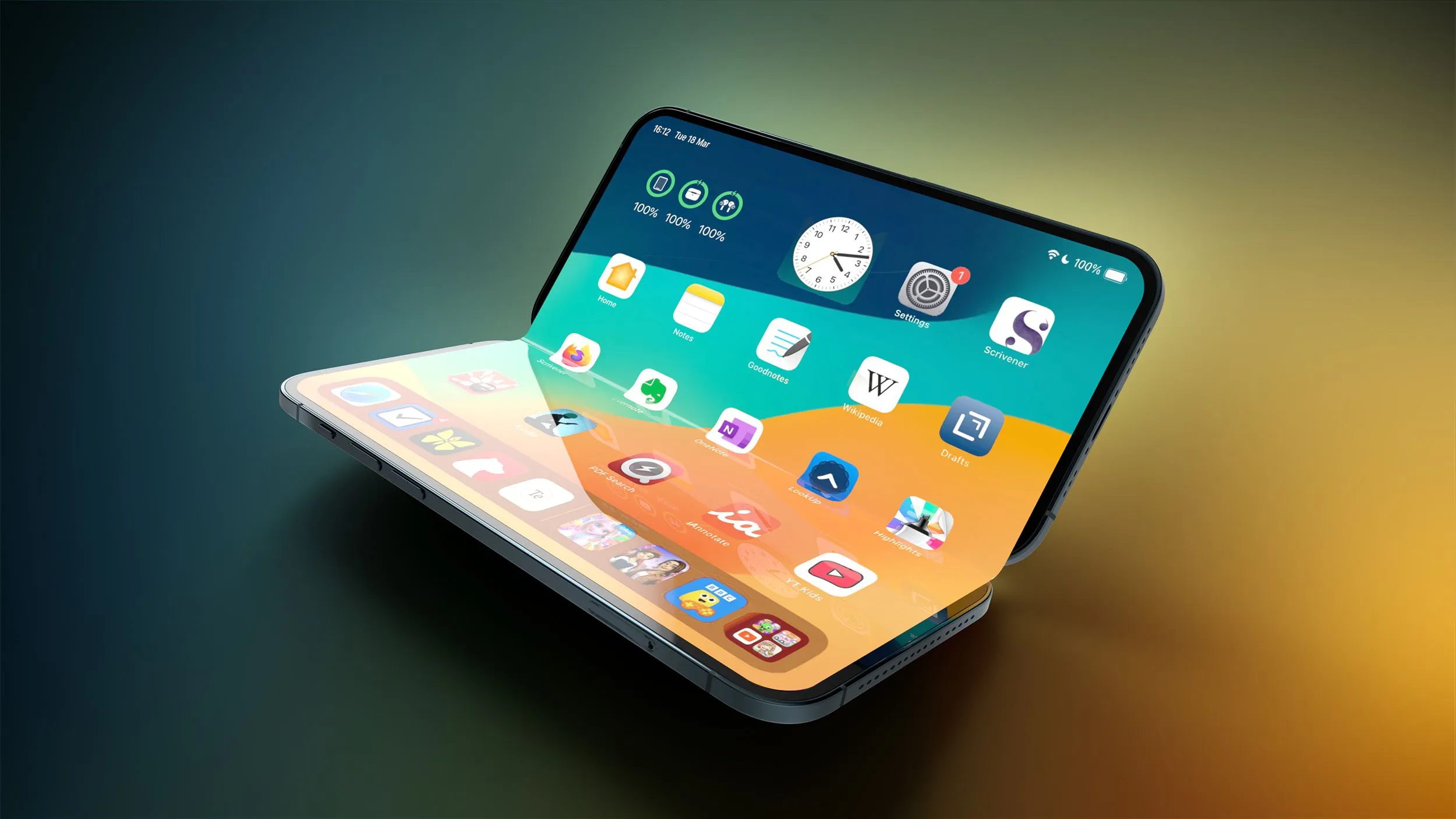
The foldable iPhone debuts in fall 2026 with iPhone 18 Pro and Pro Max. It features a book-style fold. The inner display measures 7.8 inches, outer at 5.5 inches. A crease-free screen uses advanced layers. Apple prioritizes thinness at 4.5mm unfolded.
Liquid metal solves crease issues. Rivals show visible lines after folds. Apple’s hinge distributes force evenly. This tech elevates foldable iPhone above Samsung or Google devices. Our team notes material shifts impact supply chains. Liquid metal boosts premium pricing. It aligns with Apple’s durability focus.
Improved Titanium Body Strengthens Apple’s Foldable iPhone Frame
The foldable iPhone body adopts revised titanium. This alloy increases strength and cuts weight versus current iPhone frames. Surface area stays similar, but mass drops. Titanium offers better strength-to-weight than aluminum or steel.
Foldable iPhone designs span larger areas. Extra weight strains hinges. Apple iterates on alloys across titanium iPhones. iPhone 15 introduced titanium. iPhone 16 refined it. The foldable iPhone marks the fourth generation.
Manufacturing tweaks enhance properties. Powder metallurgy or heat treatments optimize grains. Apple sources from specialists like Samsung or LG. The process yields lighter frames for foldable iPhone bulk.
Titanium resists corrosion and scratches. It withstands daily drops better than aluminum. Foldable iPhone needs this for pocket use. Larger size amplifies bend risks. Supply leaks confirm titanium over aluminum rumors. Aluminum suits slabs but fails folds. Titanium pairs with liquid metal perfectly.
Foldable iPhone integrates A20 chip and C2 modem. Two rear cameras capture pro shots. Touch ID returns for security. A 24MP under-display camera hides seams. Priced near $2400, it targets luxury buyers. Foldable iPhone premium justifies costs. Materials drive high margins. We analyzed how titanium evolves. It sets benchmarks for foldable iPhone rivals.
Apple’s Foldable iPhone Timeline and Global Impact
Apple’s liquid metal journey spans patents. Filings cover home buttons and casings. Renewals signal commitment. Foldable iPhone realizes long-term vision. Rivals like Samsung use similar alloys. Apple lags in folds but leads materials. Foldable iPhone launches late 2026. Specs include 7.6-inch inner OLED, 5.3-inch outer. Thickness hits 4.8mm open. No notch improves immersion.
Liquid metal enables smooth unfolds. It prevents gaps competitors suffer. Titanium frame adds rigidity. Our team tracks foldable iPhone market. Shipments grow yearly. Apple captures share with innovation.
Challenges persist. Mass production tests scale. Yields affect launch timing. Consumers gain durable devices. Foldable iPhone redefines portability. It folds to phone size, expands to mini-tablet.
Patents detail hinge mechanics. Liquid metal absorbs shocks. Titanium bonds seamlessly. Global supply chains ramp up. Korean firms lead titanium. US patents protect tech. Foldable iPhone boosts ecosystem. It pairs with Apple Watch, AirPods.
Squaredtech predicts success. Materials ensure longevity. Apple dominates premium folds.
Stay Updated: Gadgets