
- The Bitcoin price drop below $71,000 triggered $276 million in leveraged liquidations at Monday’s weekly open.
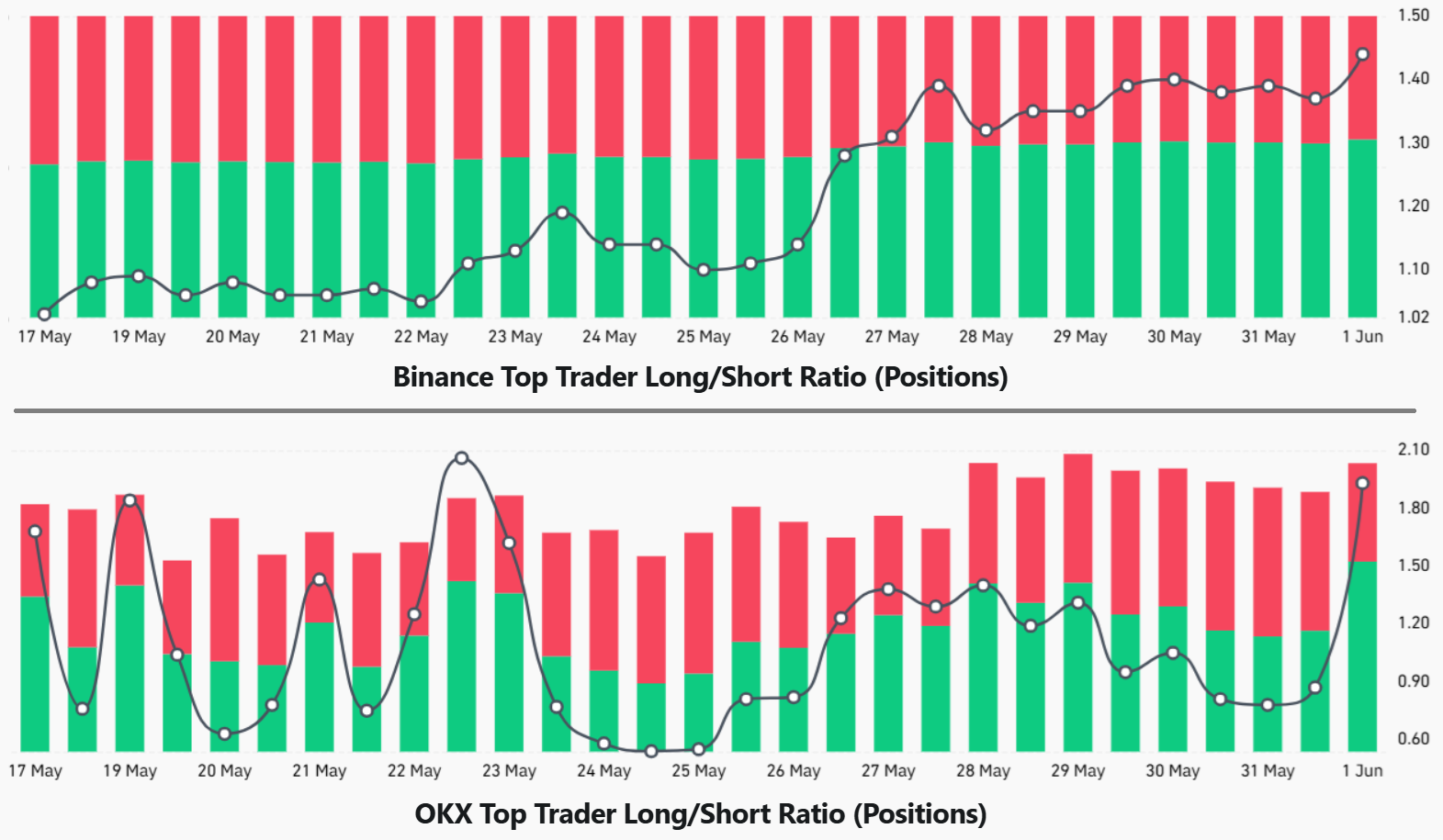
- Despite the Bitcoin price drop, top traders at Binance and OKX sharply increased their long-to-short ratios.
- Spot Bitcoin ETFs have seen $3.46 billion in net outflows since May 13, pointing to sustained capital exit.
- Competing IPO filings from Anthropic and SpaceX are pulling investor attention — and money — away from crypto.
Table of Contents
The Bitcoin Price Drop That Caught Bulls Off Guard
The Bitcoin price drop that opened this week was swift, painful, and arrived from multiple directions at once. BTC slid under $71,000 on Monday for the first time in seven weeks, dragging $276 million worth of leveraged long positions into liquidation as traders responded to a sharp escalation in Middle East tensions. Iran reportedly fired two ballistic missiles at Israel overnight, oil prices spiked — Brent crude hit $95 per barrel — and risk appetite across financial markets evaporated fast.
That kind of macro shock is brutal for Bitcoin. It’s not because crypto is directly tied to oil, but because sudden geopolitical flare-ups push institutional money toward safety. Traders who were carrying leverage had little choice but to close positions or get closed out for them. The result was a cascade that pushed BTC below a technically significant level that had held for almost two months.
The Bitcoin price drop also exposed how quickly sentiment can shift when macro conditions deteriorate. What makes this particular selloff interesting, though, is what happened in the derivatives markets while spot prices were collapsing. Rather than heading for the exits, some of the biggest players in the market were quietly moving in the other direction.
Whales Are Buying — But Can They Hold the Line?
Data from CoinGlass shows that top traders at Binance pushed their long-to-short ratio from 1.1x to 1.4x over the past week. At OKX, the shift was even more dramatic — large traders initially built short exposure between Thursday and Sunday, then reversed hard on Monday, sending their long-to-short ratio to 1.9x. That’s not a small adjustment. That’s a deliberate pivot toward bullish exposure made right at the point of maximum fear.
This is classic whale behavior during a Bitcoin price drop of this magnitude. Large players often accumulate during periods when retail sentiment is negative, positioning ahead of what they expect to be a recovery. The question is whether they’re reading the market correctly — or whether they’re fighting a macro tide that hasn’t turned yet.
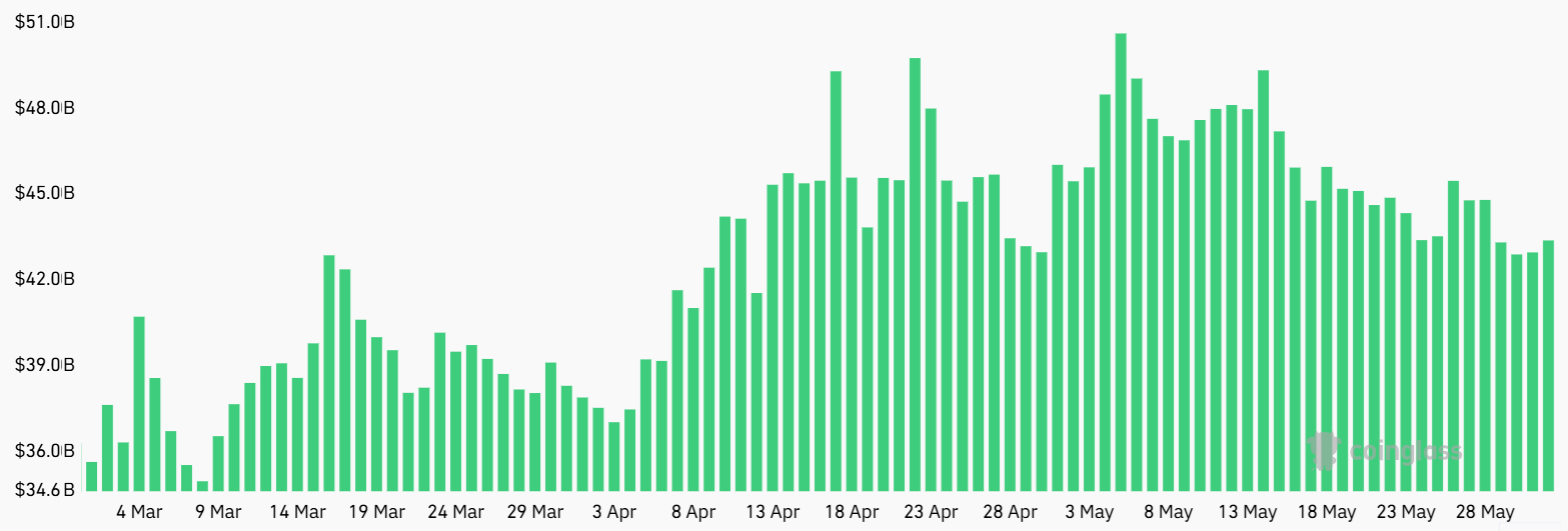
Aggregate open interest across major Bitcoin futures exchanges sat at $43.5 billion on Monday, roughly flat week-over-week. That’s a meaningful data point. If the liquidation wave had caused real panic, you’d expect open interest to fall sharply as traders closed positions en masse. The fact that it held steady suggests many traders are sitting tight and waiting, rather than fleeing.
Funding Rates Signal Confidence — And Risk
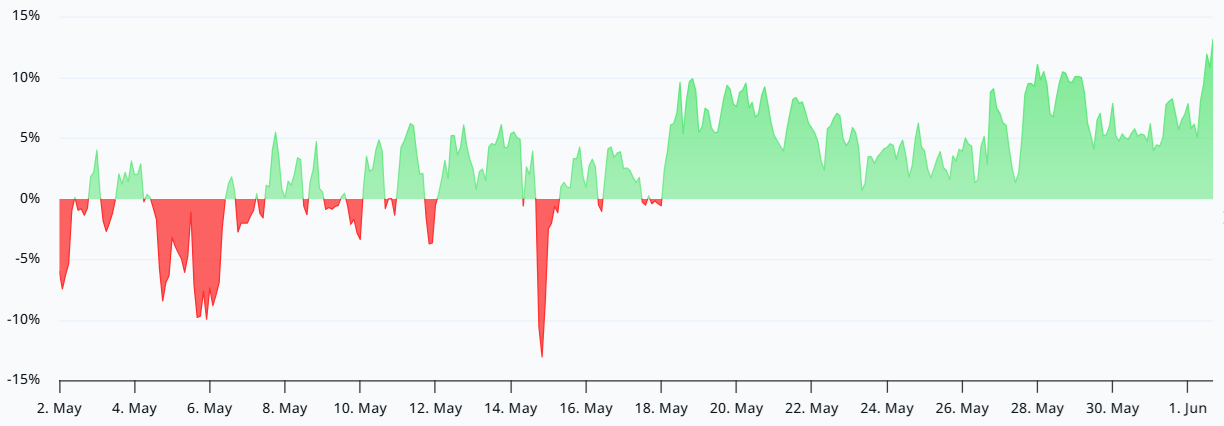
Here’s where it gets more complicated. The annualized funding rate for Bitcoin perpetual futures jumped above 12% this week — the first time it’s crossed above the neutral 6–12% range in over six months. On one hand, that’s a bullish signal. Funding rates above neutral mean long traders are paying short traders a premium to hold their positions, which typically reflects strong demand for bullish exposure.
On the other hand, elevated funding rates also mean that leveraged longs are more expensive to maintain. If the Bitcoin price drop extends further, the cost of carrying those positions becomes a pressure point, and you get the kind of cascading liquidations that amplified Monday’s move in the first place. A 13% rate isn’t alarming on its own — it’s well below the 50%+ extremes seen during previous bull market peaks — but it’s a number worth watching as the situation develops.
The broader concern is whether bullish traders are leaning too heavily on derivatives to express a view that the spot market isn’t yet supporting. Derivatives can set the tone for price direction in the short term, but sustained rallies need spot buying behind them. Right now, that’s where the story gets complicated.
ETF Outflows and the Attention Economy Problem
US-listed spot Bitcoin ETFs have recorded $3.46 billion in net outflows since May 13. That’s a significant number, and it reflects something deeper than short-term trading noise — it suggests that some of the institutional money that flowed in during the ETF launch euphoria earlier this year is now finding better uses for capital elsewhere. Each wave of Bitcoin price drop activity appears to be accelerating these redemptions rather than slowing them.
One of those uses? The AI sector. This week alone, two of the most high-profile companies in tech filed IPO prospectuses. Anthropic — the company behind Claude, currently one of the most closely watched AI labs in the world — quietly submitted its S-1 filing confidentially. Hours later, Elon Musk’s SpaceX formalized its own IPO paperwork. For investors who are trying to allocate to the next big technology wave, both of those filings represent exactly the kind of opportunity that pulls capital away from speculative assets like crypto.
This isn’t a coincidence — it’s a pattern. Every time a compelling non-crypto investment narrative heats up, a Bitcoin price drop tends to follow as capital rotates out. The AI boom is arguably the strongest alternative investment story of 2024, and with major players now moving toward public markets, the competition for growth-hungry capital is intensifying.
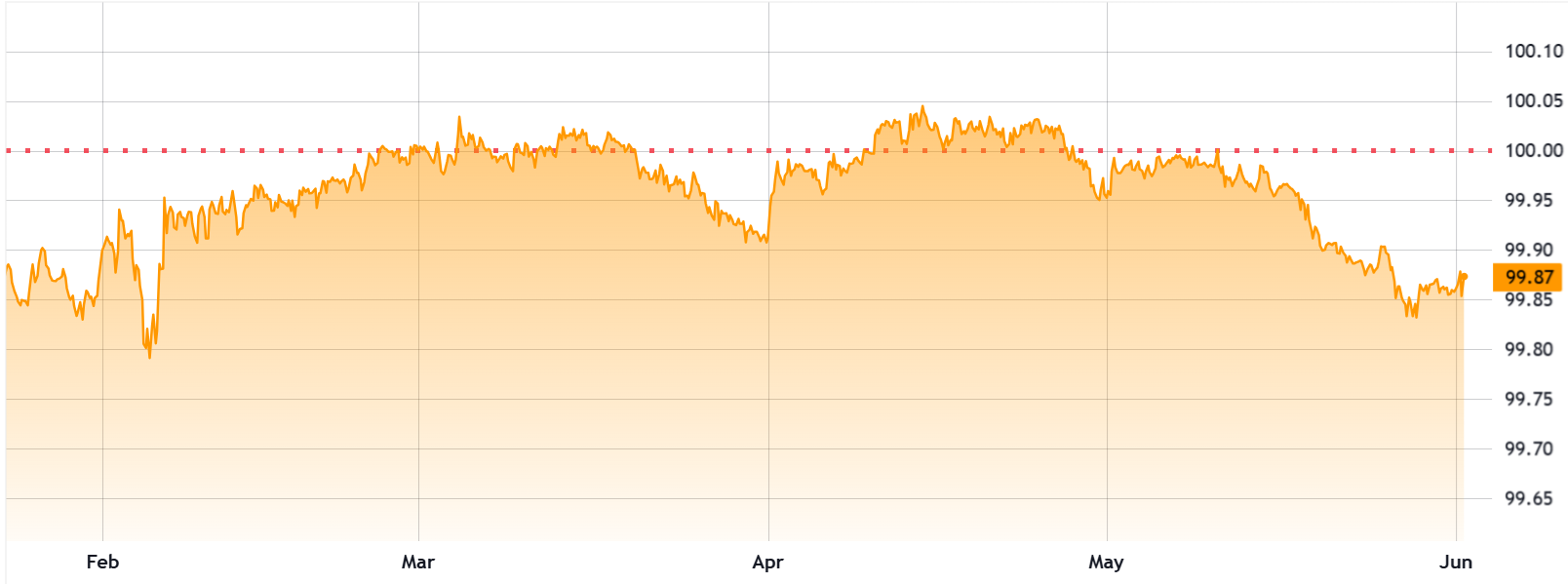
Tether’s USDT stablecoin trading at a 0.10% discount adds another data point to this picture. A small discount sounds trivial, but it typically indicates that people are converting crypto holdings back into fiat rather than rotating into other tokens. Capital is leaving the ecosystem, not just reshuffling within it.
What the Bitcoin Price Drop Tells Us About Where We Go Next
The Bitcoin price drop below $71,000 is best understood as a collision of forces rather than a single cause. Geopolitical risk triggered the immediate selloff. Persistent ETF outflows reflect longer-term repositioning by institutional holders. And the gravitational pull of the AI investment boom is drawing in capital that might otherwise have flowed into crypto. These aren’t temporary conditions — at least not all of them.
The bullish case rests on derivatives data: sophisticated traders are adding long exposure, open interest is holding, and the funding rate suggests confidence hasn’t collapsed. If the geopolitical situation stabilizes and oil prices pull back, there’s a reasonable path toward recovery. Dip buyers have reportedly placed around $500 million in bids near the $70,000 level, which would provide meaningful support if prices test that zone again.
But the bearish case is harder to dismiss than the derivatives data alone would suggest. When spot selling pressure is this persistent, when ETF outflows have been running for weeks, and when competing asset classes are actively pulling money out of the ecosystem, a recovery driven primarily by derivatives positioning can only go so far. Bulls need actual spot demand to show up — and right now, the data suggests that buyers are cautious rather than convinced.
The next few sessions will be telling. If Bitcoin can hold the $70,000 level and ETF outflow data starts to slow, the whale positioning could look prescient. If macro conditions deteriorate further or the AI IPO frenzy accelerates capital rotation out of crypto, the current Bitcoin price drop could deepen well beyond the $70K support zone. Either way, the days of low-volatility consolidation appear to be over for now.