

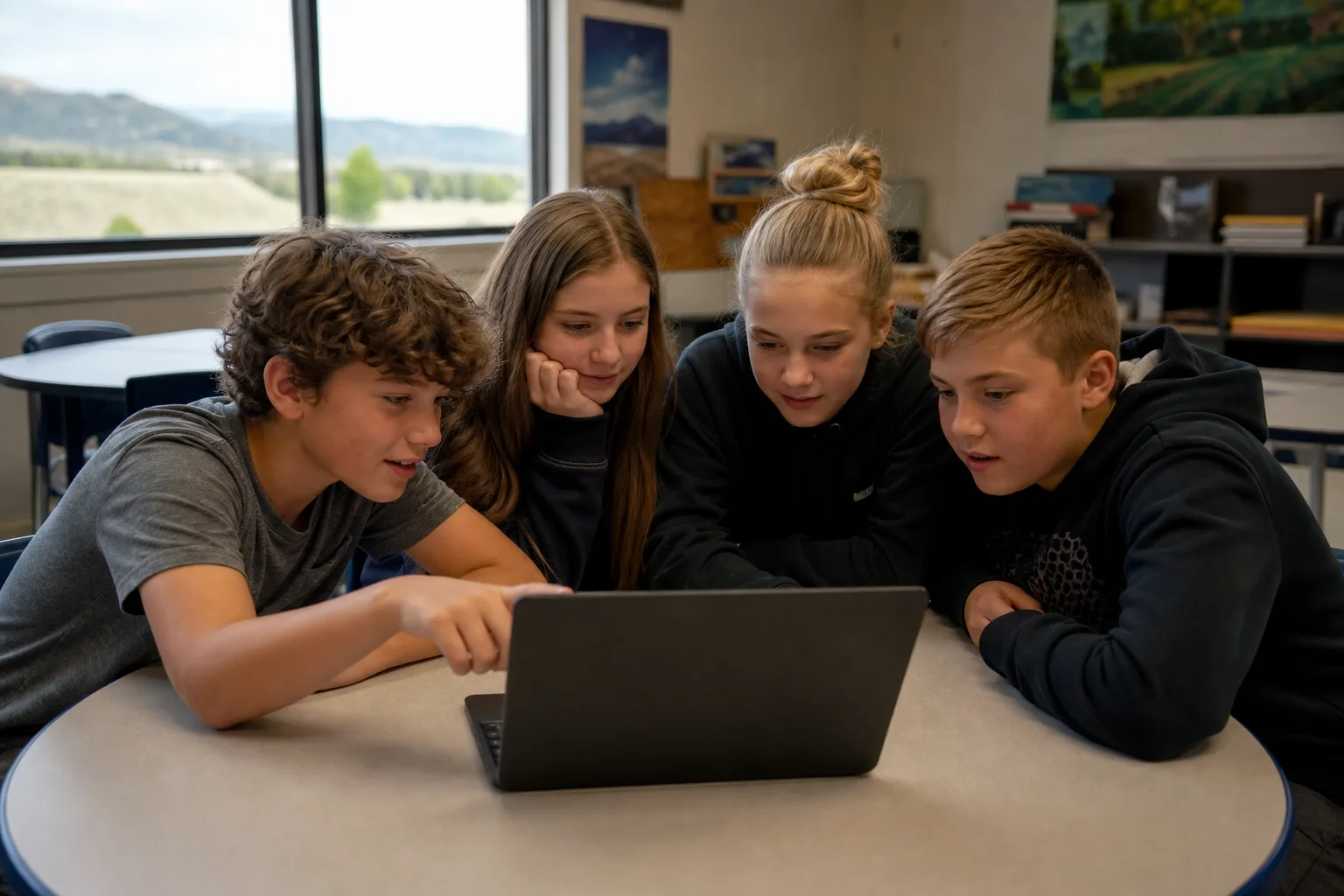
- Rural Ohio students built a working AI reading app, proving edtech innovation isn’t limited to well-funded urban districts.
- The AI reading app was designed by the students themselves, not handed down by a vendor or school administrator.
- The project highlights how accessible AI tools are reshaping what’s possible inside under-resourced classrooms.
- Student-led app development is emerging as one of the most compelling new models for teaching digital skills at scale.
Table of Contents
The AI Reading App That Started in Rural Ohio
When most people picture AI-powered edtech, they imagine well-capitalised startups pitching polished products to deep-pocketed urban school districts. What they probably don’t picture is a group of students in rural Ohio quietly building their own AI reading app from scratch — and actually shipping it. That’s exactly what happened, and it’s worth paying attention to.
Students at a rural Ohio school built a functional reading application using AI tools, designing it specifically to address literacy challenges they observed in their own community. This wasn’t a classroom exercise where the teacher held their hand through every step. These kids identified a real problem, picked up the tools available to them, and built something meant to be used — not just graded.
The implications of that are bigger than a single school project.
Why Rural Schools Are an Unlikely but Important AI Frontier
Rural districts have historically been on the receiving end of edtech, not the producing end. They tend to have fewer specialist staff, tighter budgets, and less access to the kind of extracurricular coding programmes that produce teenage app developers in places like San Francisco or Austin. The digital divide in American education is real and persistent — Pew Research has consistently documented how rural households lag behind urban ones in both broadband access and device ownership.
That context makes this AI reading app story genuinely striking. Because what it suggests is that the new generation of accessible AI development tools — think low-code environments, large language model APIs, and AI-assisted coding assistants — may be quietly flattening some of those structural disadvantages. You no longer need a $200,000 engineering team to build a working app. You need curiosity, a decent internet connection, and the right tools. Increasingly, those tools are free or nearly free.
For rural schools, that’s a meaningful shift. The barrier to building isn’t gone, but it’s lower than it’s ever been. Students who once would have consumed technology are now in a position to create it.
How the Students Actually Built It
The students used AI tools to design and develop an app targeting reading fluency — a skill area where rural schools often struggle, partly due to limited access to reading specialists and partly because of the demographic realities of smaller, more economically strained communities. Rather than waiting for a commercial product to address their needs, they built one tailored to the specific context they understood better than any outside vendor: their own school.
That hyperlocal design instinct is something commercial edtech companies genuinely struggle to replicate. A product built in San Francisco for a generalised “student” audience doesn’t carry the same relevance as something built by students who attend the school it’s meant to serve. The AI reading app these Ohio students created wasn’t trying to capture market share — it was trying to help kids they knew learn to read better.
That’s a fundamentally different design brief, and it shows in the kind of empathy that gets baked into the product.
AI in Schools: The Broader Picture
This story lands at a moment when the education sector is having a messy, often anxious conversation about AI. Many school districts across the US have spent the past two years debating whether to block ChatGPT, how to detect AI-generated homework, and whether AI tools represent a threat to academic integrity. That’s a legitimate conversation. But it’s happening alongside a very different one — about how AI tools can actively build student capability rather than undermine it.
The Ohio project sits firmly in that second camp. These students weren’t using AI to cheat. They were using it to create. There’s a version of AI in education that makes students more passive — outsourcing thinking, writing, and problem-solving to a machine. And there’s another version that makes students more capable builders, giving them tools that previously required years of specialist training to use. The AI reading app from rural Ohio is evidence of the second version working in practice.
It also raises a question that school administrators and policymakers should be sitting with: if students in a rural district with limited resources can build a functional AI-powered application, what happens when we start treating this kind of project as a core part of the curriculum rather than an exceptional outlier?
What This Means for Edtech — and the Students Who Made It
The commercial edtech market is enormous. Companies like Duolingo, Khan Academy, and IXL collectively reach tens of millions of students and have raised or generated billions in capital. They employ large teams of engineers, curriculum designers, and learning scientists. And yet, a group of students in rural Ohio built an AI reading app that addressed a local literacy need their community actually has — something no commercial product was designed to do for them specifically.
That’s not an argument against commercial edtech. It’s an argument for rethinking how schools engage with technology development. Projects like this one produce more than an app. They produce students who understand how technology is built, who have experienced the full arc from identifying a problem to shipping a product, and who have done it in a context that matters to them personally. That’s a different kind of education than any vendor can sell you.
The students who built this AI reading app will likely move on — to college, to careers, to bigger cities or bigger problems. But the model they demonstrated doesn’t have to move on with them. If rural schools can find ways to repeat it, scale it, and support it with even modest resources, they may be developing something more valuable than the app itself: a generation of students who don’t wait for technology to arrive but build it themselves.

