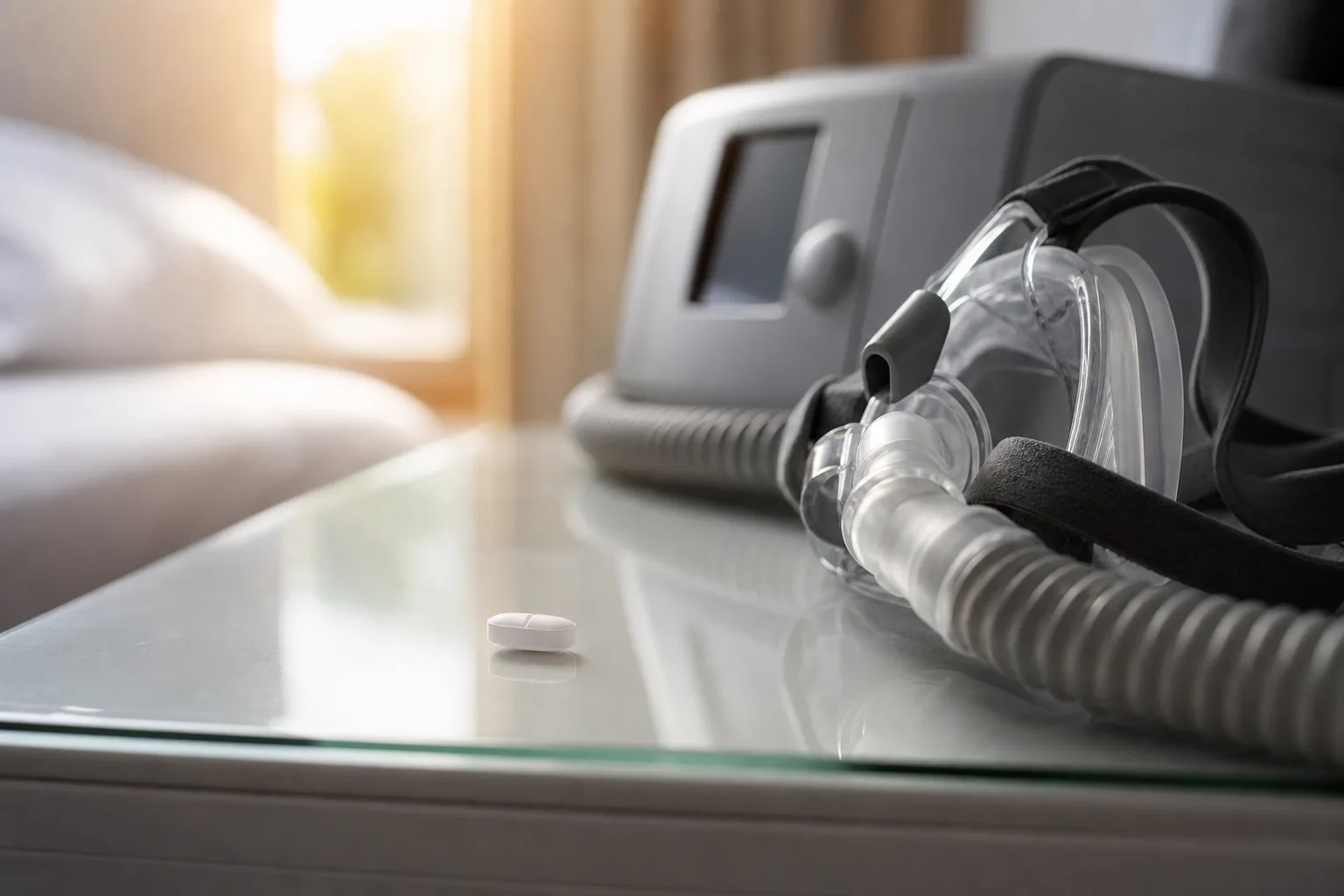
- A new sleep apnea drug called AD109 showed significant results in a phase 3 randomized clinical trial, reducing breathing interruptions per hour.
- The sleep apnea drug targets two neural pathways first identified by University of Toronto researcher Richard Horner over three decades of work.
- More than 1.6 billion adults globally are estimated to have obstructive sleep apnea, yet the vast majority remain undiagnosed.
- AD109 could offer a real alternative to CPAP therapy, which many patients abandon due to discomfort and inconvenience.
Table of Contents
Thirty Years of Basic Science Just Produced a Real Sleep Apnea Drug
A new sleep apnea drug is moving closer to market after posting positive results in a phase 3 clinical trial — and its story starts not in a biotech lab in Boston, but in a University of Toronto neuroscience lab where a researcher spent decades asking a deceptively simple question: what exactly happens to your breathing when you fall asleep? The answer, it turns out, has pharmaceutical consequences.
The drug is called AD109, and it’s an oral daily pill developed by researchers in Boston that combines two compounds targeting specific neural pathways in the brain. In the phase 3 trial, patients with mild to severe obstructive sleep apnea who took AD109 experienced measurably less airway obstruction, higher blood oxygen levels, and on average four fewer breathing interruptions per hour of sleep compared to those on a placebo. That might not sound dramatic at first, but for people who are currently stopping breathing dozens or hundreds of times a night, it matters enormously.
The Science Behind the Sleep Apnea Drug
The intellectual foundation for AD109 was laid by Richard Horner, a professor of medicine and physiology at the University of Toronto’s Temerty Faculty of Medicine. Horner has spent more than 30 years studying the nerves, muscles, and brain circuits that govern breathing during sleep — work that is about as far from commercial drug development as academic research gets. Yet here we are.
The core problem in obstructive sleep apnea is mechanical: the muscles in the upper airway repeatedly collapse during sleep, causing breathing to stop. The tongue is the biggest player here. It’s not just for speech and swallowing — it’s the largest and most influential upper airway muscle in terms of keeping your airway open. When tongue muscle tone drops during sleep, everything downstream suffers.
Horner’s lab identified two key mechanisms driving this collapse. The first discovery came in 2006, when his team established that the neurotransmitter noradrenaline plays a significant role in activating tongue muscles during wakefulness and certain sleep phases. During REM sleep — the deep, dreaming phase when brain activity surges — noradrenaline levels fall sharply, and muscle tone in the tongue drops with them. For people prone to sleep apnea, that’s when things go wrong.
The second piece came in 2013. Horner’s team showed that a family of proteins called muscarinic receptors actively suppress tongue movement during REM sleep. When they pharmacologically blocked those receptors in their models, tongue muscle activation rebounded strongly. Two signals, working in tandem: a missing “go” signal from noradrenaline, and an active