

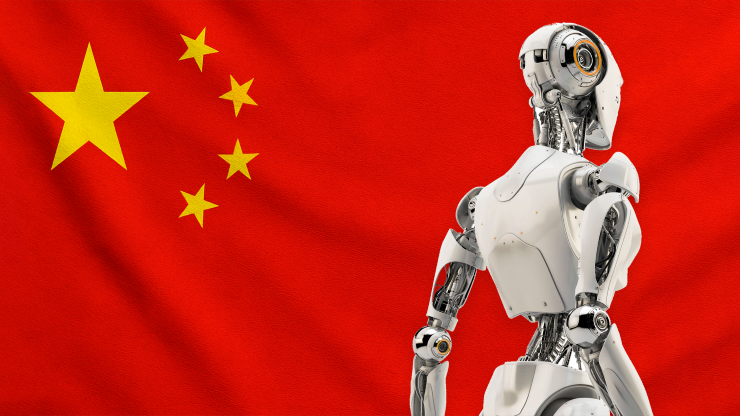
The Chinese humanoid robot ban proposal, introduced by senior U.S. lawmakers, would block federal agencies from buying or using robots built by Chinese firms. Its scope reaches beyond humanoid machines to other unmanned ground vehicles that rely on sensors, cameras, and AI models. That matters because these systems are not simply mobile hardware. They can observe workplaces, build maps of physical spaces, process information at the edge, and in some cases connect back to outside networks.
Lawmakers argue that those capabilities could let machines collect sensitive data or provide remote access to foreign actors. The concern reframes robots as more than productivity tools. In logistics, defense, and public services, a robot may move through facilities that contain valuable information, interact with employees or the public, and become part of daily operations. The same sensors that help a machine navigate a warehouse or assist in a public setting can also create an unusually detailed record of what it sees and where it has been.
Table of Contents
Chinese Humanoid Robot Ban Reflects Rising Security Concerns
The proposal reflects a broader change in how U.S. officials think about national security. AI-powered hardware is increasingly treated as part of critical infrastructure, particularly when it is deployed in sensitive environments. A humanoid robot can capture video, map environments, and interact with systems in real time. These are useful traits: mobility and perception are precisely what make such machines appealing for work that is repetitive, physically demanding, or difficult to staff.
But those traits also create exposure. A fixed device can be restricted to a defined location. A mobile robot is designed to travel, observe, and respond. It may encounter screens, documents, access points, equipment, or conversations as it performs its job. If the system connects to external networks or contains hidden control layers, it could transmit data or allow interference. The policy question is therefore not limited to where a robot was assembled. It is whether the organizations operating it can understand, govern, and control the software, data flows, updates, and remote connections that make it function.
That distinction is important because the proposed Chinese humanoid robot ban is not presented as a response to a specific incident of current misuse. From our analysis, it is primarily an attempt to limit future risk before these machines become more deeply embedded in government operations. Policymakers are preparing for scenarios in which AI-driven machines gain wider access to infrastructure and more autonomy in the physical world. Their concern is that dependency can be difficult to unwind once a product is installed, trained for a particular workflow, and tied into an agency’s systems.
Why procurement has become the pressure point
The proposed law would stop federal funds from supporting such systems. That approach places the focus on procurement rather than trying to settle every technical question about robotics at once. Federal purchasing can shape what is considered acceptable in sensitive settings, and it can influence the standards vendors are expected to meet. A restriction on buying and using a class of products also sends a message to agencies: convenience, price, and technical performance are no longer the only criteria that matter.
At the same time, the proposal may allow limited exceptions for controlled testing by defense or law enforcement agencies. This is a revealing compromise. Policymakers appear to want room to study the technology while restricting operational use. Controlled testing can help agencies examine how a machine works, what data it handles, and where its weaknesses may lie without making it part of routine government activity. It also acknowledges a practical reality: governments cannot make informed rules about fast-moving technology if they never evaluate it directly.
The bill carries bipartisan support, signaling strong political alignment on the issue. In a policy environment where technology debates can quickly become partisan, that alignment suggests the proposal is being viewed through a national-security lens rather than as a narrow dispute over a single product category. The significance is larger than humanoid robots alone. It points toward a future in which connected physical systems face scrutiny similar to the scrutiny applied to other technologies that handle data, communicate across networks, or sit close to critical operations.
Chinese Humanoid Robot Ban Could Reshape Global Tech Supply Chains
The Chinese humanoid robot ban also points to a broader shift in global technology markets. Governments are starting to evaluate products based on origin, not just performance. For years, buyers could often treat sourcing as one consideration among many, alongside cost, reliability, service, and capability. In fields involving AI, sensors, cameras, and networked hardware, country of origin is increasingly being considered alongside those traditional factors.
This could lead to separate supply chains in which countries rely on trusted partners for critical systems. The result may be regional blocs with different standards and vendors. A company that wants to serve multiple markets may face pressure to show where its hardware comes from, how its software is maintained, where information travels, and who can access the system after deployment. That can make robotics procurement more complicated, even for buyers whose immediate concern is simply finding a machine that performs reliably.
There is a real commercial consequence to that shift. Companies may need to redesign products to meet regional rules. A robot is not only a mechanical platform; it is a package of components, software, models, connectivity, servicing, and support. If regulators place greater weight on origin and control, suppliers may have to rethink how they build and deliver that package for different customers. Cross-border collaboration could slow as firms become more cautious about partnerships and sourcing arrangements.
There is also an industrial-policy dimension. Restrictions can increase domestic investment as governments push for self-reliance in robotics and AI. Local industries could gain support, especially where public-sector demand helps create an early market for domestic alternatives. That may reduce certain dependencies, but it does not automatically solve the harder questions of quality, cost, security, or interoperability. Building closer supply chains can mean buyers have fewer choices in the short term, and less competition can carry its own costs.
Security policy will have to confront trade-offs
The Chinese humanoid robot ban raises a central policy question: how should governments balance security with access to innovation? Strict limits can reduce risk, particularly when the technology is used in sensitive environments or connected to government networks. Yet restrictions can also limit exposure to advanced tools and narrow the pool of suppliers available to agencies. Open access can increase capability while creating vulnerabilities. Neither side of that equation disappears simply because a policy is framed as a security measure.
The strongest version of this debate is not whether robotics should be embraced or rejected. It is whether governments can set credible boundaries around the machines they use: what environments they can enter, what information they can collect, what systems they can interact with, and what control an operator retains. Humanoid robots attract attention because they are visibly human-shaped, but the policy concern described here applies just as clearly to other unmanned ground vehicles with sensors, cameras, and AI models.
From the SquaredTech.co perspective, the proposal signals a long-term change in which technology policy is becoming central to geopolitical strategy. Decisions about robots, AI systems, and data flows will influence economic growth and global power. In the near term, more countries may introduce similar restrictions. In the long term, this could redefine how technology moves across borders and who controls its development.
Stay Updated: Tech News

