Table of Contents
iPhone Lockdown Mode Focuses on Extreme Threat Protection
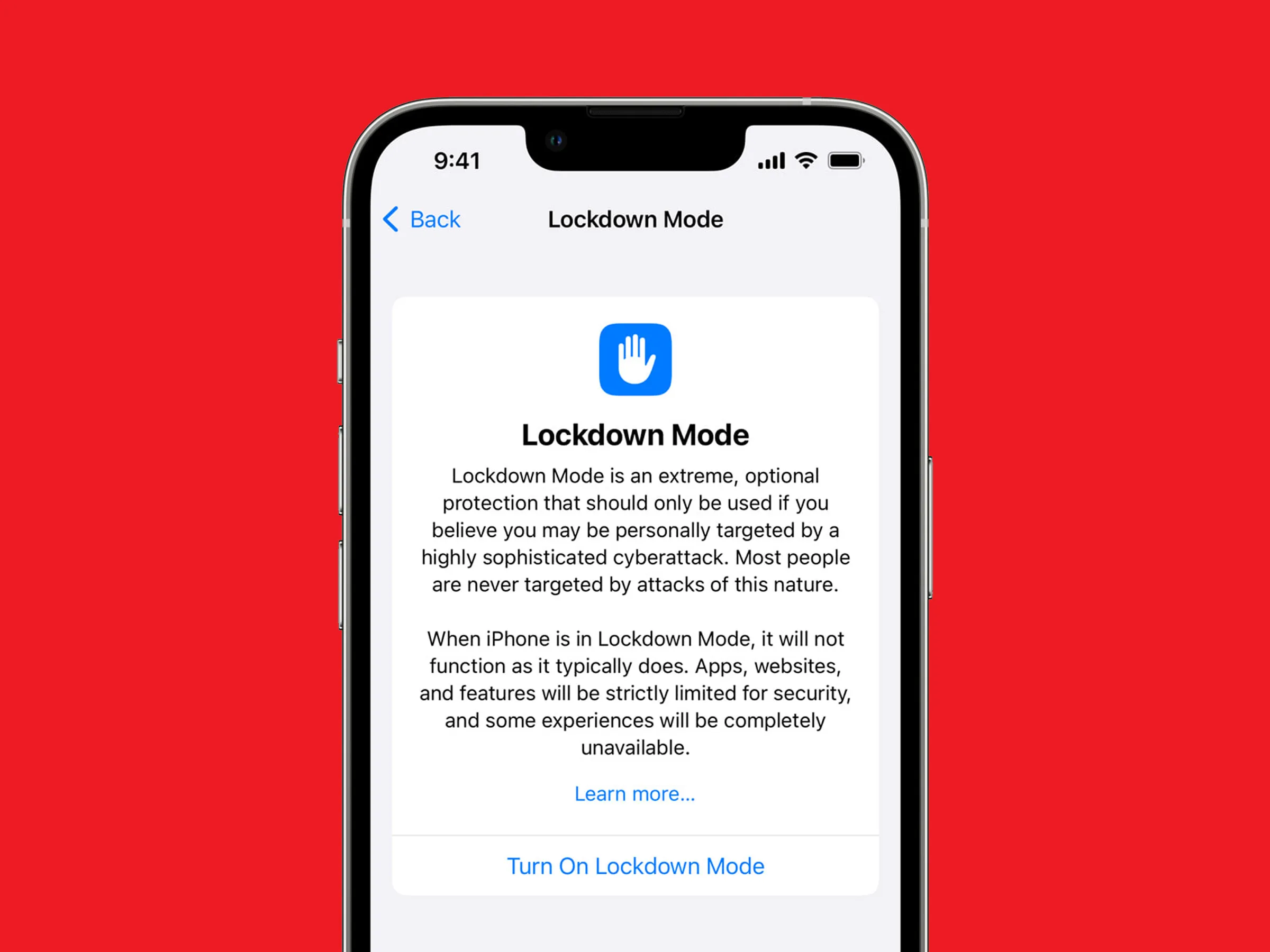
iPhone Lockdown Mode has reportedly not faced a single successful spyware breach since its release with iOS 16. Apple states that it has no record of any device in this mode being compromised by mercenary spyware. Security researchers also support this claim, noting that Lockdown Mode has blocked several known attack attempts.
That is a meaningful distinction in a security market full of broad claims and incomplete visibility. No defensive feature can prove that every attempted intrusion has been seen, and the absence of a reported compromise is not the same thing as a permanent guarantee. Still, Apple’s statement, paired with researchers’ observations of blocked attempts, gives Lockdown Mode an unusually strong track record. It places the feature in a unique position at a time when digital surveillance tools continue to grow in capability and reach.
Lockdown Mode is not meant to be a polished convenience feature for everyone. It is deliberately disruptive. The premise is straightforward: the people most likely to be targeted by sophisticated spyware often cannot rely on ordinary security defaults alone. A device used by a journalist, activist, or public figure may be worth far more to an attacker than a typical consumer phone, particularly when it contains communications, contacts, documents, location information, or access to other accounts.
That threat model matters because mercenary spyware does not usually depend on obvious mistakes such as downloading a suspicious app or entering a password into a fake site. Advanced attacks often seek less visible routes into a device: a message attachment, a browser component, an incoming connection, or another function that most users expect to work without friction. Lockdown Mode’s value is that it treats these ordinary pathways as potential liabilities when the stakes are unusually high.
iPhone Lockdown Mode works by limiting many core functions of the device. It blocks most message attachments, restricts calls from unknown numbers, and prevents certain wired connections. It also applies strict rules to web browsing, which reduces exposure to malicious scripts. Rather than attempting to identify every possible malicious action after it appears, the mode reduces the number of places where an attack can begin.
This is a more severe approach than the everyday security features built into modern phones. Regular protections are designed to make devices safer while preserving the experience people expect: rich messaging, broad browser compatibility, flexible accessories, and easy communication. Lockdown Mode changes the balance. It creates a controlled environment where attack surfaces are minimized, even if that means some normal activity becomes less convenient or is no longer available in the same form.
For general users, those protections may feel restrictive because they reduce convenience. A person who routinely receives attachments, uses unfamiliar contact numbers, connects accessories, or visits a wide range of websites could quickly notice the limits. Apple describes the feature as an option for users who face high risk threats, such as journalists, activists, or public figures. That positioning is sensible. Security tools are most effective when users understand what problem they are solving and accept the trade-off required to solve it.
The trade-off is also the point. Strong protection often requires limiting access points. Lockdown Mode applies this principle at a system level, which helps explain its effectiveness against spyware tools that rely on hidden entry paths. It is not simply another warning screen or a setting that asks users to be more careful. It changes what the device is willing to do.
That approach deserves more attention than it often receives. Much consumer security advice puts the burden on individuals: use stronger passwords, avoid unfamiliar links, update software, and stay alert. Those habits remain useful, but they offer limited protection against a well-resourced attacker exploiting a technical weakness that leaves little for the target to notice. Lockdown Mode shifts part of that burden back to the operating system by reducing the opportunities available to an attacker in the first place.
iPhone Lockdown Mode Highlights Apple’s Security Strategy
iPhone Lockdown Mode also reflects Apple’s broader focus on privacy and security as core product features. The company continues to position its devices as safer alternatives in a market where data protection has become a major concern. A feature like this supports that message because it addresses a difficult category of threat rather than only the routine risks that most security tools are built around.
By maintaining a clean security record for Lockdown Mode, Apple strengthens user trust and reinforces its brand identity. The wording matters: Apple says it has no record of any device in this mode being compromised by mercenary spyware. That is a strong claim, but it should be read alongside the feature’s narrow purpose. Lockdown Mode is not a promise that an iPhone, iPad, or Mac becomes invulnerable. It is a defensive setting for reducing exposure to especially advanced attacks.
The feature is available across iPhone, iPad, and Mac devices, though users must enable it manually on each one. That manual choice is important. A person may want the stricter protections on one device while accepting different limits on another, and Apple is not treating Lockdown Mode as a default setting for every customer. Its activation requires a restart and authentication, which adds an extra layer of control. The process ensures that users are fully aware when the mode is active and understand its limitations.
There is a practical lesson here for people who genuinely face elevated risk: protection is not just about enabling a setting once. High-risk users need to think about their whole device environment. If Lockdown Mode is used across iPhone, iPad, and Mac, each device requires its own deliberate decision. That may sound inconvenient, but it prevents a false sense of security based on assuming that protection automatically carries over everywhere.
In the near term, iPhone Lockdown Mode will likely remain a niche feature for high risk users. Most people will reasonably decide that its restrictions outweigh the benefits for their daily routines. Yet niche security features can shape mainstream design. The industry often begins by creating stricter options for the users under the greatest pressure, then brings the most useful ideas into everyday products once the threat becomes more common or the technology becomes easier to use.
Elements of this mode may become standard in everyday settings as threats evolve. Restrictions on risky attachments, connections, and web activity could influence how device makers think about optional high-security profiles, especially for users who want more protection without giving up an entire platform. Lockdown Mode also sets a benchmark for competitors, who may need to introduce similar protections to match user expectations.
There is an argument that security should not require people to accept fewer features. In an ideal world, that would be true. In practice, features create pathways, and pathways create opportunities for abuse. Lockdown Mode is refreshingly candid about that reality. It does not pretend that every risk can be removed while every function remains untouched. Instead, it gives a defined group of users a way to make a conscious choice: less convenience, fewer exposed routes, and a stronger defensive posture against mercenary spyware.
At SquaredTech.co, we view iPhone Lockdown Mode as a signal of where device security is heading. It shows that protecting users from advanced threats requires deeper system level changes rather than surface level fixes. As spyware tools become more sophisticated, features like Lockdown Mode may move from optional settings to essential safeguards.
Stay Updated: Mobile