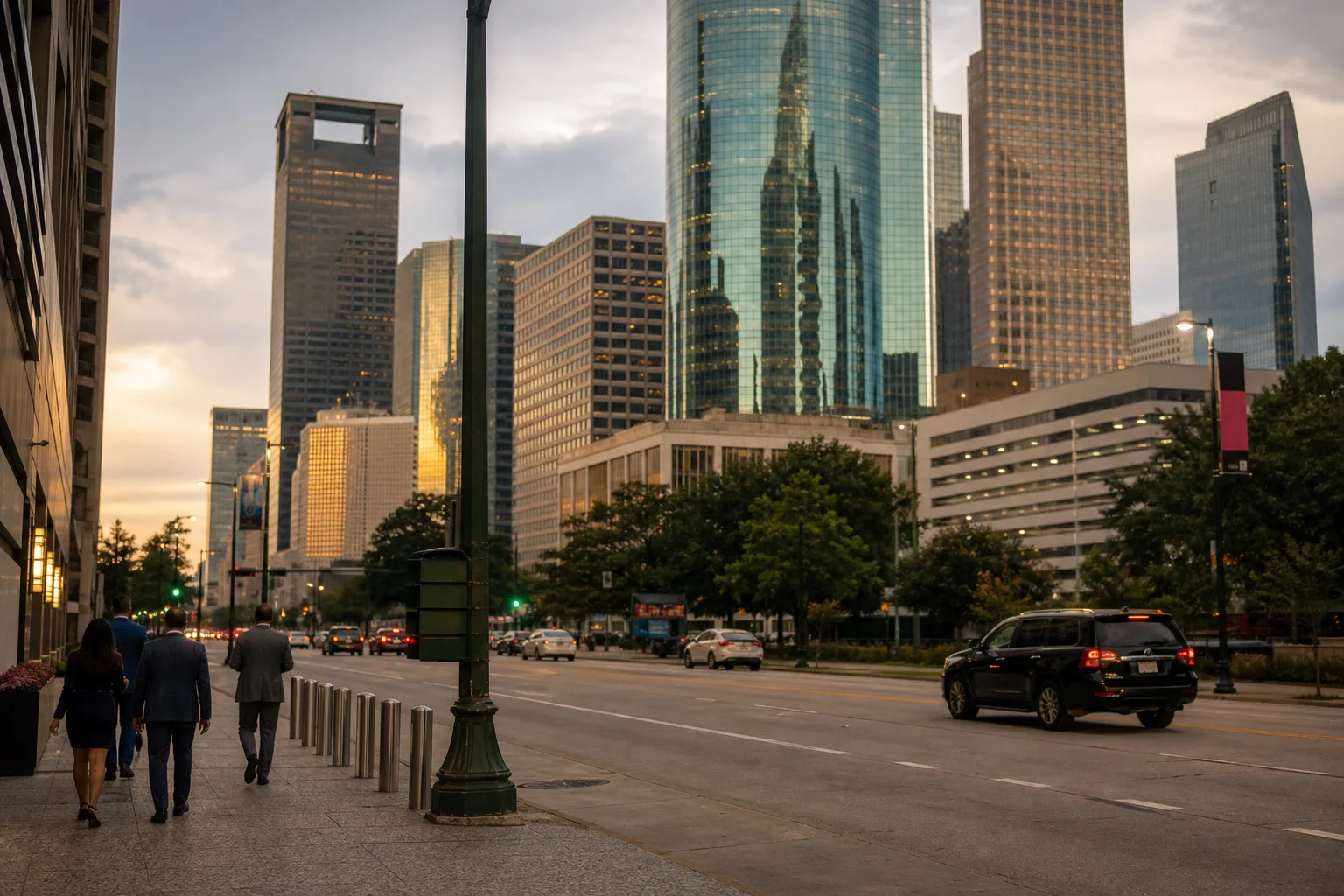
Houston business travel has a reputation problem. Millions of passengers pass through George Bush Intercontinental Airport every year — it’s a near-unavoidable connection hub for flights to Central and South America — and most of them never leave the terminal. Those who do venture into the city often find themselves confronted with punishing humidity, gridlocked highways, and a metro area so geographically vast that it defies easy navigation. It’s tempting to write the place off entirely. That would be a mistake.
- Houston business travel puts you at the center of a city where 230,000 tech workers serve the oil, gas, and healthcare industries.
- Houston business travel rewards visitors with one of the most diverse dining scenes in the US, spanning 13,000 restaurants across 70 cuisines.
- The city’s geographic sprawl means hotel location is the single most critical planning decision any business traveler can make.
- From the Texas-shaped lazy river at the Marriott Marquis to George H. W. Bush’s old haunt, Houston hotels are anything but generic.
Table of Contents
Why Houston Belongs on Your Business Radar
Houston business travel is no longer just about petrochemicals and pipeline deals. The city’s tech sector now employs over 230,000 people across a metro population of 7.9 million, and the nature of that tech work is telling. This isn’t Silicon Valley-style consumer app culture. Houston’s techies are largely embedded in the city’s industrial heartland — selling software and services to oil and gas operators, hospital networks, and the logistics companies that move goods through one of the busiest port complexes in the world. If your company plays in any of those verticals, there’s a decent chance Houston is already on your calendar.
The George R. Brown Convention Center is another major draw, hosting major trade shows across energy, healthcare, and manufacturing throughout the year. It’s a sprawling venue in the heart of downtown, and its presence shapes a lot of the hotel development and coworking infrastructure in that part of the city.
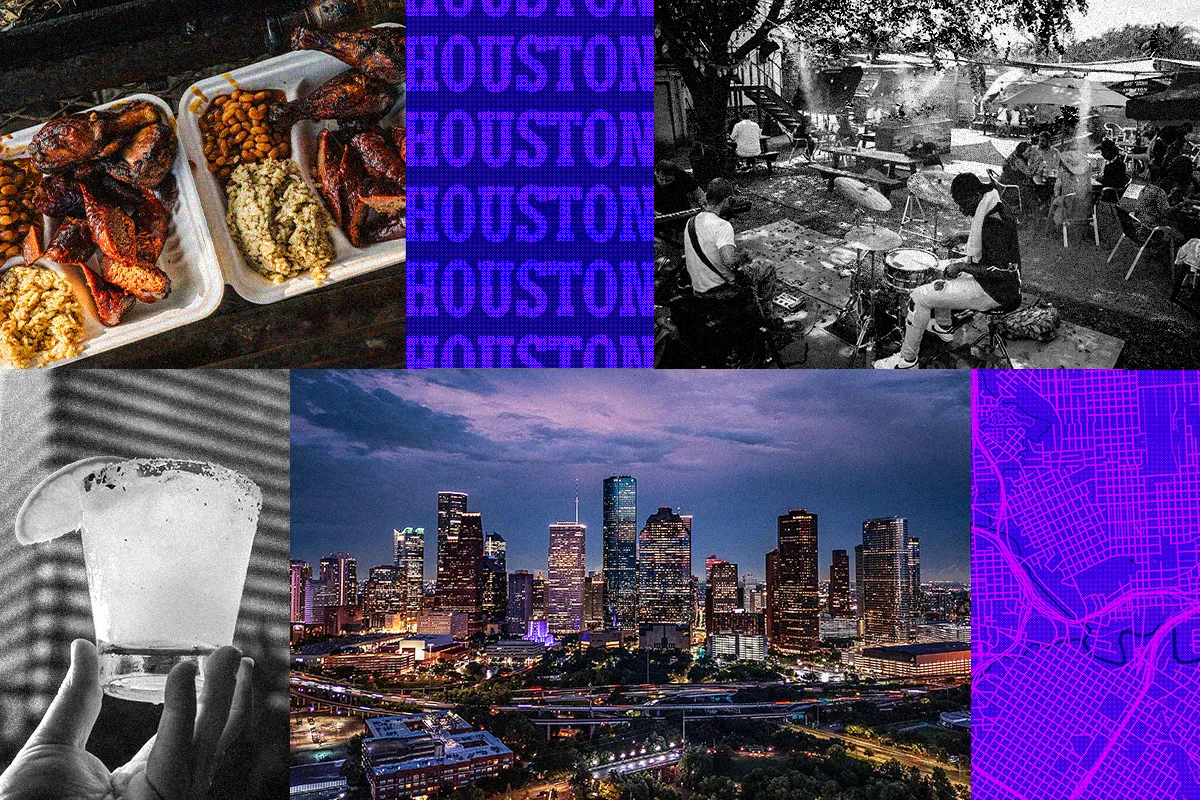
What doesn’t get mentioned enough in the same breath as deal-making and trade shows is Houston’s extraordinary dining scene. The city is one of the most ethnically diverse in the United States, and that diversity shows up on the plate. Per Houston’s tourism board, the city has roughly 13,000 restaurants representing food from 70 countries and regions. That’s not a marketing figure padded with fast-food chains — Houston genuinely punches at the level of New York or Los Angeles when it comes to Vietnamese, West African, Salvadoran, Pakistani, and countless other cuisines. Houston business travel rarely offers this kind of culinary compensation in other cities.
The One Rule of Houston Business Travel: Stay Close to Where You Need to Be
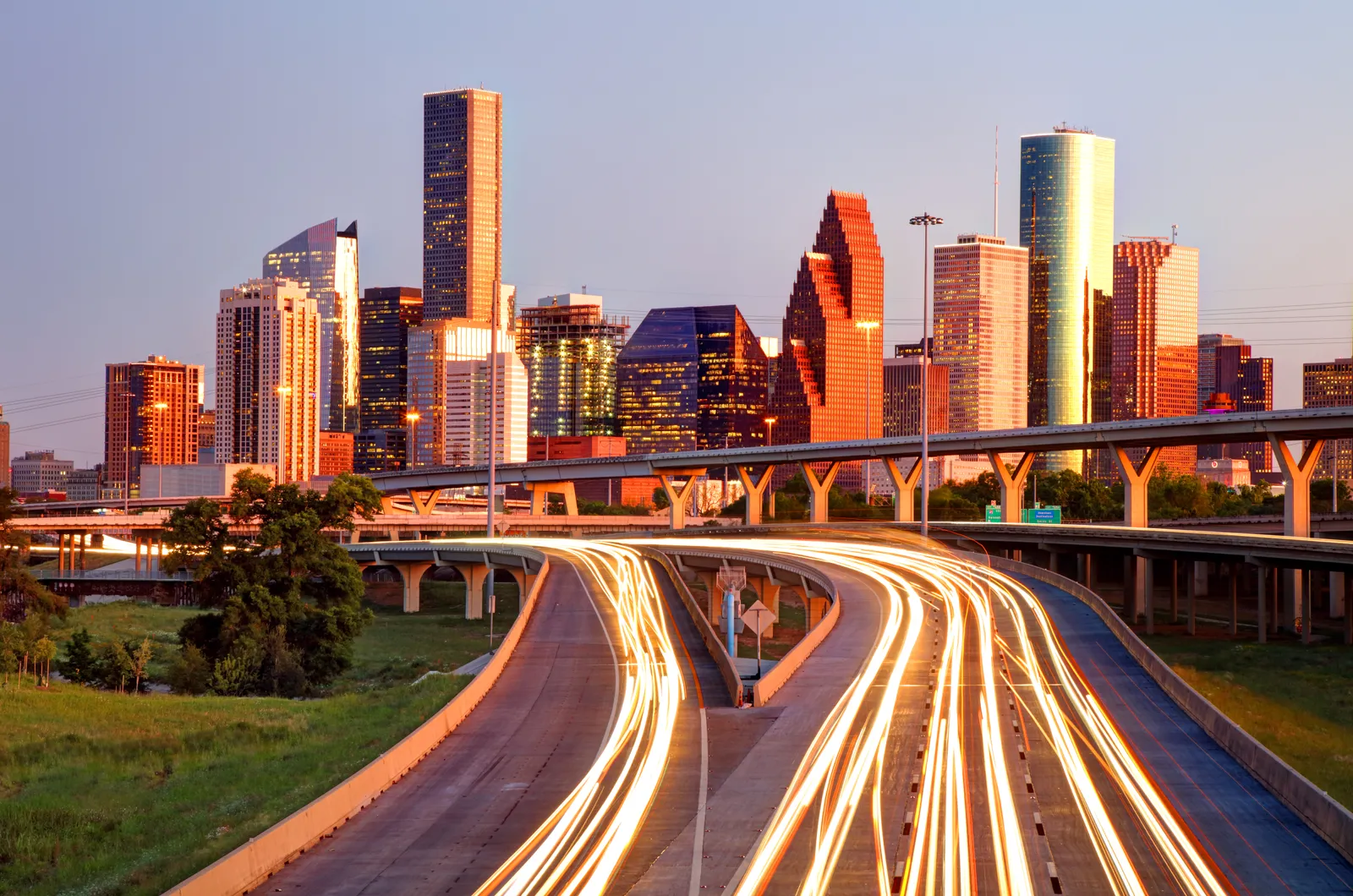
Before anything else, accept one truth about Houston business travel: the city’s lack of meaningful public transit and its notorious zoning sprawl make location everything. A cross-town drive can eat 45 minutes to an hour, even outside peak hours. There’s no subway to bail you out, and Uber surge pricing during rush hour is its own kind of punishment. Pick your hotel based on where your meetings are, not on which property looks nicest on a booking site.
With that said, here are the properties that consistently deliver for business visitors, each anchored to a specific part of the city.
Where to Stay: Houston Hotels Worth Booking
The Post Oak Hotel (1600 W Loop S) is an independently owned luxury property near the Galleria — once the largest shopping mall in the US and still a serious commercial hub. Owner Tilman J. Fertitta, who also holds the Houston Rockets NBA franchise among his many assets, has built something that manages to feel genuinely luxurious without tipping into corporate sterility. There’s a full spa and salon, multiple meeting room configurations, and rooms that come stocked with dumbbells — a small touch that says a lot about who the hotel is built for. For Houston business travel near the Galleria corridor, it’s a standout choice.
Downtown, the Marriott Marquis (1777 Walker St.) sits directly adjacent to the George R. Brown Convention Center and adds another 100,000 square feet of its own meeting space, including what it claims is Houston’s largest ballroom. It’s frequently cited as the city’s top business hotel, and its rooftop — home to a Texas-shaped lazy river, which is exactly as quintessentially Texan as it sounds — has become something of a local legend. If you’re here for a convention and don’t want to think about logistics, the Marquis is the easy answer.
For a more affordable downtown option, the Cambria Hotel Houston (1100 Texas Ave.) occupies the former headquarters of Shell Oil, a building that carries its own kind of Houston symbolism. It’s walking distance from both the convention center and Daikin Park, where the Astros play. The rooftop plunge pool is a genuinely useful amenity in a city where the heat is relentless, and the hotel’s price point makes it a sensible choice when your company’s travel policy has firm limits.
If you’d rather avoid downtown entirely, the Montrose Hotel (4110 Loretto Dr.) offers a completely different Houston business travel experience. It’s a 71-room boutique property, midcentury in aesthetic, tucked into a residential neighborhood a block from the Menil Collection — arguably the finest private art museum in Texas, and a genuinely world-class institution by any measure. The hotel has a private pool, a lobby lounge, and a small event space, but its real selling point is what surrounds it: walkable streets, independent restaurants, and a neighborhood that feels like a city rather than an airport zone.
For those who need seclusion or are hosting senior executives, The Houstonian (111 N Post Oak Ln.) occupies 27 wooded acres in the West Oaks district. It’s one of the few places in Houston where you can genuinely feel removed from urban density. The late President George H. W. Bush used the property as his official residence during the 1980s and returned regularly for decades afterward. The spa — at 125,000 square feet, reportedly the largest in Texas — is itself a destination.
Back near the Galleria, the Westin Galleria Houston (2222 W Loop S) handles pure business logistics efficiently: 24-hour business and fitness center access, shuttle service, 50,000 square feet of meeting and event space, and 485 rooms spread across 23 floors. It’s not the most characterful option on this list, but when your priority is having everything in one place and not thinking about it, it delivers.
Houston Business Travel: Where to Work Between Meetings
The city has hundreds of coworking spaces, which sounds like great news until you factor in traffic. Any Houstonian will tell you the same thing: the best coworking space is the closest one that meets your minimum requirements. That said, one option stands out for both quality and atmosphere.
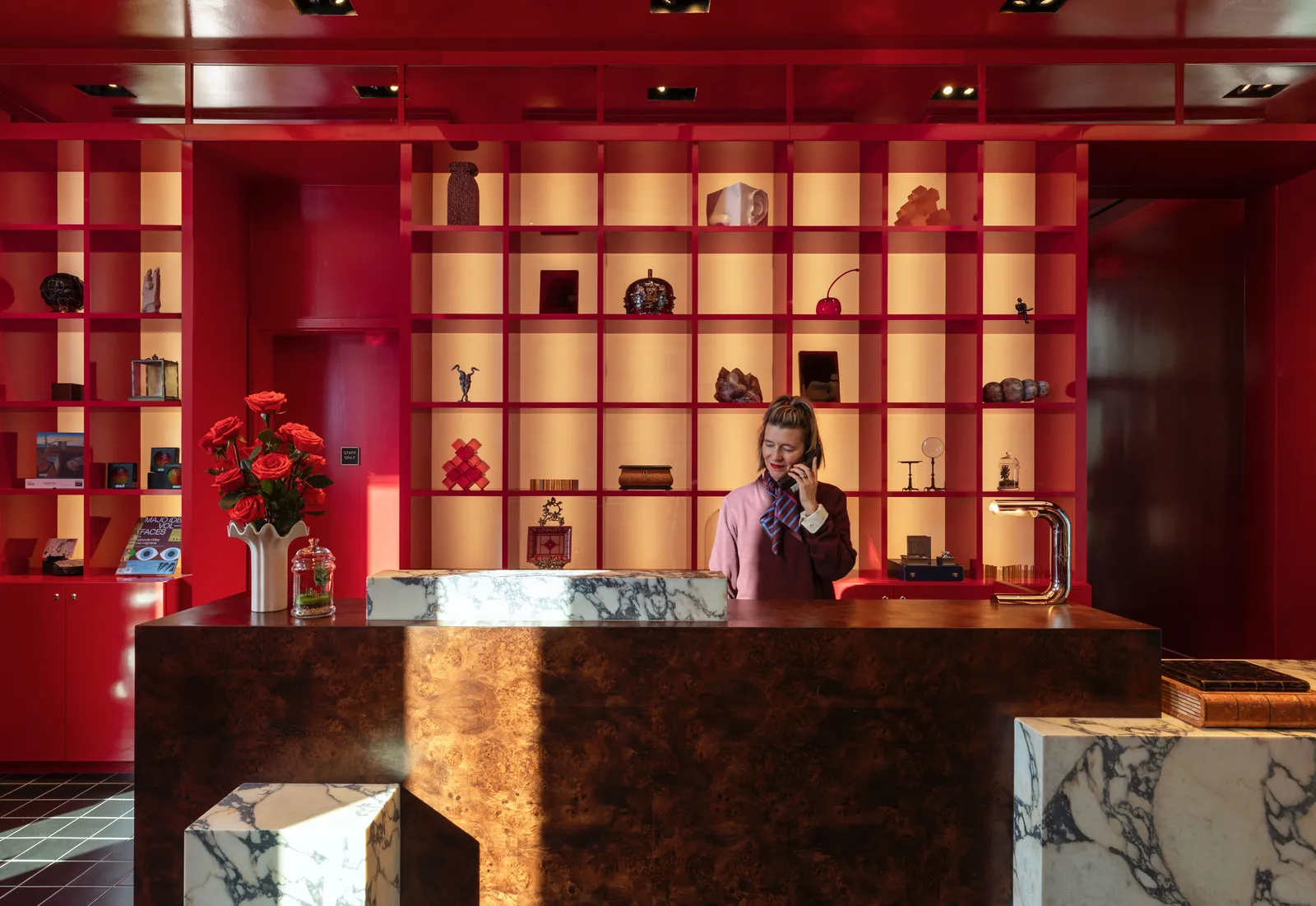
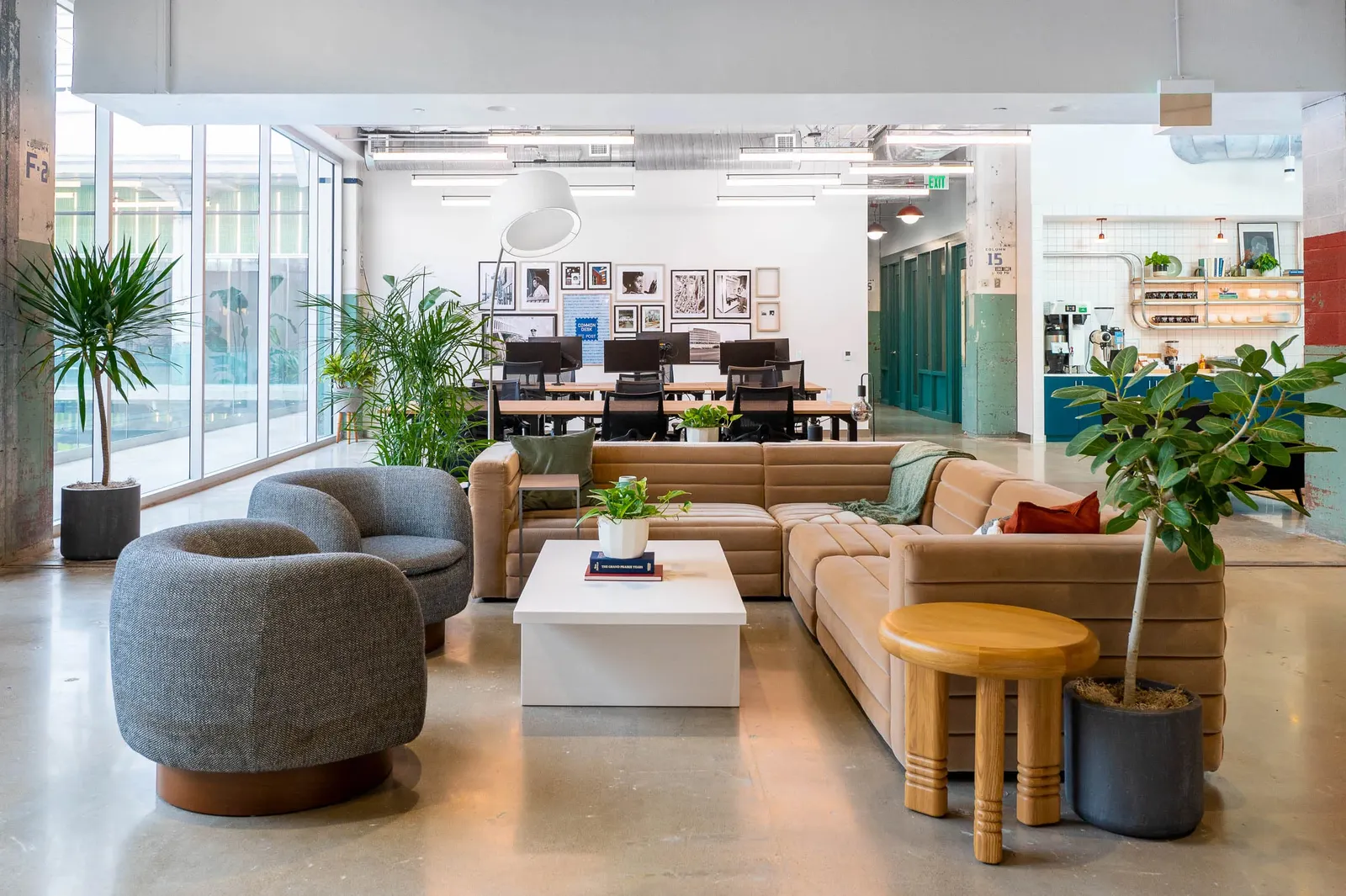
POST Houston (401 Franklin St.) is a cultural center redeveloped in 2019 from what was formerly a central post office building — and before that, a railroad depot. The space now houses a food hall, an art museum, a concert venue, and a rooftop garden, along with coworking options ranging from individual desks to private offices. Day passes start at $25, which is competitive for a space that’s genuinely interesting to spend time in. It’s the kind of coworking environment that reminds you why hybrid work culture can actually be enjoyable, rather than just a cost-saving arrangement for employers. For anyone planning Houston business travel on a flexible schedule, building in a half-day here is easy to justify.
The Real Reason to Embrace a Houston Business Trip
Strip away the hotels and the meeting rooms, and what you’re left with is a city that’s quietly becoming more significant in tech than its energy-industry identity suggests. The growth of 230,000-plus tech workers in Houston isn’t happening in a vacuum — it’s being driven by the digitization of industries that were analog for decades. Energy companies are deploying AI and sensor networks across their infrastructure. Hospital systems are running massive data operations. Logistics firms are investing in supply chain software at a scale that rivals anything coming out of the coasts.
Houston business travel, for the right kind of tech professional, puts you at the intersection of all of that. The city isn’t trying to out-compete Austin for startup culture or San Francisco for venture capital. It’s doing something arguably more durable: embedding technology into the bedrock industries that actually run the physical world. Planning Houston business travel to this market isn’t just worthwhile — it’s increasingly hard to justify skipping. That’s a market worth showing up for — humidity, traffic, and all.
Frequently Asked Questions
Is Houston business travel worth it beyond the convention center?
Absolutely. While the George R. Brown Convention Center draws huge numbers of trade show attendees, Houston’s dining scene alone justifies exploring the city. With 13,000 restaurants representing 70 countries and regions, there’s genuinely world-class food within reach of every major hotel district.
How large is Houston’s tech sector?
The Houston metro area’s tech sector employs over 230,000 people across a population of roughly 7.9 million. Most of that tech activity orbits the city’s dominant industries — oil and gas, healthcare, and logistics — rather than pure software startups.
Do I need a car for Houston business travel?
Almost certainly yes. Houston has minimal public transportation infrastructure worth relying on, and the city’s geographic spread means a cross-town drive can easily eat an hour of your day. Staying close to your meeting venue isn’t just a preference — it’s a practical necessity.
What is the best area to stay in Houston for business?
It depends on where your meetings are. Downtown is ideal for convention center events and Astros games at Daikin Park. The Galleria area suits West Loop business. Montrose works well for a quieter, more residential base with access to the Menil Collection and local culture.