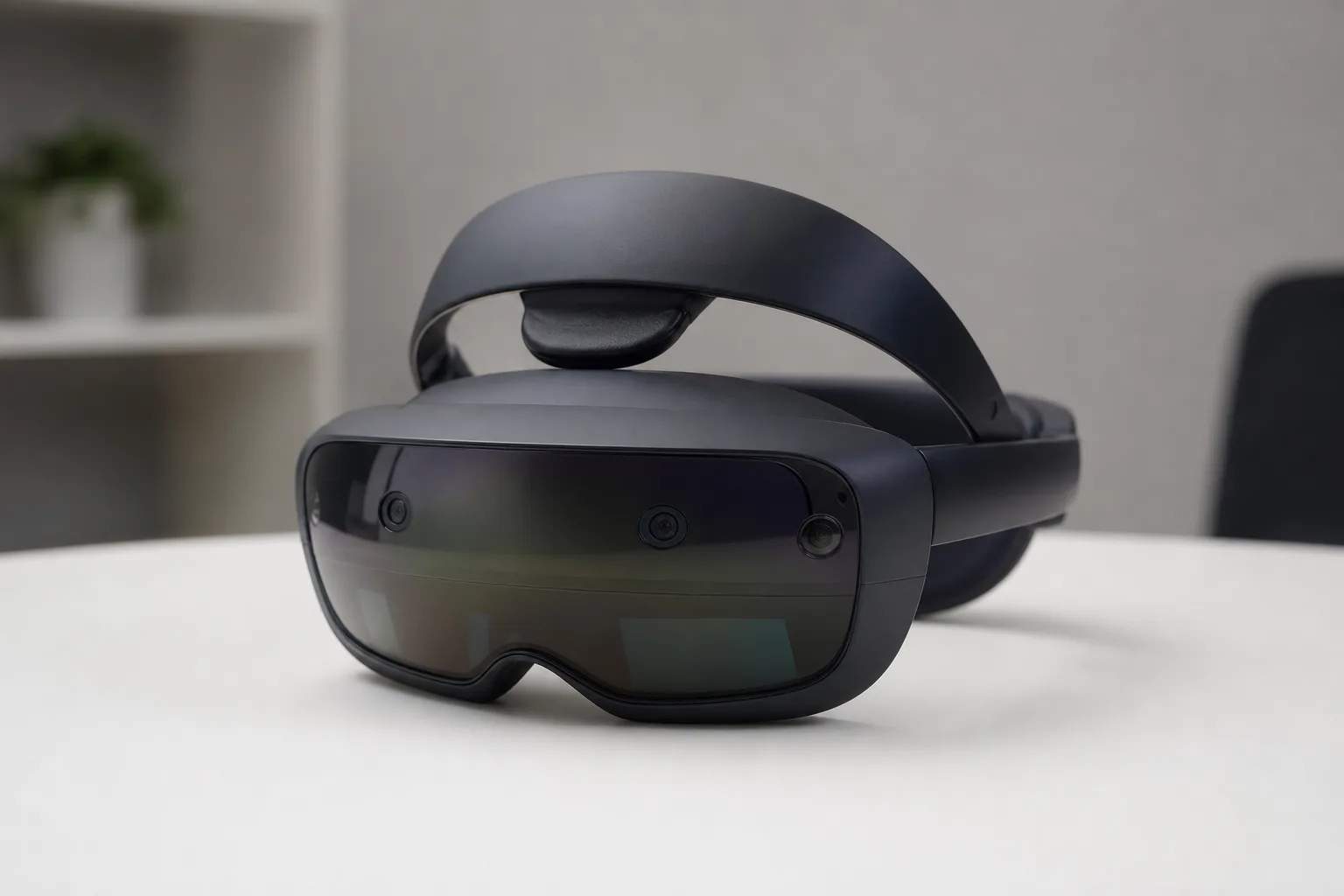
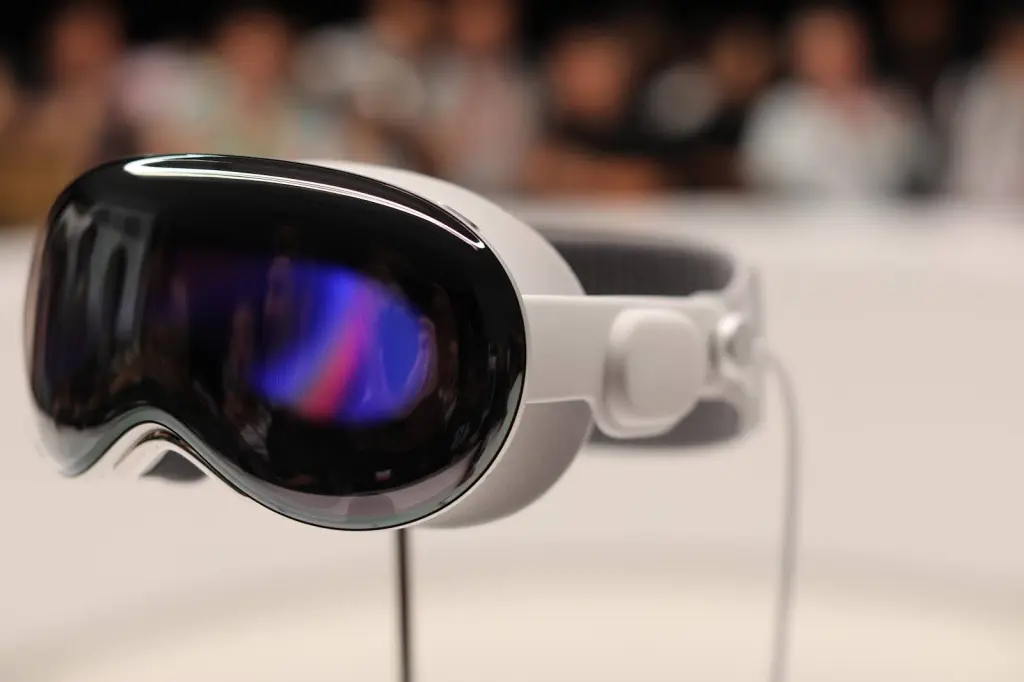
Paul Meade, Apple’s vice president responsible for the Apple Vision Pro, is heading for the exit — and the door he’s walking through leads straight to OpenAI. According to Bloomberg’s Mark Gurman, Meade is set to join OpenAI’s hardware team, marking one of the more consequential executive moves in the wearables space this year.
- Apple Vision Pro VP Paul Meade is leaving Apple to join OpenAI’s hardware division, per Bloomberg’s Mark Gurman.
- Meade also led development of Apple’s upcoming smart glasses, making his Apple Vision Pro departure especially significant.
- The move appears tied to internal restructuring as John Ternus prepares to take over as Apple’s next CEO.
- OpenAI is assembling a serious hardware team, with both Meade and former Apple design chief Jony Ive now on board.
Table of Contents
What Meade Actually Built at Apple Vision Pro
Meade wasn’t just the VP who shepherded the Apple Vision Pro to market — he also reportedly led development of the AI-powered smart glasses that Apple is planning to launch next year. That second part matters more than the first. The Apple Vision Pro was never going to be a mass-market product. Apple knew that. The smart glasses project, though, is Apple’s real attempt to own the wearables category at a price point normal humans might actually consider.
Losing the person who was steering that project is a meaningful blow, even if Apple has deep enough talent reserves to absorb it. Smart glasses are no longer a novelty category — Meta has been quietly building a real business with its Ray-Ban smart glasses, shipping millions of units and iterating quickly on AI features. Apple can’t afford to let internal leadership turbulence slow down its response.
The John Ternus Reshuffling — Apple Vision Pro Caught in the Crossfire
Gurman frames Meade’s exit not as a simple case of poaching, but as a consequence of Apple’s own internal politics. John Ternus, currently Apple’s senior VP of hardware engineering, is widely expected to succeed Tim Cook as CEO. As Ternus prepares for that elevation, he’s apparently been reshaping the hardware engineering leadership structure around him — and not everyone has come out of it feeling good about their position.
Some Apple VPs, per Gurman’s reporting, have been left feeling effectively demoted. Meade, it seems, was among them. When someone at that level of seniority feels their influence has been clipped, an offer from a well-funded competitor is unlikely to sit in their inbox for long. OpenAI, flush with capital and building something genuinely new, is exactly the kind of organisation that looks attractive in that moment.
This is also a reminder that executive succession at big companies almost always creates collateral damage. Ternus hasn’t even officially taken the CEO role yet, and the ripple effects are already landing. You can expect more movement before the dust settles.
OpenAI’s Hardware Ambitions Are Getting Serious
OpenAI has been assembling a hardware team that increasingly reads like an Apple alumni directory. The most high-profile addition was Jony Ive — the designer responsible for the iMac, the iPod, the iPhone, and essentially the entire visual identity of modern Apple. OpenAI’s collaboration with Ive is aimed at building a new category of AI device, something CEO Sam Altman has described as more ‘peaceful and calm’ than a smartphone. The implication being that our current devices are anxiety machines, and there’s a better way to interact with AI.
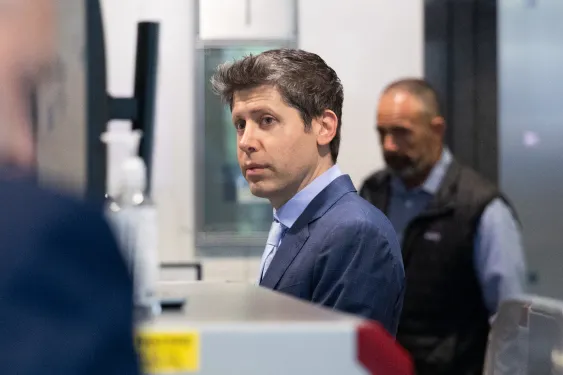
That’s an interesting pitch, but the project hasn’t been without turbulence. Reports from late 2024 suggested OpenAI was struggling to nail down exactly what this device should be — form factor, input method, how it fits into daily life. These are genuinely hard problems. Adding Meade, someone who spent years thinking about spatial computing and AI-driven wearables at Apple — including the Apple Vision Pro — gives the team a perspective that Ive’s design instincts alone can’t supply.
Meade and Ive together is a combination worth watching. One brings hardware engineering and product definition experience from the most successful consumer electronics company on the planet; the other brings a design sensibility that’s shaped how billions of people interact with technology. Whether they can actually translate that into a breakout product is another matter entirely, but the talent density is undeniable.
What This Means for Apple’s Smart Glasses Plans
The Apple Vision Pro was always positioned as a first-generation, developer-facing product — a statement of intent rather than a mainstream launch. Apple has been more transparent about that framing than it usually is with new product categories. But the smart glasses coming next year are supposed to be different: accessible, AI-native, and competitive with what Meta is already selling.
Meta’s Ray-Ban glasses have become a legitimately interesting product, especially after the company integrated its Meta AI assistant. They don’t try to put a screen in front of your eyes — they’re glasses that can answer questions, take photos, and play music, and they look like regular glasses while doing it. That’s a design philosophy Apple will have to contend with directly.
Meade was the executive helping Apple figure out that answer. His loss doesn’t kill the project — Apple has the resources to keep it moving — but it almost certainly creates some friction, and potentially some rethinking. Whoever steps into his role will need time to develop their own conviction about the product direction. In a market moving as fast as AI wearables right now, time is the one thing Apple can least afford to waste.
The Broader Talent War Between Apple and OpenAI
This departure is part of a pattern that’s been building for a while. OpenAI isn’t just competing with Apple in terms of products — it’s competing for the specific kind of hardware and product talent that Apple has historically had a lock on. Apple built its hardware culture over decades, attracting engineers and designers who believed in its exacting standards. Now some of those people are looking at what OpenAI is building and deciding the opportunity is worth more than the stability.
That’s a cultural shift worth paying attention to. For years, the gravitational pull of Apple’s hardware organisation meant executives rarely left for pure software companies or AI labs. The fact that OpenAI — which didn’t have a serious hardware programme even two years ago — can now attract senior Apple Vision Pro executives says something about how seriously the industry is taking the idea of purpose-built AI hardware.
Whether OpenAI can actually ship a product that justifies all this talent investment remains the central question. The company is exceptional at AI research and at deploying software products like ChatGPT. Hardware is a different discipline entirely — it requires supply chain management, manufacturing relationships, and product iteration cycles that play out over years, not weeks. Adding Meade is a smart move. But building a hardware organisation from scratch is a long road, and OpenAI is still very much at the beginning of it.