Table of Contents
A voice assistant with a body
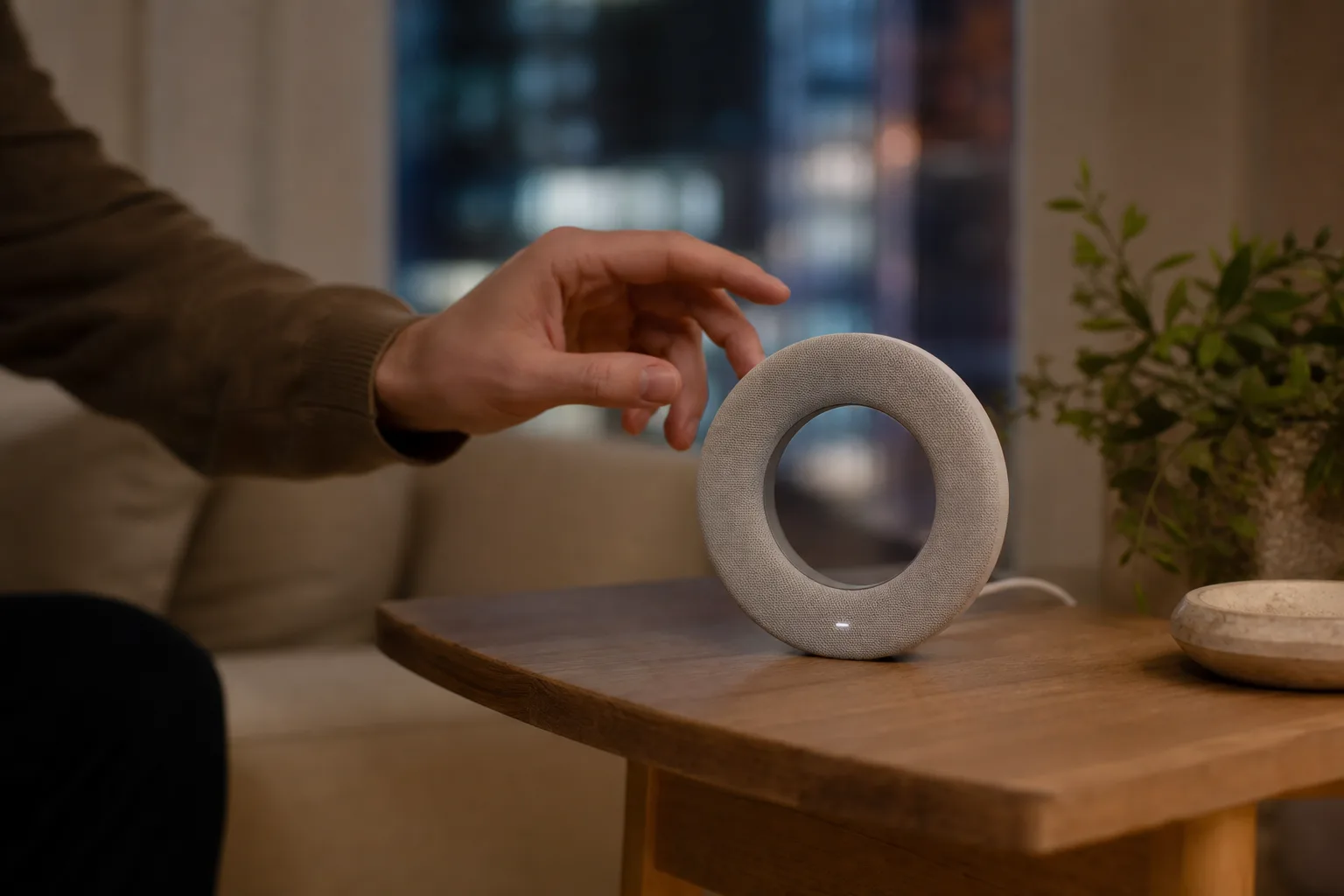
The OpenAI ChatGPT speaker is reportedly headed for a price range that puts it well above an Echo Dot and squarely into premium-gadget territory: roughly $300 to $400. Bloomberg’s reporting describes a small, battery-powered, doughnut-like device about the size of a hockey puck, built for voice conversations with ChatGPT rather than for watching a screen.
At first glance, the OpenAI ChatGPT speaker sounds like a familiar category dressed up in a fancier enclosure. OpenAI’s apparent pitch is more ambitious: a companion that moves with its owner from room to room, listens for spoken requests, responds in a more human manner, and gradually learns personal habits. There are microphones and speaker grilles, naturally, but also cameras and sensors intended to give the product some awareness of its surroundings.
My read is that OpenAI is trying to solve a problem Alexa, Siri and Google Assistant never really escaped: smart speakers became household appliances before they became genuinely useful assistants. People used them for timers, weather, music and the occasional kitchen conversion. Then they stopped expecting much more. ChatGPT has changed those expectations, even if it has also made users more alert to AI errors and privacy risks.
Why the OpenAI ChatGPT speaker costs $300 or more
A $300 to $400 price immediately tells us this won’t be a mass-market smart speaker in the Amazon mold. Amazon spent years subsidizing Echo hardware to get Alexa into homes, while Apple’s HomePod mini remains a relatively restrained entry into the category. The reported OpenAI ChatGPT speaker would cost closer to a premium pair of earbuds, or a decent small tablet, without offering a conventional display.
That price only works if OpenAI believes people will treat the device less like a household speaker and more like a personal object. Bloomberg says the unit may use premium metal, and that it will include moving elements that give it personality. Lights would indicate when it is listening, while mechanical movement could signal that the assistant is processing or speaking.
That sounds slightly theatrical, frankly. But physical feedback matters. A voice system without a screen has to communicate its state somehow. Anyone who has asked a smart speaker a question and then wondered whether it heard them knows the awkward little silence. A light ring helps; a device that visibly turns or shifts could help more, provided it doesn’t become another creepy desk ornament.
The camera system may matter even more. Environmental context could make a ChatGPT assistant vastly more useful: identifying objects, understanding what a user is looking at, or helping with a task in a room. It also raises the obvious concern. A portable, always-nearby AI gadget with cameras will face a much tougher trust test than a chatbot sitting behind a browser tab.

Jony Ive’s design bet, and Apple’s legal shadow
The OpenAI ChatGPT speaker is reportedly being designed with Jony Ive, Apple’s former design chief, whose io startup OpenAI acquired last year. Ive’s fingerprints are easy to imagine here: a simple object, premium materials, minimal visual clutter and an almost obsessive interest in how a product feels in the hand. Apple made billions selling that instinct.
But this project has landed in the middle of an increasingly pointed dispute with Apple. In its trade-secrets lawsuit against OpenAI, Apple alleged that OpenAI misled an Apple supplier into developing a metal-finishing process resembling work used by Apple. OpenAI has denied that its device relies on Apple’s proprietary information, saying it is “building something entirely new and different from anything at Apple.”
Bloomberg’s description does offer some support for that distinction. Apple’s expected home hub is said to have a display and a more square form factor. Its HomePod mini is tethered to a power cable. Apple is also reportedly pursuing a tabletop robot with a screen and motorized arm, but that product is not expected before 2027 at the earliest. None sounds especially close to a puck-shaped, camera-equipped conversational assistant designed to travel around the house.
Still, legal arguments rarely turn on broad product categories. They turn on what people knew, what documents say and whether specific processes were used. A metal object made by former Apple designers is practically guaranteed to draw scrutiny. OpenAI can argue originality all day; it will need evidence to put the issue to bed.
The OpenAI ChatGPT speaker faces a much harder problem than industrial design
OpenAI has confirmed only its broader hardware ambitions, not the reported specifications or release schedule. Bloomberg says the company wants to show the product later this year before a 2027 launch. That leaves plenty of time for the design, price and capabilities of the OpenAI ChatGPT speaker to change.
What cannot change is the central challenge: reliability. ChatGPT is impressive at conversation, brainstorming and explanation, but language models can also confidently get things wrong. That is annoying in a chat window. It is more consequential when an assistant is giving directions, interpreting a household scene, helping a child with homework, or acting on personal context gathered over months.
OpenAI will also have to explain the business model. Does the device work well without a paid ChatGPT subscription? How much data stays on the hardware, if any? Can a household know when its cameras and microphones are active? The company’s public mission centers on ensuring artificial general intelligence benefits humanity, a high-minded promise that will meet a very ordinary consumer question: what exactly is this little thing collecting in my living room?
I’d argue the hardware itself is the easy part. Make it handsome, make it portable, make it animate when it talks. The hard part is earning a place in people’s homes after the first week of novelty fades. If OpenAI can make its assistant consistently helpful without making users feel observed, the OpenAI ChatGPT speaker could finally give conversational AI a natural home outside the phone. If it cannot, it may join the long list of clever voice gadgets that became expensive kitchen timers.