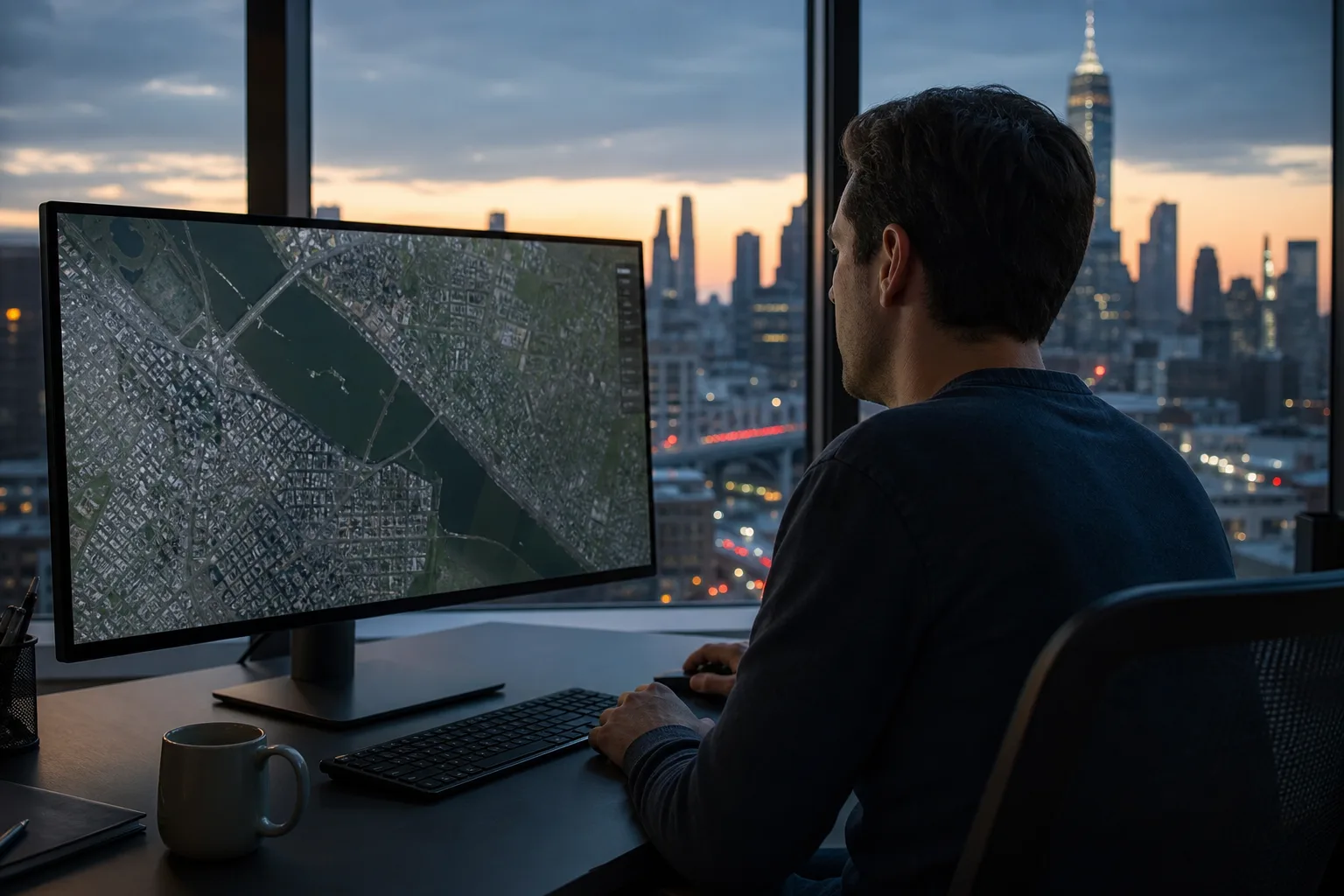
Google Earth has always carried an unusual kind of authority. For millions of people, it remains the closest thing to a browser-based window onto reality. So Google Earth AI, a short-lived feature that let people generate fake imagery inside the product, was a spectacularly bad fit for the platform.
Reports and screenshots showed users making fabricated scenes with all the emotional and political voltage a viral misinformation campaign could want: a purported nuclear installation in Iran, crowds near the US-Mexico border, and an aircraft crashing into New York’s One World Trade Center. Google withdrew the capability the following day after a swift backlash.
- Google Earth AI was pulled after users created fabricated scenes involving terrorism, borders, and alleged Iranian nuclear infrastructure.
- The Google Earth AI rollback shows why labels and watermarks cannot protect a product whose authority rests on public trust.
- Google said the generated images were private and watermarked, but viral screenshots can quickly lose that context.
- The episode exposes a larger industry habit of shipping generative AI before companies have tested obvious misuse cases.
Table of Contents
Google Earth AI collided with a product built on trust
Google’s explanation was sensible as far as it went. The company said it understands that people “uniquely trust Google Earth for a reliable view of the world,” while acknowledging that users had shared generated imagery that appeared to breach its policies. Google also said the synthetic images were not added to the standard Google Earth view for other users and carried AI-generated watermarks.
Those are meaningful limitations. They are not, frankly, enough.
A fake image does not need to alter a shared global map to cause damage. It only needs to be captured, cropped, reposted and stripped of its original interface. Once that happens, the watermark may be absent, tiny, ignored, or removed outright. Social platforms have already taught us this lesson over and over: context is the first thing to disappear when an image begins travelling.
The issue with Google Earth AI was not that it made misinformation possible. Image editors, 3D tools and generative image models have done that for years. The issue was that it placed the ability inside a product people associate with satellite imagery, geography, disaster response and on-the-ground verification. Google Earth’s visual language gives even an obviously questionable creation a little borrowed institutional credibility.
Think of it like printing a fake notice on a sheet that looks exactly like a government form. The words may be invented, but the wrapper does a lot of the persuading.
Google has long positioned Google Earth as a tool for exploring the planet, studying environmental change and working with geospatial data. Professionals use imagery and mapping layers for planning, research, humanitarian work and reporting. That serious history is precisely why an image-generation experiment demanded more skepticism before it reached users.
The obvious abuse cases were not hard to predict
My read is that the Google Earth AI failure was not a failure of imagination among bad actors. It was a failure of imagination inside Google. The first abuse cases were almost painfully predictable: military facilities, border crossings, protests, natural disasters, terrorist attacks and alleged evidence of government wrongdoing. These are not edge cases. They are the prompt ideas any trust-and-safety team should put at the top of a pre-launch test list.
The One World Trade Center example is particularly grim because September 11 conspiracies have persisted online for decades. Creating fresh imagery that appears to depict an attack on one of the world’s most recognizable buildings serves no useful public purpose. It provides raw material for people who benefit from making viewers doubt what is real.
Border imagery carries a different but equally dangerous charge. A fabricated scene showing large groups of migrants can be repurposed as political propaganda in minutes, especially during an era when immigration misinformation is already a high-engagement commodity. Nobody needs access to a public map layer for that image to circulate under a misleading caption.
That’s the practical test Google Earth AI appears to have failed: not ‘can someone technically create this?’ but ‘what happens after someone posts it with a false claim?’ A policy notice and an embedded label are weak answers to that second question.
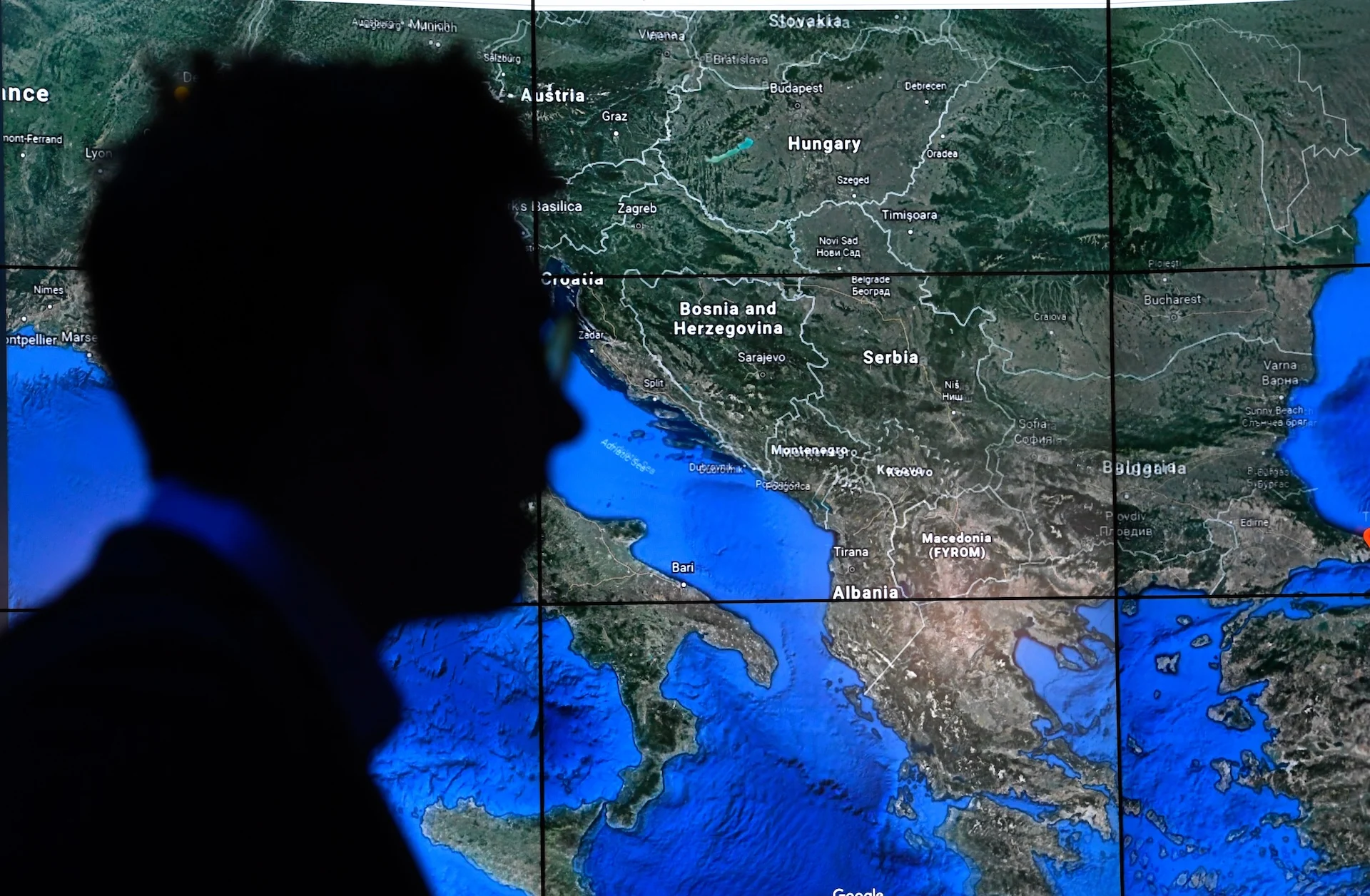
Watermarks are a speed bump, not a safety system
Google’s emphasis on watermarks makes sense from a product-design standpoint. Companies building generative tools want provenance signals that tell users where an image came from. The wider industry has backed initiatives such as the Coalition for Content Provenance and Authenticity, which promotes technical metadata for media origins. In a healthier information environment, that work could help.
But watermarks are not magic. Visible marks can be cropped or edited. Metadata can be lost during a screenshot, download, compression pass or social-media upload. And a person inclined to believe a dramatic image is unlikely to pause and inspect provenance data before sharing it. Google Earth AI showed the gap between an AI lab’s preferred safeguard and the messy reality of the internet.
The deeper problem is human behavior. Once viewers see a synthetic image framed by Earth’s familiar cartographic interface, the damage may already be done. A later warning that the scene was generated can feel like fine print after the sales pitch.
Google deserves credit for reversing course quickly rather than defending an indefensible rollout for weeks. Too often, Silicon Valley treats public backlash as an inconvenient phase between launch and wider adoption. Pulling the feature was the right call. Still, the question remains: why was a general-purpose generation tool deployed in a high-trust geospatial product before its most obvious failure modes had been addressed?
Google Earth AI is part of a broader AI product problem
This episode fits a pattern that has become exhausting. Every major platform is under pressure to demonstrate an AI strategy, whether the feature makes the underlying service better or not. Some additions are useful: AI-assisted search, transcription, accessibility tools and image cleanup can save genuine time. Others feel like a quarterly earnings slide escaped into the product roadmap.
Google Earth AI may have had legitimate applications for urban planning concepts, educational visualization or geospatial storytelling. But those cases call for constrained professional tools, clear simulation modes and strong review processes, not an open invitation to manufacture volatile real-world events. A weather simulator belongs in a classroom; it should not be casually confused with a live radar feed.
The lesson reaches beyond Google Earth. Trust is a feature, even when a company never puts it on a launch slide. Google spent years earning it in mapping products through data collection, street-level imagery and a mostly reliable sense that what users were seeing referred to an actual place. Google Earth AI risked spending that trust for a novelty feature that lasted barely a day.
We’ll see what Google brings back after it promises stronger guardrails. But a safer version cannot merely add thicker watermarks or a more prominent disclaimer. It has to begin with a harder product question: when a tool’s authority comes from showing the real world, should it be in the business of inventing that world at all?