

The Meta data center water contamination incident in Cheyenne, Wyoming has done more than foul a local water supply — it’s exposed a blind spot in how America’s AI infrastructure buildout intersects with the municipal systems that communities depend on every day. What started as a routine construction step ended with two water reclamation plants knocked offline, a city scrambling to clean up its reuse system, and a blanket suspension on industrial wastewater discharges that now affects every data center in the city.
- Meta data center water contamination in Cheyenne introduced a rare metal-resistant bacterium into the city’s reclaimed water system.
- The Meta data center water contamination knocked two water reclamation plants offline and triggered months of cleanup work.
- Cheyenne’s Board of Public Utilities has suspended discharge privileges for all data centers connected to city services.
- The incident raises serious questions about how municipalities handle industrial wastewater from AI infrastructure buildouts.
Table of Contents
What Actually Happened in Cheyenne
The story begins with a bacterium most people have never heard of. Cupriavidus gilardii is a metal-resistant organism that showed up in Cheyenne’s reclaimed water system in February, caught during what Frank Strong — engineering and water resource division manager for the Cheyenne Board of Public Utilities — described as routine fecal-bacteria sampling. ‘This isn’t something we normally test for,’ Strong told the Wyoming Tribune Eagle. That admission alone tells you something important: the contamination wasn’t caught because anyone was looking for it specifically. The Meta data center water contamination case is, in that sense, a story about the limits of routine monitoring.
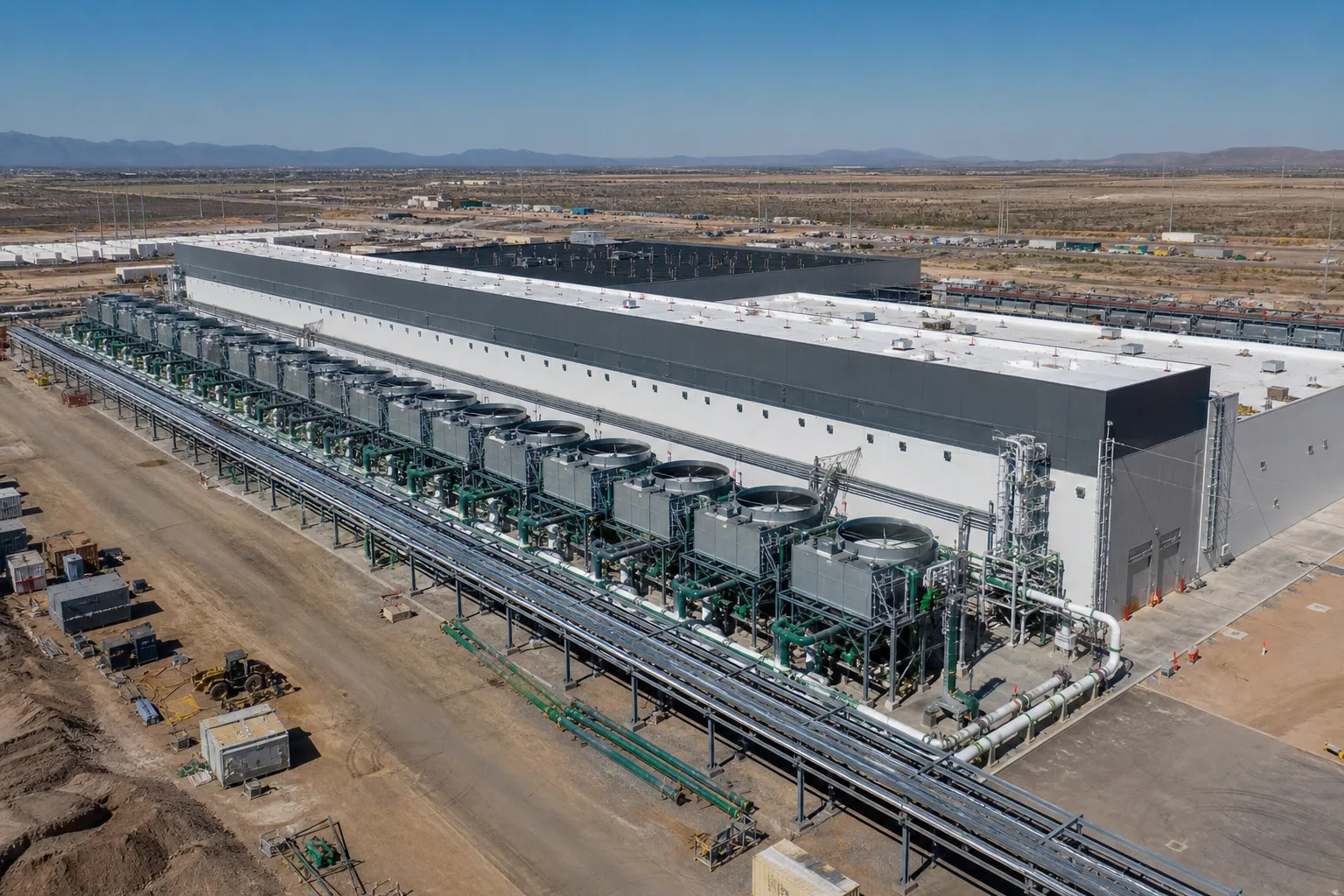
Investigators traced the bacterium back to Goat Systems LLC, the contracting entity Meta uses to build its Cheyenne campus. The mechanism was fill-and-flush — a standard commissioning procedure where construction crews fill a cooling loop’s piping with water, run it through to clear out debris, and then drain the used water into the sewer. Goat Systems routed that flush water directly into Cheyenne’s sanitary sewer system. The water carrying Cupriavidus gilardii made its way into two water reclamation plants, interfered with their operation, and ultimately pushed the city’s entire reuse system offline.
The Board of Public Utilities found Goat Systems in significant noncompliance and revoked its fill-and-flush discharge privileges on March 24. But the response didn’t stop there. A wider suspension now covers every data center connected to Cheyenne’s city services — a significant step in a city that has become a magnet for data center investment precisely because of its climate and available land. The Meta data center water contamination episode has effectively changed the terms of that investment relationship.
The Broader Risk Nobody Was Planning For
Here’s where the Meta data center water contamination story gets more complicated than a single contractor making a mistake. Cheyenne doesn’t just treat and dispose of its reclaimed water — it sprays it on parks, golf courses, and other green spaces around the city. Strong flagged to officials that Cupriavidus gilardii, introduced through irrigation spray, could become an aerosol hazard. That’s a public health dimension that goes well beyond what typically comes to mind when people think about data center operations.
Strong also raised a concern that extends past this specific bacterium: closed-loop cooling systems can carry glycol and other chemicals that municipal treatment plants simply aren’t designed to handle. This matters enormously as the data center industry races to adopt liquid cooling at scale. Microsoft, for instance, markets sealed liquid loops as a near-zero-water alternative to traditional evaporative cooling — systems that are filled once during construction and then recirculate the same fluid indefinitely. Nvidia’s Rubin platform runs a coolant that’s 75% water and 25% propylene glycol. Both approaches are being sold, accurately, as more water-efficient than the evaporative towers that have drawn criticism at data centers across the American Southwest.

But there’s a catch embedded in that efficiency argument. The one-time fill is still a fill. The flush still produces a discharge. And that discharge leaves the site before the loop is sealed — carrying whatever the piping happened to contain, including, in this case, a metal-resistant bacterium of unknown origin. Strong said the fill water had actually been purchased from the Board itself, which means nobody yet knows where Cupriavidus gilardii came from. That open question has real implications for how data center operators think about intake water quality, not just discharge compliance — and it’s one reason the Meta data center water contamination incident continues to draw scrutiny even after the affected plants came back online.
Meta Data Center Water Contamination: The Industry Implications
The Meta data center water contamination episode is a useful stress test of assumptions the industry has been making quietly. Liquid cooling has been gaining momentum for years, accelerated sharply by the thermal demands of AI accelerators like Nvidia’s H100 and the upcoming Blackwell architecture. The pitch from vendors and operators alike is that closed-loop systems solve the water consumption problem. That’s largely true once the system is running. What it obscures is that the construction and commissioning phase creates its own environmental footprint — one that municipal utilities weren’t anticipating and aren’t equipped to regulate. Understanding what the Meta data center water contamination revealed about commissioning-phase risks is now essential context for any city negotiating terms with large-scale data center developers.
Cheyenne City Councilman Pete Laybourn called the disclosure ‘a very, very unpleasant surprise.’ That’s a diplomatic way of putting it. From a regulatory standpoint, the situation is genuinely awkward: Cupriavidus gilardii isn’t a regulated contaminant under federal law, yet its presence was disruptive enough to trigger pass-through and interference findings under the Cheyenne City Code and federal pretreatment rules. The contamination fell into a gap — not illegal enough to have been proactively prevented, but damaging enough to take critical infrastructure offline for months.
Meta said it’s supporting its general contractor, Fortis, which stopped all discharging and began hauling wastewater offsite once the issue surfaced. Independent testing commissioned by the company found no trace of the bacterium, and both affected facilities — the Dry Creek and Crow Creek plants — cleared testing in late June. The reuse system is back online. From Meta’s perspective, the situation has been resolved. From Cheyenne’s perspective, the suspension on data center discharges remains in place, and the Board hasn’t indicated when or whether it will be lifted for the other projects under construction in the area. The Meta data center water contamination outcome, in other words, looks very different depending on which side of the fence you’re standing on.
Who Bears Responsibility — and Who Pays Attention
The instinct, when something like this happens, is to assign blame cleanly: the contractor screwed up, the operator should have known, the regulator should have been watching. Reality is messier. The fill water came from the city’s own supply. The bacterium’s origin remains unknown. The test that caught it wasn’t designed to catch it. And the regulations governing what data center operators can discharge into municipal systems were written long before anyone was filling cooling loops with glycol solutions at the scale demanded by AI infrastructure. Viewed in that light, Meta data center water contamination is less a story of individual negligence and more one of systemic regulatory lag.
That regulatory gap is the real story here. Cities like Cheyenne are actively competing for data center investment — the tax revenue, the construction jobs, the utility contracts. But the environmental and infrastructure terms of that competition are still being written in real time, often reactively, after something goes wrong. Strong’s comments about glycol in the wastewater stream suggest the Board is already thinking ahead to the next problem. Whether the data center industry is moving as fast to get ahead of it is a different question.
As the EPA’s industrial pretreatment program makes clear, the burden is on industrial users to ensure their discharges don’t interfere with municipal treatment operations. The Cheyenne case shows that burden isn’t always well understood — or well enforced — when the industrial user is a construction contractor building some of the most capital-intensive facilities in the country. With data center construction spending projected to run well into the hundreds of billions globally over the next several years, the Meta data center water contamination incident may look, in retrospect, like an early warning that went unheeded everywhere else.
Frequently Asked Questions
What caused the Meta data center water contamination in Cheyenne?
Meta’s construction contractor, Goat Systems LLC, discharged fill-and-flush water containing Cupriavidus gilardii — a rare, metal-resistant bacterium — into Cheyenne’s sanitary sewer. This interfered with two water reclamation plants and pushed the city’s reuse system offline for months.
What is fill-and-flush in data center construction?
Fill-and-flush is a commissioning step where crews fill a cooling loop’s piping with water to clear debris before the system is put into operation. The used flush water is then discharged — in this case into the city sewer, carrying the bacterial contamination with it.
Is Cupriavidus gilardii a regulated contaminant?
No. Cupriavidus gilardii is not a federally regulated contaminant, which is partly why it wasn’t being tested for. Despite that, its presence caused sufficient disruption to wastewater treatment to trigger pass-through and interference findings under both Cheyenne’s city code and federal pretreatment rules.
How does this affect other data centers in Cheyenne?
The Board of Public Utilities has issued a broader suspension covering every data center connected to city services, not just Meta’s contractor. Several data center projects are still under construction in the area, and the Board hasn’t clarified how long the suspension will remain in place.

